The Paradigm Shift: Reactive Boundaries vs. Proactive Guidance
When shopping for a modern electric vehicle or hybrid, buyers are often inundated with acronyms and marketing jargon surrounding Advanced Driver Assistance Systems (ADAS). Two of the most frequently confused features are Lane Keep Assist (LKA) and Lane Centering Assist (LCA). While both systems interact with the vehicle's electric power steering (EPS) to manipulate the steering wheel, their underlying logic, sensor requirements, and real-world performance metrics are vastly different. In this data-driven comparison analysis, we will dissect the telemetry, safety statistics, and hardware architectures that separate basic boundary enforcement from true proactive guidance.
Defining the Baseline: Lane Keep Assist (LKA)
Lane Keep Assist is fundamentally a reactive safety net. Designed to prevent unintentional lane departures, LKA remains dormant until the vehicle's telemetry indicates an imminent boundary breach. The system monitors the lane markings via a forward-facing camera and waits for the tire to touch or cross the painted line. Once a departure is detected without the use of a turn signal, the EPS applies a sudden, corrective steering torque to push the vehicle back into the lane.
From a data perspective, LKA interventions are characterized by high lateral acceleration spikes. Telemetry data from various automotive testing facilities shows that LKA systems typically apply corrective forces ranging from 0.15g to 0.3g of lateral acceleration. This sudden intervention is often felt by the driver as a sharp tug on the steering wheel. While effective at preventing run-off-road accidents, poorly tuned LKA systems can cause the 'ping-pong effect,' where the vehicle bounces between the left and right lane lines on long highway stretches, leading to increased driver fatigue and frustration.
Defining the Upgrade: Lane Centering Assist (LCA)
Lane Centering Assist represents a proactive, continuous guidance system. Unlike LKA, which waits for a mistake, LCA constantly reads the geometric center of the lane and applies micro-adjustments to the steering rack to maintain that centerline. LCA is a core component of SAE Level 2 automated driving systems, working in tandem with Adaptive Cruise Control (ACC) to manage both lateral and longitudinal vehicle dynamics simultaneously.
The telemetry profile of LCA is drastically different from LKA. Instead of sharp spikes in lateral acceleration, LCA operates in a continuous sine wave of micro-corrections, typically generating between 0.02g and 0.05g of lateral force. These adjustments are largely imperceptible to the driver. High-end LCA systems can maintain the vehicle within +/- 5 centimeters of the true lane center, even through sweeping highway curves, drastically reducing the cognitive load on the driver during long commutes.
Sensor Architecture: Cameras, Radar, and LiDAR
The divergence in performance between LKA and LCA is directly tied to the sensor suites required to execute their respective algorithms. Basic LKA can function adequately with a single, low-resolution monocular camera mounted behind the rearview mirror. These older Mobileye or Bosch camera modules have a limited field of view (FOV) and rely on high-contrast, freshly painted lane lines to function.
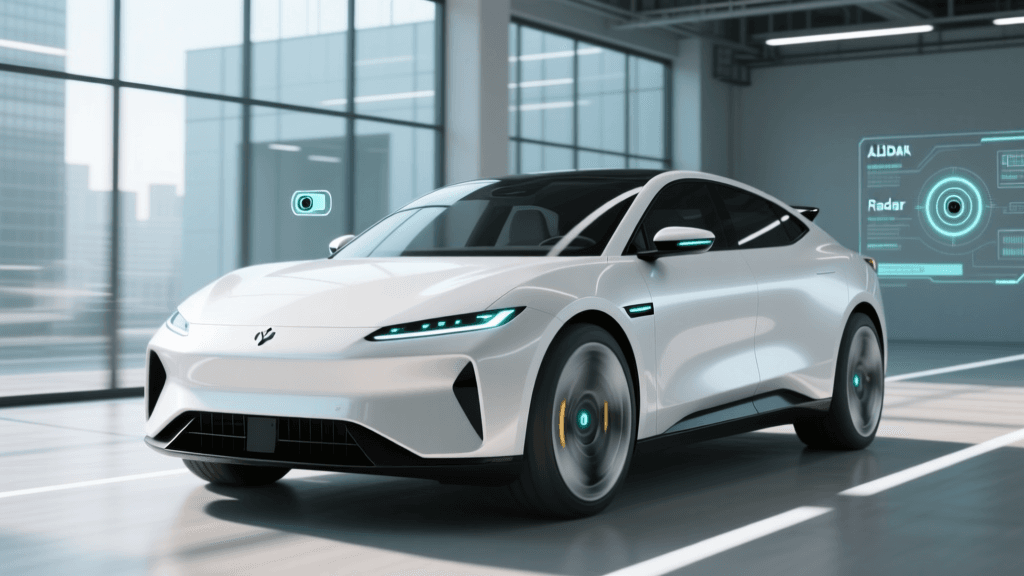
Conversely, LCA demands high-fidelity sensor fusion. Modern LCA systems utilize stereo-vision cameras to calculate depth, wide-angle lenses to anticipate sharp curves, and in some premium implementations, LiDAR or high-definition radar to map the road geometry even when lane lines are faded, obscured by snow, or entirely missing. This hardware redundancy is what allows systems like GM's Super Cruise to maintain +/- 2 cm lateral accuracy on pre-mapped highways.
Brand Implementation Analysis: Who Does It Best?
Not all lane guidance systems are created equal. Automakers use different naming conventions, but the underlying data reveals their true classification. Below is a comparison matrix of top-tier ADAS implementations available in the current EV and hybrid market.
| Brand / System | Classification | Primary Sensor Suite | Lateral Accuracy (Est.) | Driver Monitoring |
|---|---|---|---|---|
| Tesla Autopilot | LCA (Proactive) | 8x Vision Cameras (No Radar/LiDAR) | +/- 5 cm | Steering Wheel Torque |
| GM Super Cruise | LCA (Proactive) | LiDAR Map + Vision + Radar | +/- 2 cm | Infrared Eye Tracking |
| Ford BlueCruise | LCA (Proactive) | Camera + Radar Fusion | +/- 5 cm | Infrared Eye Tracking |
| Subaru EyeSight | LKA / LCA Hybrid | Stereo Vision Cameras | +/- 10 cm | Steering Wheel Torque |
| Toyota TSS 3.0 | LCA (Proactive) | Monocular Vision + Radar | +/- 8 cm | Steering Wheel Torque |
Safety Impact and Crash Reduction Statistics
The transition from LKA to LCA has profound implications for road safety. According to extensive crash data analyzed by the Insurance Institute for Highway Safety (IIHS), lane departure warning and basic lane keep assist systems reduce single-vehicle, sideswipe, and head-on crashes by 11 percent and reduce injury crashes of these types by 21 percent. This data proves that even reactive boundary enforcement saves lives by mitigating human inattention.
However, as systems evolve into proactive LCA, the risk profile shifts from run-off-road crashes to automation complacency. The National Highway Traffic Safety Administration (NHTSA) has noted through its Standing General Order on crash reporting that drivers using Level 2 LCA systems sometimes overestimate the system's capabilities, leading to rear-end collisions when the ACC fails to identify stationary objects. This data underscores why modern LCA systems are increasingly mandating infrared Driver Monitoring Systems (DMS) to ensure the driver's eyes remain on the road, effectively bridging the gap between machine capability and human responsibility.
Actionable Advice: How to Configure and Optimize Your ADAS
Understanding the data behind your vehicle's steering interventions allows you to optimize your driving experience and maximize safety. Follow these actionable steps to get the most out of your lane guidance technology:
- Eliminate the Tug-of-War: If your vehicle offers both LKA and LCA (often branded as Lane Tracing Assist or Steering Assist), disable the reactive LKA in the infotainment settings. Running both simultaneously causes the EPS to fight itself, as LKA waits for the line while LCA tries to stay in the center, resulting in erratic steering behavior.
- Maintain Sensor Fidelity: LCA systems are highly sensitive to visual obstructions. Data shows that a dirty windshield header or a misaligned camera bracket can degrade lateral accuracy by over 40 percent. Clean the area behind your rearview mirror regularly and ensure your windshield washer fluid is formulated to prevent sensor-hazing streaks.
- Understand Your DMS: If your vehicle uses an infrared camera to monitor your eye gaze (like Ford BlueCruise or GM Super Cruise), ensure it has an unobstructed view. Wearing polarized sunglasses or certain IR-blocking prescription lenses can blind the DMS, causing the LCA system to disengage abruptly and trigger annoying audible warnings.
- Test in Controlled Environments: Before relying on LCA during a high-speed highway merge, test the system's curve-handling capabilities on a well-marked, low-speed suburban parkway. This allows you to build a mental model of the system's lateral acceleration limits without risking a high-speed guardrail impact.
Conclusion
The data clearly illustrates that Lane Keep Assist and Lane Centering Assist are not interchangeable terms. LKA is a vital, reactive safety net designed to catch human error through high-torque interventions. LCA is a sophisticated, proactive co-pilot that relies on advanced sensor fusion to deliver continuous, micro-adjusted guidance. As EV and hybrid platforms continue to push the boundaries of SAE Level 2 and Level 3 automation, understanding these telemetry differences is essential for buyers looking to maximize both safety and comfort on the modern roadway.