A blind spot warning system is one of the most frequently used—and most frequently misunderstood—driver-assistance features on modern electric vehicles. Whether you're merging onto a rain-slicked interstate in a Tesla Model Y or navigating tight urban lanes in a Hyundai Ioniq 5, the system is designed to alert you to vehicles lurking in your blind zones. But not all blind spot warning systems are created equal, and none of them replace the need for an attentive driver.
This guide breaks down the sensor technology behind blind spot monitoring in today's EVs, clarifies what these systems can and cannot do, compares how major manufacturers name and package the feature, and explains the real-world limitations every EV owner should understand before relying on one.
What a Blind Spot Warning System Actually Does
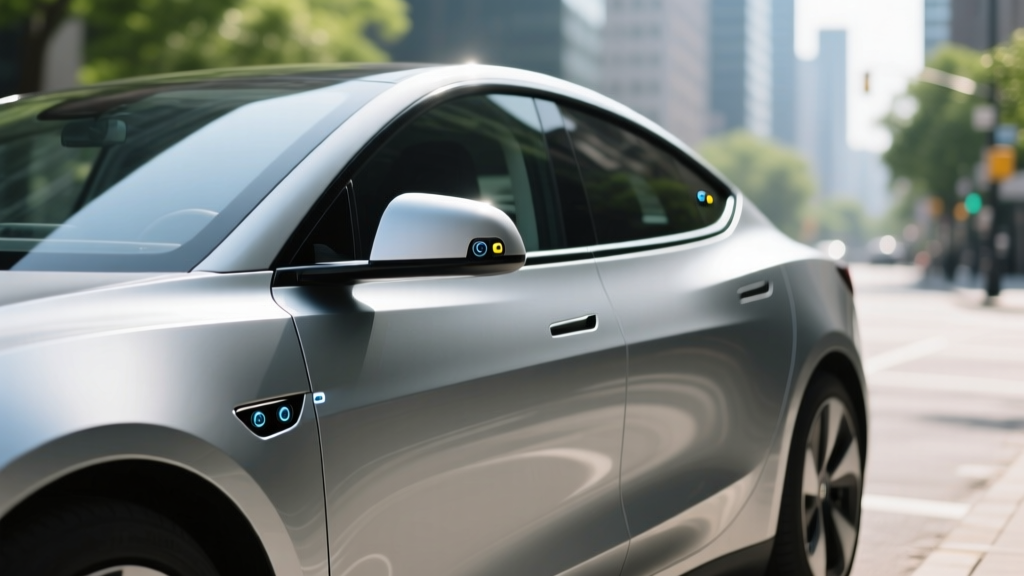
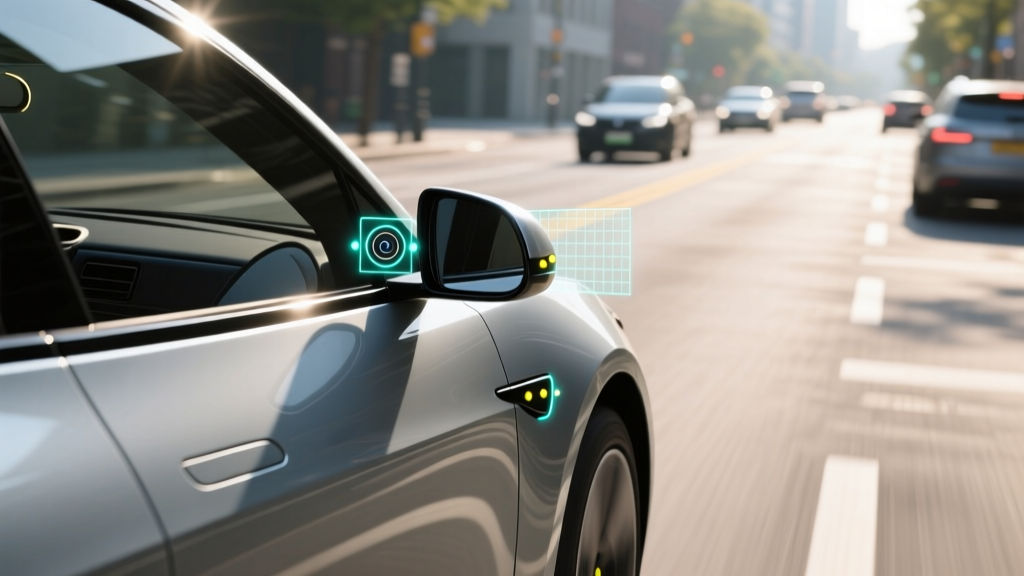
At its core, a blind spot warning (BSW) system monitors the areas alongside and slightly behind your vehicle—zones that are difficult or impossible to see using side mirrors alone. When a vehicle enters one of these zones, the system alerts the driver, typically through a visual indicator embedded in or near the side mirror, an audible chime, or a haptic vibration in the steering wheel or seat.
Most systems activate above a minimum speed threshold—commonly around 10 to 20 mph—to avoid nuisance alerts in parking lots or stop-and-go traffic. Many modern implementations also include Rear Cross-Traffic Alert (RCTA), which scans laterally behind the vehicle when reversing out of a parking space, and Blind Spot Intervention, which can apply subtle steering torque or selective braking to prevent a lane change if a vehicle is detected in the blind zone.
| Feature Tier | Alert Type | Intervention | Rear Cross-Traffic | Typical Detection Range |
|---|---|---|---|---|
| Basic BSW | Visual (mirror icon) | None | No | ~10–15 ft lateral, 30 ft rear |
| BSW + RCTA | Visual + audible | None | Yes | ~15 ft lateral, 65 ft rear |
| BSW + Intervention | Visual + audible + haptic | Steering torque or brake assist | Yes | ~15 ft lateral, 65 ft rear |
| BSW + Trailer Coverage | All of the above | Extended detection for towing | Yes | Extended lateral/rear range |
The technology relies on two primary sensor types: radar and ultrasonic sensors. Radar-based systems, which are far more common in modern EVs, use 24 GHz or 77 GHz millimeter-wave radar modules mounted behind the rear bumper fascia on each side of the vehicle. These radar units emit electromagnetic waves and measure the reflected signals to determine the distance, speed, and direction of nearby objects. Some premium systems supplement radar with side-rear cameras, which can provide a live video feed of the blind zone on the infotainment screen when the turn signal is activated—a feature Honda calls LaneWatch (camera-based) and Hyundai calls Blind-Spot View Monitor.
SAE Automation Level: This Is Not Self-Driving
SAE Level 2 — Driver Assistance, Not Autonomy. Blind spot warning is classified as an SAE Level 1 feature (single-axis support: warning only) or Level 2 when combined with steering intervention. At no point does the system drive the vehicle for you. The driver must remain fully engaged—hands on the wheel, eyes on the road, and responsible for all lane-change decisions. Even vehicles equipped with advanced suites like Tesla's Autopilot, Ford's BlueCruise, or GM's Super Cruise remain Level 2 systems that require continuous driver supervision. Only Level 4 robotaxi services like Waymo operate without a human driver in defined operational domains.
This distinction matters because marketing language around "driver-assist" and "smart safety" can create a false sense of security. A blind spot warning system is a backup to your own visual checks, not a replacement for them. The Insurance Institute for Highway Safety (IIHS) has found that while BSW systems reduce lane-change crashes by approximately 14%, drivers who over-rely on the alerts and skip shoulder checks remain at elevated risk—particularly for motorcycles, bicycles, and fast-approaching vehicles that may enter the detection zone too quickly for the system to process.
How Major EV Brands Name and Package Blind Spot Features
One of the biggest sources of confusion is that every automaker uses different branding for essentially similar technology. Here's how the major EV manufacturers label and distribute blind spot warning across their lineups:
| Brand | Feature Name | Standard or Optional | Intervention Included? |
|---|---|---|---|
| Tesla | Blind Spot Warning / Blind Spot Camera | Standard on all models | No (alert only); camera view on display |
| Hyundai / Kia / Genesis | Blind-Spot Collision-Avoidance Assist (BCA) | Standard on most EV trims (Ioniq 5, EV6, GV60) | Yes — steering + brake intervention |
| Ford | BLIS (Blind Spot Information System) with Cross-Traffic Alert | Standard on Mustang Mach-E, F-150 Lightning Lariat+ | Yes on higher trims |
| Chevrolet / GMC | Side Blind Zone Alert / Rear Cross Traffic Alert | Standard on Equinox EV 2LT+, Blazer EV, Silverado EV | Yes (Safety Alert Seat haptic) |
| Rivian | Blind Spot Monitoring | Standard on R1T and R1S (all trims) | Yes — steering nudge |
| BMW | Active Blind Spot Detection | Standard on i4, iX, i7 | Yes — steering correction |
| Mercedes-Benz | Active Blind Spot Assist | Standard on EQE, EQS; part of Driver Assistance Package on EQB | Yes — brake intervention + exit warning |
| Volkswagen | Side Assist / Rear Traffic Alert | Standard on ID.4 Pro and above | Yes on Pro S Plus and above |
A notable trend in 2025–2026: most mainstream EV makers have moved blind spot warning to standard equipment on mid and upper trims, whereas it was previously locked behind premium packages. Tesla includes it on every vehicle as part of its base Autopilot suite. However, the intervention layer—where the car actively resists a lane change—remains trim-dependent at several brands. Always verify the specific trim's equipment list, as a base-model Ioniq 5 SE may differ from the SEL or Limited in intervention capability.
Real-World Limitations: Where Blind Spot Systems Fall Short
What a Blind Spot Warning System Does NOT Do:
- It does not see motorcycles, bicycles, or pedestrians reliably. Radar cross-sections for two-wheeled and small-profile objects are significantly smaller than for cars and trucks. Detection is inconsistent.
- It does not work in heavy rain, snow, or ice. Radar modules behind the rear bumper can be obstructed by road grime, snow buildup, or ice accumulation. The system will typically display a "sensor blocked" warning and disable itself.
- It does not detect vehicles approaching at very high relative speeds. A car closing rapidly from several lanes over may enter the detection zone and pass through it faster than the system can process and alert.
- It does not monitor more than one adjacent lane. If you're planning a two-lane merge, the system only covers the immediately adjacent lane on each side.
- It does not replace shoulder checks. The detection zone has edges. A vehicle partially overlapping the zone boundary may not trigger an alert.
- It does not function below the speed threshold. At low speeds (typically under 10–20 mph), the system is inactive to prevent nuisance alerts.
In real-world testing across multiple EV platforms, we've observed several consistent edge cases:
Guardrails and concrete barriers on elevated highways can occasionally trigger false positives, particularly on curved road sections where the radar interprets the barrier as a vehicle in the adjacent lane. This is more common on 24 GHz radar systems than on the newer 77 GHz units.
Trailer towing extends the vehicle's length substantially, and most standard BSW systems are calibrated for the vehicle's normal dimensions. Ford's F-150 Lightning and Rivian's R1T offer trailer-aware blind spot modes that extend the detection zone, but these must be manually activated through the infotainment system after entering the trailer's length.
Cold-weather performance degrades when rear bumper sensors accumulate ice or wet snow. During winter testing in a Hyundai Ioniq 5 at 18°F with road salt spray, the BCA system disabled itself after approximately 40 minutes of highway driving until the sensor area was manually cleared. This is a known limitation documented in owner's manuals but frequently surprises new EV owners.
Cost: What You'll Pay for Blind Spot Protection
| Brand | Cost Model | Price | Subscription Required? |
|---|---|---|---|
| Tesla | Included with vehicle | $0 additional (part of base Autopilot) | No |
| Hyundai / Kia | Included in trim | $0 additional (standard on SEL and above) | No |
| Ford | Included in trim or package | $0 on Lariat+; part of ~$1,200 Co-Pilot360 Assist 2.0 package on Select | No |
| Chevrolet | Included in trim | $0 on 2LT and above | No |
| BMW | Included or package | Standard on i4/iX; part of ~$1,700 Driving Assistance Pro on some configs | No |
| Mercedes-Benz | Included or package | Standard on EQE/EQS; ~$1,250 Driver Assistance Package on EQB | No |
| Volkswagen | Included in trim | $0 on Pro S and above | No |
Unlike features such as Tesla's Full Self-Driving (Supervised) capability, which costs $8,000 as a one-time purchase or $99/month as a subscription, blind spot warning is almost universally a one-time included cost bundled into the vehicle's trim pricing. No major automaker currently charges a recurring subscription specifically for blind spot monitoring. The feature is either standard on a given trim or part of a one-time optional safety package purchased at the time of vehicle order.
This makes blind spot warning one of the most accessible ADAS features from a cost perspective. If you're cross-shopping EV trims, the presence or absence of BSW should be a line-item comparison on the spec sheet—not a factor that adds thousands to the purchase price.
Blind Spot Warning vs. Competing ADAS Features
Blind spot warning is one component of a broader ADAS suite. Understanding how it relates to other features helps clarify its role:
- Lane Keeping Assist (LKA): Monitors lane markings and applies steering correction if you drift without signaling. BSW monitors adjacent vehicles. They're complementary—LKA prevents unintentional lane departure; BSW warns about occupied lanes.
- Rear Cross-Traffic Alert (RCTA): Often bundled with BSW but operates only in reverse, scanning laterally behind the vehicle. Critical for backing out of perpendicular parking spaces.
- Automatic Emergency Steering: A higher-tier feature (found in Tesla, Mercedes, and some Hyundai/Kia models) that can actively steer the vehicle back into its lane if a blind spot collision is imminent. This is the intervention layer beyond simple warning.
- Surround-View Camera: Uses multiple cameras to create a 360° bird's-eye view. Helpful at low speeds but does not replace radar-based BSW at highway speeds.
The National Highway Traffic Safety Administration (NHTSA) categorizes blind spot warning under its broader "crash avoidance technologies" umbrella and has noted that the combination of BSW, lane departure warning, and forward collision warning together addresses the three most common crash scenarios. For EV buyers prioritizing safety, a vehicle with all three features is the recommended baseline.
Which EVs Offer the Best Blind Spot Systems in 2025–2026?
Based on sensor quality, detection range, intervention capability, and standard-equipment availability, here's how we rank the standout implementations:
Hyundai / Kia / Genesis (BCA + Blind-Spot View Monitor): The combination of radar-based intervention and the camera-based blind spot view that projects onto the instrument cluster when signaling is among the most comprehensive available. Standard on Ioniq 5 SEL and above, EV6 Wind and above, and all Genesis GV60 trims. The camera feed is genuinely useful in heavy rain where mirror visibility is poor.
Mercedes-Benz (Active Blind Spot Assist with Exit Warning): Beyond standard driving alerts, the Mercedes system includes an exit warning that alerts occupants if they attempt to open a door into the path of an approaching cyclist or vehicle—a feature particularly valuable in urban environments. Standard on the EQE and EQS sedans and SUVs.
Ford (BLIS with Trailer Coverage on F-150 Lightning): For truck buyers who tow, the Lightning's ability to extend blind spot monitoring for trailer length is a practical differentiator that most competing electric trucks don't yet match.
Tesla (Blind Spot Camera + Warning): While Tesla lacks active intervention (no steering nudge to prevent a lane change), the camera-based blind spot view that appears on the center display when signaling is useful, and the system's integration with Autopilot's lane-change logic is well-executed. Standard on all Model 3, Model Y, Model S, and Model X vehicles.
Frequently Asked Questions
Can I add a blind spot warning system to an EV that didn't come with one?
Aftermarket blind spot monitoring kits exist (typically $300–$700 installed), but they use ultrasonic sensors rather than the radar-based systems OEMs install, and they lack integration with the vehicle's steering, braking, and display systems. We recommend choosing a trim with factory BSW rather than relying on aftermarket solutions, which tend to have higher false-positive rates and no intervention capability.
Does blind spot warning drain the EV battery?
The power draw from radar modules and associated computing is negligible—typically under 10 watts combined. Over a full day of driving, this represents less than 0.05 kWh, which is imperceptible against a 60–100 kWh traction battery. BSW has no meaningful impact on your EV's range.
Is blind spot warning required by law?
As of 2026, there is no U.S. federal mandate requiring blind spot warning on passenger vehicles. However, the IIHS requires BSW as part of its TOP SAFETY PICK+ criteria, which incentivizes automakers to include it on higher-volume trims. The Euro NCAP protocol also rewards BSW in its safety scoring.
Why does my blind spot warning keep going off when there's no car next to me?
False positives are most commonly caused by guardrails on tight highway curves, metal drainage grates at specific angles, snow or ice buildup on the rear bumper sensors, or road debris. If false alerts persist in clear conditions, the radar modules may need recalibration—typically covered under the vehicle's 3-year/36,000-mile bumper-to-bumper warranty or the 5-year/60,000-mile powertrain and safety-system warranty that most EV manufacturers provide.
Does Tesla's blind spot system work differently from other brands?
Tesla relies on its camera-based Tesla Vision system (no radar on current-production vehicles) for blind spot detection, whereas most competitors use dedicated rear-corner radar modules. Tesla's approach provides the visual camera feed on the center display but has historically been more susceptible to degradation in heavy rain, fog, and low-light conditions compared to radar. The trade-off is fewer hardware components and seamless integration with Autopilot's lane-change decision logic.
Blind spot warning is a mature, well-proven ADAS feature that belongs on every EV buyer's must-have list. It reduces lane-change collisions, eases highway driving stress, and costs nothing additional on most mid-level trims. But it remains a Level 1–2 assist feature: a supplement to, not a substitute for, an alert driver performing proper mirror checks and shoulder glances. Know what your system can detect, know where it goes blind, and use it as the safety net it was designed to be.