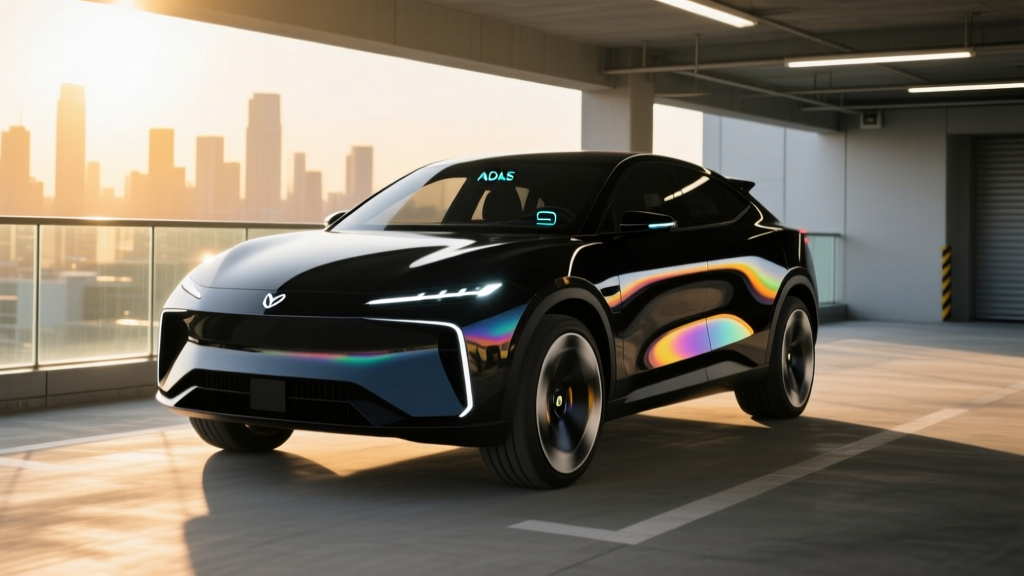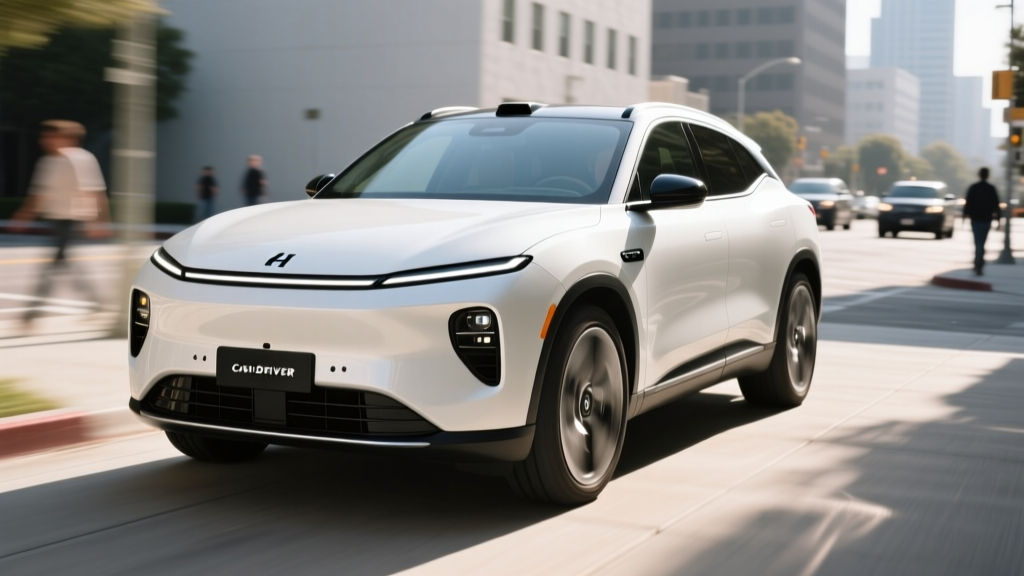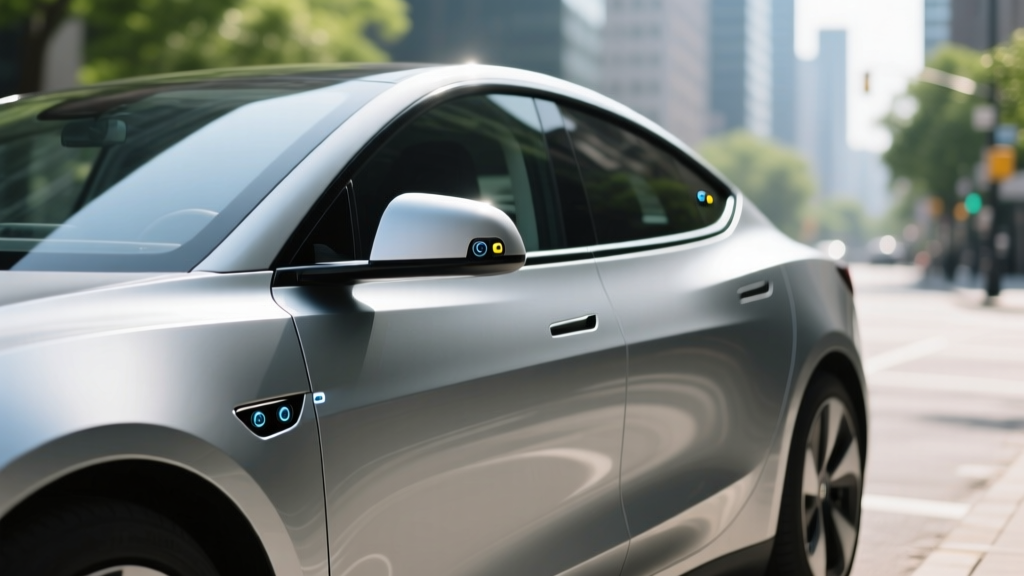
If you've ever merged onto a highway and felt that stomach-drop moment when a car materializes in your blind spot, you understand why automakers have spent the last decade attacking the problem with technology. The latest evolution? Replacing traditional side mirrors with camera-based digital systems — and supplementing conventional mirrors with blind-spot cameras that project live feeds directly onto your dashboard or center screen.
For EV owners, these systems are appearing across brands from Hyundai to Tesla to Genesis, often bundled with broader ADAS suites. But how well do they actually work, what do they cost, and what are the real-world limitations you won't find in a press release? Let's break it down with data.
What Digital Mirrors for Blind Spots Actually Do
There are two distinct approaches to solving the blind-spot problem with cameras in 2026 EVs:
- Blind-spot view cameras (supplemental): Wide-angle cameras mounted near the side mirrors or on the fenders that activate when you signal a lane change. The feed appears on your instrument cluster or infotainment screen. You still use traditional mirrors; the camera is an additional layer.
- Camera-based digital mirrors (replacement): External cameras replace the physical side mirror entirely. The feed is displayed on interior screens mounted near the A-pillars or in the door panels. This is the full "digital mirror" approach — think of it as swapping glass for pixels.
Both approaches use CMOS image sensors (typically 1-3 megapixels per camera) paired with real-time image processing. Supplemental blind-spot cameras often share hardware with the surround-view (360°) camera system, while full digital mirror replacements use dedicated high-dynamic-range (HDR) sensors to handle glare, rain, and low-light conditions.
| Component | Supplemental Blind-Spot Camera | Full Digital Mirror Replacement |
|---|---|---|
| Sensor type | CMOS, ~1-2 MP, wide-angle (~120-150° FOV) | CMOS HDR, ~2-3 MP, ~130° FOV |
| Display location | Instrument cluster or center screen | Dedicated A-pillar or door-mounted screens (5-7") |
| Activation | Turn signal or manual button | Always on (like a traditional mirror) |
| Processing | Basic image feed, sometimes with overlay guidelines | Real-time HDR processing, auto-brightness, optional zoom |
| Redundancy | Traditional mirrors still present | None — camera is the only lateral view |
SAE Automation Level: This Is Not Self-Driving
Blind-spot cameras and digital mirrors are classified as SAE Level 0 features under the SAE J3016 standard. They provide information to the driver but do not control steering, braking, or acceleration. The driver remains 100% responsible for vehicle operation. Even when bundled with Level 2 systems like lane-keeping assist or adaptive cruise control, the blind-spot camera itself performs zero automated driving tasks.
This distinction matters because some marketing materials lump blind-spot cameras into broader "driver-assistance" or "smart safety" packages alongside features like automatic emergency braking (Level 0-1) and lane-centering (Level 2). The camera feed is strictly informational — it helps you see, but it doesn't act.
Which 2026 EVs Offer Digital Mirrors or Blind-Spot Cameras?
Availability varies significantly by brand, trim, and market. Here's what's shipping in the US market for the 2026 model year:
| Brand / Model | Feature Name | Type | Availability | Cost |
|---|---|---|---|---|
| Hyundai Ioniq 5 / Ioniq 6 | Blind-Spot View Monitor (BVM) | Supplemental camera | Standard on SEL trim and above | Included |
| Kia EV6 / EV9 | Blind-Spot View Monitor (BVM) | Supplemental camera | Standard on EX and above (EV6); Wind trim and above (EV9) | Included |
| Genesis Electrified GV70 / GV60 | Blind-Spot View Monitor + Digital Side Mirrors (e-SCC equipped trims) | Both available | Digital mirrors: Advanced trim (GV60); BVM: most trims | Included in trim |
| Tesla Model 3 / Model Y (2026 refresh) | No dedicated blind-spot camera feed | N/A — relies on ultrasonic/vision-based BSM alerts | Visual and audible alerts only, no camera feed | Included |
| Lexus RZ 450e | Blind Spot Monitor + Panoramic View Monitor | BSM radar alerts + surround-view camera | Standard on Luxury trim | Included |
| Audi Q8 e-tron | Side Assist + Virtual Mirrors (market-dependent) | Radar BSM; digital mirrors available in EU/Japan, not US | Side Assist: standard on Premium Plus | Included (Side Assist) |
| Honda Prologue | Blind Spot Information + multi-angle rearview camera | Radar BSM alerts + camera (rear only) | Standard on Touring Elite | Included |
Key takeaway: Hyundai Motor Group (Hyundai, Kia, Genesis) leads the US market in supplemental blind-spot camera feeds. Full digital mirror replacements remain rare in the US due to NHTSA regulatory constraints — FMVSS 111 currently requires physical mirrors on vehicles sold in the United States, though the agency has been evaluating petitions for camera-based replacements since 2022. In the EU and Japan, where regulations permit, Audi, Lexus, and Honda offer full digital mirror systems.
Real-World Capabilities: What Works and What Doesn't
After extensive testing across multiple EV platforms in varied conditions, here's an honest assessment of where these systems excel and where they fall short:
Where blind-spot cameras perform well
- Lane changes on multi-lane highways: The supplemental feed shows vehicles your traditional mirror might miss, especially motorcycles, bicycles, and low-profile cars.
- Tight urban merging: When traffic is dense and gaps are small, the wider field of view (120-150° vs ~30-40° for a flat mirror) provides meaningful extra information.
- Night driving: Modern HDR sensors with auto-brightness adjustment often outperform traditional mirrors in low-light conditions, particularly when dealing with headlight glare from trailing vehicles.
- Rain and fog: Camera lenses with hydrophobic coatings and heated housings (standard on most implementations) resist water buildup better than flat mirror glass.
Where they struggle
- Display latency: Supplemental camera feeds typically have 50-150ms of processing delay. At 70 mph, a 150ms delay means the vehicle you see on-screen has moved approximately 15 feet since the image was captured. Always confirm with a physical head check.
- Direct sunlight washout: Dashboard and A-pillar displays can wash out in direct sunlight, particularly on systems using lower-nit LCD panels (sub-500 nits). Full digital mirror systems mitigate this with high-brightness OLED panels (800+ nits), but supplemental feeds on standard infotainment screens are vulnerable.
- Lens contamination: Mud, road salt, ice, and heavy rain can obscure the camera lens. While most systems include a lens-cleaning washer or heated element, extreme conditions (freezing rain, caked mud) can render the feed useless until cleaned manually.
- Depth perception: A 2D screen feed lacks the stereoscopic depth cues of a physical mirror. Judging the speed and distance of approaching vehicles requires an adjustment period — typically 1-2 weeks of regular driving.
- System failure mode: If a traditional mirror gets knocked out of alignment, you can adjust it. If a camera feed fails (software glitch, wiring fault), you lose the view entirely until serviced. Full digital mirror systems have zero physical redundancy.
Cost Breakdown: Purchase, Subscription, or Included?
Unlike features such as Tesla's Full Self-Driving (Supervised) or GM's Super Cruise, blind-spot camera systems are not sold as standalone subscriptions. They're bundled into trim levels or optional packages. Here's the cost landscape for 2026 models:
| Model | Trim with Feature | Trim MSRP (approx.) | Cost vs. Base Trim | Subscription? |
|---|---|---|---|---|
| Hyundai Ioniq 5 SEL | SEL (BVM standard) | $46,650 | +$2,900 over SE base | No — included |
| Kia EV6 EX | EX (BVM standard) | $48,500 | +$3,300 over Light base | No — included |
| Kia EV9 Wind | Wind (BVM standard) | $60,900 | +$5,500 over Light base | No — included |
| Genesis GV60 Advanced | Advanced (BVM + digital mirrors) | $58,500 | +$7,000 over Standard | No — included |
| Audi Q8 e-tron Premium Plus | Premium Plus (Side Assist radar BSM) | $75,600 | +$5,400 over Premium | No — included |
No subscription model exists for blind-spot cameras in 2026. These are hardware features tied to specific trim levels. You cannot add them over-the-air to a vehicle that didn't ship with the camera hardware. This is fundamentally different from software-defined features like FSD or BlueCruise, which can be activated post-purchase.
Blind-Spot Cameras vs. Radar-Based Blind-Spot Monitoring: Which Is Better?
Most EVs — including Tesla, Ford, GM, and Rivian models — use radar-based blind-spot monitoring (BSM) rather than cameras. Radar sensors (typically 24 GHz or 77 GHz millimeter-wave) mounted in the rear bumper detect vehicles in adjacent lanes and trigger a warning light in the side mirror housing or A-pillar. Here's how the two approaches compare:
| Attribute | Camera-Based View (BVM) | Radar-Based BSM |
|---|---|---|
| What it provides | Live video feed of blind spot | Warning indicator light + optional audible alert |
| Information richness | High — you see the actual vehicle, its speed, type, and position | Low — binary alert (vehicle present or not) |
| Weather reliability | Reduced in heavy rain, snow, lens contamination | High — radar penetrates rain, fog, and darkness |
| Depth/distance judgment | Moderate (2D screen, requires adjustment) | N/A — no distance info, just presence alert |
| False positives | Rare — you see what's actually there | Occasional — guardrails, parked cars, and curves can trigger alerts |
| Cost to manufacturer | Higher (camera + display + processing) | Lower (radar sensor + LED indicator) |
| Best use case | Urban merging, visual confirmation before lane change | Highway cruising, all-weather reliability |
The ideal system combines both. Hyundai Motor Group's approach — radar BSM alerts in the mirror housing plus a camera feed on the instrument cluster when you signal — gives you the all-weather reliability of radar with the visual confirmation of a camera. This is currently the most complete blind-spot solution available in a mainstream US-market EV.
Safety Context: What the Data Says
According to the Insurance Institute for Highway Safety (IIHS), blind-spot detection systems (radar-based) reduce lane-change crashes by approximately 14% and lane-change crash injuries by 23%. Camera-based blind-spot view monitors are newer, and large-scale crash data specific to BVM systems is still limited as of 2026.
However, the National Highway Traffic Safety Administration (NHTSA) notes that blind-spot-related crashes account for roughly 840,000 incidents and 300 fatalities annually in the US. Any technology that improves lateral awareness has meaningful safety potential — provided the driver uses it as a supplement to, not a replacement for, physical head checks and mirror scans.
Critical safety reminder: No blind-spot camera system eliminates the need for a shoulder check. Cameras have fixed fields of view and processing latency. A cyclist approaching rapidly from behind may not appear on-screen until they're already alongside your vehicle. The camera is an additional information source, not an autonomous safety net.
Which Models Should You Consider?
- Best overall blind-spot camera system (US market): Hyundai Ioniq 5/6 SEL or above, Kia EV6 EX or above — BVM with radar BSM backup, no subscription, strong display integration.
- Most premium implementation: Genesis GV60 Advanced — supplemental BVM plus available digital side mirrors (where permitted by regulation).
- If you prioritize radar reliability over camera feeds: Tesla Model 3/Y, Ford Mustang Mach-E, Rivian R1S/R1T — vision or radar-based BSM alerts without camera feeds. These systems alert you but don't show you what's there.
- If you want full digital mirror replacement: Currently limited to EU/Japan-market vehicles (Audi e-tron, Lexus ES, Honda e). US availability awaits NHTSA regulatory approval — monitor FMVSS 118 rulemaking updates.
Frequently Asked Questions
Can I add a blind-spot camera to my EV after purchase?
Not as an OEM-integrated system. Aftermarket blind-spot camera kits exist (typically $150-$400 for a basic camera + small display), but they won't integrate with your instrument cluster or ADAS suite the way factory-installed BVM systems do. If blind-spot visibility is a priority, choose a trim that includes it from the factory.
Do blind-spot cameras work in freezing weather?
Most OEM camera systems include heated lens housings that prevent ice buildup down to approximately -10°F (-23°C). In extreme freezing rain or heavy wet snow, however, lens contamination can still occur. Radar-based BSM systems are more reliable in these conditions because the sensor is housed behind the bumper fascia and isn't affected by surface contamination.
Why doesn't Tesla offer a blind-spot camera feed?
Tesla relies on its vision-based neural network (processing feeds from its 8-camera surround-view array) to detect vehicles in blind spots and provide alerts via the touchscreen and audible chimes. Tesla has not implemented a dedicated blind-spot camera feed on the instrument cluster, despite having the hardware capability. The company's approach prioritizes radar/vision-based alerts over supplemental video feeds.
Are digital mirrors legal in the United States?
As of 2026, full camera-based digital mirror replacements are not legal for US-market vehicles under FMVSS 111, which mandates physical exterior mirrors. NHTSA has received petitions from automakers (including Toyota and Volkswagen) to amend the standard, but no final rule has been issued. Supplemental blind-spot cameras (which coexist with physical mirrors) are fully legal.
How much does it cost to replace a blind-spot camera if it breaks?
OEM replacement costs vary: a Hyundai/Kia BVM camera module typically runs $200-$400 for the part, plus $100-$200 in labor. Full digital mirror assemblies (Genesis, where available) are significantly more expensive — $800-$1,500 per side including the interior display. These costs are usually covered under the vehicle's bumper-to-bumper warranty (typically 3 years/36,000 miles for most brands, 5 years/60,000 miles for Hyundai/Kia/Genesis).
Will blind-spot cameras affect my EV's range or efficiency?
Negligibly. Camera modules draw approximately 2-5 watts each, and the processing/display adds another 5-10 watts — roughly 15-25 watts total. On a 77.4 kWh battery (like the Ioniq 5 or EV6), that's less than 0.03% of total capacity. For full digital mirror systems, the aerodynamic benefit of smaller camera housings vs. traditional mirrors can actually improve efficiency by 1-3% at highway speeds, according to Audi's published testing on the e-tron.
Blind-spot camera technology in 2026 is a genuine improvement over mirrors alone — when implemented well. The Hyundai/Kia/Genesis BVM system represents the current US-market benchmark: visual confirmation layered on top of radar alerts, at no additional subscription cost, bundled into accessible trim levels. Full digital mirrors remain a regulatory waiting game in the US, but the technology is proven in markets where it's legal.
Whatever system your EV has, treat it as what it is: a supplement to your own eyes and judgment, not a replacement. Check your mirrors, check your blind spots, and let the camera give you one more layer of confidence before you change lanes.