Introduction to Automated Parking Systems
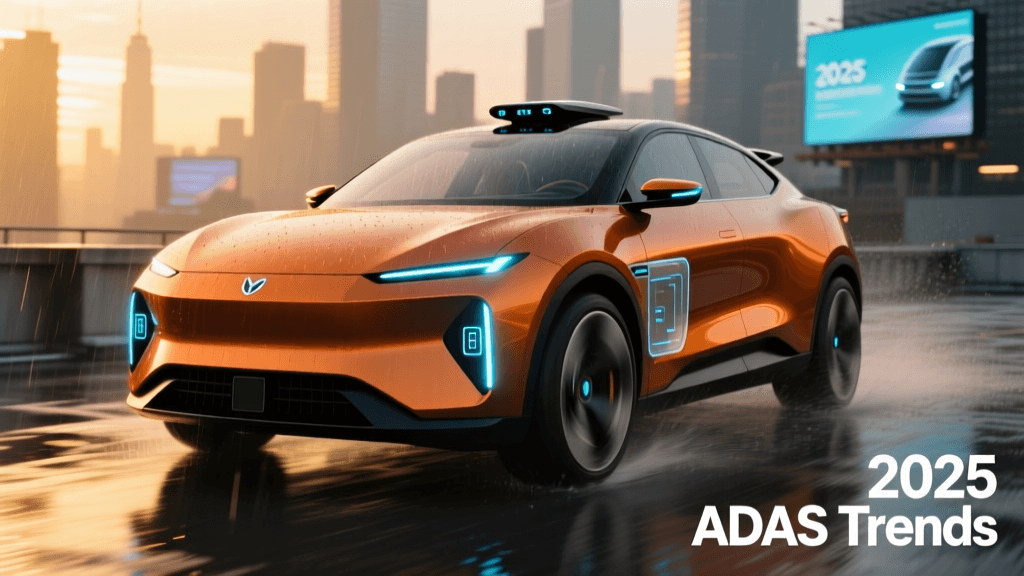
The evolution of parking assistance has transformed one of the most dreaded aspects of driving into a showcase of advanced robotics and artificial intelligence. What began in the early 2000s as simple ultrasonic proximity beepers has evolved into sophisticated Automated Parking Systems (APS) capable of executing complex multi-point turns, navigating tight multi-level garages, and even summoning vehicles across parking lots. According to NHTSA's guidelines on ADAS, these systems represent a critical stepping stone toward higher levels of vehicle autonomy, blending lateral steering control with longitudinal throttle and braking management.
However, not all automated parking systems are created equal. The underlying sensor architectures, processing algorithms, and operational design domains (ODDs) vary wildly between automakers. This technology deep dive explores the hardware and software that enable automated parking, compares the leading brand implementations, and outlines the real-world limitations drivers must understand.
The Physics of Parking: Sensor Fusion Explained
To park a vehicle autonomously, the onboard computer must construct a real-time, high-fidelity 3D map of its immediate surroundings. This requires identifying static obstacles (pillars, walls, curbs), dynamic obstacles (pedestrians, shopping carts), and semantic boundaries (painted lines, paving transitions). Automakers achieve this through sensor fusion, combining data from multiple distinct hardware arrays.
Ultrasonic Sensors: The Proximity Workhorses
Ultrasonic sensors remain the backbone of most parking assist systems. Mounted in the front and rear bumpers, these transducers emit high-frequency sound waves (typically around 40 kHz) and measure the time-of-flight for the echo to return. By calculating the speed of sound in the current air temperature, the system determines the distance to an object. While highly reliable for detecting solid walls and other vehicles within a 2 to 5-meter range, ultrasonic sensors struggle with sound-absorbing materials, angled surfaces that deflect waves away from the receiver, and low-lying objects like parking blocks or curbs.
Computer Vision and Camera Arrays
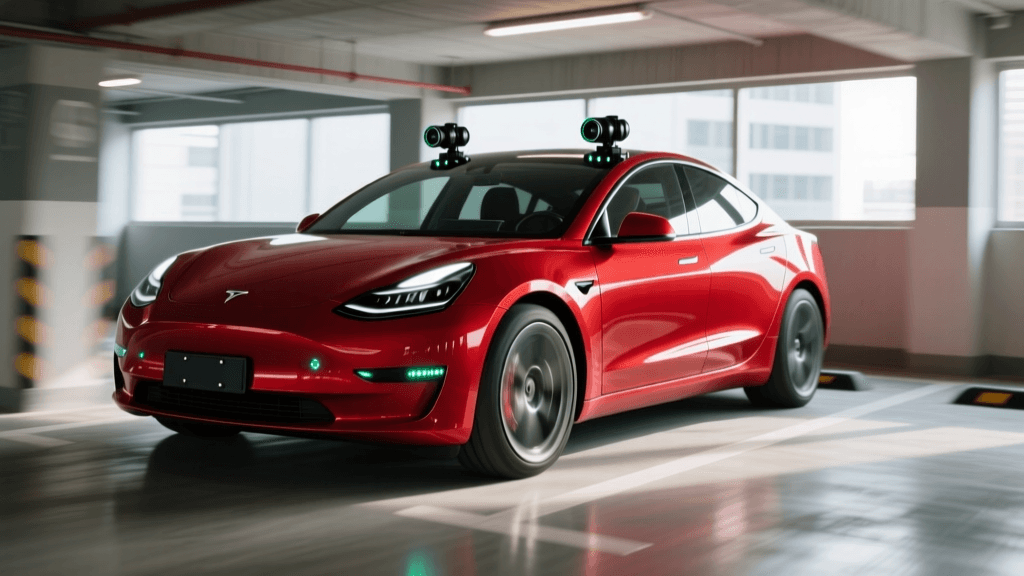
Modern systems rely heavily on surround-view camera arrays, typically utilizing four to six wide-angle (fish-eye) lenses. The software stitches these feeds together to create a top-down 'bird's-eye' view. More importantly, Convolutional Neural Networks (CNNs) process these video feeds in real-time to perform semantic segmentation. The AI is trained to recognize the specific pixel patterns of painted parking lines, the texture of grass versus asphalt, and the structural geometry of parking garage pillars. Vision systems excel at reading context but can be severely degraded by poor lighting, heavy rain, or muddy lenses.
LiDAR and Short-Range Radar
While long-range radar is reserved for Adaptive Cruise Control, short-range radar and LiDAR are increasingly used in premium automated parking suites. LiDAR (Light Detection and Ranging) fires thousands of laser pulses per second to generate a dense 3D point cloud of the environment. This allows the vehicle to detect the exact height and depth of a curb or the precise overhang of a concrete pillar, providing a layer of redundancy that cameras and ultrasonics cannot match in low-light conditions.
Brand Comparison: How Top Automakers Approach Automation
The philosophical differences in sensor reliance and software architecture lead to vastly different user experiences across major automotive brands.
Tesla: Vision-Only and Occupancy Networks
Tesla has famously abandoned ultrasonic sensors and LiDAR in favor of 'Tesla Vision,' a camera-only approach. For features like Smart Summon and the newer Actual Smart Summon, Tesla relies on an 'occupancy network.' Instead of identifying specific objects (like a shopping cart), the neural network divides the 3D space around the car into voxels (volumetric pixels) and calculates the probability of each voxel being occupied. While this allows the system to detect bizarre or irregular obstacles that traditional training data might miss, real-world performance has historically been plagued by hesitation, phantom braking, and jerky steering inputs in complex, unmapped parking lots.
BMW: Reversing Assistant and Remote Maneuvering
BMW takes a highly pragmatic, sensor-fused approach. Their Reversing Assistant is a standout feature that continuously records the last 50 meters of forward steering inputs at speeds under 22 mph. When activated, the car takes over steering and perfectly retraces its path in reverse, making it invaluable for navigating narrow, dead-end alleyways or tight garage ramps. Furthermore, BMW's Remote Parking Assistant allows users to stand outside the vehicle and use the key fob or smartphone app to guide the car straight into a tight space, relying on a robust network of ultrasonic sensors and surround cameras to prevent door dings.
Mercedes-Benz and Bosch: Level 4 Automated Valet Parking
The pinnacle of current parking technology is not entirely vehicle-dependent. Mercedes-Benz, in partnership with Bosch, has pioneered Automated Valet Parking (AVP). This is a Level 4 autonomous system that relies on Vehicle-to-Infrastructure (V2I) communication. Sensors and cameras installed in the ceiling of a smart parking garage map the environment and guide the vehicle to an empty spot. Because the infrastructure handles the heavy computational lifting and has a bird's-eye view free of blind spots, the car can navigate multi-story garages, avoid pedestrians, and park itself entirely without a driver inside or nearby.
Feature Comparison Matrix
| System Feature | Primary Sensors | Max Operational Range | Driver Presence | Top Implementations |
|---|---|---|---|---|
| Active Parking Assist | Ultrasonic, Cameras | Immediate proximity (5m) | Required (in cabin) | Ford, Hyundai, Kia |
| Remote Straight-Line Parking | Ultrasonic, Short-Range Radar | Smart Key range (~6m) | Outside vehicle | BMW, Hyundai RSPA |
| Memory / Reversing Assistant | Cameras, Ultrasonic, GPS | Up to 50 meters | Required (monitoring) | BMW, Porsche |
| Smart Summon (Lot Navigation) | Cameras (Vision-Only) | GPS / Cellular range | Outside vehicle | Tesla |
| Automated Valet (AVP) | Infrastructure V2I, LiDAR, Cameras | Entire smart garage | None required | Mercedes-Benz (Bosch) |
Real-World Limitations and Edge Cases
Despite the impressive marketing demonstrations, automated parking systems operate within strict limitations. The Insurance Institute for Highway Safety (IIHS) frequently notes that drivers must remain vigilant, as partial automation systems can fail when encountering edge cases. Common failure points include:
- Weather Interference: Heavy rain, snow accumulation on bumper sensors, or direct glare from low-hanging sun can blind camera and ultrasonic arrays, causing the system to abort the parking maneuver.
- Faded Infrastructure: Vision-based systems that rely on semantic line detection will struggle in older parking lots where painted boundaries have faded or been overlaid with conflicting tar seams.
- Complex Geometry: Mechanical parking lifts, chain-link fences, and sloped drainage gutters often confuse ultrasonic sensors, leading to premature braking or failure to recognize a valid parking space.
- Latency in Summoning: Systems that rely on cloud processing or smartphone GPS for 'summon' features often suffer from latency, making the vehicle's movements hesitant and unpredictable in busy pedestrian zones.
The Future: V2X and Smart Infrastructure
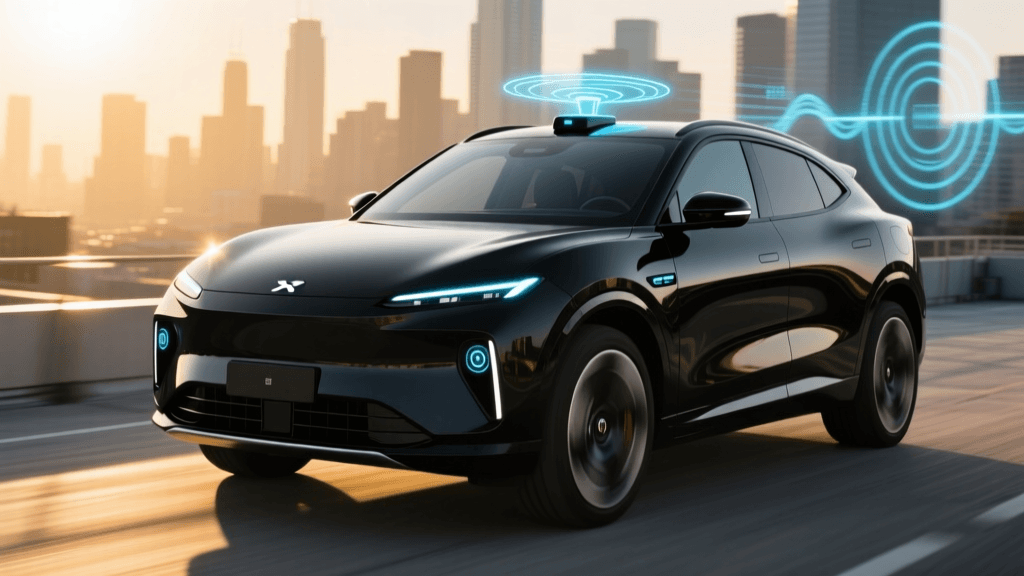
The future of automated parking lies not in equipping every car with expensive LiDAR arrays, but in smart infrastructure. Vehicle-to-Everything (V2X) communication will allow parking garages, city streets, and charging stations to broadcast localized maps and real-time occupancy data directly to the vehicle's onboard computer. As 5G networks expand and municipal infrastructure upgrades, the burden of processing will shift from the vehicle to the environment, paving the way for ubiquitous, drop-off-and-go Level 4 autonomous valet services in urban centers worldwide.