Introduction to ADAS in Adverse Weather
Advanced Driver Assistance Systems (ADAS) have fundamentally transformed the modern driving experience, offering unprecedented levels of safety and convenience on clear, well-marked roads. Features like Automatic Emergency Braking (AEB), Adaptive Cruise Control (ACC), and Lane Keep Assist (LKA) rely on a sophisticated network of sensors to monitor the vehicle's surroundings. However, the reliability of these systems is heavily dependent on environmental conditions. When the weather turns severe, the very sensors designed to protect you can become blinded, confused, or completely disabled.
According to the National Highway Traffic Safety Administration (NHTSA), ADAS technologies are designed to assist drivers, not replace them, and their limitations are magnified in adverse weather. Understanding how rain, snow, and fog affect your vehicle's sensor suite is critical for maintaining safety. In this comprehensive guide, we break down the physics of ADAS sensors in bad weather, provide a feature-by-feature performance analysis, and share expert best practices for navigating winter conditions with a smart vehicle.
The Physics of ADAS Sensors in Adverse Weather
To understand why ADAS features struggle in bad weather, we must first examine the hardware. Modern vehicles utilize a fusion of optical cameras, radar, ultrasonic sensors, and occasionally LiDAR. Each technology interacts differently with precipitation and atmospheric obscurants.
Optical Cameras and Vision Systems
Cameras are the primary sensors for Lane Keep Assist, Traffic Sign Recognition, and pedestrian detection. They operate much like the human eye, requiring adequate light and high contrast to identify lane markings, vehicles, and obstacles. Heavy rain creates a visual barrier on the windshield and camera lenses, while fog scatters light, drastically reducing contrast. Snow accumulation on the windshield or the camera housing itself will completely blind the system, leading to immediate feature disengagement.
Radar and Millimeter-Wave Sensors
Radar is the backbone of Adaptive Cruise Control and Blind Spot Monitoring. Because radar uses radio waves rather than light, it is largely unaffected by fog and darkness. However, heavy rain and wet snow can cause radar waves to scatter or reflect off the water droplets in the air, a phenomenon known as 'attenuation.' Furthermore, if slush or ice physically covers the radar emitter—often located behind the front grille or emblem—the system will fail to detect objects ahead.
LiDAR and Ultrasonics
LiDAR (Light Detection and Ranging) uses laser pulses to create a 3D map of the environment. While highly accurate in clear conditions, LiDAR beams can be scattered by heavy rain or dense fog, creating 'noise' in the point cloud. Ultrasonic sensors, used primarily for low-speed parking assist, are easily confused by heavy rain hitting the bumpers, often resulting in false proximity alerts.
Feature-by-Feature Weather Performance Breakdown
Not all ADAS features are created equal when the weather deteriorates. The Insurance Institute for Highway Safety (IIHS) notes that system redundancy is key, but even multi-sensor setups have thresholds. Below is a structured breakdown of how core features perform in adverse conditions.
| ADAS Feature | Primary Sensor | Heavy Rain Performance | Snow and Fog Performance | Expert Recommendation |
|---|---|---|---|---|
| Adaptive Cruise Control (ACC) | Radar / Camera | Good | Moderate to Poor | Increase following distance to 4-5 seconds to account for radar lag and reduced braking traction. |
| Lane Keep Assist (LKA) | Optical Camera | Poor | Poor | Disengage in heavy rain or snow-covered roads; rely on manual steering as lane markers are obscured. |
| Automatic Emergency Braking (AEB) | Radar / Camera | Moderate | Poor | Do not rely on AEB in icy conditions; stopping distances exceed the system's predictive algorithms. |
| Blind Spot Monitoring (BSM) | Corner Radar | Good | Moderate | Keep rear bumper corners clear of snow and ice buildup to maintain cross-traffic alert functionality. |
| Traffic Sign Recognition | Optical Camera | Poor | Poor | Manually verify speed limits; cameras cannot read signs obscured by snow or heavy fog. |
Expert Tips and Best Practices for Bad Weather Driving
Driving a vehicle equipped with ADAS in winter weather requires a proactive approach. Relying on automation in a whiteout or torrential downpour is a recipe for disaster. Here are the industry best practices for managing your vehicle's smart features in adverse conditions.
1. Proactive Sensor Maintenance and Cleaning
Sensor occlusion is the number one cause of ADAS failure in winter. Before setting out, clear all snow and ice from the windshield, front grille, side mirrors, and rear bumper. Expert Tip: Use a soft microfiber cloth and an alcohol-based automotive glass cleaner to wipe the windshield area directly in front of the rearview mirror, where forward-facing cameras are typically housed. Never use a metal ice scraper near camera modules, as micro-scratches on the glass will permanently distort optical recognition algorithms.
2. Utilize Heated Sensor Housings
When shopping for a new EV or hybrid, prioritize vehicles equipped with heated radar emblems, heated side mirrors, and camera washer systems. In heavy highway slush, radar sensors can become clogged in as little as 10 to 15 miles. Activating your vehicle's defroster and heated sensor systems proactively—rather than waiting for the dashboard 'Sensor Blocked' warning—ensures continuous operation of your AEB and ACC systems.
3. Adjust Following Distances and System Aggressiveness
ADAS algorithms are generally calibrated for dry pavement. When you engage Adaptive Cruise Control in the rain or snow, the system maintains a set time gap, but it cannot account for the loss of tire traction on ice. If you are driving on slick surfaces, manually increase the ACC following distance to the maximum setting (usually 4 or 5 bars). This gives the radar more time to detect a decelerating vehicle and allows the anti-lock brakes more room to bring the car to a halt without sliding.
4. Know When to Disengage and Take Over
There is a critical threshold where ADAS becomes a liability rather than an asset. In conditions of heavy fog, whiteout snow, or standing water, optical cameras will fail to detect lane lines, leading to erratic steering inputs from Lane Centering systems. Furthermore, radar can experience 'phantom braking' when it misinterprets heavy precipitation or metallic debris in the road as a stationary obstacle. Best Practice: If visibility drops below 500 feet, or if the road is entirely covered in snow, manually disable Lane Keep Assist and ACC. Keep your hands on the wheel and your feet ready to brake.
How Top Brands Handle Weather Resilience
Different automakers utilize varying sensor architectures, which dictates how their specific ADAS suites handle bad weather. According to testing and reviews by Consumer Reports, system redundancy is the defining factor in weather resilience.
- Subaru EyeSight: Historically, Subaru's EyeSight system relied entirely on stereo cameras mounted near the rearview mirror. While excellent in clear weather, it was notorious for disabling itself in heavy fog or when the windshield wipers were on high speed. Newer generations of EyeSight now incorporate a supplementary wide-angle radar to maintain AEB functionality even when the cameras are blinded by snow or rain.
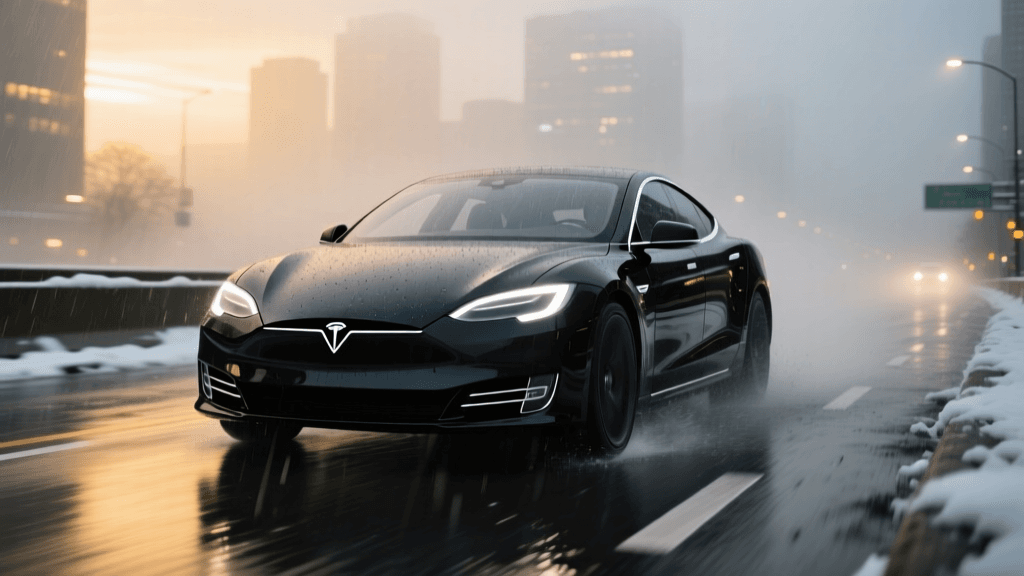
- Tesla Autopilot / FSD: Tesla's vision-only approach (having removed ultrasonic and radar sensors from newer models) makes it highly susceptible to weather. Heavy rain can cause the cameras to misinterpret shadows or water droplets, leading to sudden phantom braking on the highway. Tesla owners must remain exceptionally vigilant in stormy conditions and be prepared to override the system instantly.
- GM Super Cruise & Ford BlueCruise: These hands-free highway driving systems utilize a robust fusion of LiDAR-mapped data, radar, and high-definition cameras. Because they rely on pre-mapped GPS data to anticipate road curvature, they are slightly more resilient in light fog where lane lines might be temporarily obscured. However, both systems will issue a strict 'Take Over Immediately' warning and disengage if heavy snow obscures the driver monitoring camera or the forward-facing radar.
- Honda Sensing: Honda utilizes a combination of a front-mounted millimeter-wave radar and a windshield camera. The radar's placement behind the front emblem helps protect it from direct rain, but the system is programmed to be conservative; it will quickly disable Lane Keeping Assist if the camera detects that windshield wipers are operating at maximum speed, assuming visibility is compromised.
Conclusion
Advanced Driver Assistance Systems are marvels of modern engineering, but they are not infallible. Rain, snow, and fog exploit the physical limitations of cameras, radar, and LiDAR, often degrading performance when you need it most. By understanding how your specific vehicle's sensors interact with the environment, maintaining clean sensor housings, and knowing exactly when to take manual control, you can safely leverage ADAS technology year-round. Remember the golden rule of smart driving: ADAS is designed to assist a vigilant driver, not replace one. In adverse weather, your judgment remains the most critical safety feature on the road.