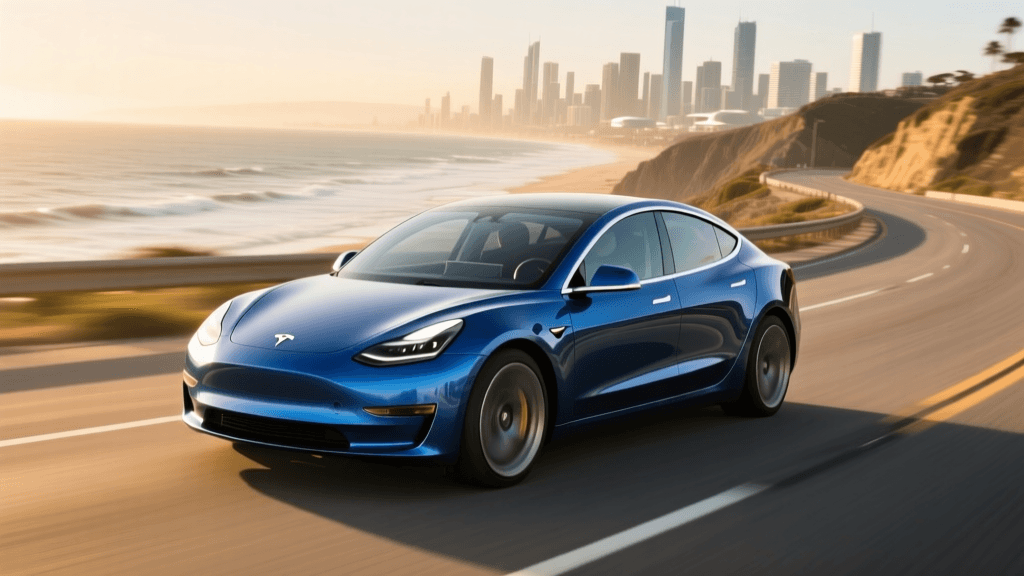
The Evolution: From FSD Beta to FSD (Supervised)
For years, Tesla owners and industry analysts alike have tracked the progress of the company's Full Self-Driving (FSD) software through its prolonged 'Beta' testing phase. However, in late 2023 and early 2024, Tesla quietly but significantly changed the nomenclature to 'FSD (Supervised).' This was not merely a marketing pivot; it represented a profound shift in Tesla's approach to autonomous driving, regulatory compliance, and liability. As we look toward the future of Advanced Driver Assistance Systems (ADAS), understanding the capability differences between the legacy FSD Beta and the current FSD (Supervised) architecture is crucial for buyers, investors, and automotive enthusiasts.
Core Capability Comparison: Supervised vs. Legacy Beta
The transition from legacy FSD Beta (primarily versions 10 through 11) to FSD (Supervised) (version 12 and beyond) marks the shift from heuristic-based programming to end-to-end neural networks. Below is a structured comparison of the two paradigms.
| Feature Category | Legacy FSD Beta (v11 and older) | FSD (Supervised) v12+ |
|---|---|---|
| AI Architecture | Hybrid: Neural nets combined with over 300,000 lines of C++ heuristic code. | End-to-End Neural Networks: AI handles perception and planning directly from camera inputs. |
| Urban Street Handling | Prone to phantom braking, abrupt lane changes, and rigid rule-following. | Human-like behavior, smoother lane negotiation, and better contextual understanding of complex intersections. |
| Driver Monitoring | Cabin camera monitoring with basic attention warnings. | Stricter, more granular cabin camera tracking; quicker disengagement penalties for inattention. |
| Ride Comfort | Often described as 'robotic' or 'jerky' during micro-adjustments. | Significantly improved longitudinal and lateral control, mimicking a seasoned human chauffeur. |
| Liability Status | SAE Level 2 (Driver fully responsible). | SAE Level 2 (Driver fully responsible, but 'Supervised' clarifies legal boundaries). |
The Technological Leap: End-to-End Neural Networks
The most significant differentiator between the legacy Beta and the Supervised era is the underlying software architecture. Legacy FSD Beta relied heavily on C++ code written by engineers to define rules. If a car encountered a construction zone, the code had explicit instructions on how to handle cones, barriers, and flaggers. However, the real world contains infinite edge cases that cannot be hardcoded.
FSD (Supervised) v12 introduced an 'end-to-end' neural network approach. Instead of engineers writing rules for every scenario, the AI was trained on millions of video clips of human driving. The neural network takes raw pixel data from the cameras and directly outputs steering, braking, and acceleration commands. This results in a system that can intuitively navigate complex, unmarked, or chaotic environments—such as navigating around a double-parked delivery truck on a narrow city street—without needing a specific line of code for that exact scenario.
Future Trends: Regulatory Scrutiny and Hardware Bottlenecks
As Tesla pushes closer to unsupervised autonomy, the regulatory landscape is tightening. According to the NHTSA's framework for Automated Driving Systems, manufacturers must prove that their systems can safely handle the dynamic driving task without human intervention. The renaming to 'Supervised' is Tesla's way of aligning with federal and international regulators, explicitly acknowledging that the driver is the ultimate fallback and liable party. This aligns with ongoing investigations into Autopilot and FSD crashes, forcing the industry to prioritize robust driver monitoring over mere steering wheel torque sensors.
Furthermore, the future of FSD is bottlenecked by hardware. Tesla's legacy Hardware 3 (HW3) computers are struggling to keep pace with the massive computational demands of end-to-end neural networks. The newer Hardware 4 (HW4 or AI4), featuring higher-resolution cameras and significantly more processing power, is becoming a hard requirement for the most advanced FSD (Supervised) features. This creates a fragmented fleet, where the future capabilities of the software will be strictly gated by the silicon installed on the assembly line.
Industry Outlook: Competitors in the Rearview Mirror
Tesla's vision-only, end-to-end approach stands in stark contrast to its competitors. Mercedes-Benz has taken a conservative, liability-accepting route with its Drive Pilot system. Drive Pilot is a certified SAE Level 3 system, but it is heavily geofenced, limited to specific highways, and restricted to speeds under 40 mph. However, when engaged, Mercedes-Benz assumes legal liability for the vehicle's actions.
Meanwhile, General Motors' Super Cruise and Ford's BlueCruise rely on a combination of LiDAR-mapped highways and robust infrared driver monitoring systems. According to research compiled on the IIHS advanced driver assistance topic page, systems that employ strict, multi-modal driver monitoring (like infrared eye-tracking) are vastly superior at preventing driver disengagement and misuse compared to systems that rely solely on steering wheel torque or basic cabin cameras.
The industry outlook suggests a bifurcation in the market: Tesla will continue to pursue a generalized, vision-based SAE Level 2 'Supervised' system that works anywhere, while legacy automakers will slowly expand geofenced, high-definition mapped SAE Level 3 systems where they can legally guarantee safety and accept liability.
Actionable Advice: Should You Purchase FSD Today?
For consumers navigating the EV and smart driving market, the transition from Beta to Supervised offers clear buying signals. Here is actionable advice for prospective and current Tesla owners:
- Verify Your Hardware: Before purchasing the $8,000 FSD package or the $99/month subscription, confirm your vehicle has HW4 (AI4). Vehicles manufactured after mid-2023 generally have this hardware. If you own an older HW3 vehicle, your experience with FSD (Supervised) will be capped, and future updates may eventually exclude your hardware entirely.
- Understand the Liability: Do not let the 'Supervised' branding or the smoothness of v12 lull you into complacency. You are operating an SAE Level 2 vehicle. You must maintain visual contact with the road and keep your hands near the wheel to satisfy the cabin camera's attention algorithms.
- Resale Value Considerations: Historically, FSD transfers poorly to second-hand buyers. With Tesla frequently altering the pricing model (shifting from a high upfront cost to a subscription model), purchasing the $8,000 lifetime package is rarely recouped in resale value. The monthly subscription is currently the most financially sound method to access the software.
- Monitor the 'Robotaxi' Pivot: Tesla's future valuation and software roadmap are heavily tied to its promised unsupervised 'Robotaxi' network. If you are buying a Tesla primarily as an investment in this future network, be aware that regulatory approval for a steering-wheel-less, unsupervised fleet remains years away, despite aggressive corporate timelines.
Conclusion
The shift from FSD Beta to FSD (Supervised) represents Tesla's maturation in the ADAS space. By abandoning the 'Beta' moniker and embracing end-to-end neural networks, Tesla has delivered a vastly superior, more human-like driving assistant. However, the 'Supervised' tag is a vital reminder of the technological and regulatory chasm that still separates SAE Level 2 assistance from true SAE Level 4 autonomy. As the industry moves forward, the battle between Tesla's generalized vision-based AI and the geofenced, sensor-fused approaches of legacy automakers will define the next decade of smart driving.