The Architecture Divide: Binocular Vision vs. Radio Waves
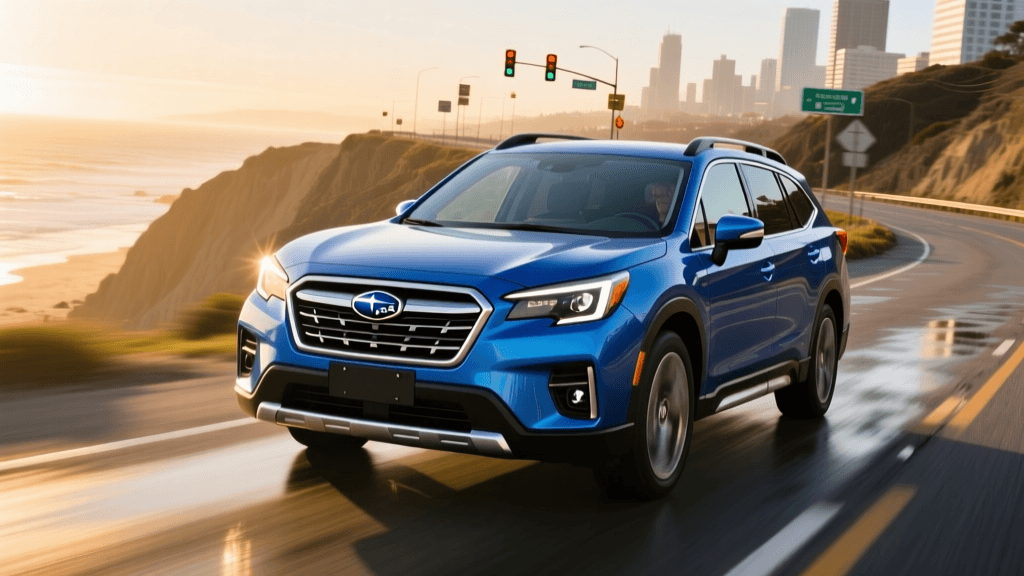
The automotive industry is currently locked in a technological arms race to perfect Advanced Driver Assistance Systems (ADAS). While the majority of automakers rely on a sensor fusion approach—combining monocular cameras with millimeter-wave radar or LiDAR—Subaru has historically charted a different path. The Subaru EyeSight system is built primarily around a color stereo camera array mounted behind the rearview mirror. This data-driven comparison analysis breaks down the engineering, real-world performance, and economic implications of Subaru’s stereo camera architecture versus the industry-standard millimeter-wave radar systems.
To understand the performance differences, we must first look at the underlying physics. Stereo cameras mimic human binocular vision. By capturing two slightly offset images simultaneously, the EyeSight system's processor calculates depth through parallax, generating a dense 3D disparity map of the environment. This allows for exceptional object classification and precise distance measurement at short to medium ranges. Conversely, millimeter-wave radar relies on Frequency Modulated Continuous Wave (FMCW) technology. It bounces radio waves off objects and measures the return time and Doppler shift. Radar excels at measuring relative velocity and operates independently of ambient light, but it struggles with low-resolution object classification and stationary object filtering.
Comparative Data: Sensor Capabilities and Limitations
When evaluating ADAS architectures, engineers weigh several critical variables. The table below outlines the fundamental data differences between Subaru's stereo camera approach and traditional millimeter-wave radar setups.
| Feature | Stereo Camera (Subaru EyeSight) | Millimeter-Wave Radar (Industry Standard) |
|---|---|---|
| Depth Perception | Excellent (Dense 3D mapping via parallax) | Poor to Fair (Relies on return signal timing) |
| Velocity Measurement | Good (Calculated via frame-by-frame tracking) | Exceptional (Direct measurement via Doppler shift) |
| Object Classification | Exceptional (Can distinguish pedestrians, cyclists, cars) | Poor (Sees objects as generic metallic/reflective blobs) |
| Low-Light Performance | Fair (Requires ambient light or streetlights) | Exceptional (Unaffected by darkness) |
| Adverse Weather (Fog/Snow) | Poor (Light attenuation obscures lenses) | Good (Radio waves penetrate fog and light snow) |
| Relative Hardware Cost | Low (Mass-produced CMOS sensors) | High (Requires specialized RF transceivers) |
Real-World Safety Data: IIHS and Crash Avoidance Metrics
The true test of any ADAS architecture is its effectiveness in preventing collisions. According to data from the Insurance Institute for Highway Safety (IIHS), Automatic Emergency Braking (AEB) systems reduce rear-end crashes by approximately 50%. Subaru’s EyeSight system consistently earns top marks in both vehicle-to-vehicle and vehicle-to-pedestrian testing.
Where the stereo camera architecture truly outshines pure radar systems is in pedestrian and cyclist detection. Because millimeter-wave radar lacks the resolution to identify the shape of a human being, radar-only systems (or poorly fused systems) often struggle with false positives from roadside clutter, leading automakers to tune down their sensitivity. Subaru’s stereo cameras, however, process color and shape data. The system can definitively classify a pedestrian stepping off a curb, allowing for aggressive and confident braking interventions. In recent IIHS nighttime pedestrian tests, EyeSight V4 (which introduced a wider field of view and improved low-light CMOS sensors) demonstrated remarkable capability, proving that advanced image processing can mitigate the traditional low-light weaknesses of camera-only systems.
The Weather Variable: Precipitation and Lighting Data
Environmental factors represent the most significant vulnerability for optical sensors. Heavy rain, fog, and snow scatter visible light, effectively blinding stereo cameras. When the EyeSight system detects that visibility is compromised, it will issue a warning on the dashboard and temporarily disable AEB and Adaptive Cruise Control. Subaru mitigates this by placing the cameras high on the windshield, directly within the sweep of the wipers, and integrating heated glass elements to prevent fogging.
Radar systems, operating in the 77 GHz spectrum, are largely immune to fog and light precipitation. However, radar is not invincible. Heavy, wet snow can accumulate on the radar emitter (usually located behind the front bumper or grille), blocking the radio waves entirely. Furthermore, radar struggles with "clutter" in heavy rain, where the sheer volume of water droplets can cause false echoes. Therefore, while radar wins in dense fog, Subaru’s stereo cameras offer more predictable and consistent performance in standard rain, provided the windshield wipers are active and the glass is treated with hydrophobic coatings.
Economic Analysis: Hardware Costs and Post-Collision Repair
From a manufacturing and consumer repair standpoint, the data heavily favors stereo cameras. Millimeter-wave radar units are expensive to produce and require precise physical alignment. If a vehicle with a radar-based AEB system suffers a minor front-end collision, the radar sensor often needs replacement, and the bumper must be removed to perform a dynamic or static calibration, driving up repair costs significantly.
Subaru’s EyeSight system eliminates the need for front-bumper radar hardware. The primary vulnerability is the windshield. If a Subaru windshield is cracked or shattered, the stereo camera module must be recalibrated. According to the National Highway Traffic Safety Administration (NHTSA), proper calibration of ADAS sensors is critical for maintaining safety efficacy. While windshield replacement with ADAS calibration is more expensive than standard glass replacement, it is generally less costly than replacing and recalibrating both a windshield camera and a front-mounted radar unit. Furthermore, as noted in Subaru's official EyeSight technology overview, the system relies heavily on software processing, meaning over-the-air updates and software refinements can continually improve the system without requiring hardware swaps.
Calibration and Maintenance Realities
For consumers, understanding the maintenance of these systems is crucial. Stereo camera calibration requires a controlled environment: a flat floor, specific lighting conditions, and precisely placed physical targets at measured distances from the vehicle. This means that replacing a Subaru windshield requires a dealership or a highly equipped auto-glass specialist. Conversely, radar calibration often requires a "dynamic" drive—a technician must drive the vehicle at specific speeds on well-marked roads with clear lane lines and reflective surfaces for the radar to lock onto. Both systems introduce friction into the repair process, but the optical nature of the EyeSight system makes it highly sensitive to improper windshield installation. Even a slight deviation in the glass mounting pitch can throw off the parallax calculations, resulting in a system that fails to accurately judge distance.
EyeSight V4 and the Future of Sensor Fusion
It is important to note that with the rollout of EyeSight V4, Subaru has begun to acknowledge the limitations of a purely optical system in specific global markets. In regions with dense urban environments and complex intersections, newer iterations of the system incorporate wide-angle mono cameras to improve intersection awareness. However, the core philosophy in the North American market remains deeply rooted in the stereo camera for primary AEB and lane-keeping duties. The data suggests that Subaru’s heavy investment in neural network image processing allows their stereo cameras to perform tasks that previously required expensive radar hardware.
Verdict: Which Architecture Wins?
The data reveals that there is no single "perfect" sensor; rather, there are distinct trade-offs. Millimeter-wave radar remains superior for high-speed adaptive cruise control in adverse weather and precise relative velocity tracking. However, Subaru’s stereo camera architecture provides vastly superior object classification, denser 3D environmental mapping, and more cost-effective hardware. For the average consumer navigating urban and suburban environments where pedestrian detection and complex object recognition are paramount, Subaru’s data-driven approach to binocular vision offers an exceptionally high safety ceiling, proving that sophisticated software and optical physics can successfully rival the brute-force hardware of radar-based systems.