The Urban ADAS Challenge: Why City Driving Breaks Autopilot
City driving is the ultimate stress test for Advanced Driver Assistance Systems (ADAS). While highway cruising relies on predictable lane markings and consistent traffic flow, urban environments throw a chaotic mix of erratic pedestrians, fading construction zones, complex unprotected intersections, and towering shadows at your vehicle's sensors. According to the Insurance Institute for Highway Safety (IIHS), partial automation systems frequently struggle with stationary objects, complex intersections, and edge-case urban scenarios that fall outside standard programming parameters.
As a driver, relying on ADAS in the city requires more than just turning the system on; it requires active troubleshooting and an understanding of your specific brand's sensor limitations. In this guide, we rank the best ADAS systems for urban environments and provide actionable, problem-solving advice to mitigate common city-driving glitches like phantom braking, sensor blinding, and intersection hesitation.
Ranking the Best ADAS Systems for City Environments
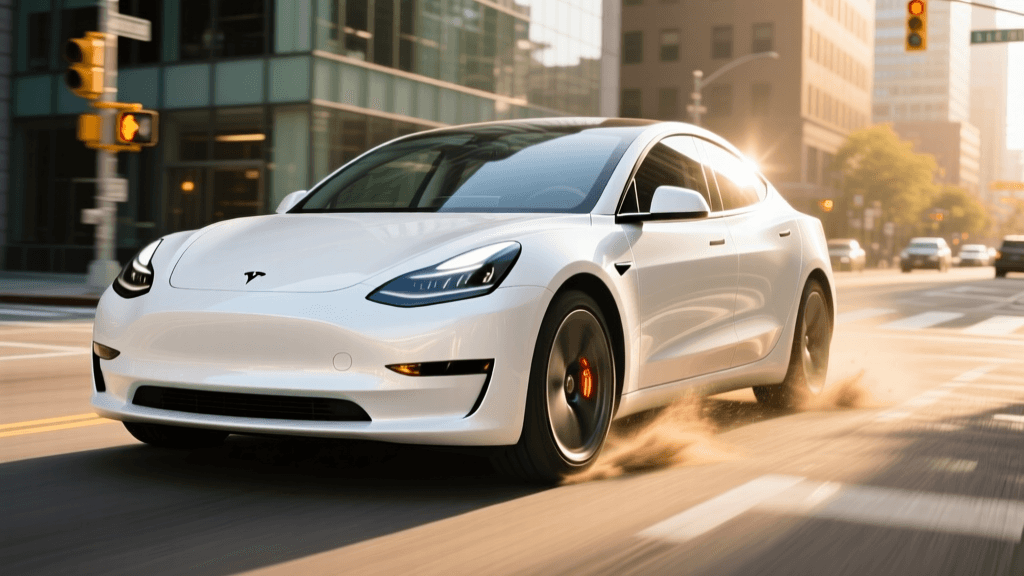
1. Tesla Full Self-Driving (FSD) v12: The Neural Net City Navigator
Tesla's vision-only FSD (particularly version 12 and newer) utilizes an end-to-end neural network that mimics human driving behavior rather than relying on hard-coded rules. In the city, FSD excels at navigating unprotected left turns, yielding to pedestrians at unmarked crosswalks, and handling tight neighborhood streets.
The Urban Glitch: Hesitation at 4-way stops and 'shadow braking' when driving under dense urban tree canopies or overpasses.
Troubleshooting Fix: Because FSD v12 relies on visual momentum, hesitation at 4-way stops can often be resolved by applying a microscopic tap to the accelerator or a slight steering nudge to signal intent to the neural network. For shadow braking, ensure your forward-facing cameras are meticulously clean; even a thin layer of city exhaust grime on the windshield can cause the vision system to misinterpret shadows as solid obstacles.
2. Honda Sensing: The Predictive Pedestrian Protector
Honda Sensing combines a forward-facing monocular camera with a millimeter-wave radar located behind the lower grille. It is exceptionally good at predicting pedestrian and cyclist movements in dense urban corridors, often initiating pre-collision braking earlier than its competitors.
The Urban Glitch: Radar occlusion in inclement city weather (slush, heavy rain) and false positives from metallic street signs.
Troubleshooting Fix: The radar is housed behind the front Honda emblem. In winter or heavy rain, city slush easily coats this area, triggering a 'Honda Sensing Disabled' warning. Keep a microfiber cloth in your cabin and wipe the emblem every 50 miles during bad weather. If you experience phantom braking near large metallic overhead signs, slightly reducing the adaptive cruise control following distance can narrow the radar's focal cone, reducing false positives.
3. Toyota Safety Sense (TSS) 3.0: The Intersection Specialist
TSS 3.0 introduces Intersection Turning Assistance, which detects oncoming vehicles and pedestrians when making a left or right turn at an intersection. It is arguably the most robust system for traditional urban intersection management.
The Urban Glitch: Overly aggressive intervention when turning into multi-lane city streets with oncoming traffic in distant lanes.
Troubleshooting Fix: If the system frequently halts your turn unnecessarily, access the Multi-Information Display (MID) settings and adjust the 'Driving Assist' sensitivity. Lowering the sensitivity slightly gives the system more leeway to allow turns when oncoming cars are safely in distant lanes. Additionally, if your windshield has recently been replaced, the camera must be recalibrated via a dealer OBD-II tool; a misalignment of just 2 degrees will cause severe intersection false positives.
4. BMW Driving Assistant Professional: The Stop-and-Go Master
BMW's system shines in heavy urban congestion. Its Stop & Go functionality and lane centering are incredibly smooth, reducing the jerkiness often felt in stop-and-go city traffic. It uses a fusion of radar, ultrasonic sensors, and high-resolution cameras.
The Urban Glitch: Lane centering confusion in temporary construction zones where old, faded white lines conflict with new yellow temporary lines.
Troubleshooting Fix: BMW's system prioritizes physical barriers over painted lines. When entering a city construction zone, lightly rest your hands on the wheel to activate the capacitive sensors, which keeps the system in 'active' rather than 'passive' monitoring mode. If the car pulls toward faded lines, apply gentle steering torque; the system will yield to driver input and recalibrate its pathing to the new lane geometry without fully disengaging.
Troubleshooting Common City ADAS Failures
Problem 1: Phantom Braking at Crosswalks
Phantom braking—when the car slams on the brakes for no apparent reason—is terrifying in dense city traffic. The National Highway Traffic Safety Administration (NHTSA) notes that sensor fusion disagreements (when the camera sees an obstacle but the radar does not) are a primary cause. In cities, this often happens when a pedestrian steps toward the curb but stops at the edge. The camera predicts a crossing, but the radar notes no lateral movement.
Actionable Advice: Do not disable Automatic Emergency Braking (AEB). Instead, learn the 'pedal override' technique. Rest your foot lightly over the accelerator pedal when approaching busy crosswalks. If the car initiates a false brake, a slight application of throttle will instantly override the AEB command, smoothing out the stop and preventing rear-end collisions from the car behind you.
Problem 2: Sun Glare and Sensor Blinding
Driving east in the morning or west in the evening through a city grid creates severe sun glare. Testing by Consumer Reports highlights that vision-only and camera-heavy systems can experience 'lens flare,' temporarily blinding the ADAS and causing sudden disengagement.
Actionable Advice: When driving into direct urban sun glare, proactively disengage lane centering before the system fails and alerts you with a loud chime. Rely on Adaptive Cruise Control (which uses radar and is immune to sun glare) for speed management, but take over steering manually until the sun angle shifts. Never use heavily tinted or polarized windshield strips, as these can block the infrared wavelengths used by interior driver-monitoring cameras, causing the ADAS to shut down entirely.
Problem 3: Construction Zone Cone Confusion
City infrastructure projects mean shifting lanes and orange cones. ADAS systems often struggle to differentiate between a cone in your lane and a cone on the shoulder, leading to erratic steering inputs.
Actionable Advice: When approaching cones, visually locate the 'pivot point' (the point where the lane shifts). Focus your eyes on the new lane path. Most modern ADAS systems use driver-monitoring cameras to track your eye gaze. By looking where you want the car to go, some advanced systems (like Ford BlueCruise and GM Super Cruise, when adapted for lower speeds) will bias their steering trajectory toward your gaze point, safely navigating the cone choke-point.
Urban ADAS Feature Comparison Matrix
| Brand / System | Primary Sensor Suite | Best Urban Feature | Common City Glitch | Troubleshooting Fix |
|---|---|---|---|---|
| Tesla FSD v12 | Vision-Only (Cameras) | Unprotected left turns | 4-Way stop hesitation | Micro-tap accelerator to signal intent |
| Honda Sensing | Camera + Millimeter Radar | Pedestrian prediction | Radar occlusion (slush) | Wipe front emblem every 50 miles |
| Toyota TSS 3.0 | Camera + Radar + Lidar (Select) | Intersection turning assist | Multi-lane false positives | Lower sensitivity in MID settings |
| BMW Driving Assistant Pro | Camera + Radar + Ultrasonic | Stop-and-go smoothness | Faded construction lines | Apply steering torque to recalibrate path |
Final Verdict: Which System Solves the City Best?
When troubleshooting the chaotic reality of city driving, Tesla FSD v12 currently holds the edge for complex intersection management and unprotected turns, provided the driver is ready to manage its occasional vision-based hesitations. However, for drivers who prefer predictable, rule-based safety with exceptional pedestrian detection, Honda Sensing remains the most reliable and easily maintainable system in the urban jungle.
Ultimately, no ADAS is a substitute for an attentive driver. By understanding the specific sensor layout of your vehicle and applying these troubleshooting techniques, you can transform your ADAS from a frustrating source of phantom braking into a highly effective urban co-pilot. Always keep your sensors clean, stay engaged at intersections, and remember that your judgment is the most advanced safety system in the car.