ADAS Troubleshooting: Subaru EyeSight vs. Toyota Safety Sense
Advanced Driver Assistance Systems (ADAS) have fundamentally changed the daily driving experience, offering a safety net that helps prevent collisions and reduces highway fatigue. However, when these systems malfunction or throw warning lights on your dashboard, they can quickly become a source of frustration. According to the National Highway Traffic Safety Administration (NHTSA), ADAS technologies are designed to assist, not replace, the driver, but their reliance on delicate sensors means they are highly susceptible to environmental and physical disruptions.
In this comprehensive troubleshooting guide, we compare two of the most widely deployed ADAS suites on the market: Subaru EyeSight and Toyota Safety Sense (TSS). Because these two automakers utilize fundamentally different hardware architectures to achieve similar safety goals, diagnosing and fixing errors requires brand-specific knowledge. Whether you are dealing with a blocked camera warning, phantom braking, or post-windshield replacement recalibration issues, this guide provides actionable solutions to get your safety systems back online.
Understanding the Hardware: Stereo Cameras vs. Radar-Camera Fusion
To effectively troubleshoot your ADAS, you must first understand how your vehicle perceives the world. Subaru and Toyota take divergent approaches to sensor hardware, which directly dictates their common failure points.
Subaru EyeSight: The Stereo Camera Approach
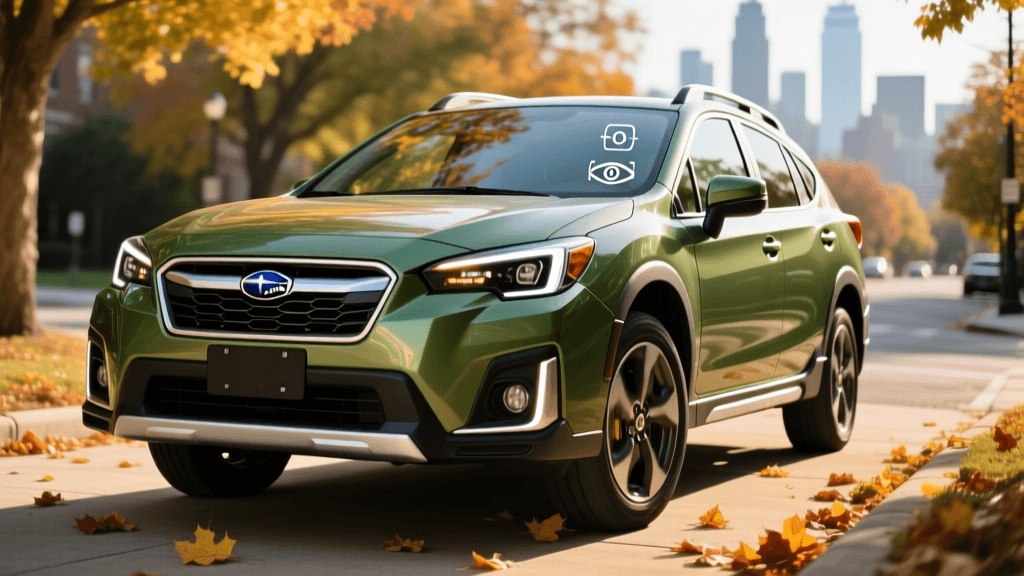
Subaru EyeSight relies almost exclusively on a pair of stereo cameras mounted inside the cabin, near the rearview mirror. These cameras mimic human binocular vision, calculating depth, distance, and the 3D shape of objects ahead. Because EyeSight does not use a front-facing radar for its core Pre-Collision Braking (in most standard configurations), its performance is entirely dependent on optical clarity. If the cameras cannot 'see' through the windshield, the system disables itself entirely.
Toyota Safety Sense: Radar and Monocular Camera Fusion
Toyota Safety Sense (specifically generations TSS 2.0, 2.5, and 3.0) utilizes a sensor fusion approach. It pairs a monocular camera mounted at the top of the windshield with a millimeter-wave radar located behind the front grille or Toyota emblem. The camera handles lane recognition and traffic sign detection, while the radar excels at measuring the precise distance and relative speed of vehicles ahead, even in low-visibility conditions. This redundancy means Toyota's system often remains partially operational when Subaru's might shut down, but it introduces a second physical sensor that can become blocked or misaligned.
Common Warning Messages and Actionable Fixes
When an ADAS system encounters an issue, it will alert the driver via the multi-information display. Below is a troubleshooting matrix for the most common warnings encountered in EyeSight and TSS equipped vehicles.
| System | Warning Message | Primary Sensor | Root Cause | Actionable Fix |
|---|---|---|---|---|
| Subaru EyeSight | EyeSight Disabled - Camera Blocked | Stereo Cameras | Dirty windshield, condensation, or heavy rain in the camera zone. | Clean the glass behind the rearview mirror. Activate the front defroster to clear interior fog. |
| Subaru EyeSight | EyeSight Disabled - High Temp | Stereo Cameras | Direct sunlight heating the camera housing beyond operational limits. | Park in the shade or use a windshield sun reflector when parked. The system will reboot once cooled. |
| Toyota TSS | PCS Unavailable - Radar Blocked | Millimeter-Wave Radar | Mud, snow, ice, or heavy bug splatter on the front Toyota emblem/grille. | Wipe the front emblem and lower grille area with a damp microfiber cloth. |
| Toyota TSS | LDA Unavailable - Camera Blocked | Monocular Camera | Streaking wipers, frost, or dirt at the top center of the windshield. | Clean the upper windshield zone. Replace worn wiper blades that are leaving optical streaks. |
Weather Interference: Sun Glare, Fog, and Heavy Rain
Environmental factors are the leading cause of temporary ADAS failures. Understanding how each system handles adverse weather is critical for troubleshooting 'phantom' disables.
Subaru EyeSight and Sun Glare
Because EyeSight relies on optical sensors, driving directly into a low-angle sunrise or sunset can temporarily blind the stereo cameras. When this happens, the system will issue a 'Camera Blocked' or 'System Disabled' warning. Troubleshooting tip: Keep your windshield impeccably clean on the inside. Interior film and off-gassing from dashboard plastics create a haze that scatters sunlight, exacerbating glare. Clean the interior glass with an automotive-specific glass cleaner and a waffle-weave microfiber towel to minimize light scatter.
Toyota TSS and Heavy Fog/Rain
Toyota's millimeter-wave radar can 'see' through fog and heavy rain much better than optical cameras. However, the monocular camera used for Lane Departure Alert (LDA) and Road Sign Assist (RSA) will still fail in heavy downpours. Furthermore, if the front radar emblem is struck by heavy, wet snow or slush kicked up by semi-trucks, the Pre-Collision System (PCS) will disable. Troubleshooting tip: In winter conditions, apply a high-quality automotive wax or ceramic coating to the front Toyota emblem. This creates a hydrophobic surface that makes it much harder for ice and slush to adhere to the radar cover.
The Windshield Replacement Trap: Recalibration Costs and Risks
One of the most expensive and complex troubleshooting scenarios arises when a rock chips or cracks your windshield. Replacing the glass on an ADAS-equipped vehicle is not a simple swap; it requires precise sensor recalibration.
Subaru EyeSight Recalibration
Subaru's stereo cameras are incredibly sensitive to the optical properties of the windshield and the exact physical angle of the camera mount. If you use a cheap, aftermarket windshield with slight optical distortions, the EyeSight system may fail to calibrate, or worse, it may miscalculate distances, leading to dangerous phantom braking. Subaru strongly recommends OEM glass. Following installation, a technician must perform a static calibration. This involves placing a specialized target board at an exact distance (measured to the millimeter with a laser tape measure) and height relative to the center of the steering wheel. Expect to pay between $150 and $300 for this calibration procedure on top of the glass cost.
Toyota TSS Recalibration
Toyota's monocular camera also requires recalibration after a windshield replacement. Depending on the specific model and year, Toyota often utilizes dynamic calibration for the camera. This involves a technician connecting a scan tool and driving the vehicle on a well-marked highway at specific speeds (usually above 40 mph) for 15 to 30 minutes while the system learns the lane lines. However, if your Toyota's front bumper was removed or the radar bracket was disturbed during bodywork, a static radar calibration using corner reflectors will be required. Always ask your glass shop for a printout of the calibration success report before leaving the shop.
Addressing Phantom Braking and Software Glitches
Phantom braking—when the ADAS system incorrectly identifies a threat and slams on the brakes—is a terrifying troubleshooting issue. Both EyeSight and TSS have been known to exhibit this behavior under specific conditions.
- Subaru EyeSight: May phantom brake when approaching large overhead highway signs, metallic bridge joints, or when shadows from trees create high-contrast patterns on the road. Fix: Ensure your EyeSight software is up to date. Subaru has released several Technical Service Bulletins (TSBs) and ECU flashes over the years to improve object recognition algorithms. Visit your dealer to check for open recalls or software updates.
- Toyota TSS: May phantom brake when entering sharp, banked curves or when a vehicle in an adjacent lane cuts closely into your zone. Fix: Adjust the adaptive cruise control following distance. Increasing the gap gives the radar and camera more time to process the trajectory of adjacent vehicles, reducing false-positive braking events.
Preventative Maintenance for Optimal ADAS Performance
The best way to troubleshoot ADAS issues is to prevent them through meticulous maintenance. Follow these rules to keep your sensors happy:
- Use OEM or High-Quality Wiper Blades: Aftermarket wiper blades often leave micro-streaks that are invisible to the human eye but look like solid obstacles to ADAS cameras. Stick to OEM Subaru or Toyota aero blades.
- Avoid Rain-Repellent Washer Fluids: Washer fluids containing heavy water-beading chemicals (like Rain-X) can leave a waxy residue on the windshield. When the wipers pass over this residue in the camera zone, it creates a smeared, opaque film that instantly disables EyeSight and TSS cameras. Use standard, high-quality bug-removal washer fluid instead.
- Keep the Front Grille Clean: When washing your Toyota, pay special attention to the lower grille and the front emblem. Use a soft brush to remove dried bugs and road grime that can attenuate the millimeter-wave radar signal.
- Inspect Camera Mounts After Potholes: If you hit a severe pothole or curb, the physical bracket holding the cameras or radar can bend slightly. If your steering wheel is perfectly straight but the car constantly pulls or the Lane Tracing Assist fights you, your ADAS sensors may be physically misaligned and require a dealer visit for a realignment procedure.
Conclusion
Troubleshooting Subaru EyeSight and Toyota Safety Sense requires an understanding of their unique hardware philosophies. Subaru's optical-only approach demands pristine glass and is highly sensitive to weather and glare, while Toyota's radar-camera fusion offers better bad-weather resilience but introduces a front-end sensor that requires physical cleaning and protection. By keeping your sensor zones clean, using the correct washer fluids, and insisting on proper recalibration after any glass or bodywork, you can ensure these life-saving systems remain operational and reliable for the long haul.