Introduction to Ford BlueCruise and the ADAS Horizon
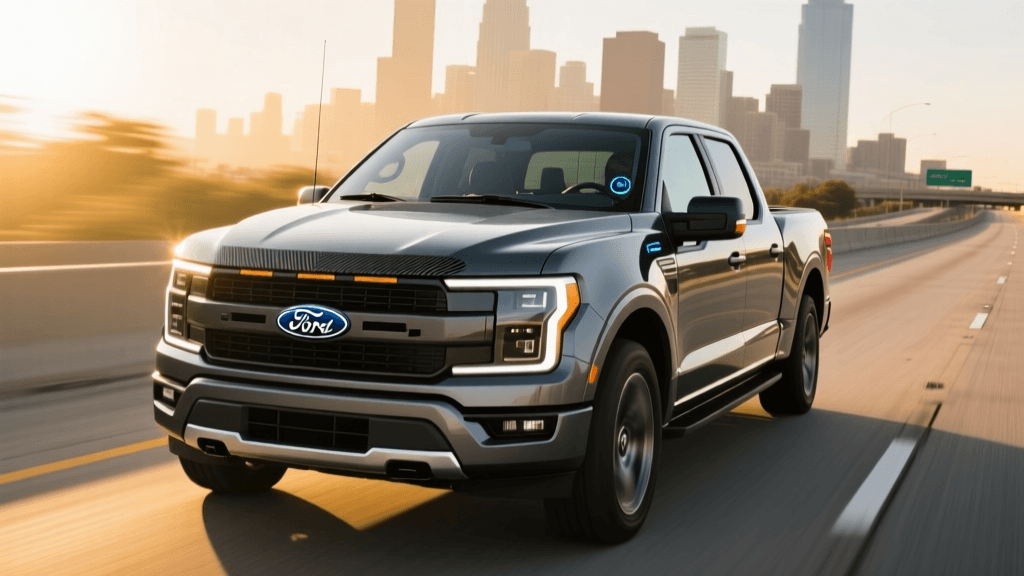
The automotive industry is standing on the precipice of a major paradigm shift, moving from passive driver assistance to active, semi-autonomous highway navigation. At the forefront of this transition is Ford BlueCruise, a hands-free advanced driver-assistance system (ADAS) that has rapidly evolved since its inception. As we look toward the future of smart driving, understanding how current Level 2+ systems perform in the real world provides critical insights into the trajectory of Level 3 and Level 4 autonomy. In this comprehensive review, we take Ford BlueCruise—specifically the latest 1.4 iteration—onto the highway to evaluate its real-world capabilities, its economic model, and what its underlying architecture signals for the future of the ADAS industry.
Real-World Highway Performance: Testing BlueCruise 1.4
Our real-world testing took place across heavily trafficked, multi-lane interstate highways and winding rural divided roads, encompassing over 130,000 miles of Ford’s pre-mapped 'Blue Zones.' The immediate standout feature of the latest software update is the system's predictive capabilities. Unlike earlier iterations that simply reacted to the road, BlueCruise 1.4 utilizes advanced sensor fusion to anticipate the environment.
Lane Centering and Predictive Speed Management
The lane-centering algorithm is exceptionally confident. Even when lane markings faded or were obscured by construction barrels, the system relied on radar and forward-facing cameras to maintain a perfect trajectory. More impressive is the Predictive Speed Assist. As we approached sharp highway curves, the system proactively reduced speed before the steering wheel angle became critical, mimicking the behavior of a cautious human driver. This reduces the 'ping-pong' effect often felt in older ADAS suites and significantly boosts passenger comfort—a crucial metric for the future adoption of autonomous tech.
Automated Lane Change Assist
With a simple tap of the turn signal, BlueCruise 1.4 scans adjacent lanes, checks blind spots via radar, and executes a smooth lane change. In our testing, the system was decisive but never aggressive. It aborted the maneuver seamlessly when a fast-approaching vehicle was detected in the target lane, showcasing the robust safety redundancies built into Ford's sensor suite.
The Driver Monitoring System (DMS) Reality
The true differentiator between Ford’s hands-free system and Tesla’s Autopilot is the implementation of a rigorous Driver Monitoring System (DMS). Mounted on the steering column, an infrared camera tracks the driver's eye gaze and head position. According to the Insurance Institute for Highway Safety (IIHS), robust driver monitoring is the most critical factor in preventing the misuse of partial automation systems.
Actionable Advice for DMS Optimization:
- Sunglasses: The infrared camera easily penetrates most standard polarized and UV-blocking sunglasses. However, heavily mirrored or specialized glacier glasses can cause the system to prompt you to look at the road.
- Hat Brims: Avoid wearing baseball caps with deeply curved, low-hanging brims. The camera needs a clear line of sight to your eyes; a low brim will trigger constant 'Eyes on the Road' warnings.
- Mounting Devices: Do not mount your smartphone or radar detector on the upper center dash or steering column, as this will physically obstruct the DMS camera's field of view.
Cost, Compatibility, and the Subscription Model
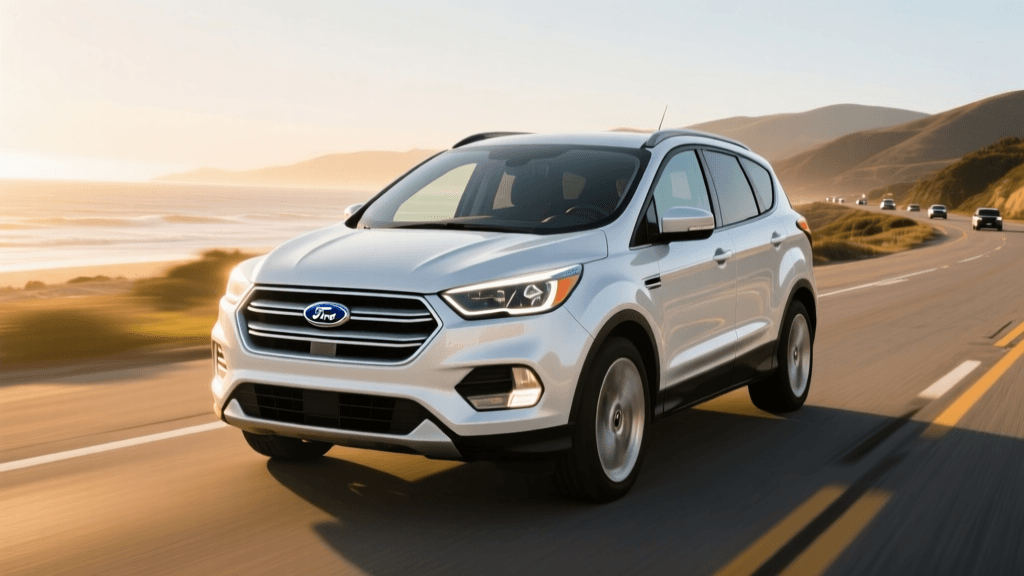
The future of automotive software is heavily tied to recurring revenue, and BlueCruise is no exception. Currently, the system is available on select models like the F-150 Lightning, Mustang Mach-E, and Expedition. The pricing structure is a vital consideration for buyers looking at the total cost of ownership over a vehicle's lifespan.
Buyers can opt for a one-time purchase (typically around $2,100 at the time of vehicle configuration, which includes the hardware and a lifetime software license on certain trims) or a subscription model post-trial. The subscription generally costs around $75 per month or $800 for an annual plan. For frequent road trippers, the annual plan offers immense value in reducing highway fatigue. However, for those who primarily drive in urban environments, the subscription may not yield a high return on investment. As the industry moves toward Software-Defined Vehicles (SDVs), we expect these features to become increasingly modular, allowing drivers to 'rent' autonomy for specific road trips via short-term micro-subscriptions.
Data Table: BlueCruise Evolution and Future ADAS Benchmarks
To understand where the industry is heading, it is essential to look at how Ford has iterated on its software. The table below outlines the progression of BlueCruise and benchmarks it against future industry expectations for Level 3 autonomy.
| Feature / Capability | BlueCruise 1.0 | BlueCruise 1.2 | BlueCruise 1.4 | Future L3/L4 Industry Benchmark |
|---|---|---|---|---|
| Hands-Free Operation | Yes (Mapped Roads) | Yes (Mapped Roads) | Yes (Expanded Mapping) | Yes (Dynamic/Unmapped Roads) |
| Lane Change Assist | No | Yes (Signal Initiated) | Yes (Smoother Execution) | Yes (Fully Autonomous Intent) |
| Predictive Speed Assist | No | Basic Curve Slowing | Advanced Curve & Grade Prep | V2X Integrated Speed Profiling |
| Driver Monitoring | IR Camera (Basic) | IR Camera (Refined) | IR Camera (High-Tolerance) | Biometric & Cabin Context AI |
| Sensor Architecture | Camera + Radar | Camera + Radar | Enhanced Sensor Fusion | LiDAR + 4D Imaging Radar + V2X |
Industry Outlook: How BlueCruise Shapes Tomorrow's Autonomy
Evaluating BlueCruise requires looking beyond the current feature set and examining the hardware and philosophy beneath it. The broader ADAS industry is currently divided into two main camps: the 'vision-only' approach championed by Tesla, and the 'sensor fusion' approach adopted by Ford, GM, Mercedes-Benz, and most legacy automakers.
The Triumph of Sensor Fusion
Ford’s reliance on a combination of high-definition cameras, forward-facing radar, and ultrasonic sensors represents the consensus view among automotive safety experts. While cameras are excellent at reading signs and detecting lane lines, they struggle in low-visibility conditions like heavy rain, fog, or direct sun glare. Radar provides the crucial depth and velocity data that cameras lack. As the National Highway Traffic Safety Administration (NHTSA) continues to evaluate the safety outcomes of ADAS, systems with redundant sensor arrays are increasingly viewed as the necessary stepping stone to true Level 3 autonomy, where the manufacturer assumes liability. Ford’s architecture is inherently designed to handle edge cases that purely optical systems miss, positioning BlueCruise as a highly resilient platform for future over-the-air (OTA) upgrades.
Over-The-Air (OTA) Updates as a Service
The future of car ownership means your vehicle will improve after it leaves the dealership. Ford has aggressively utilized OTA updates to push BlueCruise from version 1.0 to 1.4, adding entirely new capabilities like Automated Lane Change without requiring a hardware swap. Looking ahead, we anticipate Ford integrating Vehicle-to-Everything (V2X) communication protocols. This will allow BlueCruise-enabled vehicles to 'talk' to smart infrastructure, such as traffic lights and construction zone beacons, effectively allowing the car to 'see' around corners. The hardware in current-generation F-150 Lightnings and Mach-Es is largely prepped for this data-heavy future, requiring only software unlocks as municipal infrastructure catches up.
Final Verdict: Is BlueCruise Ready for the Future?
From a real-world testing perspective, Ford BlueCruise 1.4 delivers one of the most refined, confidence-inspiring hands-free highway experiences on the market today. Its predictive speed management and decisive lane changes bridge the gap between rudimentary lane-keeping and true semi-autonomous navigation. More importantly, Ford's commitment to sensor fusion and strict driver monitoring aligns perfectly with the safety mandates of global regulatory bodies.
For the consumer, the decision to invest in BlueCruise comes down to your typical driving routes. If your commute or frequent road trips involve long stretches of divided highways, the reduction in cognitive fatigue is undeniable and well worth the subscription cost. As the industry marches toward higher levels of autonomy, Ford’s iterative, safety-first, and sensor-redundant approach ensures that BlueCruise will remain a highly relevant and adaptable player in the future of smart driving. To explore the exact compatibility and mapping coverage for your region, buyers should consult the official Ford BlueCruise resource page before finalizing their vehicle configuration.