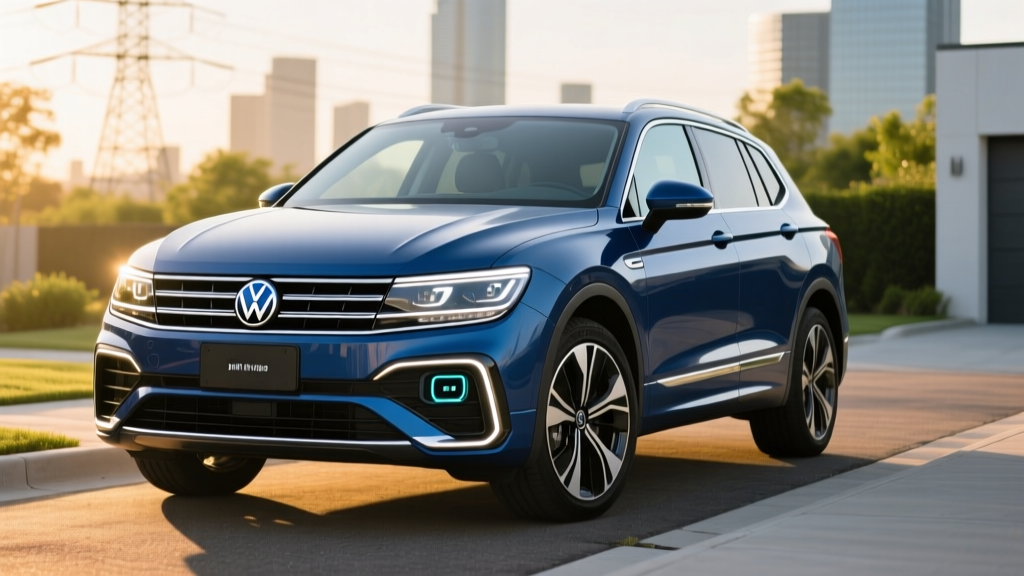
If you've been asking does VW have a hybrid SUV, the answer for the 2026 model year is yes — but with important caveats. Volkswagen offers the Tiguan eHybrid, a plug-in hybrid (PHEV) compact SUV, in select global markets. However, as of early 2026, Volkswagen's US hybrid strategy remains limited, with the Tiguan sold primarily as a conventional gas model stateside. Below, we break down what VW's hybrid SUV lineup looks like globally, what US buyers can actually purchase, and how the Tiguan PHEV stacks up on range, efficiency, and value.
VW's Hybrid SUV Lineup: What's Available and Where
Volkswagen's electrified SUV strategy diverges sharply by region. In Europe, the Tiguan eHybrid and the larger Touareg R PHEV are established offerings. In the United States, VW has leaned heavily into its ID. family of battery-electric vehicles (ID.4, ID. Buzz) while keeping the Tiguan and Atlas on conventional turbocharged gasoline powertrains.
HEV vs. PHEV: The Critical Difference
Conventional Hybrid (HEV): Uses a small battery and electric motor to assist the gas engine. You never plug it in. The battery recharges through regenerative braking and the engine. Think Toyota RAV4 Hybrid.
Plug-in Hybrid (PHEV): Has a larger battery you can plug in to charge, enabling a meaningful electric-only driving range (typically 20–50 miles). Once the battery depletes, it operates like a conventional hybrid. The Tiguan eHybrid is a PHEV.
Volkswagen does not currently sell a conventional HEV (non-plug-in hybrid) SUV in the US market. If you want a VW hybrid SUV in America, your options are limited — and you may need to look at the European-spec Tiguan eHybrid or wait for VW's announced US PHEV expansion plans.
2026 VW Tiguan eHybrid: Powertrain and Performance
The European-market Tiguan eHybrid pairs a 1.4-liter turbocharged four-cylinder engine with an electric motor integrated into the DSG automatic transmission. Here's what the numbers look like:
| Specification | 2026 Tiguan eHybrid |
|---|---|
| Engine | 1.4L TSI turbo I4 |
| Electric Motor | 85 kW (114 hp) integrated |
| Combined System Output | 245 hp / 295 lb-ft torque |
| Battery (Usable) | 13.0 kWh (NMC lithium-ion) |
| Transmission | 6-speed DSG automatic |
| 0-62 mph (0-100 km/h) | 7.5 seconds |
| Drivetrain | Front-wheel drive |
| EPA Electric Range | ~33 miles (WLTP-rated; EPA est.) |
| Total Combined Range | ~440 miles (gas + electric) |
| Max AC Charging (Level 2) | 3.6 kW |
| DC Fast Charging | Not available |
| Level 2 Charge Time (0-100%) | ~3 hours 45 minutes |
| Base MSRP (Europe) | ~€47,000 (~$51,000 USD equivalent) |
The 13.0 kWh usable battery capacity is modest by 2026 PHEV standards — competitors like the Toyota RAV4 Prime offer 18.1 kWh and 42 miles of electric range. The Tiguan eHybrid's 3.6 kW onboard charger also means Level 2 top-ups take nearly four hours, which is slow for daily plug-in use. Critically, there is no DC fast-charging capability, so public fast chargers won't help you.
Fuel Economy: EPA MPG and Real-World Efficiency
| Driving Mode | City | Highway | Combined |
|---|---|---|---|
| Charge-Sustaining (Hybrid Mode) | ~34 MPG | ~33 MPG | ~34 MPG |
| Charge-Depleting (EV + Hybrid) | 85 MPGe combined (EPA est.) | ||
Real-world expectations: In hybrid mode (battery depleted), the Tiguan eHybrid returns roughly 30–34 MPG combined in mixed driving. This is respectable but trails the RAV4 Hybrid's 39–41 MPG combined. City driving in any hybrid tends to beat EPA estimates because regenerative braking recaptures energy in stop-and-go traffic. Highway cruising at 75+ mph will push fuel economy toward 28–30 MPG.
When operating in EV mode with a full charge, the Tiguan eHybrid can handle daily commutes under 30 miles without using a drop of gasoline. However, cold weather (below 40°F) will reduce that electric range by 15–25%, bringing it down to roughly 25 miles in winter conditions.
Charging at Home: What You Need to Know
The Tiguan eHybrid charges exclusively via AC power — either a standard 120V household outlet (Level 1) or a 240V Level 2 home charger:
| Charging Level | Power | 0-100% Time | Practical Use |
|---|---|---|---|
| Level 1 (120V) | ~1.4 kW | ~9 hours | Overnight top-up only |
| Level 2 (240V) | 3.6 kW | ~3 hours 45 min | Full daily charge |
Because the battery is only 13.0 kWh usable, you don't need an expensive high-power home charger. A standard 16A Level 2 unit (like a ChargePoint Home Flex set to 3.6 kW) is sufficient. Expect home charging equipment to cost $350–$650, with electrician installation running $500–$1,500 depending on whether your electrical panel needs an upgrade.
Pricing, Tax Credits, and Ownership Costs
As of 2026, the Tiguan eHybrid is not officially sold in the United States. European pricing starts around €47,000. If VW introduces it to the US market, expect an MSRP in the $42,000–$48,000 range before incentives.
Federal Tax Credit Eligibility (IRS §30D)
Plug-in hybrids with at least 7 kWh of battery capacity can qualify for the federal clean vehicle credit under IRS §30D. However, the actual credit amount depends on:
- Battery sourcing: Critical minerals and battery components must meet phased-in domestic-content thresholds (increasing annually through 2026).
- MSRP cap: SUVs must have an MSRP at or below $80,000.
- Buyer income cap: AGI must not exceed $150,000 (single) / $300,000 (joint).
- Assembly: Final assembly must occur in North America.
If the Tiguan eHybrid were sold in the US and met sourcing requirements, it could qualify for up to $3,750–$7,500. However, European-built VW PHEVs would likely fail the North American assembly requirement. Always consult a tax professional and check fueleconomy.gov for the current eligible vehicle list.
Battery Reliability, Warranty, and Replacement Costs
PHEV battery reliability has improved substantially. Volkswagen covers the Tiguan eHybrid's high-voltage battery with an 8-year / 100,000-mile warranty (whichever comes first), guaranteeing a minimum of 70% capacity retention. This aligns with industry norms set by federal emissions warranty requirements.
Degradation reality: NMC (nickel-manganese-cobalt) batteries in PHEVs typically lose 8–15% capacity over the first 5 years of daily cycling. Because the Tiguan's battery is relatively small (13 kWh), it cycles more frequently than a larger pack, which can accelerate wear slightly. However, VW's battery management system includes a buffer (roughly 1.5–2 kWh gross above usable) to protect against deep discharge damage.
Replacement cost: Out of warranty, a Tiguan eHybrid battery replacement would run approximately $6,000–$9,000 including labor, based on comparable VW Group PHEV service pricing. This is a meaningful long-term ownership cost to factor in if you plan to keep the vehicle past 100,000 miles.
Tiguan eHybrid vs. the Competition
Pros
- 245 hp combined output — more powerful than most compact PHEV SUVs
- Refined DSG transmission with smooth EV-to-gas transitions
- Premium interior with VW's latest infotainment
- ~440-mile total range eliminates range anxiety on road trips
- Strong build quality and European driving dynamics
Cons
- 33-mile electric range trails RAV4 Prime (42 mi) and Hyundai Tucson PHEV (33 mi tied, but larger battery)
- No DC fast charging capability
- 3.6 kW onboard charger is slow for 2026 standards
- Not available in the US market as of 2026
- Hybrid-mode MPG (~34) lags behind Toyota and Honda hybrid SUVs
Who Should Choose This Hybrid vs. a Full EV or Gas Car
The Tiguan eHybrid — or any compact PHEV SUV — makes sense for a specific buyer profile:
Choose a PHEV like the Tiguan eHybrid if:
- Your daily commute is under 30 miles round-trip and you can charge at home
- You take regular road trips where EV charging infrastructure is sparse
- You want electric commuting without committing to a full BEV
- You live in an apartment or area where reliable public charging is unavailable
Choose a full EV (like the VW ID.4) if:
- You have reliable home Level 2 charging
- Your daily driving is under 200 miles
- You want to eliminate oil changes, spark plugs, and transmission maintenance entirely
- You qualify for the full $7,500 federal tax credit on a BEV
Choose a conventional gas SUV if:
- You cannot charge at home or work
- You drive mostly long highway miles where hybrids lose their efficiency advantage
- Upfront purchase price is your primary concern
Frequently Asked Questions
Does Volkswagen sell a hybrid SUV in the US in 2026?
Not currently. VW's US SUV lineup (Tiguan, Atlas, Atlas Cross Sport) uses conventional gasoline powertrains. The Tiguan eHybrid PHEV is available in Europe. VW has signaled future US PHEV plans but has not confirmed a launch date.
How many MPG does the Tiguan eHybrid get?
In hybrid mode (battery depleted), expect approximately 34 MPG combined (roughly 34 city / 33 highway). When factoring in electric-only driving, the combined rating is approximately 85 MPGe. Real-world highway driving at 75+ mph may drop to 28–30 MPG.
How far can the Tiguan eHybrid go on electric only?
The EPA-estimated electric-only range is approximately 33 miles. In cold weather (below 40°F), expect 25–28 miles. This covers most daily commutes but falls short of the RAV4 Prime's 42-mile rating.
Is the Tiguan PHEV reliable, and what does battery replacement cost?
VW's PHEV powertrain has proven reasonably reliable in European markets. The high-voltage battery carries an 8-year/100,000-mile warranty with 70% capacity retention guaranteed. Out-of-warranty replacement costs approximately $6,000–$9,000.
Does the Tiguan eHybrid qualify for a tax credit?
If sold in the US, it could potentially qualify under IRS §30D for up to $7,500, but only if it meets North American assembly, battery sourcing, MSRP cap ($80,000 for SUVs), and buyer income requirements. A European-built Tiguan eHybrid would likely not meet the assembly requirement. Check IRS.gov for current rules.
Can the Tiguan eHybrid DC fast charge?
No. The Tiguan eHybrid charges only via AC power at up to 3.6 kW on Level 2. A full charge takes about 3 hours and 45 minutes. DC fast chargers (CCS, NACS) are not compatible.