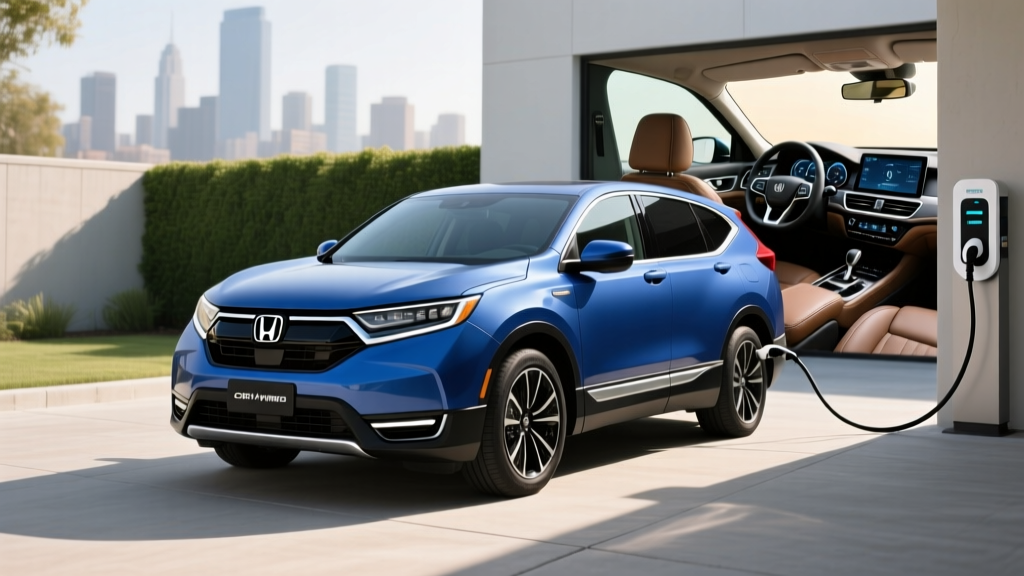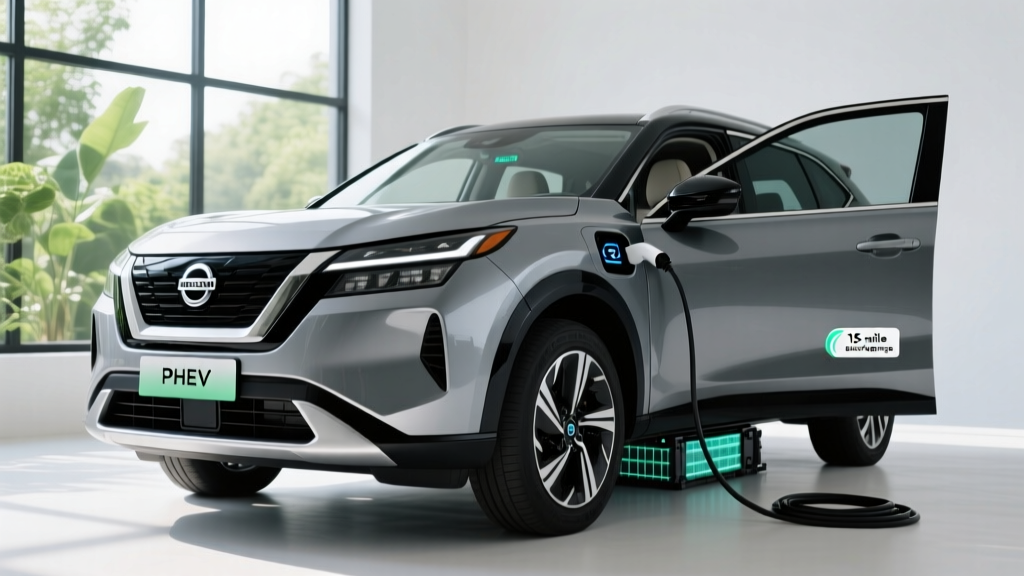
The compact SUV segment is one of the most competitive in the U.S., and for 2026 Nissan is sharpening its pitch with the Rogue Plug-In Hybrid (PHEV). Slotting between the conventional Rogue hybrid and full battery-electric competitors like the Toyota RAV4 Prime and Hyundai Tucson PHEV, the 2026 Rogue PHEV targets buyers who want meaningful electric-only commuting without surrendering the gas-engine safety net for longer road trips.
Below, we break down every spec that matters — EPA range and MPGe, battery capacity and chemistry, charge times, powertrain output, pricing by trim, and federal tax credit eligibility under current IRS §30D rules. If you're cross-shopping the 2026 Rogue plug-in hybrid against a full EV or a conventional hybrid, this guide gives you the exact numbers to decide.
HEV vs PHEV: What the 2026 Rogue Plug-In Hybrid Actually Is
Before diving into specs, it's worth clarifying the distinction, because Nissan sells both flavors of electrified Rogue:
Conventional Hybrid (HEV)
- Small battery (~1.5–2 kWh), charged only by regenerative braking and the engine
- Never plugged in — no charging cord, no home charger needed
- Electric motor assists the gas engine; cannot drive on electricity alone for meaningful distance
- Typical EPA combined: 36–40 MPG
Plug-In Hybrid (PHEV) — This Article
- Larger battery (~18–20 kWh usable), charged by plugging in or by regen/engine
- Can drive 30–40 miles on electricity alone before the gas engine engages
- Requires access to a 120V or 240V outlet to realize full efficiency benefit
- Operates as a conventional hybrid once the battery is depleted
If you cannot charge at home or at work, a PHEV's advantage shrinks considerably — you'll be carrying extra battery weight without using its electric range. The conventional Rogue HEV may be the better call in that scenario.
EPA Range, MPGe, and Fuel Economy
The headline numbers for the 2026 Rogue plug-in hybrid center on two metrics: how far it travels on electricity alone, and how efficiently it burns gas once the battery is depleted.
| Metric | EPA Estimate | Real-World Expectation |
|---|---|---|
| Electric-only range | 38 miles | 32–36 mi (highway/cold weather reduces to ~27 mi) |
| MPGe (electric + gas combined) | 95 MPGe | 80–90 MPGe depending on charge frequency |
| Gas-only city MPG | 35 MPG | 33–37 MPG (hybrids often beat EPA in stop-and-go) |
| Gas-only highway MPG | 33 MPG | 30–33 MPG |
| Gas-only combined MPG | 34 MPG | 31–34 MPG |
| Total combined range (full tank + full battery) | ~470 miles | ~420–460 miles |
A few real-world caveats worth flagging: electric-only range drops noticeably below 40°F because the battery's internal resistance rises and cabin heating draws from the pack. On a 75-mph highway run in winter, expect closer to 27 miles of pure-electric range before the 1.5L turbocharged three-cylinder engine fires up. Conversely, in mild city driving with frequent regenerative braking, some owners will see 40+ electric miles — slightly exceeding the EPA sticker.
Once the battery is depleted, the Rogue PHEV operates as a conventional hybrid. The 34 MPG combined figure is competitive with the Toyota RAV4 Hybrid (39 MPG combined per fueleconomy.gov) but trails slightly, owing to the PHEV's heavier curb weight from the larger battery pack.
Battery, Charging, and Powertrain Specs
| Specification | 2026 Rogue PHEV |
|---|---|
| Battery capacity (usable) | 18.1 kWh |
| Battery chemistry | NMC (nickel manganese cobalt) |
| Combined system horsepower | 248 hp |
| Gas engine | 1.5L turbocharged 3-cylinder (variable compression) |
| Electric motor output | 107 kW (143 hp) |
| Transmission | e-CVT (single-speed reduction for EV, CVT for hybrid mode) |
| Drivetrain | AWD standard (rear motor assist) |
| Level 1 charging (120V, 12A) | ~1.4 kW — full charge in ~13 hours |
| Level 2 charging (240V, 32A) | ~7.2 kW — full charge in ~2.5 hours |
| DC fast charging | Not available (no CCS/NACS port) |
| Charge port | J1772 (Level 1 and Level 2 only) |
| 0–60 mph | ~7.0 seconds (est.) |
| Cargo volume (behind 2nd row) | 31.6 cu ft |
The most important charging takeaway: the 2026 Rogue PHEV does not support DC fast charging. This is typical for PHEVs — the relatively small 18.1 kWh battery makes DCFC hardware cost-prohibitive and largely unnecessary. A Level 2 home charger (240V) replenishes the pack in roughly 2.5 hours, which is practical for overnight top-ups or midday charging at a workplace station.
If you only have access to a standard 120V household outlet (Level 1), plan on roughly 13 hours for a full charge — adequate for overnight replenishment if your daily commute falls within the 38-mile electric range. Most PHEV owners who install a 240V Level 2 charger report that a full nightly charge easily covers weekday driving, with the gas engine reserved for weekend trips.
Pricing, Trims, and Tax Credit Eligibility
The 2026 Nissan Rogue Plug-In Hybrid is offered in three trims. Pricing below reflects MSRP before any incentives:
- S PHEV (base): $38,990
- SV PHEV: $41,490
- SL PHEV: $44,990
All trims include AWD, a 12.3-inch touchscreen, wireless Apple CarPlay/Android Auto, and Nissan's ProPILOT Assist (a Level 2 driver-assistance system — not self-driving; the driver must remain engaged at all times).
Federal §30D Tax Credit
The 2026 Rogue PHEV may qualify for up to $3,750 under the IRS §30D Clean Vehicle Credit, but eligibility depends on several conditions that change frequently. Here's the current framework:
- MSRP cap: SUVs must be under $80,000 — all Rogue PHEV trims qualify ✓
- Buyer income cap: AGI must not exceed $150,000 (single), $225,000 (head of household), or $300,000 (joint) — verify against your tax return
- Battery sourcing / critical minerals: The credit splits into two halves ($3,750 for battery components, $3,750 for critical minerals). As of 2026, the Rogue PHEV's battery meets the components requirement but may not fully satisfy the critical-minerals threshold, potentially limiting the credit to $3,750 rather than $7,500
- Point-of-sale transfer: You can elect to transfer the credit to the dealer at purchase, reducing your out-of-pocket cost immediately — or claim it on your federal tax return
- Final assembly: Must occur in North America — the Rogue PHEV is assembled in Japan, which disqualifies it from the new-vehicle §30D credit under current law
Source: IRS §30D guidelines. Consult a tax professional before relying on credit eligibility.
This is a critical point for buyers: because the Rogue PHEV is assembled outside North America, it does not qualify for the new-vehicle §30D federal tax credit. Some buyers may be eligible for state-level PHEV incentives (Colorado, California, and others offer rebates — check your state energy office), but the federal credit is off the table for this model. Cross-shoppers should factor this into total cost comparisons against U.S.-assembled PHEVs like the Jeep Wrangler 4xe or Chrysler Pacifica PHEV.
Reliability, Battery Warranty, and Replacement Cost
Battery Warranty
Nissan covers the Rogue PHEV's high-voltage battery for 8 years / 100,000 miles (whichever comes first), with a capacity retention threshold of 70%. If the battery degrades below 70% of its original capacity within the warranty period, Nissan will repair or replace it at no cost.
The hybrid system components (inverter, electric motor, e-CVT) are covered under the same 8-year/100,000-mile powertrain warranty.
Nissan's track record with hybrid and PHEV reliability is middling compared to Toyota's dominant reputation. The 1.5L VC-Turbo three-cylinder engine is a relatively new design with variable compression ratio technology — clever for efficiency, but more complex than a naturally aspirated four-cylinder. Early reliability data from the 2024–2025 model years has been acceptable, though long-term data (5+ years) is still accumulating.
If the battery does need replacement out of warranty, expect a cost between $6,000 and $9,000 for the pack itself, plus $1,500–$2,500 in labor. This is consistent with PHEV battery replacement costs across the segment. For context, most PHEV batteries show 8–12% degradation after 100,000 miles based on fleet data — well within the warranty threshold.
For the latest safety ratings, check NHTSA and IIHS once crash-test results are published for the 2026 model year.
Who Should Buy the 2026 Rogue PHEV — And Who Shouldn't
Decision Framework
Choose the 2026 Rogue PHEV if:
- Your daily commute is under 35 miles round-trip and you can charge at home (Level 1 or 2)
- You want electric-only weekday driving but need gas-engine range for weekend trips without planning charging stops
- You prefer a mainstream brand with widespread dealer service access
- AWD is a priority (standard on all PHEV trims)
Look elsewhere if:
- You cannot charge at home or work — the PHEV premium over the conventional Rogue HEV won't pay back without regular plug-in charging
- Federal tax credit eligibility is important to your budget — the Japan assembly disqualifies the Rogue PHEV
- You want DC fast charging for road-trip electric driving — no PHEV in this segment offers it; consider a full BEV
- Maximum fuel economy is the goal — the RAV4 Hybrid (39 MPG combined, no plug needed) is more efficient as a pure hybrid
Hybrid vs PHEV vs Full EV — Which Fits You?
The 2026 Rogue lineup gives buyers three distinct paths, and the right choice depends almost entirely on your charging access and daily mileage:
- Conventional Hybrid (HEV): Best for buyers who cannot plug in. No behavior change needed — just fill up with gas and enjoy ~36–40 MPG. Lowest purchase price, no charging infrastructure required.
- Plug-In Hybrid (PHEV): Best for buyers with home charging and a sub-40-mile commute. Weekday driving is effectively electric, but the gas engine eliminates range anxiety for longer trips. Higher purchase price, partially offset by fuel savings.
- Full Battery EV (BEV): Best for buyers with reliable home charging who want zero tailpipe emissions and the lowest per-mile energy cost. Requires planning for road trips around DC fast-charging infrastructure. Consider the Nissan Ariya or Hyundai Ioniq 5 if this sounds like you.
Pros, Cons, and the Bottom Line
Pros
- 38 miles of EPA electric range covers most daily commutes
- AWD standard on all trims via rear electric motor
- 248 combined hp delivers confident merging and passing
- 2.5-hour Level 2 charge time is practical for overnight use
- 8-year/100,000-mile battery warranty matches segment standard
- ProPILOT Assist included on all trims
Cons
- No DC fast charging — electric road-trip driving isn't possible
- Does not qualify for federal §30D tax credit (Japan assembly)
- Gas-only MPG (34 combined) trails the RAV4 Hybrid by 5 MPG
- VC-Turbo 3-cylinder engine adds mechanical complexity
- Cargo space slightly reduced vs. gas-only Rogue (~31.6 vs 36.5 cu ft)
- Starting price of ~$39K is $6,000+ above the conventional Rogue HEV
The 2026 Nissan Rogue Plug-In Hybrid occupies a specific niche: it's a practical, AWD-equipped compact SUV that can handle weekday commutes on electricity while keeping a gas tank for everything else. If you have home charging, a sub-40-mile commute, and don't need the federal tax credit, it's a compelling package. If any of those conditions don't apply, the conventional Rogue HEV or a competitor like the Toyota RAV4 Prime (which does qualify for partial credits and offers 42 miles of electric range) deserve a hard look.
Frequently Asked Questions
How many MPG does the 2026 Rogue plug-in hybrid get?
Once the battery is depleted, the EPA rates the Rogue PHEV at 35 city / 33 highway / 34 combined MPG. In electric mode, it achieves 95 MPGe combined. Real-world gas-only driving typically lands between 31–37 MPG depending on conditions — city driving with frequent regenerative braking often yields slightly better numbers than the EPA highway estimate.
How far can the 2026 Rogue PHEV go on electric only?
The EPA estimates 38 miles of electric-only range. In real-world driving, expect 32–36 miles in mild conditions, dropping to roughly 27 miles in cold weather or sustained highway driving above 70 mph. The gas engine engages seamlessly once the battery is depleted, so there's no range cliff — just a transition to hybrid mode.
Does the 2026 Rogue PHEV qualify for any tax credit?
The Rogue PHEV does not qualify for the federal §30D new clean vehicle credit because final assembly occurs in Japan, not North America. Some state-level incentives may apply (check your state's energy office or DSIRE database). The conventional hybrid Rogue also does not qualify for federal credits, as the §30D credit is limited to plug-in vehicles with batteries above 7 kWh.
Is the 2026 Rogue PHEV reliable, and what does battery replacement cost?
Early reliability data is acceptable but not class-leading. Nissan's 8-year/100,000-mile battery warranty (70% capacity retention threshold) provides solid protection. Out-of-warranty battery replacement is estimated at $7,500–$11,500 including labor. The VC-Turbo three-cylinder engine is more complex than a conventional four-cylinder, which is a long-term reliability variable worth monitoring.
Can I charge the Rogue PHEV at a public DC fast charger?
No. The 2026 Rogue PHEV only supports Level 1 (120V) and Level 2 (240V) AC charging via a J1772 connector. There is no DC fast-charge port (CCS or NACS). This is standard for PHEVs — the battery is too small to justify DCFC hardware. Plan to charge at home or at Level 2 workplace/public stations.
Should I get the Rogue PHEV or a full EV?
If you can charge at home and your daily driving stays under 38 miles, the PHEV gives you electric commuting with zero range anxiety on longer trips. If you want the lowest per-mile energy cost, zero tailpipe emissions, and have access to reliable DC fast charging for road trips, a full EV like the Nissan Ariya (304 miles EPA range) or Hyundai Ioniq 5 will deliver a more transformative ownership experience — but at a higher starting price and with trip-planning requirements.