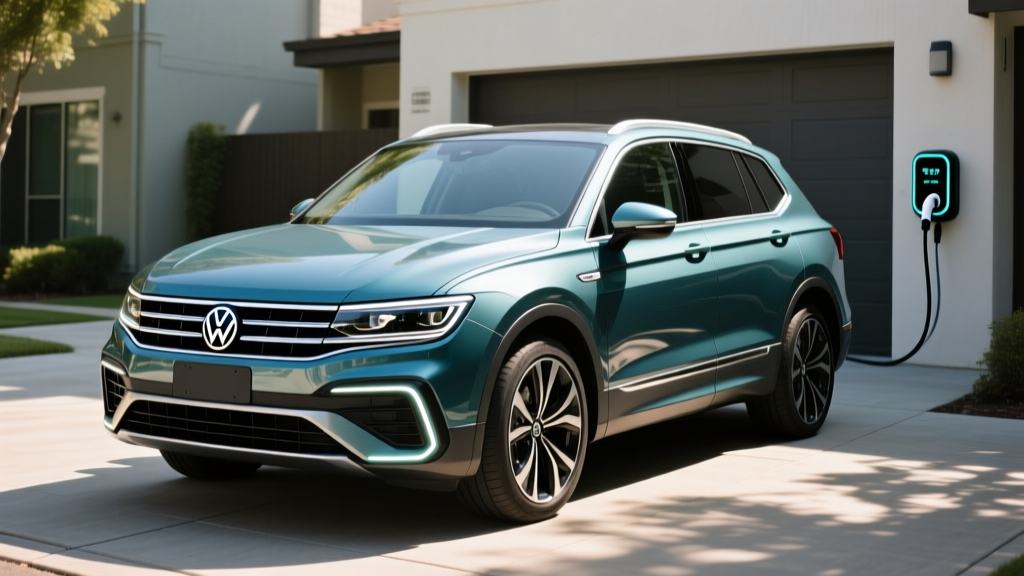
Volkswagen's electrified SUV strategy in the United States hinges on a pragmatic middle ground: the plug-in hybrid. For buyers searching for an suv hybrid vw option in 2026, the Tiguan eHybrid represents the brand's core offering — a compact crossover that blends a turbocharged gas engine with a battery-and-motor system capable of short electric-only commutes. VW discontinued the Touareg hybrid years ago and has not brought a conventional (non-plug-in) hybrid SUV to the US market, making the Tiguan eHybrid the singular answer for shoppers wanting VW badge, SUV practicality, and electrified propulsion.
This guide breaks down the 2026 Tiguan eHybrid's real-world efficiency, electric-only range, powertrain specs, charging requirements, ownership costs, and how it stacks up against going full EV or sticking with a gas-only compact SUV.
HEV vs PHEV: What VW Actually Offers in the US
Before diving into specs, it's essential to understand the distinction between hybrid types — because VW's US lineup only includes one.
Conventional Hybrid (HEV): A small battery recharges through regenerative braking and the gas engine. You never plug it in. Examples: Toyota RAV4 Hybrid, Honda CR-V Hybrid. VW does not currently sell a conventional HEV SUV in the United States.
Plug-in Hybrid (PHEV): A larger battery provides meaningful electric-only range (typically 25-40 miles). You plug it in to recharge the battery, but a gas engine kicks in for longer trips. Example: VW Tiguan eHybrid, Toyota RAV4 Prime, Ford Escape PHEV.
If you want a VW SUV with any form of hybridization in 2026, the Tiguan eHybrid is your option. VW's ID.4 is a fully electric SUV — a different vehicle category entirely. The Tiguan eHybrid occupies the bridge position: electric for daily errands, gas-powered for road trips.
2026 VW Tiguan eHybrid: Powertrain and Performance Specs
| Specification | 2026 VW Tiguan eHybrid |
|---|---|
| Powertrain | 1.5L turbocharged 4-cylinder + electric motor |
| Combined System Output | 241 hp / 295 lb-ft torque |
| Gas Engine Output | 174 hp (standalone) |
| Electric Motor Output | 114 hp (standalone) |
| Battery Capacity (Usable) | 18.8 kWh (NMC chemistry) |
| Transmission | 6-speed DSG automatic |
| Drivetrain | Front-wheel drive (FWD) |
| 0-60 mph | ~7.5 seconds |
| EPA Electric-Only Range | 32 miles |
| Total Combined Range (est.) | ~440 miles |
| Base MSRP (SE trim) | $40,490 |
The Tiguan eHybrid pairs VW's updated 1.5-liter turbocharged four-cylinder with an electric motor integrated into the transmission housing. Combined output of 241 horsepower gives it noticeably more punch than the gas-only Tiguan (which makes 184 hp). The electric motor delivers strong low-end torque, making the eHybrid feel responsive around town — particularly when starting in EV mode on a full charge.
One trade-off worth noting: the eHybrid is front-wheel drive only. If you need all-wheel drive in a VW SUV, you'll have to look at the gas-only Tiguan 4Motion trims or the fully electric ID.4 AWD.
Fuel Economy: EPA MPG and Real-World Efficiency
| Driving Mode | City | Highway | Combined |
|---|---|---|---|
| Charge-Sustaining (Hybrid Mode) | 35 MPG | 34 MPG | 35 MPG |
| Charge-Depleting (EV Mode) | 105 MPGe (electric + gas combined metric) | ||
| Electric-Only Energy Use | 32 kWh/100 mi | ||
Source: fueleconomy.gov (EPA estimates). Real-world results vary based on temperature, terrain, and driving style.
The 35 MPG combined figure applies once the battery is depleted and the Tiguan operates as a conventional hybrid. Here's where real-world driving diverges from the sticker:
- City driving with regular plug-in charging: Many owners report effectively achieving 50-70+ MPGe equivalent over short commutes because the vehicle runs primarily on electricity. If your daily round trip is under 30 miles and you charge nightly, you may burn very little gasoline for weeks.
- Highway driving in hybrid mode: Expect 32-34 MPG at sustained 70-75 mph speeds. The eHybrid's advantage is in stop-and-go traffic, where regenerative braking recaptures energy that a gas car wastes as heat.
- Cold weather penalty: Battery capacity drops roughly 15-25% in freezing temperatures, reducing electric-only range from 32 miles down to approximately 22-26 miles. The gas engine may also activate sooner to provide cabin heat.
Real-World Range Expectation: The EPA rates the Tiguan eHybrid at 32 miles electric-only. In moderate temperatures (50-80°F) with mixed city/suburban driving, expect 28-32 miles. In winter conditions or sustained highway speeds above 65 mph, plan for 20-25 miles before the gas engine engages. Total range on a full tank plus full charge is approximately 440 miles.
Battery, Charging, and Electric-Only Range
The Tiguan eHybrid's 18.8 kWh usable battery pack (NMC lithium-ion chemistry) sits beneath the rear seats and cargo floor, preserving interior space. Here's what charging looks like in practice:
| Charging Method | Power (kW) | 0-100% Time | Notes |
|---|---|---|---|
| Level 1 (120V household outlet) | ~1.4 kW | ~13-14 hours | Overnight trickle; works but slow |
| Level 2 (240V home charger) | 3.6 kW (onboard charger max) | ~5 hours | Recommended for daily charging |
| DC Fast Charging | N/A | N/A | Not supported — no DC inlet |
A critical detail for PHEV shoppers: the Tiguan eHybrid's onboard charger is limited to 3.6 kW. Even if you plug into a 7.2 kW or 11.5 kW Level 2 station, the car will only draw 3.6 kW. This is standard for most PHEVs — the batteries are small enough that manufacturers don't invest in expensive high-power onboard chargers.
DC fast charging is not available on the Tiguan eHybrid. This is typical for the PHEV segment (the RAV4 Prime is one of the rare exceptions with optional DC charging). For a 32-mile electric range, Level 2 overnight charging is sufficient for most owners.
The charge port is located on the passenger-side rear quarter panel. VW includes a Level 1 charging cord; a Level 2 home charger (such as a ChargePoint Home Flex or Emporia Vue) costs $400-$700 for equipment, plus $500-$1,500 for professional installation depending on your electrical panel.
Pricing, Trims, and Tax Credit Eligibility
The 2026 Tiguan eHybrid starts at $40,490 (SE trim, including destination). Key trim levels:
- SE eHybrid: $40,490 — 8-inch digital cockpit, heated front seats, adaptive cruise control, 18-inch wheels
- SE R-Line Black eHybrid: $43,190 — Sport appearance package, black exterior accents, 19-inch wheels
- SEL R-Line eHybrid: $45,890 — Panoramic sunroof, leather seats, navigation, Harman Kardon audio, 20-inch wheels
Federal Tax Credit (§30D) Status
As of 2026, the VW Tiguan eHybrid does not qualify for the full $7,500 federal EV tax credit under IRS §30D. The credit's battery-sourcing and critical-mineral requirements have effectively excluded most European-manufactured PHEVs. VW assembles the Tiguan eHybrid for the US market at its Puebla, Mexico plant, and the battery cell supply chain does not currently meet the domestic-content thresholds mandated by the Inflation Reduction Act.
What you might still qualify for:
- Some state-level PHEV rebates (California's CVRP program, Colorado's state credit, New York's Drive Clean rebate — check your state's current rules)
- Utility company rebates for Level 2 charger installation
- Employer or local municipality incentives
Always verify current eligibility on irs.gov and consult a tax professional before relying on credit assumptions.
Reliability, Battery Warranty, and Long-Term Ownership
VW Hybrid Battery Warranty: 8 years / 100,000 miles (whichever comes first), covering defects and capacity loss below 70% of original capacity. This meets the federal minimum mandate for emissions-related components on PHEVs.
Powertrain Warranty: 4 years / 50,000 miles (VW's standard limited warranty).
Volkswagen's PHEV powertrain has been in European-market Tiguan and Golf models since 2015, giving the platform roughly a decade of real-world service history. The 1.5L turbo engine is a newer-generation unit (EA211 evo2) introduced in 2023, so long-term reliability data on this specific engine is still accumulating.
For battery longevity context: NMC chemistry PHEV batteries typically experience 1-2% capacity loss per year under normal use. With the Tiguan's 32-mile EPA range, even a 15% degradation over 8 years would leave approximately 27 miles of electric range — still functional for most commutes.
Battery replacement cost (out of warranty): Based on current VW PHEV battery pricing, expect $8,000-$12,000 for a full pack replacement including labor. This is a worst-case scenario; most hybrid batteries outlast the vehicle itself or remain serviceable well past the warranty period. Individual module replacement (if only one cell group degrades) can cost $1,500-$3,000.
IIHS has not yet published a 2026 crash-test rating for the Tiguan eHybrid specifically, though the gas-only Tiguan earned Good ratings across most categories in prior model years.
Tiguan eHybrid vs. Gas Tiguan vs. VW ID.4: Which Fits You?
The decision between VW's three compact-SUV options depends on your driving patterns, home charging access, and budget:
Choose the Tiguan eHybrid if:
- Your daily commute is under 30 miles round-trip and you can charge at home overnight
- You want to drive electric most days but need gas flexibility for road trips or apartment-to-apartment moves
- You value the 241 hp combined output and low-speed electric torque
- You're not ready to commit to a full EV but want to reduce fuel consumption
Choose the gas-only Tiguan if:
- You cannot install a Level 2 charger at home (apartment, no garage, older electrical panel)
- You need AWD (4Motion is gas-only)
- You want the lowest upfront price ($29,495 base S trim)
- Your driving is mostly highway — the eHybrid's city efficiency advantage shrinks on long trips
Choose the VW ID.4 (full EV) if:
- You can charge at home and want zero gasoline costs
- Your daily driving is under 200 miles and you're comfortable with 250-275 miles of EPA range
- You want lower maintenance costs (no oil changes, no transmission fluid)
- The ID.4 may still qualify for partial federal/state incentives that offset its higher MSRP
| Attribute | Tiguan eHybrid (PHEV) | Tiguan Gas (2.0T) | ID.4 Pro (BEV) |
|---|---|---|---|
| Starting MSRP | $40,490 | $29,495 | $41,995 |
| Combined Output | 241 hp | 184 hp | 282 hp (RWD) |
| EPA Range / Efficiency | 32 mi EV + 35 MPG | 26 MPG combined | 275 mi / 104 MPGe |
| Home Charging Needed? | Recommended (Level 2) | No | Essential (Level 2) |
| AWD Available? | No | Yes (4Motion) | Yes (Pro S AWD) |
| Cargo Volume | 33.0 cu ft (rear seats up) | 37.1 cu ft | 30.3 cu ft |
| Federal Tax Credit | Not eligible | N/A | Check current eligibility |
Pros and Cons at a Glance
Pros
- 32-mile electric range covers most daily commutes without gasoline
- 241 hp combined output is the quickest Tiguan variant
- No range anxiety — gas engine provides 400+ mile total range
- Refined, quiet cabin with VW's latest infotainment
- 8-year/100,000-mile hybrid battery warranty
- Regenerative braking reduces brake wear significantly
Cons
- FWD only — no AWD option for snow-belt buyers
- Does not qualify for the $7,500 federal tax credit
- $11,000 premium over base gas Tiguan requires years to recoup in fuel savings
- 3.6 kW onboard charger limits Level 2 speed
- Cargo space slightly reduced vs. gas Tiguan (battery packaging)
- DC fast charging not available
5-Year Ownership Cost Snapshot
| Cost Category | Tiguan eHybrid | Tiguan Gas (2.0T SE) |
|---|---|---|
| Purchase Price | $40,490 | $34,675 |
| Federal Tax Credit | $0 | $0 |
| Est. State Rebate | $1,000-$2,000 (varies) | $0 |
| Fuel (5 yr, 12k mi/yr) | $3,200 (electric + gas) | $8,400 (gasoline only) |
| Home Charger Install | $800-$1,500 | $0 |
| Maintenance (5 yr) | $2,100 | $2,800 |
| Insurance (est. avg) | $7,800 | $7,200 |
| 5-Year Total (approx.) | ~$52,000-$53,500 | ~$53,075 |
Assumptions: $3.50/gal gasoline, $0.14/kWh electricity, 60% electric-mode driving for PHEV. Actual costs vary by region, driving habits, and utility rates. Source for fuel-cost methodology: fueleconomy.gov EV cost calculator.
The eHybrid's fuel savings of roughly $5,200 over five years nearly offsets the $5,815 price premium over a comparably equipped gas Tiguan SE — but only if you charge regularly. Owners who rarely plug in will operate the eHybrid as a heavy, slightly less efficient gas car and will not see the payback.
Frequently Asked Questions
How many MPG does the VW Tiguan eHybrid get?
The EPA rates the 2026 Tiguan eHybrid at 35 MPG combined (35 city / 34 highway) in charge-sustaining hybrid mode after the battery is depleted. When factoring in electric-only driving, the combined metric is 105 MPGe. Real-world city driving with regular charging often yields far less gasoline consumption than the EPA number implies — many owners report using 1-2 gallons per week for commutes under 30 miles.
How far can the Tiguan eHybrid go on electric only?
The EPA rates the Tiguan eHybrid at 32 miles of electric-only range. In moderate temperatures with city driving, expect 28-32 miles. In freezing weather or at sustained highway speeds, plan for 20-25 miles. The gas engine seamlessly engages when the battery is depleted, giving a total combined range of approximately 440 miles.
Does the VW Tiguan hybrid need to be plugged in?
Yes — the Tiguan eHybrid is a plug-in hybrid (PHEV), meaning you should plug it in nightly to maximize the electric-only range. However, you can drive it without ever plugging in; it will function as a conventional hybrid using regenerative braking and the gas engine to charge the small battery. You'll just lose the 32-mile electric range benefit and get roughly 35 MPG instead of potentially 50+ MPGe equivalent.
Is the Tiguan eHybrid reliable?
VW's PHEV powertrain has been in production since 2015 across European models, providing a reasonable reliability track record. The hybrid battery carries an 8-year/100,000-mile warranty. The 1.5L turbo engine is newer, so long-term data is still building. PHEV ownership adds complexity (two powertrains) but the electric motor has very few moving parts and the battery rarely requires full replacement within the vehicle's lifespan.
Does the Tiguan eHybrid qualify for a tax credit?
As of 2026, the Tiguan eHybrid does not qualify for the $7,500 federal §30D tax credit due to battery-sourcing and assembly-origin requirements. Some state-level incentives (California, Colorado, New York, and others) may offer $1,000-$2,000 rebates for PHEVs. Check irs.gov and your state's energy office for current eligibility.
What is the VW hybrid battery replacement cost?
Out-of-warranty replacement of the Tiguan eHybrid's 18.8 kWh battery pack costs approximately $8,000-$12,000 including labor. However, PHEV batteries rarely require full replacement — the 8-year/100,000-mile warranty covers defects and significant degradation, and most hybrid batteries remain functional well beyond the warranty period.
Should I buy the Tiguan eHybrid or the ID.4?
If you can charge at home and your daily driving stays under 200 miles, the ID.4 offers lower running costs, zero tailpipe emissions, and potentially better incentive eligibility. If you frequently drive long distances, lack reliable charging access, or need the familiarity of a gas backup, the Tiguan eHybrid provides electric commuting without range anxiety. The eHybrid is the bridge; the ID.4 is the destination.