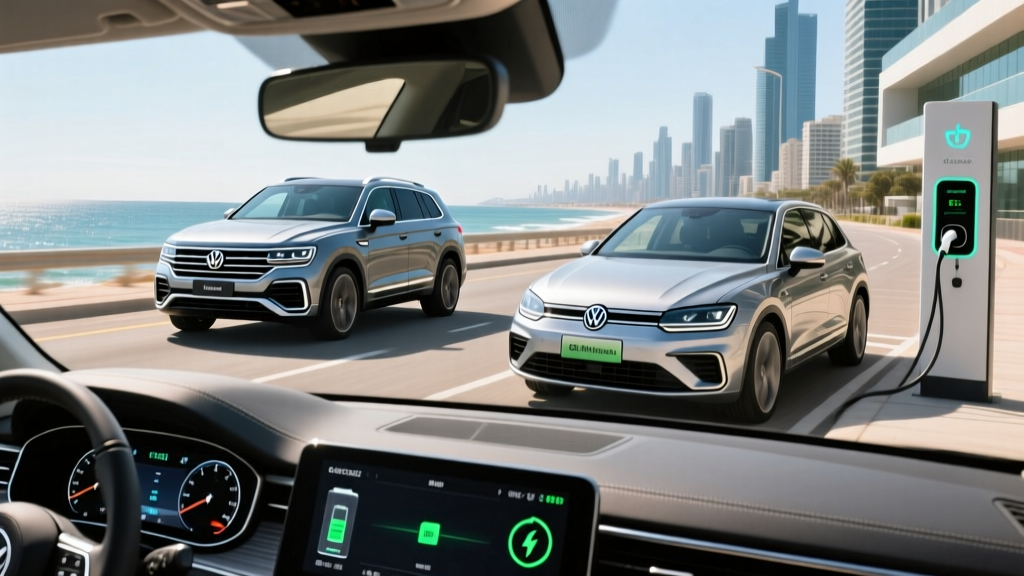
Volkswagen's hybrid lineup in the U.S. market has historically been thin compared to Toyota or Hyundai, but the 2026 model year brings renewed relevance to the question: what VW hybrids can American buyers actually purchase? The answer centers on the plug-in hybrid (PHEV) variants VW offers globally, with availability and trim specifics that vary by market. This guide breaks down the two most discussed VW PHEV nameplates — the Touareg PHEV and the Golf GTE/eHybrid — with exact specs, EPA-estimated MPG, electric-only range, battery and charging data, pricing, and a practical framework for deciding whether a VW hybrid fits your garage.
HEV vs PHEV: Where VW Hybrids Fit
Conventional Hybrid (HEV): A small battery (typically 1–2 kWh) recharges via regenerative braking and the gas engine. You never plug it in. City MPG often exceeds highway MPG because the electric motor assists heavily at low speeds. Toyota dominates this segment with the Prius and RAV4 Hybrid.
Plug-In Hybrid (PHEV): A larger battery (10–25+ kWh) provides 20–50 miles of electric-only driving before the gas engine engages. You plug it in at home (Level 2) or on the go to replenish the battery. Once the electric range is depleted, it operates like a conventional hybrid. VW's hybrid offerings fall squarely in the PHEV category.
Volkswagen does not currently sell a conventional (non-plug-in) HEV in the U.S. market for 2026. Every VW hybrid discussed here is a plug-in hybrid, meaning you can plug it in to unlock its electric-only range — and you should, to maximize fuel savings. If you never charge a PHEV, you're hauling dead battery weight and getting worse MPG than a comparable gas-only vehicle.
2026 VW Touareg PHEV (Touareg eHybrid / R): Specs and Efficiency
The Touareg PHEV pairs a 3.0-liter turbocharged V6 with an electric motor integrated into the transmission. It's VW's flagship SUV hybrid, competing with the BMW X5 xDrive50e and Volvo XC90 Recharge. Note that U.S. availability for the 2026 Touareg PHEV has been limited — VW has prioritized European and Chinese markets for this nameplate, and American buyers should verify current dealer availability before planning a purchase.
| Specification | Touareg PHEV (Global Spec) |
|---|---|
| Powertrain | 3.0L Turbo V6 + Electric Motor |
| Combined Horsepower | ~375 hp (system output) |
| Combined Torque | ~516 lb-ft |
| Battery Capacity (Gross / Usable) | ~17.9 kWh / ~14.8 kWh |
| Electric-Only Range (WLTP) | ~29–31 miles (WLTP) |
| Estimated EPA Electric Range | ~23–26 miles (estimated) |
| Level 2 AC Charging (Max kW) | 7.2 kW |
| Full Charge Time (Level 2, 240V) | ~2.5 hours |
| DC Fast Charging | Not available |
| 0–60 mph | ~5.7 seconds |
| Drivetrain | AWD (4MOTION) |
| Estimated Base MSRP (if U.S. available) | ~$68,000–$75,000 |
Real-World Range Note: WLTP testing tends to overstate electric range by 15–20% compared to the EPA cycle used in the U.S. For the Touareg PHEV, expect roughly 23–26 miles of electric-only driving on a full charge under EPA-equivalent conditions, dropping to 18–21 miles in cold weather (below 35°F) or at sustained highway speeds above 70 mph. The gas engine may also engage during hard acceleration even in EV mode.
Touareg PHEV Fuel Economy
| Mode | City | Highway | Combined |
|---|---|---|---|
| Charge-Depleted (Hybrid Mode, Estimated) | ~22 MPG | ~26 MPG | ~24 MPG |
| MPGe (Electric + Gas, Estimated) | ~56 MPGe combined | ||
Once the battery is depleted, the Touareg operates as a heavy luxury SUV with a V6. Its hybrid-mode MPG is modest — you're paying for performance and refinement, not Prius-level efficiency. The real savings come from daily commutes under 25 miles where you can stay in electric-only mode.
2026 VW Golf GTE / eHybrid: The Hot-Hatch PHEV
The Golf GTE is VW's sporty PHEV hatchback, blending GTI-inspired dynamics with plug-in efficiency. In European markets, it's offered alongside a more efficiency-focused Golf eHybrid variant. The Mk8 Golf GTE has been sold in Europe since 2020, but VW has not officially offered the Golf GTE or eHybrid in the U.S. market as of the 2026 model year. American enthusiasts have long awaited its return, and while VW has hinted at future PHEV hatchback availability, buyers should treat U.S. specs as preliminary until an official announcement.
| Specification | Golf GTE (European Spec, Mk8.5) |
|---|---|
| Powertrain | 1.5L Turbo I4 + Electric Motor |
| Combined Horsepower | ~245 hp (system output) |
| Combined Torque | ~295 lb-ft |
| Battery Capacity (Gross / Usable) | ~19.7 kWh / ~15.6 kWh |
| Electric-Only Range (WLTP) | ~62 miles (WLTP, optimistic) |
| Estimated EPA Electric Range | ~48–52 miles (estimated, if U.S. certified) |
| Level 2 AC Charging (Max kW) | 7.2 kW |
| Full Charge Time (Level 2, 240V) | ~2 hours 45 min |
| DC Fast Charging | Not available (some EU markets: 50 kW DC optional) |
| 0–60 mph | ~6.5 seconds |
| Drivetrain | FWD |
| Estimated U.S. MSRP (if available) | ~$38,000–$42,000 |
Real-World Range Note: The Mk8.5 Golf GTE's larger 19.7 kWh battery is a significant upgrade over earlier generations. Under WLTP, it claims 62 miles electric-only — but EPA testing is harsher. U.S. buyers should expect roughly 48–52 miles if the model is EPA-certified, with cold-weather range dropping to 35–42 miles at freezing temperatures. Highway driving at 75+ mph will also reduce electric range by 15–20%.
Golf GTE Fuel Economy (Estimated)
| Mode | City | Highway | Combined |
|---|---|---|---|
| Charge-Depleted (Hybrid Mode, Estimated) | ~38 MPG | ~40 MPG | ~39 MPG |
| MPGe (Electric + Gas, Estimated) | ~105 MPGe combined | ||
The Golf GTE's efficiency story is compelling: nearly 40 MPG even when the battery is empty, plus roughly 50 miles of gas-free commuting when charged daily. For comparison, a conventional 2026 VW Golf GTI achieves approximately 28 MPG combined (fueleconomy.gov).
Battery Warranty, Reliability, and Replacement Costs
VW PHEV Battery Warranty: Volkswagen provides a hybrid battery warranty of 8 years or 100,000 miles (whichever comes first) for PHEV models sold in the U.S., covering defects and capacity loss below a specified threshold (typically 70% of original capacity). This aligns with industry standards and is mandated in part by CARB-emissions states that require 10 years/150,000 miles for hybrid battery coverage.
PHEV batteries experience less degradation than full EV batteries because they operate in a narrower state-of-charge window — the vehicle's software maintains a buffer at both the top and bottom of the battery to prolong life. Real-world data from earlier VW PHEV models (such as the 2016–2019 Golf GTE sold in Europe) suggests battery capacity retention of 85–92% after 5 years and 60,000 miles of regular use.
Battery Replacement Cost
If a VW PHEV battery requires replacement outside of warranty, expect costs in the range of $6,000–$10,000 for parts and labor, depending on the model and battery size. The Touareg's larger pack will be at the higher end. However, outright battery failure is rare — most degradation is gradual, and a battery at 70% capacity still provides meaningful electric range.
Pricing, Tax Credits, and Incentives
Federal tax credit eligibility for PHEVs is governed by the same IRS §30D Clean Vehicle Credit rules that apply to full EVs, with critical caveats:
- Battery capacity: The vehicle must have a battery of at least 7 kWh — both the Touareg PHEV (~17.9 kWh) and Golf GTE (~19.7 kWh) qualify on this criterion.
- MSRP cap: SUVs (like the Touareg) must have an MSRP at or below $80,000; sedans/hatchbacks (like the Golf GTE) must be at or below $55,000.
- Buyer income cap: Modified adjusted gross income must not exceed $150,000 (single), $225,000 (head of household), or $300,000 (joint filing).
- Battery sourcing and critical minerals: The battery components and critical minerals must meet phased-in domestic-content and FEOC (Foreign Entity of Concern) requirements that tighten each year through 2029.
- Credit amount: Up to $7,500, split between a $3,750 battery-component credit and a $3,750 critical-minerals credit. PHEVs meeting only one requirement receive $3,750.
- Point-of-sale transfer: Since 2024, the credit can be transferred to the dealer as an upfront price reduction at purchase.
Important: Many PHEVs — particularly those from European manufacturers — have struggled with the battery-sourcing requirements introduced under the Inflation Reduction Act. VW's PHEV battery supply chain involves cells from suppliers like Samsung SDI and LG Energy Solution, and the critical-minerals sourcing may or may not satisfy FEOC-free requirements for 2026. Always verify current eligibility on the fueleconomy.gov tax credit tracker before purchasing, as the IRS updates qualifying vehicle lists regularly.
Who Should Choose a VW Hybrid?
Choose a VW PHEV if:
- Your daily commute is under 30 miles round-trip and you have home charging (Level 2)
- You want a European-driving SUV or hatchback with electric commuting and gas flexibility for road trips
- You aren't ready to commit to a full EV due to apartment living, limited charging access, or frequent long-distance travel
- You value VW's interior quality, driving dynamics, and brand heritage
Choose a full EV instead if:
- You have reliable home Level 2 charging and rarely drive more than 250 miles in a day
- You want zero tailpipe emissions and minimal maintenance (no oil changes, no gas engine upkeep)
- You want the full $7,500 federal tax credit — many full EVs have clearer eligibility than PHEVs
Choose a conventional hybrid (HEV) instead if:
- You cannot charge at home or at work — a PHEV's electric range is wasted without plugging in
- You want maximum MPG without behavioral changes (a Toyota RAV4 Hybrid gets ~40 MPG combined without ever plugging in)
- You want lower upfront cost — HEVs carry no plug-in premium
VW Hybrids vs the Competition
| Attribute | VW Touareg PHEV | BMW X5 xDrive50e | Toyota RAV4 Prime |
|---|---|---|---|
| Powertrain | 3.0L V6 + Motor | 3.0L I6 + Motor | 2.5L I4 + Motors |
| Combined HP | ~375 hp | 483 hp | 302 hp |
| Battery (kWh) | ~17.9 | 25.7 | 18.1 |
| EV Range (EPA) | ~23–26 mi (est.) | 38 mi | 42 mi |
| Hybrid-Mode MPG | ~24 combined | ~22 combined | ~38 combined |
| 0–60 mph | ~5.7s | 4.6s | 5.7s |
| DC Fast Charge | No | No | No |
| AWD | Yes | Yes | Yes |
| Est. MSRP | ~$68,000–$75,000 | ~$72,000 | ~$44,500 |
| U.S. Availability | Limited/Unconfirmed | Yes | Yes |
The RAV4 Prime dominates on value and efficiency. The BMW X5 PHEV wins on range and power. The Touareg PHEV, if available, offers a middle ground with VW-specific refinement but trails both on paper — and its uncertain U.S. availability is a significant practical hurdle.
Charging Your VW PHEV at Home
PHEV batteries are small enough that Level 1 charging (120V household outlet) is actually practical — unlike full EVs, which practically require Level 2. Here's what to expect:
| Charging Level | Power | Touareg PHEV Full Charge | Golf GTE Full Charge |
|---|---|---|---|
| Level 1 (120V, 12A) | ~1.4 kW | ~10–11 hours | ~11–12 hours |
| Level 2 (240V, 32A) | ~7.2 kW | ~2.5 hours | ~2.75 hours |
| DC Fast Charging | N/A | Not supported | Not supported (U.S.) |
For most PHEV owners, a standard 120V outlet in the garage is sufficient — plug in overnight and the battery is full by morning. A dedicated Level 2 charger ($400–$700 for equipment, $500–$1,500 for electrician installation) is a luxury for PHEVs but provides the convenience of faster top-ups if you make multiple short trips per day.
Neither VW PHEV supports DC fast charging in U.S. configurations. This is typical for the PHEV segment — the batteries are small enough that Level 2 replenishes them quickly, and adding DC charging hardware increases cost and weight.
Pros of VW Hybrids
- European driving dynamics and interior quality in a plug-in package
- Meaningful electric-only range for daily commuting (23–52 mi depending on model)
- Gas engine eliminates range anxiety on long trips
- PHEV batteries degrade slower than full EV batteries due to buffered SoC window
- 8-year/100,000-mile hybrid battery warranty
- Level 1 overnight charging is sufficient — no expensive home install required
Cons of VW Hybrids
- Limited U.S. model availability — most VW PHEVs are Europe-only or unconfirmed
- No DC fast charging on any VW PHEV
- Federal tax credit eligibility uncertain due to battery-sourcing rules
- Touareg PHEV hybrid-mode MPG is modest for a heavy luxury SUV
- Competition (RAV4 Prime, BMW X5 PHEV) offers better range or value
- VW's U.S. hybrid strategy has been inconsistent — future model availability unclear
Frequently Asked Questions
How many MPG does a VW hybrid get?
It depends on the model and whether the battery is charged. The Touareg PHEV achieves an estimated ~24 MPG combined once the battery is depleted. The Golf GTE achieves an estimated ~39 MPG combined in hybrid mode. When charged, both vehicles operate in electric-only mode for their first 23–52 miles, achieving 56–105 MPGe. Real-world city MPG in hybrid mode often exceeds EPA estimates by 2–4 MPG for PHEVs due to frequent regenerative braking opportunities.
How far can a VW PHEV go on electric only?
The Touareg PHEV provides an estimated 23–26 miles of EPA-equivalent electric range. The Golf GTE (European spec) achieves approximately 48–52 miles EPA-estimated, though this model is not confirmed for U.S. sale. Cold weather (below freezing) reduces electric range by 20–30% due to cabin heating demands and reduced battery efficiency.
Hybrid vs PHEV vs EV — which fits me?
Choose a conventional hybrid (HEV) if you can't charge at home and want better MPG without changing habits. Choose a PHEV if you can charge at home, commute under 40 miles daily, but need gas-engine flexibility for road trips. Choose a full EV if you have home charging, drive under 250 miles daily, and want the lowest operating costs and zero tailpipe emissions. PHEVs are the transitional choice — best for households not yet ready to go fully electric.
Are VW hybrids reliable and what does battery replacement cost?
VW's PHEV powertrains have demonstrated average-to-good reliability. The hybrid battery is warrantied for 8 years/100,000 miles and typically retains 85–92% capacity after 5 years of use. Out-of-warranty battery replacement costs $6,000–$10,000 depending on the model. The gasoline engine and transmission require standard maintenance (oil changes, fluid service). VW's overall brand reliability has improved in recent years but still trails Toyota and Honda in long-term dependability surveys from J.D. Power and Consumer Reports.
Does a VW hybrid qualify for a federal tax credit?
Potentially, but it's not guaranteed. Under IRS §30D rules, PHEVs must meet battery-capacity (7+ kWh), MSRP cap ($80K SUV / $55K car), buyer income, and battery-sourcing requirements. VW's PHEV battery supply chains have not consistently met the critical-minerals and FEOC-free component thresholds that tightened in 2024–2026. Check the fueleconomy.gov qualifying vehicle list before purchasing, and consult a tax professional for personal eligibility. State-level incentives may also apply — check your state's energy office or DMV website.
Can I charge a VW PHEV on a regular household outlet?
Yes. PHEV batteries are small enough (14–16 kWh usable) that a standard 120V Level 1 outlet fully recharges them in 10–12 hours — easily overnight. You do not need a dedicated 240V circuit, though installing one cuts charge time to roughly 2.5 hours. This is one of the major practical advantages of PHEVs over full EVs for apartment dwellers or homeowners without garage wiring upgrades.