Volvo XC90 Hybrid at a Glance: Quick Verdict
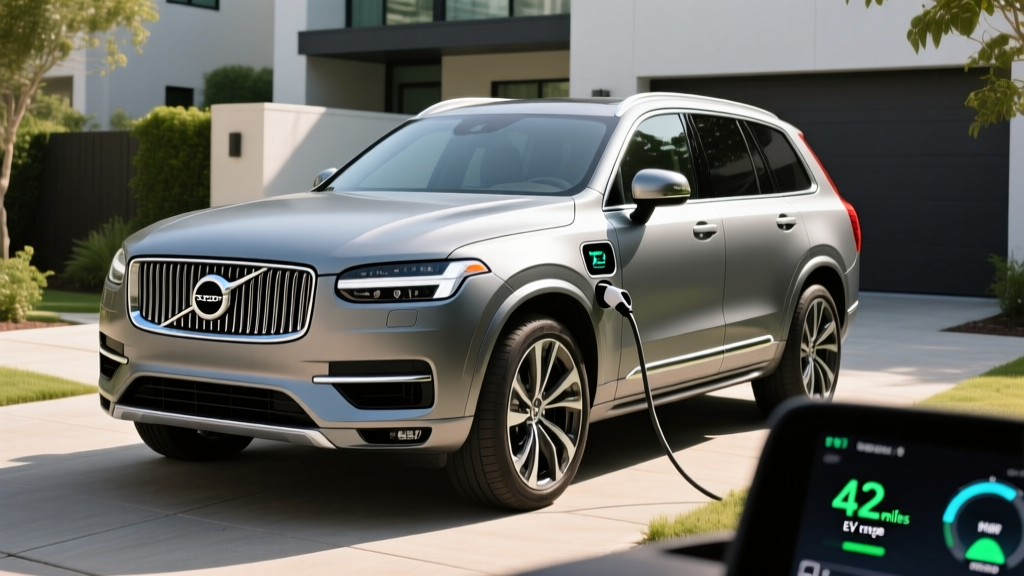
The Volvo XC90 Recharge is a plug-in hybrid (PHEV) three-row luxury SUV that pairs a turbocharged and supercharged 2.0-liter four-cylinder engine with a rear-axle electric motor to deliver 455 combined horsepower. For 2026, the XC90 Recharge offers an EPA-estimated 35 miles of electric-only range, a usable battery capacity of 18.8 kWh, and the ability to operate as a conventional hybrid once the battery is depleted. It occupies a specific niche: buyers who want electric commuting capability without sacrificing the flexibility of a gasoline engine for longer road trips.
If you are shopping for a Volvo XC90 hybrid, it is important to understand that Volvo currently sells only the Recharge (PHEV) variant in the United States. The mild-hybrid B5 and B6 powertrains were discontinued after the 2024 model year as part of Volvo's global electrification strategy. That means every new XC90 on dealer lots now carries a plug, a larger battery, and the potential for meaningful electric-only driving — but also a higher starting price than the old non-plug-in models.
EPA Fuel Economy and Real-World MPG
The XC90 Recharge operates in two distinct modes, and each has its own EPA rating. When the battery is charged, you drive on electricity measured in MPGe (miles per gallon equivalent). Once the battery is depleted, the vehicle functions as a conventional hybrid, and standard MPG ratings apply.
| Metric | City | Highway | Combined |
|---|---|---|---|
| MPGe (charge-depleting) | — | — | 58 MPGe |
| MPG (charge-sustaining / gas only) | 27 MPG | 28 MPG | 27 MPG |
| Electric-only range | 35 miles (EPA) | ||
| Total range (electric + gas) | ~430 miles | ||
Source: fueleconomy.gov
Real-world expectations: The 27 MPG combined figure in charge-sustaining mode is solid for a 4,900-pound luxury SUV with all-wheel drive. In real-world driving, owners who charge nightly and commute under 35 miles may use almost no gasoline on weekdays. However, on a long highway road trip with a depleted battery, expect closer to 25–26 MPG at sustained 75 mph speeds — the boxy aerodynamics and heavy curb weight work against highway efficiency. In cold weather (below 30°F), electric-only range can drop by 20–30%, reducing the EV portion to roughly 25–28 miles due to cabin heating demands and reduced battery efficiency.
Powertrain and Performance Specifications
The XC90 Recharge uses Volvo's T8 powertrain, which combines a front-mounted 2.0-liter turbocharged and supercharged inline-four engine with a 143-hp electric motor integrated into the rear axle. This setup provides all-wheel drive without a mechanical driveshaft connecting the front and rear — the engine powers the front wheels, the electric motor powers the rear wheels, and the vehicle's software coordinates both seamlessly.
| Specification | Value |
|---|---|
| Combined horsepower | 455 hp |
| Combined torque | 523 lb-ft |
| Gas engine | 2.0L turbo + supercharged I4, 312 hp |
| Electric motor (rear axle) | 143 hp / 229 lb-ft |
| 0–60 mph | 5.0 seconds |
| Transmission | 8-speed automatic |
| Drivetrain | AWD (eAWD — electric rear axle) |
| Towing capacity | 5,000 lbs |
The 5.0-second 0–60 mph time is genuinely quick for a three-row family SUV. The electric motor provides instant torque at low speeds, making the XC90 Recharge feel responsive in city driving and confident during highway merges. The eAWD system can send up to 100% of electric power to the rear wheels, which also means the vehicle can operate in rear-wheel-drive mode during pure electric driving — a detail that improves efficiency in EV mode.
Battery, Charging, and Electric-Only Range
The XC90 Recharge uses an 18.8 kWh lithium-ion battery pack (usable capacity) mounted low in the chassis between the front and rear axles. This is a significant upgrade from earlier T8 models that carried only 11.6 kWh — the larger pack is what enables the 35-mile EPA electric range.
Charging capabilities:
| Charging Level | Power (kW) | 0–100% Time | Notes |
|---|---|---|---|
| Level 1 (120V household) | ~1.4 kW | ~14 hours | Overnight top-up only |
| Level 2 (240V home/work) | ~5.0 kW (onboard charger limit) | ~4 hours | Recommended daily charging |
| DC Fast Charge | Not supported | N/A | No CCS/CHAdeMO inlet |
The XC90 Recharge does not support DC fast charging. This is typical for PHEVs — the battery is small enough that Level 2 charging fully replenishes it in about four hours, which covers most overnight and workplace charging scenarios. The onboard charger is limited to approximately 5.0 kW, meaning even if you connect to a 7.2 kW or 11.5 kW Level 2 station, the vehicle will only draw up to its 5.0 kW maximum. A standard 240V / 32-amp home charger (such as a ChargePoint Home Flex or Wallbox Pulsar Plus) is the ideal setup.
The connector is a J1772 (standard for AC Level 2 charging in North America). If you own a Tesla and have a NACS-to-J1772 adapter, you can also use Tesla's Level 2 destination chargers.
Battery Warranty, Reliability, and Replacement Cost
Volvo covers the XC90 Recharge's high-voltage battery with a warranty of 8 years or 100,000 miles, whichever comes first. This warranty guarantees that the battery will retain a minimum capacity threshold — typically 70% of original capacity — during the coverage period. If the battery degrades below that threshold or fails due to a manufacturing defect, Volvo will repair or replace it at no cost.
• High-voltage battery: 8 years / 100,000 miles (capacity retention ≥70%)
• Powertrain warranty: 4 years / 50,000 miles
• Basic vehicle warranty: 4 years / 50,000 miles
• Complimentary scheduled maintenance: 3 years / 36,000 miles
Reliability: The XC90 platform has been in production since 2016, and the T8/Recharge powertrain has accumulated years of real-world data. The most commonly reported issues in earlier model years (2016–2020) involved software glitches in the infotainment system and occasional concerns with the air suspension — neither of which are specific to the hybrid system. The high-voltage battery and electric motor have proven durable, with very few reports of premature failure. According to owner surveys, the hybrid components have been among the most reliable parts of the vehicle.
Battery replacement cost: If the battery falls outside warranty coverage and requires replacement, expect a cost between $8,000 and $12,000 including parts and labor at a Volvo dealership. This figure is consistent with other luxury PHEVs in this class. However, lithium-ion battery degradation in PHEVs tends to be gradual — most owners report losing only 5–10% of electric range over the first five years of ownership. With the 8-year/100,000-mile warranty, the vast majority of owners will never face an out-of-pocket battery replacement.
Pricing, Trims, and Tax Credit Eligibility
The 2026 Volvo XC90 Recharge starts at approximately $78,250 (including destination) for the Plus trim and climbs to roughly $85,000 for the Ultimate trim. Polestar Engineered variants, which add performance-tuned suspension, upgraded brakes, and distinctive styling, push the price above $90,000.
| Trim | MSRP (incl. destination) | Key Features |
|---|---|---|
| Plus (6-seat) | ~$78,250 | Pilot Assist, panoramic roof, 20" wheels |
| Plus (7-seat) | ~$78,250 | Same as 6-seat, bench second row |
| Ultimate | ~$85,000 | Nappa leather, air suspension, Bowers & Wilkins audio |
| Polestar Engineered | ~$91,500 | Öhlins dampers, 22" wheels, gold brake calipers |
Federal tax credit (§30D): As of 2026, the Volvo XC90 Recharge is not eligible for the full $7,500 federal EV tax credit under IRS §30D. The primary reason is the battery sourcing and critical minerals requirements — Volvo sources battery cells from suppliers that do not currently meet the domestic-content thresholds established by the Inflation Reduction Act. Additionally, the XC90 Recharge's MSRP exceeds the $80,000 cap for SUVs in certain trim configurations, which can further disqualify specific trims.
- MSRP cap for SUVs: $80,000 (Plus trim qualifies on paper; Ultimate and Polestar may exceed)
- Buyer income cap: $150,000 single / $300,000 married filing jointly
- Battery sourcing: Must meet critical minerals and battery component thresholds — XC90 Recharge currently does not qualify on this basis
- Point-of-sale transfer: Available for qualifying vehicles, but inapplicable if the vehicle itself does not meet sourcing rules
Some state-level incentives may still apply. For example, certain states offer rebates or HOV lane access for PHEVs regardless of federal credit eligibility. Check your state's energy or environmental agency for current programs. Always consult IRS.gov or a tax professional before relying on credit eligibility.
XC90 Recharge vs. Full EV vs. Gasoline SUV: Which Fits You?
Choosing between the XC90 Recharge, a fully electric SUV, and a conventional gasoline SUV depends on your driving patterns, charging access, and budget. Here is a practical decision framework:
- Your daily commute is under 35 miles round-trip and you can charge at home
- You take regular road trips exceeding 200 miles and don't want to plan around charging stations
- You want three rows and luxury features without going fully electric
- You want to reduce fuel consumption significantly without range anxiety
- You have reliable home Level 2 charging
- Your daily driving rarely exceeds 250 miles, or you're comfortable with DC fast-charging on road trips
- You want to eliminate gasoline purchases and oil changes entirely
- You want access to the full $7,500 federal tax credit (on qualifying models)
- You cannot install a home charger (apartment, street parking)
- You want the lowest purchase price and simplest ownership experience
- You drive high annual mileage and want consistent 34–36 MPG without plugging in
- You don't need electric-only driving capability
Pros and Cons of the Volvo XC90 Recharge
- 35 miles of electric range covers most commutes
- 455 hp delivers genuinely quick acceleration (5.0s 0–60)
- Premium Scandinavian interior with excellent materials
- Available 6- or 7-seat configurations
- Strong safety ratings from IIHS
- No range anxiety — gas engine covers long trips
- 8-year / 100,000-mile battery warranty
- No DC fast charging — Level 2 only
- Does not qualify for $7,500 federal tax credit
- High starting price ($78,250+)
- Onboard charger limited to ~5 kW
- Only 2.0L four-cylinder engine (some rivals offer six-cylinder)
- Third-row space is tight for adults
- Google-based infotainment can be slow to respond
Frequently Asked Questions
How many MPG does the Volvo XC90 hybrid get?
The 2026 XC90 Recharge gets an EPA-estimated 27 MPG combined (27 city / 28 highway) when operating on gasoline alone after the battery is depleted. When fully charged, it achieves 58 MPGe combining electric and gasoline operation. Real-world highway MPG in gas-only mode tends to be 25–26 MPG at sustained speeds above 70 mph.
How far can the XC90 Recharge go on electric only?
The EPA rates the XC90 Recharge at 35 miles of electric-only range. In real-world conditions, expect 30–33 miles in moderate weather with mixed driving, and 24–28 miles in freezing temperatures or sustained highway driving. The vehicle seamlessly transitions to hybrid mode once the battery is depleted — there is no interruption in driving.
Does the Volvo XC90 Recharge qualify for a federal tax credit?
As of 2026, the XC90 Recharge does not qualify for the $7,500 federal §30D tax credit due to battery sourcing requirements not meeting the Inflation Reduction Act's critical minerals and domestic component thresholds. Some state incentives may still apply. Always verify current rules on IRS.gov.
Is the XC90 Recharge reliable, and what does battery replacement cost?
The T8/Recharge powertrain has proven reliable since its introduction, with few reported issues specific to the hybrid system. The high-voltage battery is covered for 8 years or 100,000 miles. Out-of-warranty replacement costs range from $8,000 to $12,000, though most owners experience only gradual degradation (5–10% range loss over five years) and never need a replacement.
Can I charge the XC90 Recharge at a Tesla Supercharger?
No. The XC90 Recharge does not support DC fast charging of any kind, including Tesla Superchargers. You can only charge via AC Level 1 (120V) or Level 2 (240V) using the J1772 connector. For Level 2 charging at Tesla destination chargers, a NACS-to-J1772 adapter would work, but this is still limited to the vehicle's ~5 kW onboard charger rate.
Hybrid vs PHEV vs EV — which is right for me?
If you can charge at home and commute under 35 miles daily, the XC90 Recharge PHEV lets you drive on electricity most days while keeping a gas tank for road trips. If you want zero gasoline and have charging access, consider a full EV like the BMW iX or Tesla Model X. If you cannot charge at home at all, a conventional hybrid like the Toyota Grand Highlander Hybrid is the simpler, lower-cost choice — though Volvo no longer sells a non-plug-in XC90 in the US.