Quick Verdict: The Volvo XC60 PHEV at a Glance
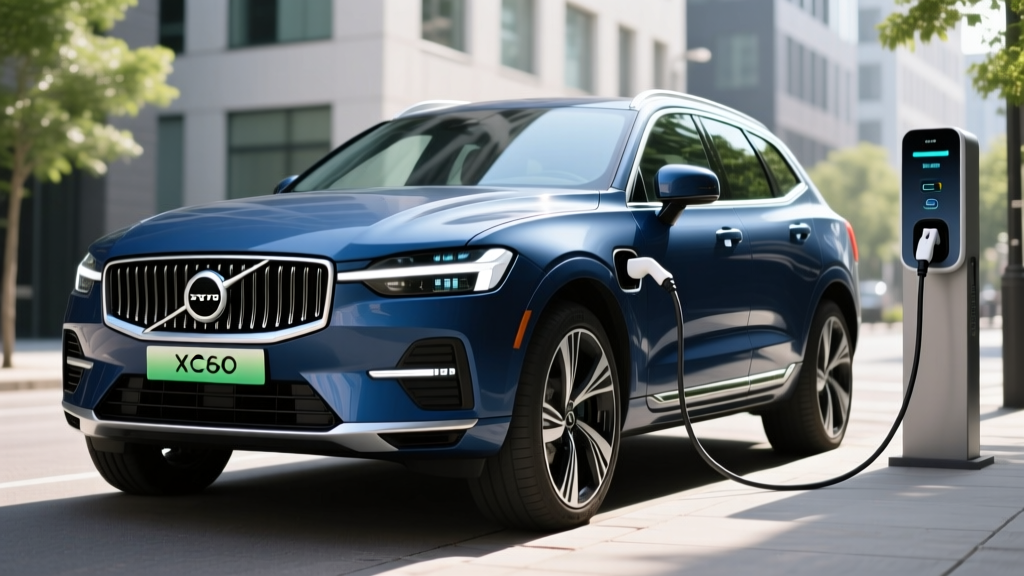
The 2026 Volvo XC60 Recharge (T8 plug-in hybrid) occupies a specific niche: luxury SUV buyers who want genuine daily electric commuting without surrendering the flexibility of a gas engine for road trips. With an EPA-rated 35 miles of electric-only range, 455 combined horsepower, and a starting MSRP around $59,000, it competes directly with the BMW X5 xDrive50e, Audi Q5 PHEV, and Mercedes-Benz GLE 350e.
But the XC60 Recharge isn't for everyone. Its 18.8 kWh battery delivers strong around-town electric driving, yet the lack of DC fast charging and a relatively small fuel tank mean road-trippers should plan stops carefully. Below, we break down every number that matters — from real-world MPG to battery warranty — so you can decide if this PHEV fits your garage.
| Spec | Value |
|---|---|
| Powertrain | 2.0L turbo- & supercharged I4 + rear electric motor (P8 AWD) |
| Combined Horsepower | 455 hp / 523 lb-ft torque |
| Battery (usable) | 18.8 kWh (NMC lithium-ion) |
| EPA Electric Range | 35 miles |
| EPA MPGe (electric + gas) | 63 MPGe combined |
| EPA MPG (gas-only, charge-depleted) | 28 city / 28 hwy / 28 combined |
| Total Combined Range | ~440 miles (electric + gas) |
| 0–60 mph | 4.5 seconds |
| AC Charging (Level 2) | 3.7 kW onboard charger; ~5 hours 0–100% |
| DC Fast Charging | Not supported |
| Fuel Tank | 13.2 gallons |
| Battery Warranty | 8 years / 100,000 miles |
| Base MSRP (Core Plus) | ~$59,050 |
| Federal Tax Credit (§30D) | Not eligible (see Tax Credit section) |
HEV vs. PHEV: Where the XC60 Recharge Fits
Volvo sells the XC60 exclusively as a plug-in hybrid (the "Recharge" badge) in the U.S. for the 2026 model year. There is no conventional hybrid (HEV) version currently offered. Here is the distinction every buyer should understand:
| Feature | Conventional Hybrid (HEV) | Plug-In Hybrid (PHEV) — XC60 Recharge |
|---|---|---|
| Plugs in? | No — charges via regenerative braking and engine | Yes — plug in to unlock full electric range |
| Electric-only range | 0–2 miles at very low speed | 35 miles EPA |
| Battery size | ~1–2 kWh | 18.8 kWh usable |
| Best for | Drivers without home/workplace charging access | Drivers with reliable Level 1 or Level 2 charging who commute under 35 miles daily |
| Gas engine still available? | Yes — always | Yes — kicks in when battery depletes or under hard acceleration |
If you cannot charge at home or work, a PHEV still works as a conventional hybrid once the battery depletes — you just lose the electric-only miles and the MPGe advantage. The XC60 Recharge returns a respectable 28 MPG combined on gas alone, but you are paying a premium for a battery you are not using to its potential.
Electric Range, MPGe, and Real-World Efficiency
The EPA rates the 2026 XC60 Recharge at 35 miles of electric-only range and 63 MPGe combined when operating in hybrid mode with a charged battery. Once the battery is depleted, it operates as a conventional hybrid at 28 MPG combined (28 city / 28 highway).
| Mode | City | Highway | Combined |
|---|---|---|---|
| Charge-sustaining (gas only) | 28 MPG | 28 MPG | 28 MPG |
| Blended (electric + gas, MPGe) | — | — | 63 MPGe |
| Electric-only range | 35 miles (EPA) | ||
Real-world electric range: Expect 28–32 miles of electric driving on mixed suburban/highway routes in moderate temperatures. In cold weather (below 30°F), cabin heating draws heavily from the 18.8 kWh pack, and real-world electric range can drop to 22–26 miles. Highway driving at 70+ mph also reduces range due to aerodynamic drag — plan on roughly 25 electric miles at sustained interstate speed.
Real-world gas MPG: The 28 MPG combined EPA figure is realistic for mixed driving once the battery is depleted. In city-heavy driving with frequent regenerative braking, some owners report 30–31 MPG. Highway-only at 75 mph, expect closer to 26–27 MPG. Source: fueleconomy.gov.
The total combined range — electric plus the 13.2-gallon fuel tank — works out to roughly 440 miles. That 13.2-gallon tank is smaller than many competitors (the BMW X5 xDrive50e holds 16.9 gallons), so plan fuel stops accordingly on long trips.
Powertrain and Performance
The XC60 Recharge pairs a 2.0-liter four-cylinder engine (both turbocharged and supercharged) with a rear-axle electric motor. Combined output is 455 horsepower and 523 lb-ft of torque, routed through an 8-speed automatic transmission to all four wheels. The result is a 0–60 mph time of 4.5 seconds — genuinely quick for a luxury compact SUV.
Driving dynamics are composed rather than sporty. The electric motor provides instant torque from a stop, making the XC60 feel responsive in city traffic. The transition between electric and gas power is smooth, one of the better-executed PHEV handoffs in the segment. Volvo's one-pedal driving mode offers moderate regenerative braking, though it won't bring the car to a complete stop like some full EVs.
The P8 AWD powertrain also means the rear wheels are driven exclusively by the electric motor, which gives the XC60 Recharge a slight rear-bias feel under hard acceleration — a pleasant surprise in a Volvo.
Charging: Level 1, Level 2, and the DC Fast-Charging Gap
The 2026 XC60 Recharge comes with a 3.7 kW onboard AC charger. There is no DC fast-charging capability — a notable limitation compared to rivals like the Mitsubishi Outlander PHEV, which supports DC fast charging. For a PHEV with an 18.8 kWh battery, however, this is less of a practical concern than it would be for a full EV.
| Charging Level | Power (kW) | Time (0–100%) | Miles of Range per Hour |
|---|---|---|---|
| Level 1 (120V household outlet) | ~1.4 kW | ~13–14 hours | ~7 miles/hr |
| Level 2 (240V, 16A) | 3.7 kW | ~5 hours | ~18 miles/hr |
| DC Fast Charging | Not supported | ||
Most XC60 Recharge owners charge overnight on a standard 120V outlet (Level 1), which adds roughly 7 miles of range per hour — enough to replenish the full 35-mile range in about 5 hours if you plug in when you get home from work. A Level 2 home charger (240V) is faster and more convenient but not strictly necessary for this battery size.
If you install a Level 2 charger, expect to spend $500–$1,200 for the charging unit and $800–$2,500 for electrician labor and permitting, depending on your panel capacity and run length. A 200-amp electrical panel is typically sufficient; older homes with 100-amp service may need a panel upgrade ($1,500–$3,500). Always get a quote from a licensed electrician before committing.
Pricing, Trims, and Tax Credit Eligibility
The 2026 Volvo XC60 Recharge is offered in several trim levels:
- Core Plus: ~$59,050 MSRP
- Plus Bright: ~$62,550 MSRP
- Ultimate: ~$66,850 MSRP
- Ultra (Polestar Engineered): ~$72,350 MSRP
All trims include the 18.8 kWh battery, P8 AWD powertrain, Google-based infotainment, and Volvo's suite of driver-assistance features (adaptive cruise, lane-keeping, blind-spot monitoring).
Federal Tax Credit (§30D) — XC60 Recharge Eligibility
As of 2026, the Volvo XC60 Recharge does not qualify for the federal §30D clean vehicle tax credit (up to $7,500). The reasons relate to the Inflation Reduction Act's battery-sourcing and critical-mineral requirements, which the XC60's supply chain does not currently satisfy. Additionally, the §30D credit has the following constraints for any vehicle:
- MSRP cap: $80,000 for SUVs (XC60 qualifies on price)
- Buyer income cap: $300,000 joint / $150,000 single (AGI limits)
- Battery component and critical mineral sourcing thresholds (XC60 fails here)
- Point-of-sale transfer option available for eligible vehicles
Always verify current eligibility on the fueleconomy.gov tax credit page and consult a tax professional before making a purchase decision based on credit availability. State and local incentives may still apply — check your state energy office or utility for rebates.
Battery Warranty, Reliability, and Replacement Costs
High-voltage battery warranty: Volvo covers the XC60 Recharge's 18.8 kWh traction battery for 8 years or 100,000 miles, whichever comes first. The warranty guarantees the battery will retain a minimum percentage of its original capacity (typically 70%) during the coverage period. If the battery drops below this threshold, Volvo will repair or replace it at no cost.
12V auxiliary battery: Separate from the traction battery, the 12V battery powers electronics and is covered under the standard 4-year/50,000-mile new-vehicle warranty.
PHEV battery degradation is generally mild compared to full EVs because the battery is smaller and the vehicle's thermal management system keeps it within an optimal temperature range. Volvo's NMC (nickel manganese cobalt) chemistry is well-established. Based on industry data from similar PHEV platforms, expect 5–10% capacity loss over the first 5 years, translating to roughly 1.5–3.5 miles of electric range reduction.
Replacement cost: If the high-voltage battery needs replacement outside of warranty, expect a cost in the range of $8,000–$12,000 for the battery pack plus labor. This is significantly less than full-EV battery replacements ($15,000–$25,000+) because the pack is smaller. However, out-of-warranty PHEV battery failures remain rare within the first 10–12 years of ownership.
Overall reliability: Volvo's PHEV powertrain has been in production since 2019 (the current generation). Owner surveys from Consumer Reports and J.D. Power place Volvo in the mid-pack for reliability. The most commonly reported issues involve infotainment software glitches (Google-based system) and minor electrical gremlins rather than powertrain failures. The hybrid-specific components — battery, electric motor, power electronics — have proven durable in Volvo's larger XC90 Recharge, which shares the same architecture.
XC60 PHEV vs. Full EV vs. Gas: Which Is Right for You?
Choose the XC60 Recharge PHEV if:
- You have home or workplace Level 1/Level 2 charging access
- Your daily commute is under 35 miles round-trip
- You take road trips of 200+ miles regularly and don't want to plan around DC fast chargers
- You want luxury SUV features (premium audio, leather, advanced safety) without going fully electric
- You live in a region with cold winters where EV range loss is a concern
Choose a full EV (e.g., Volvo EX60, Tesla Model Y, BMW iX) if:
- You want zero tailpipe emissions and lower per-mile energy costs
- You have reliable home charging and access to DC fast-charging networks for road trips
- You want to qualify for the $7,500 federal tax credit (many EVs qualify; this PHEV does not)
- You want minimal maintenance (no oil changes, no spark plugs, fewer moving parts)
Choose a conventional gas vehicle if:
- You have no access to any charging (no garage, no workplace charger)
- Your budget is under $45,000 and you need a compact luxury SUV
- You drive fewer than 8,000 miles per year and the fuel savings don't justify a PHEV premium
Pros
- 35 miles of electric range covers most daily commutes gas-free
- 455 hp delivers genuinely quick acceleration (4.5s 0–60)
- Smooth gas-electric powertrain transition
- High-quality Scandinavian interior with Google infotainment
- AWD with electric rear axle provides confident all-weather traction
- No range anxiety — gas engine covers long trips
Cons
- No DC fast charging
- Small 13.2-gallon fuel tank limits road-trip range (~440 mi total)
- Does not qualify for the $7,500 federal §30D tax credit
- Starting price near $60K is steep for the segment
- Real-world electric range drops noticeably in cold weather
- 3.7 kW onboard charger is slow compared to some PHEV rivals
Frequently Asked Questions
How many MPG does the Volvo XC60 PHEV get?
Once the battery is depleted, the 2026 XC60 Recharge returns an EPA-estimated 28 MPG combined (28 city / 28 highway) on gasoline alone. When you factor in regular charging and electric-only driving, the blended rating is 63 MPGe. Real-world results vary: city-heavy driving with daily charging can push effective fuel consumption well below 28 MPG, while highway-only driving without charging yields closer to 26–27 MPG.
How far can the XC60 Recharge go on electric only?
The EPA rates it at 35 miles of electric-only range. In real-world mixed driving at moderate temperatures, expect 28–32 miles. Cold weather (below 30°F) and sustained highway speeds can reduce that to 22–26 miles. The gasoline engine seamlessly takes over once the battery is depleted, so you are never stranded.
Does the XC60 PHEV qualify for a federal tax credit?
No. As of 2026, the Volvo XC60 Recharge does not qualify for the federal §30D clean vehicle tax credit (up to $7,500) due to battery-sourcing and critical-mineral requirements under the Inflation Reduction Act. It does meet the MSRP cap ($80,000 for SUVs) and may meet buyer income requirements, but the sourcing rules disqualify it. Check IRS.gov for the most current rules. State and utility incentives may still apply.
Is the XC60 PHEV battery reliable, and what does replacement cost?
Volvo covers the 18.8 kWh high-voltage battery for 8 years / 100,000 miles. PHEV batteries experience less degradation than full-EV batteries due to smaller size and active thermal management. Expect 5–10% capacity loss over 5 years. Out-of-warranty replacement, if needed, typically costs $8,000–$12,000 including labor. Failures within the first decade are uncommon based on Volvo's track record with the T8 powertrain since 2019.
Can I charge the XC60 Recharge on a regular household outlet?
Yes. A standard 120V household outlet (Level 1) delivers about 1.4 kW, adding roughly 7 miles of electric range per hour. A full charge from empty takes about 13–14 hours. For most owners who plug in overnight, this is sufficient to replenish the 35-mile electric range. A Level 2 (240V) charger cuts that to about 5 hours.
Hybrid vs. PHEV vs. EV — which should I choose?
If you can charge at home and your daily driving is under 35 miles, the XC60 Recharge PHEV lets you commute on electricity while keeping a gas engine for longer trips — the best of both worlds. If you want maximum savings, zero tailpipe emissions, and have good charging infrastructure, a full EV (like the Volvo EX60 or Tesla Model Y) may be a better long-term choice. If you have no charging access at all, a conventional hybrid (HEV) is the most practical electrified option, though Volvo does not currently offer an HEV version of the XC60.