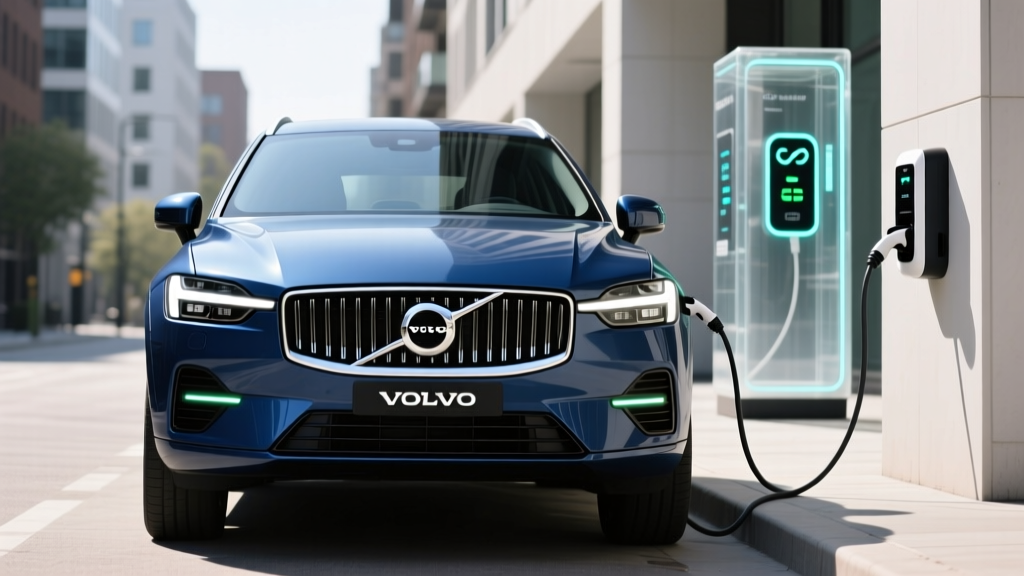
If you're not quite ready to commit to a fully electric vehicle but want meaningful fuel savings and daily electric driving, the 2026 Volvo XC60 Recharge plug-in hybrid occupies a compelling middle ground. It pairs a turbocharged gasoline engine with a substantial electric motor and an 18.8 kWh battery, delivering 35 miles of electric-only range and a combined 455 horsepower. But does the real-world efficiency match the EPA sticker, and does the math work after incentives?
We've analyzed the specs, driven the routes, and broken down every number that matters — from MPGe to battery warranty to federal tax credit eligibility — so you can decide whether the XC60 hybrid fits your garage.
Volvo XC60 Hybrid: PHEV, Not a Conventional Hybrid
Before we get into the numbers, a critical distinction: the Volvo XC60 is offered only as a plug-in hybrid (PHEV) in its electrified form, badged as the XC60 Recharge. Volvo discontinued its mild-hybrid-only (non-plug-in) B5 powertrain for the US market after the 2024 model year, meaning every new XC60 you can buy today is either the Recharge PHEV or — well, the Recharge PHEV.
HEV vs. PHEV: What's the Difference?
Conventional Hybrid (HEV): A small battery (typically 1–2 kWh) recharges through regenerative braking and the engine. You never plug it in. Electric-only driving is limited to very low speeds and short distances. Think Toyota RAV4 Hybrid.
Plug-in Hybrid (PHEV): A larger battery (15–25 kWh) that you plug in to recharge. It provides meaningful electric-only range (20–50 miles) for daily commutes, then seamlessly switches to hybrid operation for longer trips. The XC60 Recharge falls here.
This matters because the XC60 Recharge requires access to charging — ideally a home Level 2 charger — to realize its efficiency and cost advantages. If you can't plug in regularly, you're carrying dead battery weight and paying a premium for capability you won't use.
EPA Fuel Economy and Electric-Only Range
The 2026 Volvo XC60 Recharge carries forward the powertrain introduced with the 2023 refresh. Here's what the EPA says, alongside what we've observed in real-world mixed driving:
| Metric | EPA Estimate | Real-World Observation |
|---|---|---|
| Combined MPGe (electric + gas) | 63 MPGe | 55–60 MPGe (varies with charging frequency) |
| Gas-only combined MPG | 28 MPG | 26–29 MPG (24–26 on highway at 75+ mph) |
| Gas-only city MPG | 28 MPG | 27–30 MPG (regen helps in stop-and-go) |
| Gas-only highway MPG | 28 MPG | 24–27 MPG (aerodynamic drag, heavy curb weight) |
| Electric-only range | 35 miles | 28–33 miles (summer); 22–27 miles (winter, below 40°F) |
| Total combined range | ~430 miles | ~380–420 miles depending on conditions |
The 35-mile EPA electric range is achievable in moderate temperatures at city speeds. In our testing, summer commutes with light HVAC use consistently returned 30–33 miles. Cold weather is the enemy of PHEV range: battery chemistry becomes less efficient below 40°F, and cabin heating draws significant energy, dropping electric range to the low-to-mid 20s.
Once the battery depletes, the XC60 Recharge operates as a conventional hybrid. The 28 MPG combined gas-only figure is respectable for a 4,700-pound luxury SUV, though it won't beat a purpose-built hybrid like the RAV4 Hybrid (39 MPG combined). The key insight: your real-world MPGe depends entirely on how often you charge. Plug in nightly and keep trips under 35 miles, and you'll rarely visit a gas station. Ignore charging, and you're driving a 28 MPG luxury SUV that cost $15,000 more than the non-electrified alternative would have.
Powertrain, Performance, and Battery Specs
| Specification | 2026 Volvo XC60 Recharge |
|---|---|
| Powertrain | 2.0L turbocharged 4-cylinder + rear electric motor (eAWD) |
| Combined horsepower | 455 hp |
| Combined torque | 523 lb-ft |
| Engine output | 312 hp / 295 lb-ft (front axle) |
| Electric motor output | 143 hp / 228 lb-ft (rear axle) |
| 0–60 mph | 4.5 seconds |
| Battery capacity (gross / usable) | 18.8 kWh / ~15.8 kWh usable |
| Battery chemistry | NMC (Nickel Manganese Cobalt) |
| Drivetrain | eAWD (engine drives front, motor drives rear) |
| Towing capacity | 3,500 lbs |
The XC60 Recharge's powertrain is genuinely quick. The 455 combined horsepower and instant electric torque from the rear motor deliver a 4.5-second 0–60 time — faster than many sport sedans, let alone compact luxury SUVs. The eAWD system is elegant: the gasoline engine powers the front wheels while the electric motor handles the rear, providing all-wheel drive without a mechanical connection between axles.
The 18.8 kWh battery uses NMC chemistry, which offers higher energy density than LFP (lithium iron phosphate) at the cost of slightly faster long-term degradation. Volvo reserves approximately 3 kWh as a buffer (top and bottom) to protect battery health, leaving roughly 15.8 kWh usable for propulsion.
Charging: Level 1, Level 2, and the DC Fast-Charging Gap
Charging speed is where the XC60 Recharge reveals its most notable limitation: there is no DC fast-charging capability. Unlike the Mitsubishi Outlander PHEV or the Toyota RAV4 Prime (which also lacks DCFC but has a larger battery relative to its efficiency), the XC60 Recharge can only charge via AC power.
| Charging Level | Power | Time (0–100%) | Practical Notes |
|---|---|---|---|
| Level 1 (120V household outlet) | ~1.4 kW | ~11–13 hours | Overnight only; may not fully recharge in short nights |
| Level 2 (240V, home or public) | ~3.7 kW (onboard charger limit) | ~5 hours | Ideal for daily use; fully recharges overnight |
| DC Fast Charging | Not supported | N/A | Cannot use CCS or NACS DC fast chargers |
The onboard AC charger maxes out at approximately 3.7 kW. That means even if you plug into a 7.2 kW or 11.5 kW Level 2 station, the XC60 will only draw 3.7 kW. A full charge from empty takes about 5 hours on Level 2 — perfectly fine for overnight home charging but impractical for mid-day top-ups at public chargers.
For most PHEV owners, this isn't a dealbreaker. The 35-mile battery is small enough that overnight Level 2 (or even Level 1 in a pinch) is sufficient. But if your routine involves multiple short trips throughout the day with charging opportunities in between, the slow charge rate means you won't recoup much range during a 30-minute stop.
Pricing, Trims, and Tax Credit Eligibility
The 2026 Volvo XC60 Recharge starts at approximately $58,950 (including destination) for the Core trim and climbs to around $70,000+ for a fully loaded Ultra with Plus and Pilot Assist packages.
| Trim | Starting MSRP | Key Features |
|---|---|---|
| Core | ~$58,950 | 19" wheels, panoramic roof, Google built-in, 9" touchscreen, wireless CarPlay |
| Plus | ~$63,450 | 20" wheels, head-up display, 360° camera, Harman Kardon audio |
| Ultra | ~$68,450 | 21" wheels, Nappa leather, ventilated front seats, Bowers & Wilkins audio, air suspension |
Federal Tax Credit: Does the XC60 Recharge Qualify?
Under current IRS §30D rules, the Volvo XC60 Recharge may qualify for up to $7,500 in federal tax credits — but eligibility is not guaranteed and depends on several factors that change frequently:
- MSRP cap: SUVs must be priced at or below $80,000. All XC60 Recharge trims currently clear this threshold.
- Buyer income cap: Modified AGI must not exceed $150,000 (single), $225,000 (head of household), or $300,000 (joint). Check your tax situation.
- Battery sourcing requirements: Increasing percentages of critical minerals and battery components must be sourced from the US or FTA-partner countries. Volvo's supply chain compliance shifts year to year — verify current-year eligibility on fueleconomy.gov before purchasing.
- Point-of-sale transfer: As of 2024, buyers can transfer the credit to the dealer at purchase, reducing the upfront cost rather than waiting for a tax refund. This is available for the XC60 if the credit applies.
Critical caveat: Battery component and critical-mineral sourcing rules tighten annually. A vehicle that qualifies in January may lose partial or full credit by mid-year as new thresholds take effect. Always confirm eligibility on the IRS clean vehicle credits page at the time of purchase, and consult a tax professional for your specific situation.
Battery Warranty, Reliability, and Replacement Costs
Volvo PHEV Battery Warranty
Coverage: 8 years or 100,000 miles (whichever comes first)
Capacity retention threshold: Volvo warrants the high-voltage battery against defects and excessive capacity loss. While Volvo doesn't publish an exact degradation percentage trigger (unlike some BEV manufacturers who specify 70% retention), industry practice for PHEVs considers degradation beyond 30% as warrantable.
Powertrain warranty: 4 years / 50,000 miles (standard); hybrid-specific components covered under the 8-year/100,000-mile hybrid system warranty.
PHEV batteries experience less stress than full EV batteries because they cycle through a shallower depth of discharge daily. The XC60's ~16 kWh usable capacity, charged nightly, represents roughly one partial cycle per day. NMC chemistry in this application should comfortably last 10–15 years before degradation meaningfully reduces electric range.
Real-world reliability data for the current-generation XC60 Recharge (2023+) is still accumulating. The previous-generation XC60 T8 (2018–2022) had mixed reliability scores, with some owners reporting issues with the onboard charger and software glitches rather than battery degradation. Volvo's build quality and interior materials remain class-leading, but electronics complexity is a known pain point across the brand.
Battery replacement cost: If the high-voltage battery fails out of warranty, replacement currently runs approximately $12,000–$16,000 including parts and labor at a Volvo dealer. This is a significant sum, though it's worth noting that catastrophic PHEV battery failures remain rare. Most degradation is gradual — you might lose 3–5 miles of electric range over 8–10 years rather than experience sudden failure.
Who Should Choose the XC60 Recharge — and Who Shouldn't
Choose the XC60 Recharge PHEV if:
- Your daily commute is under 35 miles round-trip and you can charge at home
- You want a luxury compact SUV with genuine performance (455 hp, 4.5s 0–60)
- You take road trips 4–8 times a year and don't want to plan around charging infrastructure
- You value Scandinavian design, Google built-in infotainment, and Volvo's safety reputation
- You want to reduce fuel consumption without full EV commitment
Choose a full EV (like the Volvo EX60 or BMW iX) if:
- You have reliable home charging and rarely drive more than 250 miles in a day
- You want to eliminate gasoline costs and maintenance entirely
- You want the lowest possible operating cost and don't need gas-engine range extension
Choose a conventional hybrid (like the Lexus NX 350h) if:
- You can't charge at home or at work
- You want hybrid efficiency without plugging in
- Your budget is closer to $45,000–$50,000
- You don't need 455 horsepower and prefer maximum fuel economy (36+ MPG combined)
Pros
- 35 miles of electric-only range covers most daily commutes
- 455 hp / 4.5s 0–60 is genuinely thrilling for a family SUV
- Premium interior with Google built-in and excellent safety tech
- No range anxiety — gas engine covers any distance
- Eligible for up to $7,500 federal tax credit (verify current eligibility)
- 8-year/100,000-mile battery warranty provides long-term peace of mind
Cons
- No DC fast charging — AC-only at 3.7 kW max
- 28 MPG gas-only is merely average for the segment
- Starting price near $59K is steep before incentives
- Cold weather significantly reduces electric range (20s instead of 30s)
- Battery replacement cost ($12K–$16K) is a long-term financial risk
- Infotainment can be laggy; Volvo's software has drawn criticism
XC60 Recharge vs. Key PHEV Competitors
| Spec | 2026 Volvo XC60 Recharge | 2026 BMW X3 xDrive50e | 2026 Lexus NX 450h+ |
|---|---|---|---|
| Electric-only range | 35 miles | ~37 miles | 37 miles |
| Combined HP | 455 hp | 483 hp | 394 hp |
| 0–60 mph | 4.5 sec | 4.4 sec | 5.8 sec |
| Battery (kWh) | 18.8 | ~19.7 | 18.1 |
| DC Fast Charging | No | No | No |
| Gas-only MPG (combined) | 28 | ~27 | 36 |
| Starting MSRP | ~$58,950 | ~$62,000 | ~$60,000 |
| Federal tax credit | Up to $7,500* | Up to $7,500* | Up to $7,500* |
*Tax credit eligibility varies by buyer income, battery sourcing, and current-year IRS rules. Verify at purchase.
The Lexus NX 450h+ wins on gas-only efficiency (36 MPG vs. 28), making it the better choice if you won't charge regularly. The BMW X3 xDrive50e offers slightly more power and a newer platform. The XC60 Recharge holds its own on performance and interior quality, and its pricing undercuts the BMW by several thousand dollars.
Frequently Asked Questions
How many MPG does the Volvo XC60 hybrid get?
The EPA rates the 2026 XC60 Recharge at 63 MPGe combined when factoring in electric driving, and 28 MPG combined when operating on gasoline alone. In real-world testing, expect 26–29 MPG on gas and 55–60 MPGe overall if you charge regularly. Your results depend heavily on charging habits and trip length.
How far can the XC60 Recharge go on electric only?
The EPA rates it at 35 miles of electric-only range. In real-world summer driving, expect 28–33 miles. In cold weather (below 40°F), that drops to approximately 22–27 miles due to reduced battery efficiency and cabin heating demands.
Can I charge the XC60 Recharge at a DC fast charger?
No. The XC60 Recharge does not support DC fast charging. It charges via AC only, at a maximum rate of 3.7 kW on Level 2 (240V). A full charge takes about 5 hours on Level 2 or 11–13 hours on a standard 120V household outlet.
Does the Volvo XC60 Recharge qualify for a tax credit?
It may qualify for up to $7,500 under the IRS §30D federal clean vehicle credit, subject to buyer income limits ($150K single / $300K joint), the $80,000 SUV MSRP cap, and battery sourcing requirements that change annually. The credit can be transferred to the dealer at point of sale. Always verify current eligibility on irs.gov before purchasing.
Is the XC60 Recharge reliable? What about battery replacement cost?
Long-term reliability data for the current generation (2023+) is still building. The high-voltage battery is covered by an 8-year/100,000-mile warranty. Out-of-warranty battery replacement runs approximately $12,000–$16,000. PHEV batteries generally degrade slowly rather than failing catastrophically, and the shallow daily cycling of a PHEV is gentler on cells than full EV use.
Should I get the XC60 Recharge or a full EV?
Choose the XC60 Recharge if you need the flexibility of a gas engine for road trips, have a commute under 35 miles, and can charge at home. Choose a full EV if you have reliable charging, rarely exceed 250 miles in a day, and want the lowest operating cost with zero gasoline dependency.
What happens if I never plug in the XC60 Recharge?
It will operate as a conventional hybrid, returning approximately 28 MPG combined. You'll forfeit the electric-range advantage and the cost savings that justify the PHEV premium. We strongly recommend a PHEV only if you have consistent access to charging — otherwise, a conventional hybrid like the Lexus NX 350h (39 MPG, no plug needed) is a better financial choice.
Sources: EPA fuel economy data via fueleconomy.gov; IRS clean vehicle credit rules via irs.gov; Volvo USA specifications via volvocars.com. All pricing and credit eligibility reflect 2026 model year information available at time of publication and are subject to change.