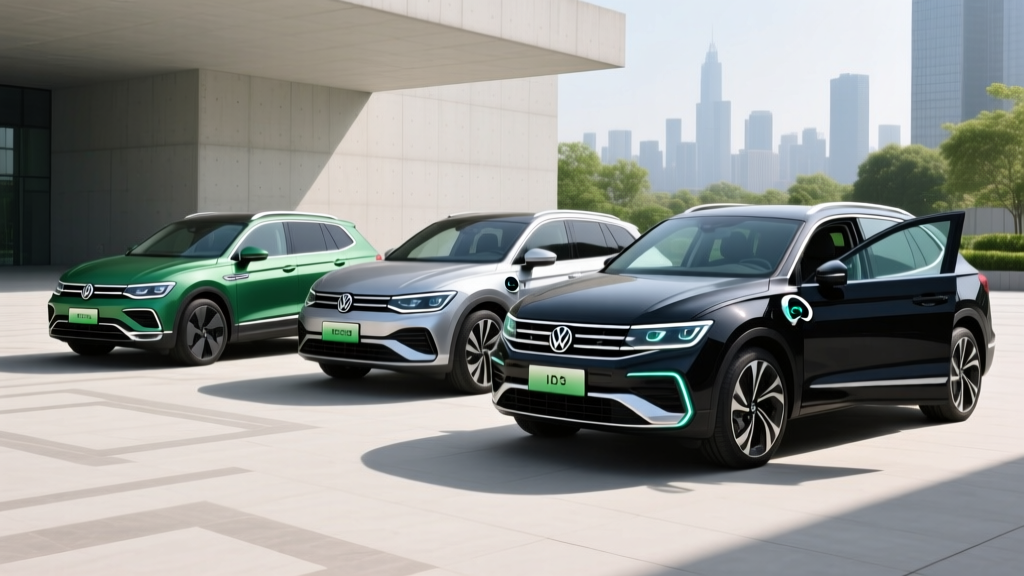
If you're asking whether Volkswagen makes a hybrid SUV, the short answer is yes — but the details depend heavily on where you live and which flavor of hybrid you want. For 2026, Volkswagen offers electrified SUV options in select markets, with the compact Tiguan eHybrid (a plug-in hybrid) leading the charge globally, while the U.S. market has historically seen limited hybrid SUV availability from VW. Let's dissect exactly what VW offers, the real-world numbers, and whether a VW hybrid SUV fits your garage — or whether you should look at a full EV or a competing hybrid instead.
Volkswagen's Electrified SUV Lineup: What's Available in 2026
Volkswagen's strategy has leaned heavily toward battery-electric vehicles (the ID.4, ID.7, and upcoming ID. models), but the automaker hasn't abandoned hybrids entirely. Here's what exists in the 2026 model year:
- VW Tiguan eHybrid (PHEV): Available in European and select global markets. This is a plug-in hybrid pairing a 1.5L turbocharged four-cylinder engine with an electric motor and a ~19.7 kWh (usable) battery pack.
- VW Tiguan (mild-hybrid, U.S.): The U.S.-spec 2026 Tiguan uses a mild-hybrid (MHEV) powertrain — a 48-volt system that assists the gas engine but cannot drive on electric power alone. This is not a full hybrid or plug-in hybrid.
- VW Touareg R (PHEV): Sold in European markets, this performance-oriented plug-in hybrid SUV pairs a V6 with an electric motor for over 450 combined horsepower. Not available in the U.S.
- VW ID.4 (BEV): VW's all-electric compact SUV sold in the U.S. and globally — not a hybrid, but the electric alternative VW pushes for American buyers.
For U.S. buyers specifically asking "does Volkswagen make a hybrid SUV?" — the honest answer is that VW does not currently sell a full hybrid (HEV) or plug-in hybrid (PHEV) SUV in the United States for 2026. The mild-hybrid system in the Tiguan provides marginal efficiency gains but doesn't deliver the electric-only driving or dramatic MPG improvements of a true hybrid. If you want a VW hybrid SUV, you'd need to look at European-market models or consider the used market (the previous-generation Tiguan eHybrid was briefly available in some regions).
HEV vs PHEV vs MHEV: What VW's Hybrid Labels Actually Mean
| Type | Abbreviation | Plug In? | Electric-Only Driving? | Typical Benefit |
|---|---|---|---|---|
| Conventional Hybrid | HEV | No | Very short (under 1 mi) | 20-40% better MPG than gas-only |
| Plug-In Hybrid | PHEV | Yes | 25-60+ miles on battery | Gas-free daily commuting + long road trips |
| Mild Hybrid | MHEV | No | No | 5-10% MPG improvement, smoother stop/start |
| Battery Electric | BEV | Yes (only power) | Entire range (200-350+ mi) | Zero tailpipe emissions, lowest fuel cost |
The U.S.-spec 2026 VW Tiguan's mild-hybrid system falls into that bottom tier of electrification. The 48-volt battery and integrated starter-generator smooth out the automatic stop-start function and provide a small torque fill during acceleration, but you will not see the kind of city MPG gains that a Toyota RAV4 Hybrid or Honda CR-V Hybrid delivers. This is a critical distinction many buyers miss.
VW Tiguan eHybrid (PHEV) Specs: The Global Market Option
For readers in markets where the Tiguan eHybrid is sold — or for U.S. buyers curious about what VW's PHEV technology looks like — here are the detailed specifications for the latest-generation model:
| Specification | Value |
|---|---|
| Powertrain | 1.5L turbo I4 + electric motor |
| Combined Horsepower | ~245 hp (system output) |
| Battery (usable) | ~19.7 kWh, NMC lithium-ion |
| Electric-Only Range (WLTP) | ~62 miles (≈50 mi EPA-equivalent) |
| Level 2 AC Charging | 3.6 kW onboard charger; ~5.5 hours 0-100% |
| DC Fast Charging | Not available (no DC inlet) |
| 0-62 mph (0-100 km/h) | ~7.5 seconds |
| Total Combined Range | ~500+ miles (electric + gas tank) |
| Drivetrain | Front-wheel drive |
The Tiguan eHybrid's 19.7 kWh battery is notably large for a compact PHEV SUV, giving it a genuine electric-only commute range that covers most daily driving. However, the 3.6 kW onboard charger means Level 2 replenishment is slow — overnight charging is the practical expectation, not a quick top-up during a lunch break. There is no DC fast charging capability, which is standard for most PHEVs in this class.
Fuel Economy: MPG Breakdown and Real-World Expectations
Fuel economy is where the distinction between VW's hybrid options becomes stark. Let's compare:
| Model | City MPG | Highway MPG | Combined MPG | MPGe (PHEV electric mode) |
|---|---|---|---|---|
| 2026 VW Tiguan (U.S. MHEV, 2.0T) | ~23 | ~30 | ~26 | N/A |
| VW Tiguan eHybrid (PHEV, WLTP-est.) | ~45 (hybrid mode)* | ~38* | ~42* | ~100 MPGe |
| Toyota RAV4 Hybrid (HEV, U.S.) | 41 | 38 | 39 | N/A |
| Honda CR-V Hybrid (HEV, U.S.) | 43 | 36 | 40 | N/A |
| Ford Escape PHEV (U.S.) | 42 (hybrid) | 36 | 39 | 105 MPGe |
*WLTP figures tend to run 10-15% higher than EPA equivalents; real-world U.S. EPA numbers for the Tiguan eHybrid would likely fall in the mid-to-high 30s combined in hybrid mode.
Real-world MPG note: Conventional hybrids (HEVs) and PHEVs in hybrid mode typically exceed their EPA city rating in stop-and-go traffic because regenerative braking recovers energy that gas cars waste as heat. Highway MPG is often lower than city for hybrids — the opposite of gas cars. If your commute is mostly city driving, expect the RAV4 Hybrid or CR-V Hybrid to deliver 42-45 MPG in practice. The Tiguan eHybrid, driven in electric mode for short commutes, uses zero gasoline on trips under ~50 miles.
Battery Warranty, Reliability, and Replacement Costs
Hybrid/PHEV Battery Warranty Standard: Most manufacturers, including Volkswagen, provide a minimum of 8 years/100,000 miles on the high-voltage hybrid battery (10 years/150,000 miles in California Air Resources Board states). This is federally mandated for emissions-related components on PHEVs and is standard practice for HEVs across the industry.
Volkswagen's hybrid and PHEV battery packs use proven NMC (nickel-manganese-cobalt) lithium-ion chemistry. Real-world degradation data from earlier VW PHEVs (like the previous-gen Golf GTE and Passat GTE) shows approximately 10-15% capacity loss over 8 years of typical use — meaning a 62-mile WLTP electric range might drop to ~53-56 miles after eight years. This is normal and well within warranty thresholds.
Out-of-warranty hybrid battery replacement costs for a compact PHEV like the Tiguan eHybrid typically run $4,000-$7,000 for the battery module, plus labor. However, individual cell or module repairs can be significantly cheaper ($1,000-$2,500). Complete battery failure before 150,000 miles is rare based on industry-wide data from fueleconomy.gov and long-term fleet studies.
For reliability broadly, Volkswagen has historically scored average to slightly below average in J.D. Power and Consumer Reports reliability surveys, though the hybrid/PHEV powertrain components themselves have proven durable. The mild-hybrid system in the U.S. Tiguan adds minimal complexity (a 48V battery and starter-generator) and is not a significant reliability concern.
Pricing and Tax Credit Eligibility
Here's where U.S. buyers face a hard truth: since VW doesn't sell a PHEV or full hybrid SUV in the States for 2026, the pricing and tax credit discussion centers on what's not available — and what alternatives cost.
| Model | Base MSRP (2026) | Federal §30D Tax Credit | Effective Price |
|---|---|---|---|
| 2026 VW Tiguan (MHEV, U.S.) | ~$30,500 | $0 (not a PHEV/BEV) | ~$30,500 |
| Toyota RAV4 Hybrid (HEV) | ~$33,500 | $0 (HEVs don't qualify) | ~$33,500 |
| Ford Escape PHEV | ~$39,500 | Up to $7,500* | ~$32,000* |
| VW ID.4 (BEV) | ~$39,700 | Up to $7,500* | ~$32,200* |
| Toyota RAV4 Prime (PHEV) | ~$44,500 | Up to $7,500* | ~$37,000* |
*Federal §30D tax credit eligibility depends on buyer income caps ($150K single / $300K joint), vehicle MSRP caps ($80K SUVs), battery component and critical mineral sourcing requirements, and point-of-sale transfer availability. Always verify current eligibility on irs.gov before purchasing. Credits are not guaranteed and rules change frequently.
The key takeaway: if you want an electrified VW SUV in the U.S., the ID.4 (all-electric) is VW's primary offering and may qualify for the full $7,500 federal credit — effectively bringing its price close to a gas Tiguan. For a PHEV SUV with federal credit eligibility, you'll need to look at the Ford Escape PHEV, Toyota RAV4 Prime, or Hyundai Tucson PHEV.
Hybrid vs PHEV vs EV: Which Fits Your Situation?
Choose a conventional hybrid (HEV) if:
- You cannot charge at home (no garage, no outlet access)
- You want better MPG without changing any habits
- Your budget is under $35,000 and you want proven reliability
- Best pick: Toyota RAV4 Hybrid or Honda CR-V Hybrid
Choose a plug-in hybrid (PHEV) if:
- You can install a Level 2 charger at home (240V outlet or hardwired)
- Your daily commute is under 40 miles round-trip (covers most errands on electric)
- You take road trips where charging infrastructure is sparse
- You want federal tax credit eligibility without full EV commitment
- Best pick: Ford Escape PHEV or Toyota RAV4 Prime
Choose a battery-electric vehicle (BEV) if:
- You have reliable home charging (Level 2 strongly recommended)
- Your daily driving is under 200 miles and you can plan road-trip charging
- You want the lowest per-mile fuel cost and minimal maintenance
- You want a VW specifically — the ID.4 is the electric SUV option
- Best pick: VW ID.4, Hyundai Ioniq 5, or Tesla Model Y
Pros and Cons of Going Hybrid with Volkswagen
Pros (VW MHEV Tiguan, U.S.)
- Smooth stop/start from 48V mild-hybrid system
- Competitive cargo space and VW interior quality
- Available AWD (4Motion)
- Strong dealership network for service
- Lower purchase price than PHEV/BEV alternatives
Cons (VW MHEV Tiguan, U.S.)
- Not a true hybrid — MPG gains are minimal (~26 combined)
- No electric-only driving capability
- No federal tax credit eligibility
- Falls far behind RAV4 Hybrid and CR-V Hybrid on fuel economy
- No PHEV SUV option available in the U.S. market
Frequently Asked Questions
How many MPG does the 2026 VW Tiguan hybrid get?
The U.S.-spec 2026 VW Tiguan with its mild-hybrid powertrain achieves approximately 23 city / 30 highway / 26 combined MPG, per EPA estimates. This is a mild-hybrid system, not a full hybrid, so fuel economy gains over a conventional gas engine are modest. For comparison, the Toyota RAV4 Hybrid achieves 41 city / 38 highway / 39 combined MPG as a true HEV.
Does Volkswagen sell a plug-in hybrid SUV in the United States?
No. As of the 2026 model year, Volkswagen does not offer a plug-in hybrid (PHEV) SUV in the U.S. market. The Tiguan eHybrid PHEV is sold in Europe and other global markets with an estimated 50-mile EPA-equivalent electric-only range, but it is not available at U.S. dealerships. VW's U.S. electrification strategy focuses on the all-electric ID.4.
How far can the VW Tiguan eHybrid go on electric only?
The European-market VW Tiguan eHybrid achieves approximately 62 miles of electric-only range on the WLTP test cycle, which translates to roughly 50 miles under the more stringent EPA methodology. This is competitive with other compact PHEV SUVs like the Ford Escape PHEV (37 miles EPA) and exceeds most rivals in the segment.
Is the VW hybrid system reliable and what does battery replacement cost?
Volkswagen's hybrid and PHEV systems use proven NMC lithium-ion chemistry with an 8-year/100,000-mile battery warranty (10 years/150,000 miles in CARB states). Out-of-warranty battery replacement runs approximately $4,000-$7,000, though individual module repairs cost less. Based on fleet data from similar VW PHEV systems, 10-15% battery degradation over 8 years is typical, and complete failure before 150,000 miles is uncommon.
Does a VW hybrid SUV qualify for any federal tax credit?
The U.S.-spec VW Tiguan mild-hybrid does not qualify for the federal §30D clean vehicle tax credit because it is not a plug-in hybrid or battery-electric vehicle — only PHEVs and BEVs with sufficient battery capacity are eligible. The all-electric VW ID.4 may qualify for up to $7,500 depending on buyer income, MSRP caps, and battery sourcing requirements. Always check current rules at irs.gov.
Should I buy a VW hybrid SUV or look at competitors?
If fuel economy is your priority, competitors like the Toyota RAV4 Hybrid (39 MPG combined), Honda CR-V Hybrid (40 MPG combined), or Ford Escape PHEV (37 miles electric + 39 MPG hybrid) deliver significantly better efficiency and are readily available at U.S. dealerships. The VW Tiguan mild-hybrid makes sense if you prioritize VW's driving dynamics, interior quality, and brand loyalty — but know that you're getting only marginal efficiency gains over a conventional gas SUV.
For the latest EPA fuel economy data on all hybrid and electric SUVs, visit fueleconomy.gov. For current federal tax credit eligibility, consult irs.gov.