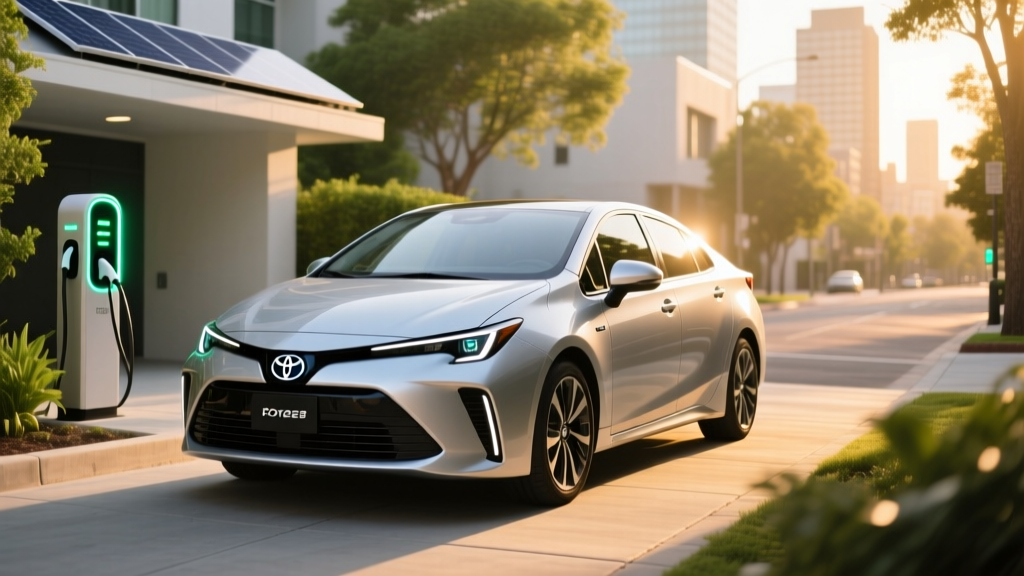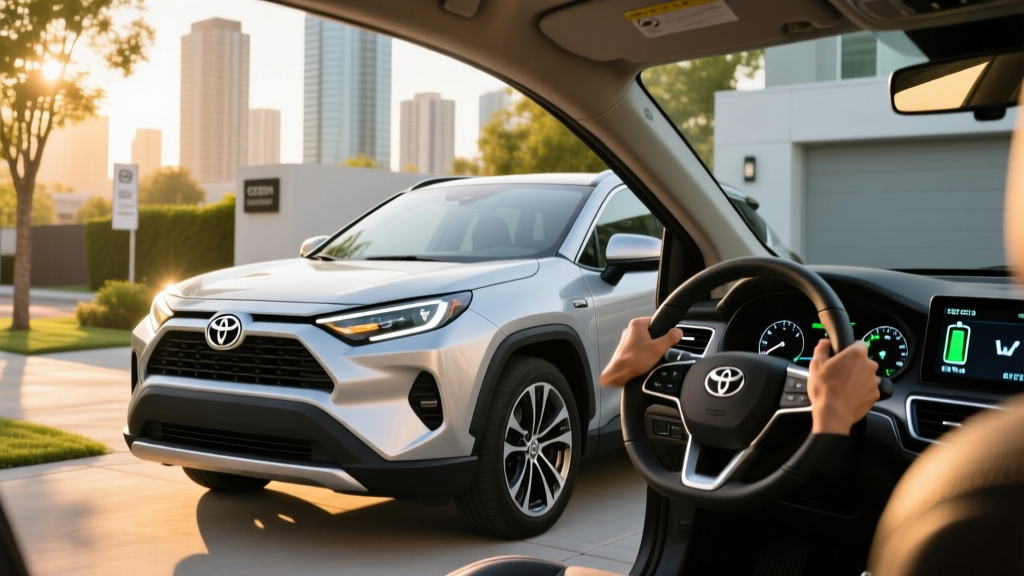
Quick Verdict: The Toyota RAV4 LE Hybrid at a Glance
The Toyota RAV4 LE Hybrid remains one of the most pragmatic compact SUVs on the market for drivers who want meaningful fuel savings without plugging in. For 2026, the LE Hybrid trim pairs a 2.5-liter four-cylinder engine with Toyota's fifth-generation hybrid system to deliver an EPA-estimated 41 MPG city, 38 MPG highway, and 39 MPG combined — figures that consistently hold up in real-world mixed driving. Starting at approximately $33,425 (including destination), it undercuts most plug-in hybrid and full-electric SUV competitors while offering a proven powertrain backed by a 10-year/150,000-mile hybrid battery warranty.
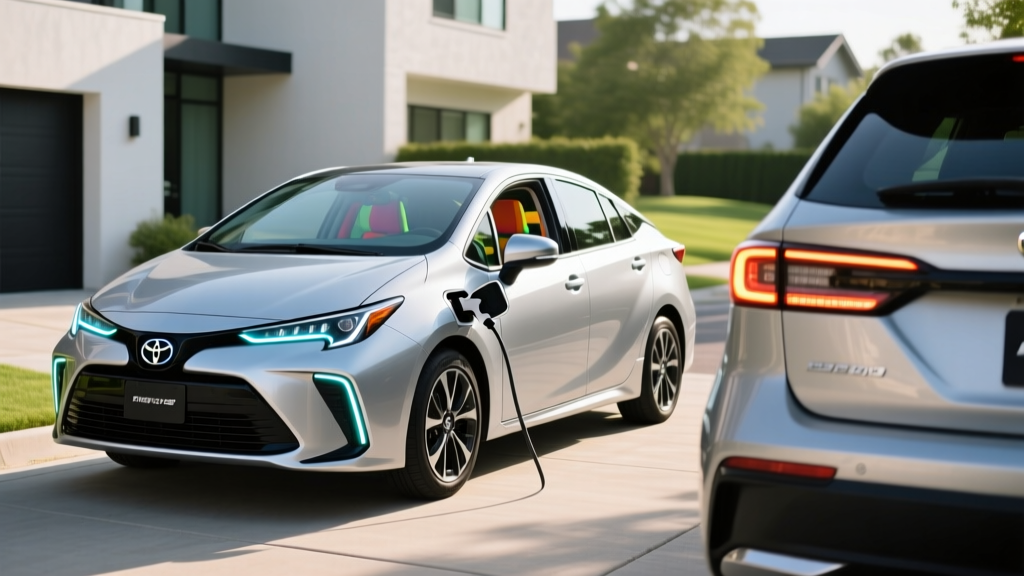
This is a conventional hybrid (HEV), not a plug-in. You never need to charge it — the system recovers energy through regenerative braking and the gasoline engine. If you're looking for electric-only driving, you'll want the RAV4 Prime (Toyota's PHEV variant), which we address in detail below. But for buyers who simply want a fuel-efficient, reliable compact SUV without lifestyle changes, the RAV4 LE Hybrid is a benchmark.
How Many MPG Does the Toyota RAV4 LE Hybrid Get?
The EPA fuel economy ratings for the 2026 RAV4 LE Hybrid with all-wheel drive (the standard configuration for this trim) are:
| Metric | EPA Estimate | Real-World Expectation |
|---|---|---|
| City MPG | 41 MPG | 40–44 MPG (hybrids often exceed EPA in stop-and-go) |
| Highway MPG | 38 MPG | 35–38 MPG (sustained 75+ mph reduces advantage) |
| Combined MPG | 39 MPG | 37–41 MPG depending on driving mix |
Source: fueleconomy.gov
Hybrids shine in city driving because the electric motor handles low-speed propulsion and regenerative braking recaptures energy that would otherwise be lost as heat. On the highway, the gasoline engine does most of the work, so the efficiency gap between a hybrid and a conventional gas car narrows. In our experience, owners who do a 60/40 city-to-highway split routinely report 39–42 MPG on the trip computer. Heavy-footed highway-only drivers may see 34–36 MPG.
With a 14.5-gallon fuel tank, that translates to roughly 530–590 miles of total range per fill-up — enough for most drivers to visit the gas station once every two weeks.
HEV vs. PHEV: Is the RAV4 LE Hybrid or RAV4 Prime Right for You?
Toyota sells two electrified RAV4 variants, and the distinction matters for your wallet and daily routine:
| Attribute | RAV4 LE Hybrid (HEV) | RAV4 Prime (PHEV) |
|---|---|---|
| Powertrain type | Conventional hybrid — no plug | Plug-in hybrid — charges from outlet |
| Combined horsepower | 219 hp | 302 hp |
| Electric-only range | N/A (motor assists engine) | 42 miles (EPA) |
| Battery capacity | ~1.6 kWh (small, self-charging) | 18.1 kWh usable |
| EPA combined MPG / MPGe | 39 MPG | 94 MPGe (electric) / 38 MPG (gas) |
| Level 2 charge time | N/A | ~2.5 hours (240V, 32A) |
| DC fast charging | No | No |
| Starting MSRP | ~$33,425 | ~$44,925 |
| Federal tax credit (§30D) | Not eligible | Up to $7,500 (subject to eligibility) |
Choose the RAV4 LE Hybrid (HEV) if: You don't have access to home or workplace charging, you want a lower purchase price, or your daily commute exceeds 50 miles and you'd rather not manage plug-in routines.
Choose the RAV4 Prime (PHEV) if: You can install a Level 2 charger at home, your daily round-trip commute is under 42 miles (covering most errands on electricity alone), and you want the performance boost of 302 hp combined.
Powertrain and Performance Specs
| Specification | Detail |
|---|---|
| Engine | 2.5L DOHC 4-cylinder (176 hp / 163 lb-ft) |
| Front electric motor | 134 hp / 199 lb-ft |
| Rear electric motor (AWD) | 54 hp / 120 lb-ft |
| Combined system output | 219 hp |
| Transmission | Electronically controlled CVT (eCVT) |
| Drivetrain | Electronic On-Demand AWD (standard on LE Hybrid) |
| 0–60 mph | ~7.4 seconds |
| Towing capacity | 1,750 lbs |
The eCVT is not a traditional belt-driven CVT — it's a planetary gearset that blends engine and motor power seamlessly. There are no rubber bands or slipping sensations. Acceleration is linear and adequate for highway merging, though the RAV4 Hybrid is tuned for efficiency, not sportiness. The electronic AWD system engages the rear motor only when traction is needed, which keeps efficiency high while providing confidence in rain and light snow.
Battery Warranty, Lifespan, and Replacement Cost
Hybrid Battery Warranty: Toyota covers the RAV4 LE Hybrid's traction battery for 10 years or 150,000 miles, whichever comes first. This applies to all 50 states and is transferable to subsequent owners.
Hybrid System Warranty: The hybrid control module, inverter, and related components carry the same 10-year/150,000-mile coverage.
Toyota's hybrid battery track record is among the best in the industry. The RAV4 Hybrid uses a nickel-metal hydride (NiMH) battery pack — a mature chemistry known for longevity over energy density. Based on data from earlier-generation RAV4 Hybrids and Prius models, most Toyota hybrid batteries last well beyond 150,000 miles with minimal degradation. The pack is relatively small (~1.6 kWh), so it experiences shallow charge/discharge cycles, which reduces wear.
If replacement is needed outside warranty, expect to pay $3,000–$5,000 for a new OEM battery pack installed at a dealership. Refurbished or reconditioned packs are available from third-party shops for $1,500–$2,500. However, given the warranty terms and Toyota's reliability history, most original owners will never face this cost.
Pricing, Tax Credits, and Ownership Economics
The 2026 Toyota RAV4 LE Hybrid starts at approximately $33,425 (including $1,395 destination charge). This is the base hybrid trim and includes Toyota Safety Sense 3.0, an 8-inch touchscreen, wireless Apple CarPlay and Android Auto, and the electronic AWD system.
Federal tax credit: The RAV4 LE Hybrid does not qualify for the IRS §30D Clean Vehicle Credit. That credit applies only to plug-in electric vehicles (BEVs and PHEVs) with sufficient battery capacity and meeting critical-mineral and battery-component sourcing requirements. Conventional hybrids like this one are excluded. For current rules, see IRS §30D guidelines.
State incentives: A handful of states offer rebates or HOV-lane access for conventional hybrids, but these programs are increasingly focused on PHEVs and BEVs. Check your state's energy office or DMV for current programs.
5-Year Fuel Cost Comparison
Here's how the RAV4 LE Hybrid stacks up against a comparable gas-only compact SUV over five years (assuming 15,000 miles/year and $3.50/gallon regular):
| Vehicle | Combined MPG | Annual Fuel Cost | 5-Year Fuel Cost |
|---|---|---|---|
| 2026 RAV4 LE Hybrid | 39 MPG | ~$1,346 | ~$6,730 |
| 2026 RAV4 LE (gas AWD) | 28 MPG | ~$1,875 | ~$9,375 |
| Savings with Hybrid | — | ~$529/yr | ~$2,645 over 5 years |
The hybrid premium over the gas RAV4 LE is roughly $1,500–$2,000 at the base trim level. You'll recoup that through fuel savings in approximately 3–4 years at current gas prices, and the hybrid's strong resale value typically preserves more of that premium at trade-in time.
Hybrid vs. PHEV vs. Full EV: Which Fits Your Situation?
The right electrified vehicle depends on your charging access, commute, and budget. Here's a practical decision framework:
Choose the RAV4 LE Hybrid (HEV) if:
- You rent or live somewhere you cannot install a charger
- You take frequent road trips and don't want to plan around charging stops
- Your budget is under $35,000 and you want maximum value
- You want fuel savings without changing any habits
Choose a PHEV (like the RAV4 Prime) if:
- You have a garage or driveway where you can install a 240V outlet
- Your daily driving is under 40 miles (you'll rarely use gas on weekdays)
- You want electric commuting but gas flexibility for weekend trips
- You can qualify for the $7,500 federal tax credit (income and sourcing rules apply)
Choose a full EV (like the Tesla Model Y or Hyundai Ioniq 5) if:
- You have reliable home Level 2 charging
- Your daily driving is under 250 miles
- You want zero tailpipe emissions and minimal maintenance (no oil changes, no gas engine)
- You're comfortable with DC fast charging on road trips
Pros and Cons
Pros
- 39 MPG combined — excellent for a compact AWD SUV
- No plug-in required — zero lifestyle adjustment
- 10-year/150,000-mile hybrid battery warranty
- Standard AWD across all Hybrid trims
- Strong resale value and proven Toyota reliability
- Toyota Safety Sense 3.0 standard (adaptive cruise, lane-keeping, auto emergency braking)
Cons
- No federal tax credit eligibility
- Modest 219 hp — adequate, not quick
- 1,750-lb towing limit (lower than some gas competitors)
- Cabin and infotainment feel dated vs. newer EV rivals
- Regenerative braking feel is mild — no true one-pedal driving
Frequently Asked Questions
How many MPG does the 2026 Toyota RAV4 LE Hybrid get?
The EPA rates it at 41 MPG city, 38 MPG highway, and 39 MPG combined. In real-world mixed driving, most owners report 37–42 MPG depending on driving style and conditions. City-heavy commutes tend to yield higher numbers because the hybrid system recovers more energy through regenerative braking at low speeds.
Does the RAV4 LE Hybrid need to be plugged in?
No. The RAV4 LE Hybrid is a conventional hybrid (HEV). It charges its small battery pack entirely through regenerative braking and the gasoline engine. You fuel it like any other car — just less often.
How far can the RAV4 Prime go on electric only?
The 2026 RAV4 Prime (the PHEV variant, a separate model) offers an EPA-estimated 42 miles of electric-only range on a full charge. The RAV4 LE Hybrid has no electric-only mode — the electric motor always works in conjunction with the gasoline engine.
Is the RAV4 Hybrid reliable, and what does a battery replacement cost?
Toyota's hybrid systems have an excellent long-term reliability record spanning two decades of Prius and RAV4 Hybrid production. The hybrid battery is warranted for 10 years/150,000 miles. Out-of-warranty replacement costs $3,000–$5,000 for a new OEM pack, though most batteries outlast the vehicle's typical ownership period. IIHS has rated the RAV4 highly for crash safety as well.
Does the RAV4 LE Hybrid qualify for any tax credit?
No. The federal §30D Clean Vehicle Credit applies only to plug-in vehicles (BEVs and PHEVs). The conventional RAV4 Hybrid does not qualify. The RAV4 Prime PHEV may qualify for up to $7,500 depending on your income, the vehicle's MSRP, and battery-sourcing requirements. Always verify current eligibility on IRS.gov before purchasing.
What's the difference between the RAV4 Hybrid and the RAV4 Prime?
The RAV4 Hybrid is a conventional HEV (no plug, 219 hp, 39 MPG combined, ~$33,425). The RAV4 Prime is a plug-in hybrid PHEV (302 hp, 42 miles electric-only, ~$44,925, potentially eligible for federal tax credits). The Prime is faster and can drive on electricity alone for short commutes, but it costs significantly more and requires access to charging to realize its benefits.