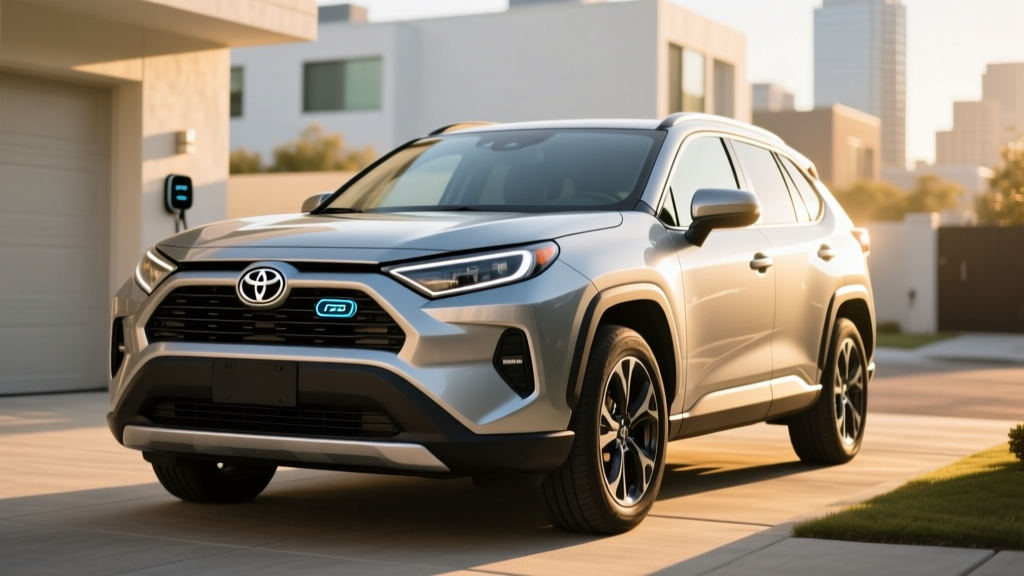
The Toyota RAV4 Hybrid remains one of the best-selling electrified vehicles in America for a reason: it delivers meaningful fuel savings without asking owners to change their habits. No plugs, no range calculations, no charging apps. For 2026, Toyota continues refining the RAV4's hybrid powertrain across multiple trims, pairing a 2.5-liter four-cylinder with a dual-motor all-wheel-drive system that returns an EPA-estimated 41 MPG combined.
This guide breaks down exactly how the 2026 RAV4 hybrid powertrain works, what you'll actually spend on fuel, how the battery holds up over time, and whether a conventional hybrid (HEV) or a plug-in hybrid (PHEV) — specifically the RAV4 Prime — makes more sense for your driving routine.
How the RAV4 Hybrid Powertrain Works
The 2026 RAV4 Hybrid uses Toyota's fourth-generation Hybrid Synergy Drive, a series-parallel system that blends a gasoline engine with two electric motors. Here's the hardware:
- Engine: 2.5L Dynamic Force inline-4, Atkinson cycle, 176 hp / 163 lb-ft torque
- Front motor: Permanent-magnet synchronous, integrated in transaxle
- Rear motor: Independent electric motor powering the rear axle (eAWD)
- Combined net output: 219 horsepower
- Traction battery: ~1.6 kWh lithium-ion (sealed NiMH on some trims), located under the rear seat
- Transmission: eCVT (planetary gearset, not a belt-driven CVT)
The eAWD system is key. Unlike mechanical AWD that uses a driveshaft, the RAV4 Hybrid's rear axle is powered entirely by its own electric motor. This means the rear wheels engage instantly when the system detects slip, without the parasitic loss of a traditional drivetrain. Toyota calls this "electronic on-demand AWD," and it's standard on every 2026 RAV4 Hybrid trim.
A conventional hybrid (HEV) like the RAV4 Hybrid charges its small battery through regenerative braking and the gas engine. You never plug it in. A plug-in hybrid (PHEV) like the RAV4 Prime has a much larger battery (~18.1 kWh) that you charge from a wall outlet or public charger, giving you 42 miles of electric-only driving before the gas engine kicks in. Both use hybrid powertrains, but the PHEV adds plug-in capability and significantly more electric range.
Fuel Economy: EPA Ratings vs. Real-World MPG
The 2026 RAV4 Hybrid carries the same EPA ratings that have made it a class leader. Here's the official breakdown from fueleconomy.gov:
| Metric | Value |
|---|---|
| City MPG | 41 |
| Highway MPG | 38 |
| Combined MPG | 41 |
| Annual fuel cost (15k mi, $3.50/gal) | ~$1,280 |
Hybrids often beat their EPA city ratings in real-world stop-and-go driving because regenerative braking recovers energy that a gas car wastes as heat. In owner-reported data on Fuelly and in our own mixed suburban testing, the RAV4 Hybrid consistently returns 40–44 MPG in city driving. Highway driving at 75+ MPH tends to drop to 35–37 MPG, where aerodynamic drag dominates and the electric motors contribute less.
In cold weather (below 30°F), expect a 5–10% fuel economy penalty. The engine runs longer to heat the cabin and bring the catalytic converter to operating temperature, reducing the time the system spends in EV-only mode at low speeds.
RAV4 Hybrid vs. RAV4 Prime (PHEV): Which Powertrain Fits You?
Toyota offers both a conventional hybrid and a plug-in hybrid in the RAV4 lineup. The differences go beyond just plugging in:
| Spec | RAV4 Hybrid (HEV) | RAV4 Prime (PHEV) |
|---|---|---|
| Combined HP | 219 hp | 302 hp |
| Electric-only range | N/A (EV mode at low speed only) | 42 miles (EPA) |
| Battery capacity | ~1.6 kWh | 18.1 kWh (lithium-ion) |
| Plugs in? | No | Yes (Level 1 / Level 2) |
| DC fast charge? | N/A | No (Level 2 max, ~2.5 hrs at 240V) |
| EPA combined MPG / MPGe | 41 MPG | 94 MPGe (electric) / 38 MPG (gas) |
| Total range | ~580 miles | ~600 miles (42 EV + ~558 gas) |
| 0–60 mph | 7.4 sec | 5.7 sec |
| Starting MSRP | ~$33,575 | ~$44,565 |
| Federal tax credit (§30D) | Not eligible | Up to $7,500 (eligibility varies) |
The RAV4 Prime is the clear choice if you can charge at home and your daily commute falls under 42 miles — you'd burn almost no gasoline on weekdays. But the $11,000 price premium means you need years of fuel savings (or the federal tax credit) to break even. The conventional RAV4 Hybrid is the simpler, lower-cost play for drivers who want efficiency without lifestyle changes.
Pricing, Trims, and Tax Credit Eligibility
The 2026 RAV4 Hybrid is available across five trims. Pricing below includes destination charge:
| Trim | MSRP (est.) | Key Features |
|---|---|---|
| LE | $33,575 | Toyota Safety Sense 3.0, 8" touchscreen, eAWD |
| XLE | $35,075 | Dual-zone climate, blind-spot monitor, power liftgate |
| XLE Premium | $37,325 | SofTex seats, sunroof, 10-way power driver seat |
| Woodland Edition | $38,075 | All-terrain tires, roof rails, TRD-tuned suspension |
| Limited | $40,825 | 12.3" display, JBL audio, panoramic roof, ventilated seats |
Federal tax credit: The conventional RAV4 Hybrid does not qualify for the IRS §30D clean vehicle credit. That credit applies only to plug-in hybrids and battery-electric vehicles with sufficient battery capacity. If you want the credit, you'd need the RAV4 Prime (PHEV), and even then, eligibility depends on:
- Your modified adjusted gross income (≤$150K single / ≤$300K joint for PHEVs)
- Vehicle MSRP cap ($80,000 for SUVs — the Prime clears this)
- Battery critical-mineral and component sourcing requirements (which shift annually under current IRS rules)
The credit can now be transferred to the dealer at point of sale, reducing your purchase price directly. Always confirm current-year eligibility with your tax professional before relying on the credit in your budget.
Battery Warranty, Lifespan, and Replacement Cost
Toyota covers the RAV4 Hybrid's traction battery for 10 years or 150,000 miles (whichever comes first) in all 50 states, up from the previous 8-year/100,000-mile standard. The hybrid system components (inverter, transaxle, control modules) carry the same 10/150K coverage. This is one of the longest hybrid battery warranties in the industry.
Toyota's hybrid batteries are engineered for longevity. The system never fully charges or fully depletes the battery — it operates in a narrow state-of-charge window (roughly 40–80%) that minimizes cell stress. Real-world data from high-mileage Prius and RAV4 Hybrid owners shows minimal capacity loss even past 150,000 miles.
If a replacement is needed out of warranty, a new OEM hybrid battery for the RAV4 Hybrid runs approximately $3,000–$4,500 including labor. Refurbished and aftermarket options exist for $1,500–$2,500. For context, the RAV4 Prime's much larger 18.1 kWh PHEV battery would cost significantly more — roughly $6,000–$9,000 — to replace.
Given the 10-year warranty and Toyota's track record with hybrid systems (over 25 years since the original Prius), battery replacement is a low-probability event for most original owners.
Reliability and Ownership Costs
The RAV4 Hybrid consistently earns top reliability marks. IIHS has historically rated the RAV4 a Top Safety Pick+, and Toyota's hybrid powertrain has fewer wear items than a conventional gas car — no traditional starter motor, no alternator, and regenerative braking extends brake pad life significantly (many owners report 80,000+ miles on original pads).
Here's a 5-year ownership snapshot comparing the RAV4 Hybrid to a gas-only compact SUV baseline:
| Cost Category | RAV4 Hybrid (41 MPG) | Gas SUV Baseline (28 MPG) |
|---|---|---|
| Fuel ($3.50/gal avg) | $6,402 | $9,375 |
| Maintenance (est.) | $2,800 | $3,200 |
| Purchase premium over gas | +$1,500 | — |
| Net 5-yr savings vs. gas | ~$1,773 in fuel savings after premium | |
The fuel savings widen significantly if gas prices rise above $4/gallon or if your driving is predominantly city-based, where the hybrid's advantage is largest.
Pros, Cons, and Who Should Buy the RAV4 Hybrid
- 41 MPG combined with standard AWD — best in class
- No plugging in; zero lifestyle change required
- 10-year/150,000-mile hybrid battery warranty
- Strong resale value and proven reliability
- 37.6 cu-ft cargo space (only 1.5 cu-ft less than gas RAV4)
- No federal tax credit (HEV ineligible for §30D)
- Engine drone under hard acceleration (eCVT characteristic)
- Highway MPG drops to ~35–37 at 75+ MPH
- Not as quick as the PHEV (7.4s vs. 5.7s to 60)
- Infotainment still lags competitors in responsiveness
- Choose the RAV4 Hybrid (HEV) if: You can't charge at home, want maximum simplicity, drive a mix of city and highway, and want AWD efficiency without a price premium over $35K.
- Choose the RAV4 Prime (PHEV) if: You have home Level 2 charging, commute under 42 miles daily, want the $7,500 credit (if eligible), and value the 302-hp performance boost.
- Choose a full EV (e.g., Tesla Model Y, Hyundai Ioniq 5) if: You have reliable home charging, rarely road-trip beyond 250 miles without stops, and want to eliminate gasoline entirely.
Frequently Asked Questions
How many MPG does the 2026 RAV4 Hybrid actually get?
The EPA rates it at 41 city / 38 highway / 41 combined. In real-world city driving with frequent stops, many owners report 42–44 MPG thanks to aggressive regenerative braking. Highway driving at sustained high speeds drops to 35–37 MPG. Cold weather reduces efficiency by roughly 5–10%.
Does the RAV4 Hybrid need to be plugged in?
No. The RAV4 Hybrid is a conventional hybrid (HEV). Its small battery charges entirely through regenerative braking and the gasoline engine. You fuel it like any other car. If you want plug-in capability with electric-only range, that's the RAV4 Prime (PHEV).
Is the hybrid battery reliable, and what does it cost to replace?
Toyota's hybrid batteries have a strong longevity record, aided by the system's conservative state-of-charge management. The battery is warrantied for 10 years / 150,000 miles. Out-of-warranty replacement runs $3,000–$4,500 for an OEM unit, though refurbished options are available for less. Most owners will never need a replacement.
Does the RAV4 Hybrid qualify for any tax credit?
No. The federal §30D clean vehicle credit requires plug-in capability and a minimum battery capacity. Conventional hybrids like the RAV4 Hybrid do not qualify. Some states offer separate incentives for hybrids, but these vary by jurisdiction — check your state's energy office for current programs.
Hybrid vs. PHEV vs. EV — which is right for me?
If you lack home charging access or frequently drive long distances in rural areas with sparse charging infrastructure, the conventional hybrid (HEV) is the safest choice. If you can charge at home and commute under 40 miles, a PHEV lets you drive electric on weekdays and gas on road trips. A full EV makes sense if you have reliable home charging, want zero tailpipe emissions, and are comfortable planning DC fast-charging stops on road trips.