Quick Verdict: Honda's Most Complete CR-V Hybrid Package
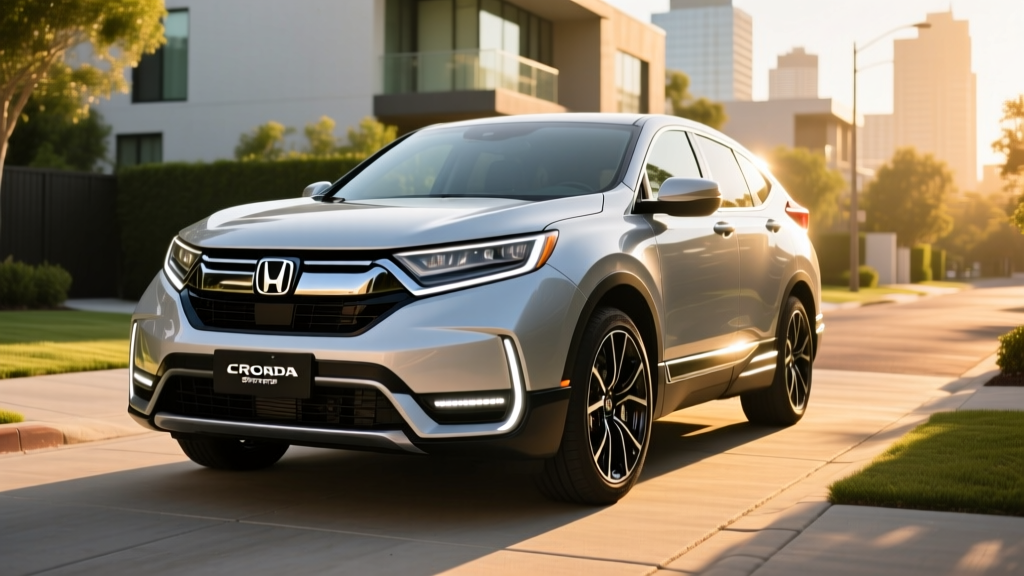
The 2026 Honda CR-V Hybrid Sport Touring sits at the top of Honda's compact SUV hybrid lineup, pairing a 204-horsepower two-motor hybrid powertrain with standard all-wheel drive and Honda's most comprehensive feature set. With an EPA-rated 40 MPG combined, it delivers genuine fuel savings over gas-only competitors while avoiding the range anxiety and charging logistics of a full EV. At $42,350 MSRP, it's the priciest CR-V Hybrid trim, but the Sport Touring bundles premium features that would cost thousands more as standalone options on lower trims.
This is a conventional hybrid (HEV), not a plug-in hybrid (PHEV). You never plug it in — the gasoline engine and regenerative braking handle all battery charging. For buyers who want electric-only commuting without charging infrastructure, Honda offers the CR-V e:FHEV in some markets, but in the US, the CR-V Hybrid lineup remains strictly self-charging.
| Spec | Value |
|---|---|
| Powertrain | 2.0L Atkinson-cycle 4-cyl + two-motor hybrid |
| Combined Horsepower | 204 hp |
| Combined Torque | 247 lb-ft (electric motor) |
| Drivetrain | AWD (standard on Sport Touring) |
| EPA MPG (City / Hwy / Combined) | 43 / 36 / 40 |
| Fuel Tank | 15.3 gallons |
| EPA Total Range | ~612 miles |
| 0–60 mph | ~7.6 seconds (est.) |
| Cargo Volume (behind rear seats) | 36.3 cu ft |
| Cargo Volume (rear seats folded) | 76.5 cu ft |
| Towing Capacity | 1,000 lbs |
| Base MSRP (Sport Touring AWD) | $42,350 |
| Hybrid Battery Warranty | 8 years / 100,000 miles |
| Powertrain Warranty | 5 years / 60,000 miles |
Fuel Economy: EPA Ratings and Real-World MPG
The EPA rates the 2026 CR-V Hybrid AWD at 43 MPG city, 36 MPG highway, and 40 MPG combined. These figures apply across the Hybrid Sport, Sport L, and Sport Touring trims — Honda's hybrid system is mechanically identical across all three. Front-wheel-drive Hybrid trims (available on the Sport trim only) bump the rating slightly to 43/36/40 as well for the current model year, though historically FWD held a 1–2 MPG advantage.
| Drivetrain | City MPG | Highway MPG | Combined MPG |
|---|---|---|---|
| FWD (Sport trim) | 43 | 36 | 40 |
| AWD (Sport, Sport L, Sport Touring) | 43 | 36 | 40 |
| Gas-only CR-V AWD (comparison) | 27 | 32 | 29 |
The hybrid's city advantage is significant. Honda's two-motor system operates primarily in electric drive mode at low speeds, with the gasoline engine acting as a generator rather than directly turning the wheels. This means stop-and-go traffic — where gas engines waste the most fuel — is precisely where the CR-V Hybrid shines. In real-world city driving, many owners report exceeding the 43 MPG city rating, with figures in the 44–47 MPG range common in moderate climates without heavy air-conditioning use.
Highway driving tells a different story. Above 65 mph, the engine engages directly via a lock-up clutch, and the hybrid system provides less benefit. Expect 34–36 MPG on flat highway cruises at 70–75 mph. In cold weather (below 35°F), the engine runs more frequently to maintain cabin heat, and real-world combined economy can dip to 35–37 MPG until the powertrain reaches operating temperature. Source: fueleconomy.gov — 2026 Honda CR-V Hybrid.
How Honda's Two-Motor Hybrid System Works
The CR-V Hybrid uses Honda's fourth-generation two-motor hybrid system, which is fundamentally different from Toyota's planetary-gear eCVT approach. Here's how it operates across three modes:
- EV Drive: At low speeds and light loads, the traction motor powers the wheels using energy from the 1.06 kWh lithium-ion battery. The gas engine is off. This mode covers gentle acceleration up to roughly 25–30 mph.
- Hybrid Drive: Under moderate acceleration, the gas engine starts but doesn't drive the wheels. Instead, it spins a generator motor that produces electricity to feed the traction motor. This series-hybrid mode is efficient because the engine can run at its optimal RPM regardless of vehicle speed.
- Engine Drive: At steady highway speeds (typically above 45–55 mph), a lock-up clutch connects the engine directly to the front wheels. This is more efficient than converting mechanical energy to electrical and back again. The traction motor can still add torque for passing.
The combined output of 204 hp and 247 lb-ft of torque (from the electric motor) gives the CR-V Hybrid confident acceleration for merging and passing. The 0–60 mph time of approximately 7.6 seconds is competitive with turbocharged gas rivals, and the electric motor's instant torque delivery makes it feel quicker than the number suggests around town.
Sport Touring Trim: What You Get for $42,350
The Sport Touring is the flagship CR-V Hybrid trim, and Honda bundles nearly every available feature as standard. Key equipment includes:
- Wireless Apple CarPlay and Android Auto with 9-inch touchscreen
- Wireless phone charging pad
- 12-speaker Bose premium audio system
- Heated front seats and heated steering wheel
- Power-adjustable front seats (8-way driver, 4-way passenger)
- Leather-trimmed seats
- Hands-free power tailgate with walk-away close
- Dual-zone automatic climate control
- 19-inch Berlina Black alloy wheels
- Blind-spot information system with rear cross-traffic monitor
- Low-speed braking control and front/rear parking sensors
- Honda Sensing suite (adaptive cruise, lane-keeping, collision mitigation, road departure mitigation)
- Traffic Jam Assist (low-speed lane-centering)
Compared to the Hybrid Sport ($36,350) and Sport L ($39,350), the Sport Touring adds roughly $3,000–$6,000 in equipment value. The Bose audio, leather, hands-free tailgate, and parking sensors are items you cannot add to lower trims. For buyers who plan to keep the vehicle 5+ years, the feature density justifies the premium.
One notable absence: the CR-V Hybrid does not offer a panoramic sunroof or ventilated seats, features available on some competitors like the Hyundai Tucson Hybrid Limited. If those are must-haves, cross-shop accordingly.
HEV vs PHEV vs EV: Which Powertrain Fits You?
The CR-V Hybrid is a conventional hybrid (HEV). Honda does not currently sell a plug-in hybrid (PHEV) version of the CR-V in the United States. If you're weighing powertrain options, here's how the three electrified paths compare:
| Factor | HEV (CR-V Hybrid) | PHEV (e.g., Tucson PHEV) | BEV (e.g., Ioniq 5) |
|---|---|---|---|
| Plug in to charge? | No | Yes (for EV range) | Yes (always) |
| Electric-only range | ~1 mile (low-speed) | 30–35 miles typical | 250–320 miles typical |
| Total range | ~550–610 miles | ~400–450 miles | 250–320 miles |
| Home charging needed? | No | Recommended (Level 2) | Essential (Level 2) |
| Federal tax credit | Not eligible | Up to $7,500 (§30D) | Up to $7,500 (§30D) |
| Fuel cost (per mile) | ~$0.09 (gas) | ~$0.04 (electric) / $0.09 (gas) | ~$0.04 (electric) |
| Upfront cost premium | +$1,500–$3,000 vs gas | +$5,000–$8,000 vs gas | +$8,000–$15,000 vs gas |
| Best for | No home charging, long trips | Short commute + home charging | Home charging + mostly under 250 mi/day |
Choose the CR-V Hybrid (HEV) if: You don't have access to home or workplace charging, you take frequent road trips exceeding 300 miles, or you want meaningful fuel savings without changing your refueling habits. The hybrid pays for itself through fuel savings alone within 3–5 years for most drivers.
Consider a PHEV if: You have Level 2 charging at home and your daily commute is under 35 miles round-trip. A PHEV lets you drive most days on electricity while retaining a gas engine for longer trips. The federal §30D tax credit can offset the higher purchase price if the model and your income qualify.
Consider a full EV if: You have reliable home charging, your daily driving is well under 250 miles, and you want the lowest per-mile operating cost and minimal maintenance. EVs eliminate oil changes, have fewer moving parts, and benefit from the strongest tax incentives.
Tax Credit Eligibility: Does the CR-V Hybrid Qualify?
The 2026 Honda CR-V Hybrid does not qualify for the federal §30D New Clean Vehicle tax credit. This credit applies only to plug-in electric vehicles (BEVs and PHEVs) that meet specific battery sourcing, critical mineral, MSRP, and buyer income requirements. Conventional hybrids like the CR-V Hybrid are excluded under current IRS rules.
Some states offer their own incentives for hybrid vehicles, though these are far less common than EV incentives. Check your state's energy or environmental agency website for current programs. Honda occasionally offers manufacturer incentives or low-APR financing on hybrid trims — your local dealer can confirm current offers.
For buyers specifically seeking a tax-credit-eligible Honda, the Honda Prologue (a fully electric SUV built on GM's Ultium platform) may qualify depending on battery sourcing and your income. See the IRS §30D guidelines for full eligibility rules, including MSRP caps ($80,000 for SUVs), income limits ($300,000 joint / $150,000 single), and battery component sourcing requirements.
Reliability, Battery Warranty, and Long-Term Ownership
Honda's hybrid system has a strong reliability track record. The two-motor design is mechanically simpler than traditional transmissions — there's no multi-speed gearbox, torque converter, or clutch packs to wear out. The e-CVT operation is achieved through electrical power-splitting, not mechanical gears.
Real-world data from Honda's earlier hybrid systems (Accord Hybrid, Insight) suggests the battery packs routinely last 150,000–200,000+ miles before any significant capacity loss. The CR-V Hybrid's 1.06 kWh battery is small and operates within a conservative state-of-charge window (roughly 20%–80%), which minimizes degradation. Honda's battery management system actively controls temperature and charge rates to extend longevity.
If battery replacement is needed out of warranty, expect a cost in the range of $2,500–$4,000 for the hybrid battery pack — significantly less than a full EV battery replacement. Independent hybrid battery repair shops can sometimes replace individual cells for $800–$1,500. For context, a gas-only CR-V's transmission replacement can cost $3,000–$5,000, so the hybrid's battery risk is comparable to conventional drivetrain risks.
The CR-V earned a 2024 IIHS Top Safety Pick+ rating (the highest designation) when equipped with specific headlights, and Honda Sensing comes standard on all trims. NHTSA ratings can be verified at nhtsa.gov/ratings.
Pros and Cons: CR-V Hybrid Sport Touring
- 40 MPG combined EPA; routinely exceeds 43 MPG in city driving
- 204 hp with strong electric torque for confident merging
- Standard AWD on Sport Touring with no fuel economy penalty vs FWD
- Comprehensive feature set — Bose audio, leather, wireless everything
- Excellent cargo space (36.3 cu ft) with no hybrid-compromise packaging
- Proven Honda reliability; 8–10 year hybrid battery warranty
- No charging infrastructure required
- No plug-in hybrid option in the US CR-V lineup
- Highway MPG (36) less impressive than city (43)
- 1,000-lb towing capacity — not for trailers or boat hauling
- Engine drone under hard acceleration (typical of Atkinson-cycle hybrids)
- No panoramic sunroof or ventilated seats available
- $42,350 MSRP is steep for a compact SUV; no federal tax credit
- Infotainment still uses Honda's older interface (functional but dated)
Frequently Asked Questions
How many MPG does the CR-V Hybrid Sport Touring get?
The EPA rates the 2026 CR-V Hybrid AWD at 43 MPG city, 36 MPG highway, and 40 MPG combined. In real-world city driving, many owners achieve 44–47 MPG. Highway driving at 70–75 mph typically yields 34–36 MPG. Cold weather can reduce combined economy to 35–37 MPG.
Do I need to plug in the CR-V Hybrid?
No. The CR-V Hybrid is a conventional hybrid (HEV), not a plug-in hybrid. The battery charges through regenerative braking and the gasoline engine. You fuel it like any other gas car — just less often thanks to the 40 MPG combined rating.
Is the CR-V Hybrid reliable, and what does battery replacement cost?
Honda's two-motor hybrid system has a strong reliability record across multiple model lines. The hybrid battery is warranted for 8 years/100,000 miles (10 years/150,000 miles in CARB states). Out-of-warranty replacement typically costs $2,500–$4,000, and many packs last 150,000–200,000+ miles.
Does the 2026 CR-V Hybrid qualify for any tax credit?
No. The federal §30D New Clean Vehicle credit applies only to plug-in vehicles (BEVs and PHEVs). Conventional hybrids do not qualify. Check your state for possible local incentives, and ask your dealer about any Honda manufacturer offers.
How does the CR-V Hybrid compare to the Toyota RAV4 Hybrid?
The RAV4 Hybrid (219 hp, 41/38/39 MPG AWD) is the CR-V Hybrid's closest rival. The Honda holds a slight city MPG advantage (43 vs 41), while the Toyota edges it on highway (38 vs 36). The RAV4 offers more trim variety and a slightly firmer ride; the CR-V Hybrid has a more refined interior and quieter cabin. Both carry strong reliability reputations and similar warranty coverage.
Can the CR-V Hybrid tow a trailer?
The CR-V Hybrid is rated for 1,000 lbs of towing capacity — sufficient for a small utility trailer or a couple of dirt bikes, but not for campers, boat trailers, or horse trailers. If you need 3,500+ lbs of towing, you'll need to look at midsize SUVs or trucks.
What's the difference between the CR-V Hybrid Sport and Sport Touring?
The Sport ($36,350) has cloth seats, a 7-inch display, and standard Honda Sensing. The Sport L ($39,350) adds leather and a power tailgate. The Sport Touring ($42,350) adds the Bose 12-speaker system, 9-inch touchscreen with wireless CarPlay/Android Auto, wireless charging, heated steering wheel, parking sensors, and 19-inch black wheels. The hybrid powertrain is identical across all three.