Quick Verdict: Two Priuses, Very Different Jobs
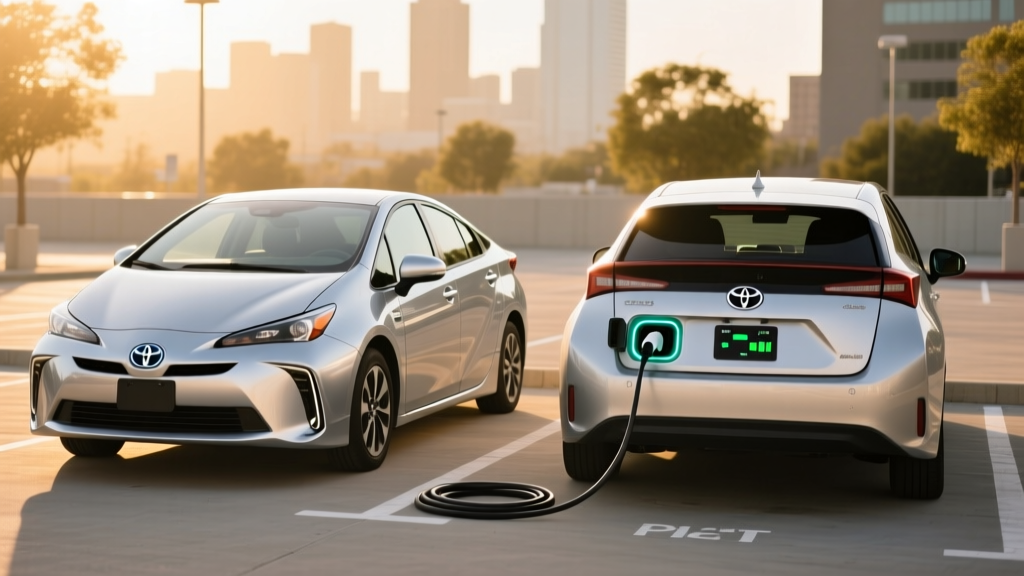
The current-generation Toyota Prius lineup splits into two distinct vehicles sharing a nameplate and a silhouette. The conventional Prius HEV (hybrid electric vehicle) needs no plug, sips fuel at an EPA-rated 57 MPG combined, and starts under $29,000. The Prius Prime (Toyota's name for the plug-in hybrid variant) adds a larger battery, 44 miles of electric-only driving, and a combined 52 MPG once that battery depletes — but starts around $34,000 and requires regular plug-in charging to unlock its advantage.
If you can charge at home or work and your daily round-trip commute stays under 40 miles, the Prime operates as a part-time EV and may qualify for up to $3,750 in federal tax credits. If you lack reliable plug access, drive long or unpredictable routes, or want the lowest upfront cost, the standard HEV is the rational pick. Below, we break down the exact numbers that should drive your decision.
HEV vs PHEV: The Fundamental Difference
Conventional Hybrid (Prius HEV): Uses a small battery (roughly 1.0 kWh usable) charged entirely by regenerative braking and the gasoline engine. You never plug it in. The electric motor assists the engine and enables brief low-speed EV mode, but the car is fundamentally gasoline-powered with hybrid efficiency gains.
Plug-In Hybrid (Prius Prime): Carries a much larger battery (13.6 kWh total capacity, approximately 10.5 kWh usable) that you charge via a standard outlet or Level 2 charger. This enables 44 miles of pure electric driving before the gasoline engine engages. Once the battery depletes, it operates as a conventional hybrid.
EPA Fuel Economy and Electric-Only Range
Fuel economy is where the Prius name made its reputation, and both variants deliver. Here's the official EPA breakdown sourced from fueleconomy.gov:
| Metric | Prius HEV (LE) | Prius HEV (XLE/Limited) | Prius Prime (SE) | Prius Prime (XSE) |
|---|---|---|---|---|
| Combined MPG (gas) | 57 | 52 | 52 | 48 |
| City MPG | 57 | 52 | 50 | 48 |
| Highway MPG | 56 | 52 | 47 | 44 |
| Electric-only range | N/A | N/A | 44 miles | 39 miles |
| Combined MPGe (EV mode) | N/A | N/A | 127 MPGe | 114 MPGe |
| Total range (gas + electric) | ~600 miles | ~555 miles | ~440 miles | ~410 miles |
Real-World MPG vs. EPA Sticker
Toyota's hybrid system excels in city driving where regenerative braking recaptures energy at every stop. Many Prius HEV owners report exceeding the 57 MPG EPA estimate in warm-weather city driving, with 60–65 MPG achievable on flat urban routes. Highway driving at 75+ MPH typically drops to 48–52 MPG due to aerodynamic drag. In cold weather (below 30°F), expect a 10–15% reduction as the engine runs more frequently for cabin heat.
For the Prime, the 44-mile electric range assumes moderate temperatures and speeds under 65 MPH. In winter conditions, expect 32–38 miles of electric range before the engine engages. The gasoline MPG once depleted tracks closely with the HEV's numbers in similar conditions.
Powertrain and Performance Specs
Both vehicles share Toyota's fifth-generation hybrid architecture, but the Prime's larger battery and more powerful electric motor change the driving character significantly.
| Specification | Prius HEV | Prius Prime |
|---|---|---|
| Engine | 2.0L 4-cylinder | 2.0L 4-cylinder |
| Engine horsepower | 150 HP | 150 HP |
| Combined net horsepower | 194 HP (FWD) / 196 HP (AWD) | 220 HP |
| 0–60 MPH | 7.2 sec (FWD) | 6.6 sec |
| Drivetrain | FWD or AWD | FWD only |
| Battery capacity | ~1.0 kWh (Li-ion) | 13.6 kWh (Li-ion) |
| Cargo volume (rear seats up) | 23.8 cu ft | 20.3 cu ft |
| Curb weight | ~3,032 lbs | ~3,340 lbs |
The Prime's 220 combined horsepower makes it genuinely quick — the 6.6-second 0–60 time beats many compact sport sedans. The trade-off is weight: the Prime carries roughly 300 extra pounds from the larger battery, which slightly reduces cargo space (the battery sits beneath the rear cargo floor) and eliminates the AWD option available on the standard HEV.
Prius Prime Charging: Speed, Connectors, and Practicality
Charging is where the Prime diverges most sharply from the HEV. Here's what you need to know about plugging in:
| Charging Level | Power (kW) | Connector | Full Charge Time (0–100%) | Miles Added per Hour |
|---|---|---|---|---|
| Level 1 (120V household) | ~1.4 kW | Standard J1772 | ~11 hours | ~4–5 miles |
| Level 2 (240V home/public) | ~3.3 kW (onboard charger max) | J1772 (NACS with adapter) | ~4 hours | ~12–14 miles |
| DC Fast Charge | Not supported | N/A | N/A | N/A |
Critical detail: The Prius Prime does not support DC fast charging. Its onboard charger maxes out at 3.3 kW, meaning even a 50 kW public fast charger delivers only 3.3 kW to the battery. This is standard for PHEVs — the battery is too small to benefit from high-speed charging, and the added cost of DC hardware isn't justified. A full charge on a 240V Level 2 home charger takes about 4 hours, which means overnight charging easily replenishes the battery every night.
On a standard 120V outlet, expect roughly 11 hours for a full charge. For most owners, a dedicated 240V Level 2 charger (like a ChargePoint Home Flex or Emporia Vue) installed in the garage is the practical solution. Installation typically costs $500–$1,500 depending on your electrical panel's capacity and the run distance from panel to charger location.
Pricing, Trims, and Tax Credit Eligibility
Pricing reflects the Prime's additional battery and electric drivetrain hardware. Here's the current MSRP breakdown:
| Model / Trim | MSRP (incl. destination) |
|---|---|
| Prius LE (HEV) | $28,545 |
| Prius XLE (HEV) | $31,545 |
| Prius Limited (HEV) | $35,545 |
| Prius Prime SE (PHEV) | $33,445 |
| Prius Prime XSE (PHEV) | $36,445 |
| Prius Prime XSE Premium (PHEV) | $39,445 |
Federal Tax Credit for the Prius Prime
The Prius Prime (PHEV) may qualify for a federal tax credit under IRS §30D Clean Vehicle Credit. As of current rules, the credit amount depends on battery sourcing and critical mineral requirements:
- Maximum potential credit: Up to $3,750 (partial — full $7,500 requires meeting both critical mineral AND battery component sourcing thresholds, which varies by model year production batch)
- Buyer income caps: AGI must not exceed $150,000 (single), $225,000 (head of household), or $300,000 (joint)
- MSRP cap: Vehicle MSRP must not exceed $55,000 (sedans) — all Prime trims qualify
- Point-of-sale transfer: You can elect to transfer the credit to the dealer at purchase, reducing your out-of-pocket cost immediately rather than waiting for tax filing
- Standard Prius HEV: Does NOT qualify for the §30D federal credit (it is not a plug-in vehicle)
Always verify current eligibility on the IRS Clean Vehicle Credit page and consult a tax professional, as sourcing requirements and credit amounts are subject to change.
Battery Warranty, Reliability, and Replacement Costs
Hybrid battery longevity remains a top concern for buyers. Toyota's track record here is among the best in the industry, with Prius batteries routinely lasting 150,000–200,000+ miles before meaningful degradation.
Toyota Hybrid Battery Warranty
Coverage: 10 years / 150,000 miles (whichever comes first) for the hybrid battery on all current Prius and Prius Prime models. This applies nationwide in all 50 states.
What's covered: Battery capacity loss below a defined threshold, cell failures, and related hybrid system components (inverter, control modules).
Hybrid system warranty: 8 years / 100,000 miles for other hybrid-specific components.
If a battery does need replacement outside of warranty, expect the following approximate costs:
- Prius HEV battery replacement: $2,000–$3,500 (smaller battery, simpler swap)
- Prius Prime battery replacement: $4,000–$6,500 (larger 13.6 kWh pack)
- Refurbished/remanufactured options: Available for $1,200–$2,500 (HEV) from third-party specialists, with varying warranties
In practice, the Prius has earned an outstanding reliability reputation across multiple generations. Consumer Reports and long-term owner surveys consistently rank it among the most trouble-free vehicles in its class. The fifth-generation powertrain has shown no systemic issues through its first production years.
Real-World Ownership: Who Should Choose Which?
The decision between the HEV and the Prime comes down to three variables: your daily mileage, your charging access, and your budget.
Prius HEV — Choose It If
- You cannot charge at home or work reliably
- Your daily driving exceeds 50 miles or is highly variable
- You want the lowest purchase price and simplest ownership
- You need AWD for snow-belt climates
- You prioritize maximum cargo volume (23.8 cu ft vs 20.3)
- You drive primarily highway miles (the HEV's advantage over gas cars is smaller on the highway, but it's still excellent)
Prius Prime — Choose It If
- You have home or workplace Level 2 charging access
- Your daily round-trip commute is 40 miles or less
- You want to drive on electricity most days but need gas flexibility for road trips
- You qualify for the federal tax credit, narrowing the price gap
- You value the 220 HP and 6.6-second 0–60 performance
- You want to reduce gasoline consumption to near-zero on weekdays
The math that matters: If your commute is 30 miles round-trip and you charge nightly, the Prime uses essentially zero gasoline on weekdays. Over 250 workdays, that's 7,500 electric miles and perhaps 2,000 gas-powered miles on weekends and road trips — annual fuel cost drops to roughly $200–$400 (gas) plus $150–$250 (electricity), compared to $1,200–$1,500 in gas for the HEV covering the same total distance. The Prime's ~$4,900 price premium (before tax credits) pays back in roughly 4–6 years on fuel savings alone, with the added benefit of quieter, smoother electric driving most of the time.
Hybrid vs PHEV vs Full EV: Where Does the Prius Fit?
Decision Framework: HEV, PHEV, or BEV?
Choose the Prius HEV if: You want maximum fuel efficiency with zero lifestyle change — no charging, no range planning, no electrical work. Ideal for apartment dwellers without charging access or drivers who regularly exceed 200+ miles per day.
Choose the Prius Prime if: You want EV-like daily driving with the safety net of a gas engine for longer trips. Best for homeowners with garage charging who rarely drive more than 40 miles daily but take occasional road trips where EV charging infrastructure is sparse.
Choose a full BEV (e.g., Tesla Model 3, Hyundai Ioniq 6) if: You have reliable home charging, your daily driving is within the vehicle's range, you want zero gasoline dependency, and you qualify for the full $7,500 federal tax credit. BEVs have lower per-mile energy costs and fewer moving parts, but require more route planning on long trips.
Frequently Asked Questions
How many MPG does the Toyota Prius get?
The Prius HEV LE achieves an EPA-rated 57 MPG combined (57 city / 56 highway). Higher trims with larger wheels drop to 52 combined. The Prius Prime achieves 52 combined MPG once its electric battery is depleted (SE trim). In real-world city driving, many owners report 60+ MPG in warm weather.
How far can the Prius Prime go on electric only?
The Prius Prime SE delivers an EPA-rated 44 miles of electric-only range. The XSE trim, with larger wheels and additional weight, achieves 39 miles. In cold weather (below freezing), expect 32–38 miles on the SE. At highway speeds above 70 MPH, electric range also decreases by roughly 15–20%.
Does the standard Toyota Prius need to be plugged in?
No. The conventional Prius HEV charges its small battery entirely through regenerative braking and the gasoline engine. There is no plug, no charging cable, and no electric-only driving beyond very brief low-speed maneuvers. Only the Prius Prime requires plug-in charging.
Does the Prius or Prius Prime qualify for a federal tax credit?
The standard Prius HEV does not qualify for the federal §30D Clean Vehicle Credit because it is not a plug-in vehicle. The Prius Prime (PHEV) may qualify for up to $3,750 depending on battery sourcing requirements, buyer income limits, and current IRS rules. Verify eligibility at irs.gov before purchasing.
How long will the Prius hybrid battery last?
Toyota's hybrid batteries are designed to last the life of the vehicle. Real-world data shows many Prius batteries reaching 150,000–200,000+ miles with minimal degradation. Toyota warranties the hybrid battery for 10 years / 150,000 miles. If replacement is eventually needed, expect $2,000–$3,500 for the HEV and $4,000–$6,500 for the Prime's larger pack.
Can the Prius Prime DC fast charge?
No. The Prius Prime does not support DC fast charging. Its onboard charger is limited to 3.3 kW on Level 2 (240V) AC power, and a full charge takes approximately 4 hours. This is standard for plug-in hybrids, whose smaller batteries don't benefit from the high-speed charging infrastructure designed for full EVs.
Is the Prius Prime worth the extra cost over the regular Prius?
If you can charge at home and your daily commute stays under 44 miles, the Prime effectively eliminates weekday gasoline use and offers stronger performance (220 HP vs 194 HP). With the potential $3,750 federal tax credit, the effective price premium narrows to roughly $1,150 over a comparably equipped HEV. The payoff depends on your charging access and driving pattern — without regular plug-in charging, the Prime's advantage disappears and the HEV becomes the better value.