The Prius Lineup in 2026: Two Flavors of Hybrid Efficiency
The Toyota Prius has anchored the hybrid market for over two decades, and the current-generation platform (redesigned for 2023 and refined through 2026) remains the benchmark against which every other hybrids series contender is measured. Toyota offers two distinct powertrains under the Prius nameplate: the conventional hybrid (HEV) that never plugs in, and the Prius Prime plug-in hybrid (PHEV) that delivers meaningful electric-only range before the gas engine fires up. Understanding which one fits your driving pattern is the single most important decision you'll make in this purchase — and the answer depends entirely on your daily mileage, charging access, and budget.
This guide breaks down both models with exact EPA data, real-world efficiency observations, charging logistics, battery longevity expectations, and federal tax credit eligibility under current IRS §30D rules.
HEV vs PHEV: How the Two Prius Models Differ
Before diving into specs, the distinction matters because it affects everything from your fuel budget to your garage electrical requirements.
| Attribute | Prius (HEV) | Prius Prime (PHEV) |
|---|---|---|
| Plug-in required? | No — refuels at gas station only | Yes — plugs in for electric range |
| Battery capacity | ~1.0 kWh (small buffer) | 13.6 kWh usable |
| Electric-only range | N/A (motor assists at low speed only) | 44 miles (EPA) |
| EPA combined MPG/MPGe | 57 MPG combined | 52 MPG (gas) / 127 MPGe (electric+gas) |
| Starting MSRP | $28,550 | $33,450 |
| Federal tax credit | Not eligible (§30D requires plug-in) | Up to $3,750 (§30D, sourcing-dependent) |
| DC fast charging | N/A | No — Level 2 AC only |
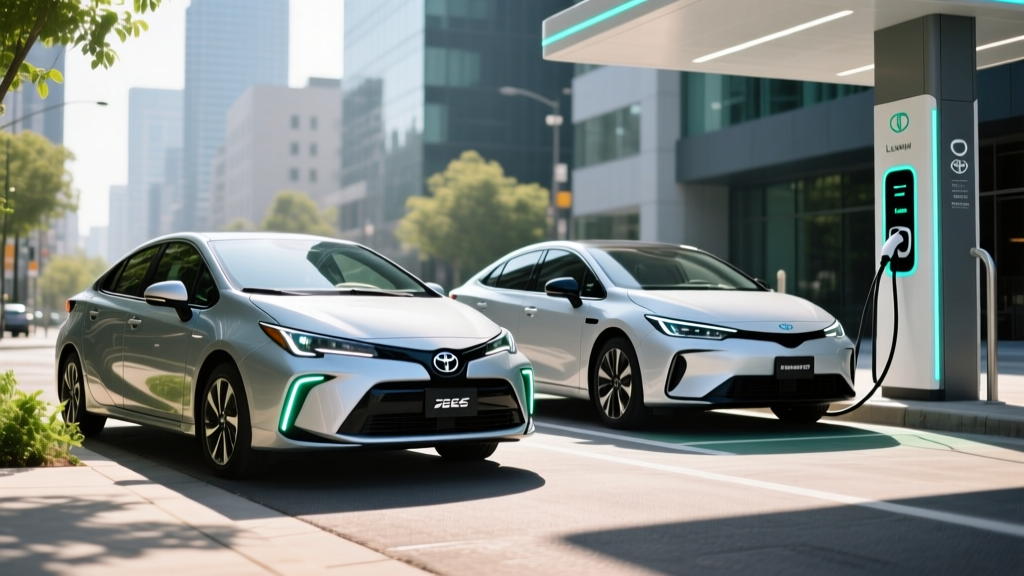
The conventional Prius generates all its electricity internally through regenerative braking and the gasoline engine. You never plug it in. The Prius Prime carries a substantially larger lithium-ion battery that you charge via a standard J1772 connector (Level 1 or Level 2), giving you a pure-electric driving envelope for most daily commutes before the hybrid system takes over seamlessly.
Fuel Economy: EPA Ratings and Real-World MPG
Fuel economy is why buyers choose the Prius. Here's the full EPA breakdown per fueleconomy.gov data:
| Model / Trim | City MPG | Highway MPG | Combined MPG | MPGe (PHEV) |
|---|---|---|---|---|
| Prius LE (FWD) | 57 | 56 | 57 | N/A |
| Prius XLE / Limited (FWD) | 52 | 52 | 52 | N/A |
| Prius AWD | 53 | 54 | 54 | N/A |
| Prius Prime SE | 53 (gas-only) | 51 (gas-only) | 52 (gas-only) | 127 MPGe |
| Prius Prime XSE / XSE Premium | 50 (gas-only) | 47 (gas-only) | 48 (gas-only) | 114 MPGe |
Real-world MPG reality check: The conventional Prius LE's 57 MPG combined EPA rating is one of the rare cases where real-world city driving can actually exceed the sticker. Hybrids recapture energy during stop-and-go braking, so urban drivers regularly report 58–62 MPG in warm weather on flat terrain. Highway driving at 75+ mph, however, typically drops to 48–52 MPG because aerodynamic drag dominates and regenerative braking opportunities disappear. In cold weather (below 35°F), expect a 5–10% reduction across the board as the engine runs longer to heat the cabin and bring the catalytic converter to operating temperature.
For the Prius Prime, the 44-mile electric-only range (SE trim with lighter wheels) is achievable in mixed suburban driving at moderate speeds. Highway-heavy electric driving at 70+ mph will compress that to roughly 34–38 miles. Once the battery depletes, the Prime operates as a conventional hybrid at its rated 48–52 MPG — you're never stranded.
Powertrain, Battery, and Charging Specifications
Both Prius models share Toyota's fifth-generation hybrid synergy drive, pairing a 2.0-liter four-cylinder Atkinson-cycle engine with electric motor-generators.
| Specification | Prius (HEV) | Prius Prime (PHEV) |
|---|---|---|
| Engine | 2.0L 4-cyl Atkinson | 2.0L 4-cyl Atkinson |
| Combined system horsepower | 194 hp (FWD) / 196 hp (AWD) | 220 hp |
| 0–60 mph | 7.2 sec (FWD) | 6.6 sec |
| Drive configuration | FWD or electronic AWD | FWD only |
| Traction battery | ~1.0 kWh lithium-ion | 13.6 kWh lithium-ion |
| Level 1 charge time (120V) | N/A | ~11 hours (0–100%) |
| Level 2 charge time (240V) | N/A | ~4 hours (0–100%) |
| DC fast charge capable | No | No |
| Charge port / connector | N/A | J1772 (AC) |
| Total range (gas + electric) | ~620 miles | ~440 miles (combined) |
A critical note for Prius Prime shoppers: this vehicle does not support DC fast charging. The onboard AC charger maxes out at roughly 3.3 kW, meaning a full Level 2 charge takes about four hours. For overnight home charging, this is perfectly adequate — you'll wake up to a full battery every morning. But on a road trip, you cannot top up at a DC fast charger; you'll simply drive on gasoline once the electric range depletes. If you need rapid mid-trip electric replenishment, a full BEV or a PHEV with DC capability (like the Chrysler Pacifica Hybrid, though at far lower efficiency) would be the alternative.
Battery Longevity, Warranty, and Replacement Costs
Toyota Hybrid Battery Warranty
Coverage: 10 years / 150,000 miles (whichever comes first) on the hybrid traction battery, valid in all 50 states for 2020 and newer model years.
Capacity threshold: Toyota warrants the battery against defects and abnormal capacity loss. There is no published guaranteed minimum State of Health percentage, but real-world data from high-mileage Prius fleets shows typical degradation of 10–15% over 150,000 miles.
Replacement cost (out of warranty): $2,500–$4,000 for a new OEM hybrid battery pack installed at a dealer, depending on model (HEV vs. Prime). Refurbished/remanufactured packs run $1,200–$2,200 installed. The HEV battery is smaller and cheaper to replace; the Prime's 13.6 kWh pack commands the higher end of that range.
Toyota's hybrid battery track record is among the strongest in the industry. The Prius has been in continuous production since 1997 in Japan (2000 in the US), and multi-generational fleet data shows the vast majority of hybrid batteries outlast the 10-year warranty window without requiring replacement. The Toyota warranty documentation explicitly covers the hybrid battery, inverter, and related powertrain control modules. For context, Consumer Reports consistently ranks the Prius among the most reliable vehicles in its class, with predicted reliability scores well above average.
One practical maintenance note: the hybrid battery cooling fan filter (located near the rear seat on most trims) should be inspected and cleaned annually. A clogged filter causes the battery to run hotter, accelerating degradation. This is a $0 DIY task — remove the cover, vacuum or rinse the mesh filter, reinstall.
Pricing, Trims, and Federal Tax Credit Eligibility
Here's the 2026 Prius lineup pricing and incentive landscape:
| Trim | MSRP | Federal Tax Credit (§30D) | Effective Price (if eligible) |
|---|---|---|---|
| Prius LE | $28,550 | $0 (HEV, not eligible) | $28,550 |
| Prius XLE | $31,050 | $0 (HEV, not eligible) | $31,050 |
| Prius Limited | $34,750 | $0 (HEV, not eligible) | $34,750 |
| Prius Prime SE | $33,450 | Up to $3,750 | ~$29,700 |
| Prius Prime XSE | $36,750 | Up to $3,750 | ~$33,000 |
| Prius Prime XSE Premium | $39,950 | Up to $3,750 | ~$36,200 |
Federal tax credit details for the Prius Prime: Under current IRS §30D rules, the Prius Prime qualifies for a partial credit — up to $3,750 — because it meets the battery component manufacturing requirement but may not fully satisfy the critical minerals sourcing threshold (these thresholds escalate annually). The conventional Prius HEV does not qualify for any federal purchase credit because §30D applies only to plug-in vehicles with a minimum battery capacity of 7 kWh.
Eligibility requirements for the Prius Prime credit include:
- Buyer income cap: Modified AGI ≤ $150,000 (single) / $300,000 (married filing jointly)
- MSRP cap: Vehicle MSRP must be ≤ $55,000 (sedan) — all Prius Prime trims qualify
- Point-of-sale transfer: You can transfer the credit to the dealer at purchase, reducing your out-of-pocket cost immediately rather than waiting for tax filing
- Vehicle assembly: Must be assembled in North America (Prius Prime is assembled in Japan — verify current-year eligibility with your dealer, as this has historically disqualified some Toyota PHEVs from the full credit)
Important caveat: The North American final assembly requirement has been a moving target for Toyota plug-in models. Before committing to a purchase, verify the specific VIN's eligibility using the DOE's qualified vehicles list on fueleconomy.gov, and consult a tax professional regarding your personal eligibility.
Who Should Choose Which Prius — Or Something Else Entirely?
Choose the Prius HEV if:
- You lack access to home or workplace charging (apartment, street parking, no outlet nearby)
- Your daily driving exceeds 50 miles and you don't want to think about plugging in
- You want the lowest purchase price and the simplest ownership experience
- You drive predominantly in city traffic where regenerative braking maximizes efficiency
Choose the Prius Prime PHEV if:
- You have a garage or driveway with a 120V or 240V outlet
- Your round-trip commute is under 40 miles (you'll rarely buy gas on weekdays)
- You want EV-like daily driving with the security of a gas engine for road trips
- You want to reduce your carbon footprint now without committing to full BEV infrastructure
Choose a full BEV (e.g., Tesla Model 3, Hyundai Ioniq 6) if:
- You have reliable Level 2 home charging and access to DC fast chargers for road trips
- You want to eliminate gasoline entirely and minimize moving-part maintenance
- You qualify for the full $7,500 federal credit on an eligible BEV, narrowing the price gap
- Your household already has a second gas vehicle for long or remote trips
Prius Lineup Pros
- Best-in-class fuel economy (57 MPG HEV, 127 MPGe Prime)
- 10-year/150,000-mile hybrid battery warranty
- Proven reliability over decades of real-world data
- Prime offers 44 miles of genuine electric commuting
- Strong resale value relative to EV competitors
- 220 hp on Prime makes it genuinely quick (6.6s 0–60)
Prius Lineup Cons
- Prime lacks DC fast charging — no road-trip electric top-up
- AWD only available on HEV, not on Prime
- Rear seat and cargo space tighter than crossover alternatives
- Federal credit on Prime is partial ($3,750) and assembly-dependent
- Infotainment system functional but not class-leading
- Highway MPG drops noticeably at speeds above 75 mph
Frequently Asked Questions
How many MPG does the 2026 Toyota Prius get?
The Prius LE (FWD) achieves an EPA-rated 57 MPG city / 56 MPG highway / 57 MPG combined. The XLE and Limited trims rate at 52 combined. The AWD variant rates at 54 combined. In real-world city driving, many owners report 58–62 MPG thanks to aggressive regenerative braking. Highway driving at 75+ mph typically yields 48–52 MPG.
How far can the Prius Prime go on electric only?
The 2026 Prius Prime SE achieves an EPA-rated 44 miles of electric-only range. The heavier XSE and XSE Premium trims rate at approximately 39–40 miles. In real-world conditions — moderate temperatures, suburban speeds under 55 mph — expect to match or slightly exceed the EPA number. Sustained highway driving at 70+ mph compresses electric range to roughly 34–38 miles. Once depleted, the Prime seamlessly transitions to hybrid mode at 48–52 MPG.
Does the Toyota Prius qualify for any tax credit?
The conventional Prius HEV does not qualify for the federal §30D new clean vehicle credit because it is not a plug-in vehicle. The Prius Prime PHEV may qualify for up to $3,750 under §30D, subject to battery sourcing requirements, buyer income caps ($150K single / $300K joint), and the North American final assembly rule. Verify your specific VIN's eligibility on fueleconomy.gov before purchasing. Some states offer additional rebates for PHEVs — check your state energy office or DSIRE database.
Is the Prius hybrid battery reliable, and what does replacement cost?
Toyota's hybrid battery reliability is among the best-documented in the automotive industry. The traction battery is warrantied for 10 years / 150,000 miles. Real-world data shows most Prius batteries last 150,000–200,000+ miles with 10–15% capacity degradation. Out-of-warranty replacement costs $2,500–$4,000 for an OEM pack (dealer-installed) or $1,200–$2,200 for a remanufactured unit. Keeping the battery cooling fan filter clean is the single most impactful maintenance task for longevity.
Do I need to plug in the regular Toyota Prius?
No. The conventional Prius HEV charges its small battery entirely through regenerative braking and the gasoline engine. You refuel only at gas stations. Only the Prius Prime PHEV requires (or benefits from) plug-in charging. If you choose the Prime, a standard 120V household outlet is sufficient for overnight charging (~11 hours for a full charge), though a 240V Level 2 setup reduces that to about 4 hours.
How does the Prius compare to a full EV for daily commuting?
If your commute is under 40 miles round-trip and you have home charging, the Prius Prime effectively operates as an EV on weekdays — you may visit a gas station only a handful of times per year. A full BEV like the Tesla Model 3 or Chevrolet Equinox EV eliminates gasoline entirely and offers lower per-mile energy costs (roughly $0.04–$0.06/mile on electricity vs. $0.10–$0.14/mile on gas in a Prius at 55 MPG and $3.50/gallon). However, the Prius Prime removes range anxiety on long trips entirely, since you simply refuel with gasoline. The right choice depends on your charging access, trip patterns, and willingness to adapt to EV charging logistics.