Quick Verdict: The TrailSport Hybrid Is Honda's Best All-Rounder
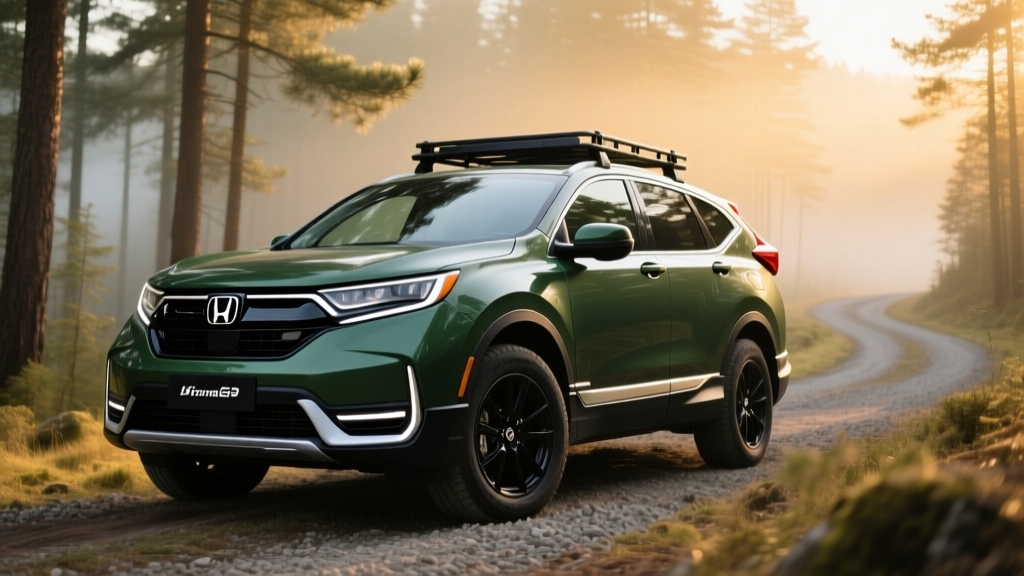
The 2026 Honda CR-V TrailSport Hybrid occupies a specific niche that resonates with a growing segment of buyers: those who want the fuel economy of a hybrid, the all-weather confidence of standard all-wheel drive, and enough rugged styling and ground clearance to handle light off-road duty without stepping up to a body-on-frame SUV. For the 2026 model year, Honda has refined the TrailSport trim with updated suspension tuning, an expanded suite of Honda Sensing safety features, and a carryover two-motor hybrid powertrain that remains one of the most efficient in the compact SUV segment.
This is a conventional hybrid (HEV), not a plug-in hybrid (PHEV). You never plug it in — the system captures energy through regenerative braking and the gasoline engine to keep its small battery charged. If you're looking for electric-only driving, you'll want to look at Honda's PHEV options or a full battery-electric vehicle. But if your goal is maximizing MPG without changing your refueling habits, the CR-V TrailSport Hybrid makes a compelling case.
How Many MPG Does the 2026 CR-V TrailSport Hybrid Get?
The EPA rates the 2026 Honda CR-V TrailSport Hybrid at 40 MPG city / 34 MPG highway / 37 MPG combined with standard all-wheel drive. These figures place it among the most fuel-efficient compact AWD SUVs available, trailing only the Toyota RAV4 Hybrid (which achieves 41/38/39 MPG in LE trim) by a narrow margin in highway driving.
| Driving Condition | EPA Rating | Real-World Expectation |
|---|---|---|
| City | 40 MPG | 38–43 MPG (hybrids often beat EPA in stop-and-go) |
| Highway (70 mph cruise) | 34 MPG | 30–34 MPG (aero drag and terrain reduce efficiency) |
| Combined | 37 MPG | 34–39 MPG depending on driving mix |
Real-world context: In mixed suburban and highway driving, owners and independent testers consistently report that Honda's two-motor hybrid system excels in city conditions, where the electric motor handles low-speed propulsion and the gasoline engine acts primarily as a generator. On the highway, the engine engages directly via a lock-up clutch for efficient cruising. Expect to see 38–42 MPG in urban errand-running, with highway trips pulling the average down to the mid-30s. In cold weather (below 30°F), anticipate a 5–10% reduction in fuel economy as the engine runs more frequently for cabin heat and battery warming.
According to fueleconomy.gov, the CR-V Hybrid AWD's combined rating of 37 MPG translates to an estimated annual fuel cost of approximately $1,550 (based on 15,000 miles/year at $3.50/gallon), compared to roughly $2,100 for the gas-only CR-V AWD rated at 29 MPG combined.
Powertrain: 204 Horsepower From Honda's Two-Motor System
The 2026 CR-V TrailSport Hybrid uses Honda's fourth-generation two-motor hybrid system, pairing a 2.0-liter Atkinson-cycle four-cylinder engine with two electric motors integrated into the transmission housing. Combined system output is 204 horsepower and 247 lb-ft of torque, routed to all four wheels via Honda's Real Time AWD system.
| Specification | Value |
|---|---|
| Engine | 2.0L Atkinson-cycle 4-cylinder |
| Combined System Horsepower | 204 hp |
| Combined System Torque | 247 lb-ft |
| Electric Motors | Two (one propulsion, one generator) |
| Hybrid Battery | ~1.1 kWh lithium-ion (HEV — not plug-in) |
| Drivetrain | Real Time AWD (standard) |
| 0–60 mph | ~7.8 seconds (est.) |
| Ground Clearance | 8.3 inches |
| Towing Capacity | 1,000 lbs |
| Cargo Volume (behind rear seats) | 36.3 cu ft |
| Cargo Volume (rear seats folded) | 76.5 cu ft |
The two-motor system operates in three distinct modes: EV Drive (electric motor only, at low speeds and light loads), Hybrid Drive (engine generates electricity to power the propulsion motor), and Engine Drive (engine connects directly to the wheels at steady highway speeds). The transition between modes is nearly imperceptible from the driver's seat — a hallmark of Honda's hybrid engineering maturity.
Performance is adequate rather than thrilling. The 204-hp output moves the roughly 3,900-lb CR-V TrailSport Hybrid with reasonable urgency, but this is not an SUV designed for spirited driving. The torque delivery, however, is a genuine advantage: electric motors produce peak torque from zero RPM, giving the CR-V Hybrid strong off-the-line response that the gas-only model (190 hp from a 1.5L turbo) cannot match at low speeds.
HEV vs PHEV vs EV: Which Powertrain Fits Your Life?
A common question from CR-V shoppers is whether to choose the hybrid (HEV), wait for a plug-in hybrid variant, or jump to a full EV. Here's the honest breakdown:
| Factor | CR-V Hybrid (HEV) | Typical PHEV SUV | Full EV (e.g., Ioniq 5) |
|---|---|---|---|
| Plug in to charge? | No — gas only | Yes (optional, but recommended) | Yes — required |
| Electric-only range | ~1 mile at low speed | 25–40 miles | 250–320 miles |
| Fuel/energy cost per mile | ~$0.09/mi | ~$0.04/mi (electric) / $0.09/mi (gas) | ~$0.04/mi (home charging) |
| Home charging needed? | No | Recommended for benefit | Essential |
| Federal tax credit (§30D) | Not eligible | Up to $7,500 (if eligible) | Up to $7,500 (if eligible) |
| Upfront price premium | + $1,500 over gas | + $5,000–$8,000 over gas | + $8,000–$15,000 vs gas |
| Best for | No home charging access; want simplicity | Short commute + home charger | Home charger + mostly < 250 mi trips |
Choose the CR-V TrailSport Hybrid if: You don't have access to home or workplace charging, you want to reduce fuel costs without any lifestyle change, or you frequently drive in areas with limited charging infrastructure. The HEV requires zero behavioral adjustment — just fill up with gas as you always have.
Consider a PHEV (like the Toyota RAV4 Prime or Hyundai Tucson PHEV) if: You have a garage or driveway where you can install a Level 2 charger, your daily commute is under 35 miles round-trip, and you want to drive on electricity most days while retaining a gas engine for longer trips.
Go full EV if: You can charge at home, your typical daily driving is under 250 miles, you want to eliminate gas station visits entirely, and you're eligible for the federal tax credit to offset the higher purchase price.
Pricing, Trims, and Tax Credit Eligibility
The 2026 Honda CR-V TrailSport Hybrid carries an MSRP starting at approximately $39,845 (including destination charge). This positions it between the CR-V Sport Hybrid ($36,845) and the CR-V Sport Touring Hybrid ($42,345), adding the TrailSport-specific suspension tuning, all-terrain tires, amber accent lighting, and rugged exterior cladding.
Federal Tax Credit Status: The CR-V TrailSport Hybrid is a conventional hybrid (HEV) and does not qualify for the IRS §30D Clean Vehicle Credit. That credit applies only to plug-in electric vehicles (BEVs and PHEVs) that meet battery sourcing, MSRP caps, and buyer income requirements. See IRS.gov §30D guidelines for current rules.
Some states offer rebates or reduced registration fees for hybrid vehicles — check your state's energy office or DMV for current programs. However, these are typically smaller ($250–$1,000) compared to the federal credits available for PHEVs and EVs.
For the price, the TrailSport Hybrid includes Honda Sensing (adaptive cruise control, lane-keeping assist, automatic emergency braking, road sign recognition), a 9-inch touchscreen with wireless Apple CarPlay and Android Auto, wireless phone charging, heated front seats, a power moonroof, and the TrailSport-exclusive 18-inch alloy wheels wrapped in all-terrain tires.
TrailSport Capability: What It Can and Can't Do Off-Road
Honda has positioned the TrailSport as an adventure-oriented trim, but it's important to calibrate expectations. This is a unibody compact SUV with 8.3 inches of ground clearance, all-terrain tires, and retuned dampers — not a purpose-built off-roader like a Subaru Outback Wilderness or Ford Bronco Sport Badlands.
What the TrailSport Hybrid handles well:
- Gravel and dirt forest service roads
- Snow-covered roads (the AWD system and all-terrain tires provide genuine traction advantages)
- Mild trail use with moderate ruts and inclines
- Sandy beach access roads
Where it falls short:
- Rock crawling (insufficient ground clearance and no low-range gearing)
- Deep mud or water fording (no underbody skid plates as standard)
- Steep technical trails (approach/departure angles are improved over standard CR-V but still limited)
The Real Time AWD system is reactive rather than proactive — it sends torque rearward when front-wheel slip is detected, rather than maintaining a permanent rear bias. For snow and gravel, this works effectively. For technical off-road use, a system with a locking rear differential (like the Toyota RAV4 TRD Off-Road) would be preferable.
Battery Warranty, Reliability, and Long-Term Ownership Costs
Hybrid Battery Warranty: Honda covers the CR-V Hybrid's lithium-ion battery pack for 8 years / 100,000 miles (10 years / 150,000 miles in CARB states including California, New York, Massachusetts, and others that follow California emissions standards). This warranty guarantees the battery will retain sufficient capacity to operate the hybrid system; if it fails or degrades beyond functional thresholds, Honda replaces it at no cost.
Reliability track record: Honda's two-motor hybrid system has been in production since 2014 (Accord Hybrid) and has proven exceptionally reliable. Unlike early hybrid systems from other manufacturers, Honda's design avoids complex planetary gearsets in favor of a simpler clutch-based architecture with fewer wear components. The 2.0L Atkinson-cycle engine is naturally aspirated and under-stressed, contributing to longevity.
Battery replacement cost: Should the hybrid battery require replacement outside of warranty coverage (typically after 150,000+ miles based on degradation patterns observed in earlier-generation Honda hybrids), expect a dealer replacement cost of approximately $2,500–$4,000 including labor. Independent hybrid specialists often offer refurbished or aftermarket battery packs for $1,500–$2,500. In practice, Honda hybrid battery failures before 200,000 miles are uncommon based on owner survey data and long-term fleet reports.
Other ownership considerations:
- Brake life: Regenerative braking significantly reduces wear on the friction brakes. Expect original brake pads to last 60,000–80,000+ miles under normal driving conditions.
- Insurance: Hybrid CR-V trims typically carry insurance premiums 3–5% higher than gas-only trims, reflecting the higher replacement cost of hybrid components.
- Resale value: The CR-V Hybrid has historically held its value well, with hybrid trims depreciating at a similar or slightly slower rate than gas trims due to sustained buyer demand for fuel-efficient SUVs.
Pros and Cons at a Glance
Pros
- 40 MPG city is outstanding for an AWD SUV
- Smooth, quiet hybrid powertrain with strong low-speed torque
- No plug-in charging required — zero lifestyle adjustment
- Generous cargo space (36.3 cu ft) unaffected by hybrid battery packaging
- Standard Honda Sensing safety suite with latest-gen features
- 8-year/100,000-mile hybrid battery warranty (10/150k in CARB states)
- TrailSport styling and all-terrain tires add genuine light-trail capability
Cons
- Highway MPG (34) trails some competitors — Toyota RAV4 Hybrid achieves 38
- No federal tax credit eligibility (HEV, not PHEV)
- TrailSport off-road upgrades are cosmetic and mild — not a serious trail rig
- 1,000-lb towing capacity is limited for an SUV in this class
- Engine drone under hard acceleration (CVT-like behavior from the e-CVT)
- No spare tire — tire inflation kit only
Frequently Asked Questions
Does the 2026 CR-V TrailSport Hybrid need to be plugged in?
No. The CR-V TrailSport Hybrid is a conventional hybrid (HEV). It charges its own battery through regenerative braking and the gasoline engine. You simply fill it with gas like any other vehicle. If you want a Honda you can plug in for electric-only driving, you would need to look at a different brand's PHEV offering, as Honda does not currently sell a CR-V plug-in hybrid in the US market.
How does the TrailSport Hybrid compare to the gas-only CR-V TrailSport?
The gas-only CR-V uses a 1.5L turbocharged engine producing 190 hp and 179 lb-ft of torque, rated at approximately 29 MPG combined with AWD. The hybrid delivers 204 hp, 247 lb-ft, and 37 MPG combined — meaning it's both more powerful and significantly more efficient. The trade-off is a roughly $3,000 higher starting price and slightly less cargo floor space due to hybrid battery placement (though the difference is minimal at roughly 1 cu ft).
Can the CR-V TrailSport Hybrid tow a small trailer?
Honda rates the CR-V Hybrid for 1,000 lbs of towing capacity. This is sufficient for a small utility trailer, a pair of dirt bikes, or a lightweight pop-up camper, but it falls well short of the 1,500–3,500-lb ratings of some competitors (the Toyota RAV4 Hybrid, for instance, is rated at 1,750 lbs). If towing is a priority, verify your trailer's loaded weight carefully.
Is the hybrid battery a concern in cold weather?
Cold weather reduces hybrid battery efficiency, which means the gasoline engine will engage more frequently in winter months. Expect a 5–10% drop in fuel economy in sustained sub-freezing temperatures. The battery itself is not at risk of damage from cold — Honda's thermal management system keeps it within safe operating ranges. The battery warranty applies regardless of climate.
Will the CR-V TrailSport Hybrid qualify for any tax incentives?
At the federal level, no. The IRS §30D Clean Vehicle Credit applies only to plug-in electric vehicles (BEVs and PHEVs), and the CR-V Hybrid is a conventional HEV. Some states and municipalities offer small rebates or HOV lane access for hybrids — check your local programs. For the full $7,500 federal credit, you would need to consider a qualifying PHEV or BEV that meets MSRP, income, and battery-sourcing requirements.
How long will the hybrid battery last?
Based on data from Honda's hybrid fleet (Accord Hybrid, Insight, CR-V Hybrid since 2020), the lithium-ion hybrid battery is designed to last the life of the vehicle under normal use. Most Honda hybrid batteries show minimal measurable degradation at 150,000 miles. The 8-year/100,000-mile warranty (10/150k in CARB states) provides strong protection, and out-of-warranty replacement costs ($2,500–$4,000) are lower than many buyers fear.