Quick Verdict: The Benchmark for Hybrid Car Fuel Efficiency
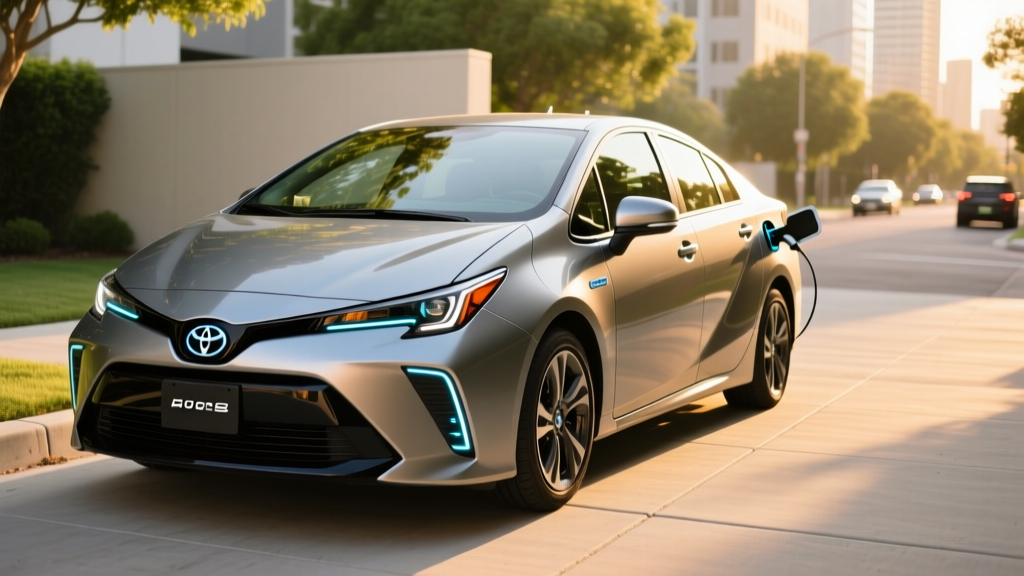
The 2026 Toyota Prius Prime remains the segment's reference point for hybrid car fuel efficiency, combining a 44-mile EPA electric-only range with 52 MPG combined once the battery depletes. For buyers who want EV-like commuting without range anxiety on road trips, the Prius Prime delivers a total system range exceeding 440 miles. The conventional Prius HEV pushes efficiency even further at 57 MPG combined — but sacrifices the plug-in advantage. Here's every number that matters.
HEV vs PHEV: What's the Difference?
Conventional Hybrid (HEV): The standard Prius uses a small battery (~1.0 kWh) charged entirely by regenerative braking and the gas engine. You never plug it in. It excels at stop-and-go city driving where the electric motor assists frequently, achieving up to 57 MPG combined.
Plug-in Hybrid (PHEV): The Prius Prime carries a larger 13.6 kWh lithium-ion battery you charge via a standard outlet or Level 2 charger. It drives up to 44 miles on electricity alone before the hybrid system engages. Ideal if you can charge at home and commute under 45 miles round-trip.
EPA Fuel Economy and Real-World MPG
| Metric | Prius HEV (FWD) | Prius Prime (PHEV) |
|---|---|---|
| Electric-Only Range | N/A | 44 miles (EPA) |
| MPGe (Electric Mode) | N/A | 127 MPGe |
| City MPG (Gas) | 57 | 52 |
| Highway MPG (Gas) | 56 | 48 |
| Combined MPG (Gas) | 57 | 52 |
| Total Combined Range | ~588 miles | ~440 miles |
| Fuel Tank Capacity | 10.6 gal | 10.6 gal |
Real-world expectations: The Prius HEV consistently exceeds its EPA city rating in actual stop-and-go traffic — owners on fueleconomy.gov report averages of 55-60 MPG in urban commuting. Highway cruising at 75+ mph drops efficiency to roughly 48-50 MPG for the HEV. Cold weather (below 32°F) reduces fuel economy by 10-15% in both models as the engine runs more frequently for cabin heat.
The Prius Prime's 44-mile electric range holds up well in mild weather but expect 35-38 miles in freezing temperatures. Once the battery depletes, the Prime's slightly heavier curb weight (3,340 lbs vs. 3,032 lbs for the HEV) explains its 5 MPG combined deficit.
Powertrain Specs: Engine, Motor, and Horsepower
| Specification | Prius HEV | Prius Prime (PHEV) |
|---|---|---|
| Engine | 2.0L 4-cylinder | 2.0L 4-cylinder |
| Engine Power | 150 hp | 150 hp |
| Electric Motor | 83 hp (front) | 161 hp (front) |
| Net Combined Horsepower | 194 hp (FWD) / 196 hp (AWD) | 220 hp |
| 0-60 mph | 7.2 sec (FWD) | 6.6 sec |
| Drivetrain | FWD or AWD-e | FWD only |
| Transmission | eCVT | eCVT |
The 220 hp net output in the Prime makes it genuinely quick — the 6.6-second 0-60 time outpaces most compact crossovers. The larger traction motor (161 hp vs. 83 hp in the HEV) is what gives the Prime its electric-only highway capability, sustaining speeds up to 84 mph without the engine engaging.
Battery, Charging, and Electric-Only Range
| Battery & Charging | Prius Prime (PHEV) |
|---|---|
| Battery Chemistry | Lithium-ion (NMC) |
| Battery Capacity | 13.6 kWh (total) |
| Usable Capacity | ~10.8 kWh |
| Level 1 Charging (120V) | ~11 hours (full) |
| Level 2 Charging (240V, 3.3 kW) | ~4 hours (full) |
| DC Fast Charging | Not available |
| Charge Port | J1772 |
The Prius Prime's onboard charger maxes out at 3.3 kW — meaning Level 2 charging adds roughly 11 miles of electric range per hour. There is no DC fast charging capability, which is typical for PHEVs in this price class. A full charge overnight on a standard 120V outlet is feasible if you drive under 30 miles daily; otherwise, a 240V Level 2 home setup is strongly recommended.
Hybrid Battery Warranty and Replacement Cost
Toyota covers the Prius Prime's hybrid battery for 10 years or 150,000 miles (whichever comes first) in all 50 states — an improvement from the older 8-year/100,000-mile standard. The conventional Prius HEV carries the same warranty.
Out-of-warranty replacement cost: A new OEM Prius Prime traction battery runs approximately $3,500-$4,500 installed at a dealership. Refurbished units from independent hybrid specialists typically cost $1,800-$2,500. In practice, Toyota hybrid batteries regularly exceed 200,000 miles with minimal degradation — the nickel-metal-hydride packs in older Prius models have proven exceptionally durable, and the current lithium-ion chemistry shows similar longevity in fleet data.
Pricing, Trims, and Tax Credit Eligibility
| Trim (2026 Prius Prime) | MSRP |
|---|---|
| SE | $33,475 |
| XSE | $36,775 |
| XSE Premium | $40,225 |
Federal tax credit (§30D): The 2026 Prius Prime does not qualify for the full $7,500 federal EV tax credit. Under current IRS §30D rules, PHEVs must meet battery component sourcing and critical mineral requirements, along with MSRP caps ($55,000 for sedans) and buyer income limits ($150,000 single / $300,000 joint). Toyota's PHEV battery sourcing has not consistently met the critical-minerals threshold for the full credit.
Check the latest eligibility on the IRS qualified vehicles list before purchasing — credit availability can change by model year and production batch. Some states offer additional PHEV rebates (California's CVRP, for instance, has periodically included PHEVs at reduced amounts). Always verify with your state energy office.
Who Should Choose the Prius Prime vs. Full EV or Gas?
Prius Prime PHEV — Pros
- 44-mile electric range covers most commutes emission-free
- 52 MPG after battery depletes — no range anxiety on road trips
- 220 hp makes it the quickest Prius ever
- 10-year/150,000-mile battery warranty
- No home charger strictly required (Level 1 works overnight)
Prius Prime PHEV — Cons
- No DC fast charging
- 3.3 kW onboard charger limits Level 2 speed
- FWD only — no AWD option (HEV offers AWD-e)
- Likely does not qualify for full $7,500 federal credit
- Less cargo space than a compact SUV PHEV
Decision Framework
Choose the Prius Prime (PHEV) if: You can charge at home (even on 120V), your round-trip commute is under 45 miles, and you take road trips where charging infrastructure is unreliable. You want EV-like daily driving with gas-car flexibility.
Choose the standard Prius (HEV) if: You have no access to any charging (apartment, street parking), you want the absolute highest MPG (57 combined), or you need AWD for snow-belt winters. The $3,000-$4,000 price savings over the Prime also matters.
Choose a full BEV (like the Tesla Model 3 or Hyundai Ioniq 6) if: You have reliable home Level 2 charging, your daily driving is under 250 miles, you want zero tailpipe emissions, and you qualify for the full $7,500 federal credit — which can make a BEV cheaper to own than a PHEV over 5 years.
Reliability and Long-Term Ownership
Toyota's hybrid powertrain is among the most proven in the industry. The Prius nameplate has accumulated billions of real-world miles since 2000, and the hybrid synergy drive system has been iteratively refined for over two decades. The 2026 model carries over the fifth-generation hybrid architecture introduced for the 2023 redesign.
Key reliability factors:
- Hybrid battery: Lithium-ion pack with active thermal management. Expected lifespan well beyond 150,000 miles based on fleet data from Toyota's global hybrid fleet.
- eCVT transmission: A planetary gearset with no belts, clutches, or traditional shifting components — one of the most durable transmission designs in production.
- Brake wear: Regenerative braking significantly reduces pad wear; owners commonly report 80,000-100,000 miles on original brake pads.
- Maintenance schedule: Oil changes every 10,000 miles, no spark plug replacement until 120,000 miles, and no transmission fluid changes under normal use.
The Prius consistently earns top marks from IIHS and the current generation carries strong safety ratings. Toyota Safety Sense 3.0 (standard on all trims) includes pre-collision braking, lane-keeping assist, adaptive cruise control, and road sign assist.
Frequently Asked Questions
How many MPG does the 2026 Toyota Prius Prime get?
The Prius Prime achieves 52 MPG combined (52 city / 48 highway) when operating as a hybrid after the battery is depleted. In electric-only mode, it earns 127 MPGe. The conventional Prius HEV achieves 57 MPG combined.
How far can the Prius Prime go on electric only?
The EPA rates the 2026 Prius Prime at 44 miles of electric-only range. In real-world mild-weather driving at moderate speeds, 40-44 miles is achievable. In freezing temperatures or sustained highway driving above 70 mph, expect 35-38 miles before the gas engine engages.
Does the Prius Prime qualify for a federal tax credit?
As of 2026, the Prius Prime is unlikely to qualify for the full $7,500 §30D federal tax credit due to battery sourcing requirements. It may qualify for a partial credit ($3,750) depending on the specific production batch and current IRS sourcing determinations. Always check the IRS qualified clean vehicles list before purchasing.
Is the Prius hybrid battery expensive to replace?
An OEM replacement battery costs $3,500-$4,500 installed. Refurbished units run $1,800-$2,500. However, Toyota hybrid batteries routinely last 200,000+ miles, and the 10-year/150,000-mile warranty provides substantial coverage. Most owners will never need a replacement.
Should I buy the Prius HEV or the Prius Prime PHEV?
If you can charge at home and commute under 45 miles daily, the Prime's electric-only range eliminates most gasoline use. If you can't charge at home, need AWD, or want the lowest purchase price and highest MPG, the standard HEV is the better fit. The HEV's 57 MPG combined is the highest of any non-plug-in vehicle sold in the US.
Does the conventional Prius hybrid need to be plugged in?
No. The standard Prius HEV charges its small battery entirely through regenerative braking and the gas engine. There is no plug, no charging cable, and no electric-only driving mode of meaningful distance. It operates as a self-charging hybrid at all times.