Quick Verdict: The Hybrid Sport Touring Leader for 2026
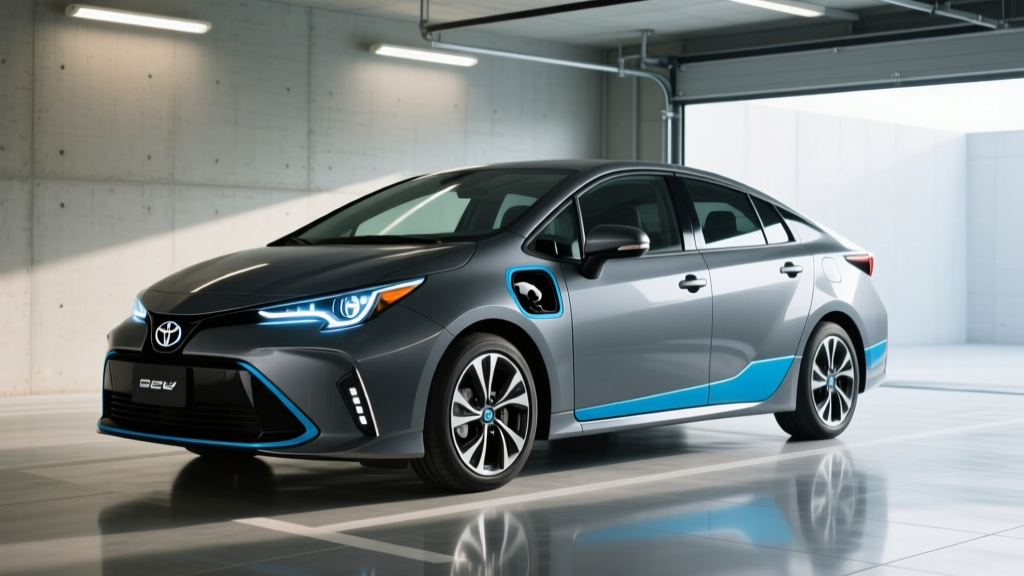
The 2026 Toyota Prius Plug-in Hybrid (PHEV) is the closest thing the market offers to a true hybrid sport touring vehicle — a car that blends genuine electric-only commuting, highway touring range, and a level of driving engagement that would have been unthinkable for the Prius nameplate a generation ago. With 220 combined horsepower, 44 miles of EPA-rated electric-only range, and a starting MSRP around $33,445, it occupies a unique niche: sporty enough for back roads, efficient enough to slash your fuel bill, and practical enough for a 500-mile road trip without a single charge stop.
This guide breaks down every spec that matters — EPA MPG, real-world efficiency, battery longevity, tax credit eligibility under current IRS §30D rules, and how the Prius PHEV stacks up against full EVs and conventional hybrids for buyers researching hybrid sport touring options.
HEV vs PHEV: What's the Difference and Why It Matters
Before diving into specs, it's critical to distinguish between the two hybrid flavors Toyota sells under the Prius badge:
- Prius HEV (conventional hybrid): Uses a small battery (~1.0 kWh) charged entirely by the engine and regenerative braking. You never plug it in. EPA-rated up to 57 MPG combined. It's a pure fuel-economy play.
- Prius PHEV (plug-in hybrid): Carries a larger 13.6 kWh battery pack that can be charged from a wall outlet or public charger. It delivers 44 miles of electric-only driving before the gasoline engine seamlessly engages, functioning as a conventional hybrid afterward.
The hybrid sport touring case for the PHEV is straightforward: you get EV-like silent, instant-torque commuting during the week, and a 470+ mile total range for weekend touring — all with 220 hp on tap. The HEV sacrifices electric-only capability for a lower purchase price and slightly higher combined MPG when you never plug in.
Powertrain, Performance, and the "Sport" in Sport Touring
Toyota's fifth-generation Prius PHEV powertrain pairs a 2.0-liter four-cylinder Atkinson-cycle engine with two motor-generators and a lithium-ion battery pack. The result is a combined system output of 220 horsepower — a 58-hp jump over the standard Prius HEV's 162 hp.
| Spec | Prius PHEV (2026) | Prius HEV (2026) |
|---|---|---|
| Combined System HP | 220 hp | 162 hp |
| Engine | 2.0L I4 Atkinson | 2.0L I4 Atkinson |
| Battery Capacity (usable) | 13.6 kWh (Li-ion) | ~1.0 kWh (Li-ion) |
| 0-60 mph | ~6.6 seconds | ~7.2 seconds |
| Drivetrain | FWD (AWD available on HEV) | FWD / AWD |
| EPA Electric-Only Range | 44 miles | N/A |
| Total Combined Range | ~470+ miles | ~590+ miles |
| Base MSRP | $33,445 | $28,345 |
The 6.6-second 0-60 time puts the Prius PHEV in hot-hatch territory, and the low center of gravity from the under-floor battery pack gives it genuinely composed cornering manners. On winding two-lane roads, the electric motor's instant torque fill between shifts (the e-CVT keeps the engine in its power band) makes it a surprisingly willing sport tourer. It won't challenge a GR Corolla, but it redefines what a 92 MPGe car can feel like.
Fuel Economy: EPA Numbers and Real-World MPG
| Driving Mode | EPA Rating | Real-World Expectation |
|---|---|---|
| Electric-Only (MPGe) | 92 MPGe combined | 85–95 MPGe (varies with temp/speed) |
| Hybrid Mode — City | 50 MPG | 52–58 MPG (hybrids often exceed EPA in city) |
| Hybrid Mode — Highway | 47 MPG | 43–47 MPG (aerodynamic drag at 75+ mph) |
| Hybrid Mode — Combined | 48 MPG | 46–52 MPG |
The Prius PHEV's efficiency advantage shows most clearly in city driving, where regenerative braking and low-speed electric assist let it routinely exceed its EPA city rating. On a mixed suburban commute with frequent stops, owners regularly report 54-58 MPG in hybrid mode. Highway efficiency dips predictably — at 80 mph, expect closer to 43 MPG. Cold weather (below 40°F) can reduce electric-only range by 15-25%, dropping the 44-mile EV range to roughly 33-37 miles until the battery and cabin warm up.
For context on the data, fueleconomy.gov lists the Prius PHEV's official ratings. The real-world takeaway: if your daily commute is under 40 miles round-trip and you charge nightly, you may use gasoline only on road trips.
Charging the Prius PHEV: Times, Connectors, and Limitations
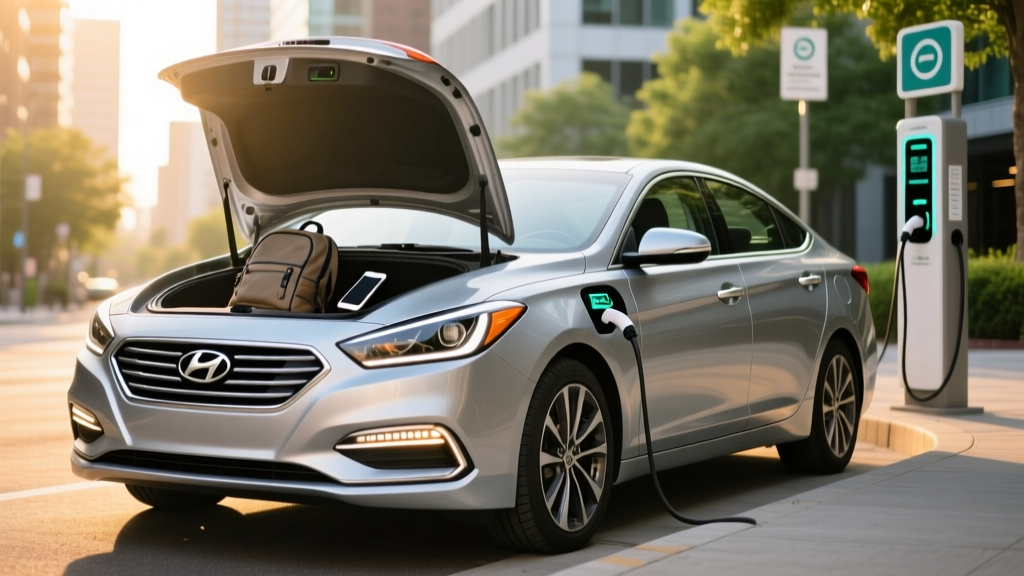
The 2026 Prius PHEV charges via a standard J1772 connector (Level 1 and Level 2 AC). Toyota equips it with a 3.5 kW onboard charger, which is the limiting factor for charge speed.
| Charging Level | Power (kW) | 0-100% Time | Notes |
|---|---|---|---|
| Level 1 (120V household) | ~1.2 kW | ~11 hours | Overnight top-up; adequate for light commutes |
| Level 2 (240V home/public) | 3.5 kW | ~4 hours | Fully replenishes overnight or during workday |
| DC Fast Charge | N/A | N/A | No DC fast charging capability |
The lack of DC fast charging is a deliberate trade-off. Toyota positions the Prius PHEV for home and workplace charging, not highway fast-charge stops. Given the 13.6 kWh battery, a 3.5 kW Level 2 charger refills the pack in about four hours — plug in when you get home, and it's full by morning. If you need DC fast charging for road-trip electric driving, a full BEV (battery electric vehicle) is the better tool.
For home Level 2 installation, budget $500-$1,500 for a quality 240V charger (like a ChargePoint Home Flex or Emporia Level 2) plus $500-$2,000 for electrician labor and permitting, depending on your panel's proximity to the garage. A dedicated 20A or 30A circuit is typically sufficient given the 3.5 kW onboard charger limit.
Tax Credit Eligibility: Does the Prius PHEV Qualify?
Under current IRS §30D rules, the Prius PHEV may qualify for a partial or full federal tax credit up to $7,500, but eligibility depends on several factors that change periodically:
- MSRP cap: Sedans must be under $55,000 MSRP. All Prius PHEV trims clear this easily.
- Buyer income cap: Modified AGI must not exceed $150,000 (single), $225,000 (head of household), or $300,000 (joint).
- Battery sourcing requirements: Critical minerals and battery component sourcing must meet escalating annual thresholds. Toyota's supply chain has been adapting, but the exact credit amount ($3,750 or $7,500) depends on current-year sourcing compliance.
- Point-of-sale transfer: As of 2024, eligible buyers can transfer the credit to the dealer at purchase, reducing the purchase price directly rather than waiting for a tax refund.
Always verify current eligibility on IRS.gov and confirm with your tax professional before purchasing. State incentives (such as California's CVRP or Colorado's innovative motor vehicle credit) may stack on top — check your state's energy office for details.
Battery Longevity, Warranty, and Replacement Cost
Toyota covers the Prius PHEV's hybrid battery with a 10-year/150,000-mile warranty (in CARB states; 8-year/100,000-mile in other states). The warranty guarantees the battery will retain sufficient capacity to function as designed — Toyota defines the threshold at approximately 60-70% of original capacity.
Real-world degradation data: Toyota's lithium-ion packs in the Prius lineage have an excellent longevity track record. Taxi fleet data and owner reports from fourth-generation models routinely show 150,000-200,000+ miles with less than 10-15% capacity loss. The PHEV's larger battery actually experiences shallower depth-of-discharge cycles in daily use (you rarely drain the full 13.6 kWh to zero), which reduces wear.
Replacement cost if out of warranty: A new OEM Prius PHEV battery pack typically costs $4,000-$6,500 installed. Third-party remanufactured options may be available for $2,500-$4,000. Given the 10-year warranty and slow degradation curve, most original owners will never face this cost.
Who Should Buy This vs. a Full EV or Gas Car
Choose the Prius PHEV (hybrid sport touring) if:
- You can charge at home or work (Level 1 or 2) and your daily commute is under ~40 miles
- You want electric commuting but regularly take road trips exceeding 300 miles and don't want to plan around DC fast chargers
- You value driving engagement (220 hp, low CG, responsive handling) alongside efficiency
- You live in an apartment or area with limited public charging infrastructure
- You want to reduce fuel consumption dramatically without full EV range anxiety
Choose a full BEV (e.g., Tesla Model 3, Hyundai Ioniq 6) if:
- You have reliable home Level 2 charging and your daily driving rarely exceeds 250 miles
- You want zero gasoline purchases, zero oil changes, and minimal drivetrain maintenance
- You want access to DC fast charging (150-350 kW) for road trips
- Local incentives or the full $7,500 federal credit make the BEV price-competitive
Choose the standard Prius HEV (no plug) if:
- You cannot charge at home or work at all
- You want maximum simplicity — no cables, no charging apps, no plug-in routine
- Your budget is tighter and the ~$5,000 PHEV premium doesn't pencil out against your driving miles
Stick with a conventional gas car if:
- You drive fewer than 5,000 miles per year and fuel cost savings won't offset any electrification premium
- You need a body style or capability (heavy towing, off-road) that current hybrid/EV options don't serve
Pros
- 44-mile EV range covers most daily commutes gasoline-free
- 220 hp and 6.6s 0-60 make it genuinely fun to drive
- 470+ mile total range eliminates road-trip range anxiety
- 10-year/150k-mile battery warranty in CARB states
- Low starting MSRP ($33,445) with potential $7,500 federal credit
- Excellent real-world city MPG (often exceeds EPA rating)
Cons
- No DC fast charging — EV range is home/office-charge only
- 3.5 kW onboard charger means 4-hour Level 2 fill time
- Rear seat and cargo space tighter than crossover alternatives
- FWD only on PHEV (no AWD option, unlike the HEV)
- EV range drops 15-25% in sustained cold weather
Frequently Asked Questions
How many MPG does the 2026 Prius PHEV get?
In hybrid mode (battery depleted), the EPA rates it at 50 city / 47 highway / 48 combined MPG. Real-world city driving often yields 52-58 MPG thanks to regenerative braking. Highway driving at 75-80 mph typically returns 43-47 MPG.
How far can the Prius PHEV go on electric only?
The EPA rates it at 44 miles of electric-only range. In mild weather (60-80°F) at city speeds, you may see 46-50 miles. In cold weather or at sustained highway speeds, expect 33-40 miles before the engine engages.
Does the Prius PHEV qualify for the $7,500 federal tax credit?
It may qualify for a partial ($3,750) or full ($7,500) credit under IRS §30D, depending on current battery-sourcing compliance and your income level. The MSRP is well under the $55,000 sedan cap. Always verify on fueleconomy.gov's tax credit page and consult a tax professional.
Is the Prius PHEV battery reliable, and what does replacement cost?
Toyota's hybrid batteries have a proven track record lasting 150,000-200,000+ miles with modest degradation. The battery is warrantied for 10 years/150,000 miles (CARB states) or 8 years/100,000 miles (non-CARB). Out-of-warranty replacement runs $4,000-$6,500 for an OEM pack. Most original owners will never need one.
Do I need to plug in the Prius PHEV?
No — if you never plug it in, it operates as a conventional hybrid and still achieves 48 MPG combined. However, you'll miss the 44 miles of gasoline-free electric commuting that makes the PHEV premium worthwhile. Plugging in nightly on a standard 120V outlet is sufficient for most commutes.
How does the Prius PHEV compare to a sport touring EV like the Ioniq 6?
The Hyundai Ioniq 6 offers 360 miles of EPA range, 150+ kW DC fast charging, and lower running costs — but starts around $38,000+ and requires charging infrastructure planning for road trips. The Prius PHEV sacrifices all-electric road-trip capability for the freedom of 470+ mile gas-electric range and a lower entry price. If charging access is solid, the EV wins on operating cost. If you road-trip often without reliable fast-charging routes, the PHEV is the more flexible hybrid sport touring choice.