Toyota's Plug-In Hybrid Strategy in 2026
Toyota has doubled down on its plug-in hybrid electric vehicle (PHEV) lineup as a bridge between conventional hybrids and full battery-electric vehicles. For 2026, the automaker offers two distinct Toyota PHEV models in the U.S. market: the RAV4 Prime SUV and the Prius Prime liftback. Both pair a gasoline engine with a larger battery and more powerful electric motor than their conventional hybrid siblings, enabling meaningful electric-only driving before the gas engine kicks in.
This guide breaks down exact EPA figures, real-world expectations, pricing, tax credit eligibility, and long-term ownership considerations for both models — the data you need to decide whether a Toyota PHEV fits your driving pattern better than a full EV or a standard hybrid.
HEV vs PHEV: What's Actually Different?
Before comparing the two Toyota PHEV models, it's worth clarifying the distinction between a conventional hybrid (HEV) and a plug-in hybrid (PHEV), since Toyota sells both versions of the RAV4 and Prius.
| Feature | Conventional Hybrid (HEV) | Plug-In Hybrid (PHEV) |
|---|---|---|
| Battery size | ~1.0–1.6 kWh | 13.6–18.1 kWh |
| Plugs in? | No — charges via regen & engine | Yes — Level 1/Level 2 charging |
| Electric-only range | ~1 mile at low speed | 42–44 miles (EPA) |
| Federal tax credit | Not eligible (§30D) | Up to $7,500 (eligibility varies) |
| Gas engine | Primary power source | Backup / range extender after EV range depleted |
| Typical buyer | No home charging access | Home charger + short daily commute |
The core trade-off: PHEVs cost more upfront but offer zero-emission daily driving for most commutes, while HEVs require no behavioral change and deliver strong MPG everywhere. If you can charge at home and your daily round-trip is under 40 miles, a Toyota PHEV essentially functions as an EV on weekdays and a hybrid on road trips.
2026 RAV4 Prime: The Performance PHEV SUV
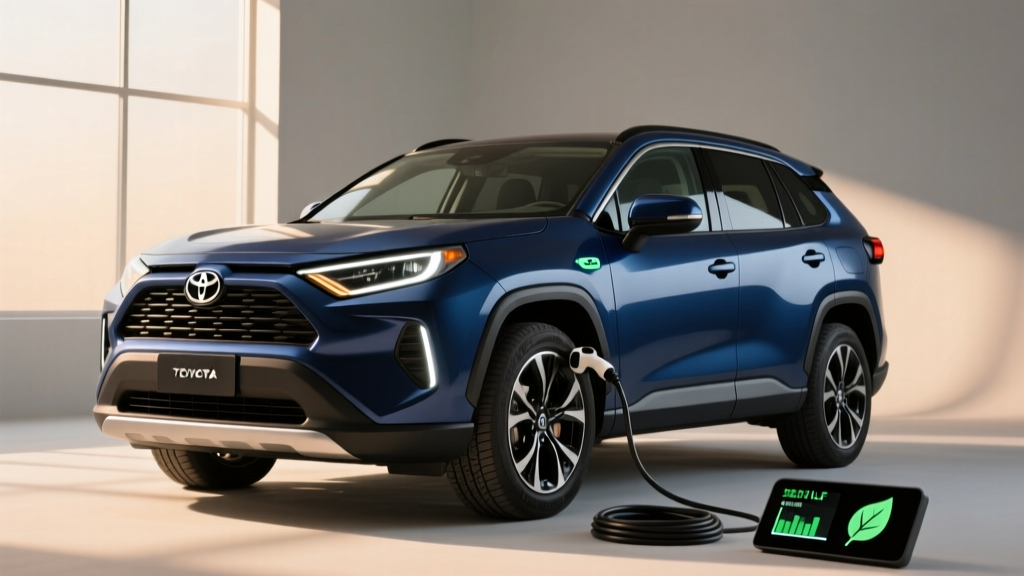
The RAV4 Prime remains Toyota's most powerful RAV4 variant and one of the quickest SUVs in its price bracket. It pairs a 2.5-liter four-cylinder engine with front and rear electric motors for standard all-wheel drive.
| Specification | 2026 RAV4 Prime |
|---|---|
| Combined horsepower | 302 hp |
| 0–60 mph | 5.7 seconds |
| Battery (gross / usable) | 18.1 kWh / ~14.9 kWh |
| Battery chemistry | Lithium-ion (NMC) |
| EPA electric-only range | 42 miles |
| Total combined range | ~600 miles |
| EPA MPGe (EV mode) | 94 MPGe |
| EPA MPG (hybrid mode, combined) | 38 MPG |
| Level 1 charge time (120V, 12A) | ~12 hours (0–100%) |
| Level 2 charge time (240V, 32A) | ~2.5 hours (0–100%) |
| DC fast charging | Not supported |
| Drivetrain | Electronic AWD (eAWD) |
| Base MSRP (SE trim) | $44,915 |
| XSE trim MSRP | $48,540 |
Real-World MPG and Range Expectations
The EPA rates the RAV4 Prime at 42 miles of electric-only range and 38 MPG combined once the battery is depleted. In real-world testing, owners consistently report achieving 38–42 miles of EV range in mild weather (55–75°F) with mixed city/highway driving. In cold weather (below 30°F), expect that EV range to drop to roughly 30–34 miles due to cabin heating demand and reduced battery efficiency.
Once operating as a hybrid, the RAV4 Prime delivers real-world fuel economy close to its EPA rating — typically 36–40 MPG combined depending on driving style. Highway-heavy driving at 75+ mph will push it toward 34–36 MPG, while city driving with frequent regenerative braking opportunities can yield 40+ MPG. The combined range of approximately 600 miles means you'll stop for gas long before range becomes a concern.
Charging the RAV4 Prime
The RAV4 Prime uses a standard J1772 connector for Level 1 and Level 2 AC charging. It does not support DC fast charging — a deliberate engineering choice. Toyota's reasoning: the 18.1 kWh battery is small enough that a 32A Level 2 home charger replenishes it fully in about 2.5 hours, making DC fast-charging hardware unnecessary weight and cost for most PHEV use cases.
For daily use, plugging in overnight on a standard 120V outlet (Level 1) adds roughly 3–4 miles of EV range per hour of charging. If your daily EV consumption is 20–25 miles, Level 1 alone may suffice. For full daily replenishment or if you want faster turnaround, a 240V Level 2 home charger is strongly recommended.
2026 Prius Prime: The Efficiency-Focused PHEV
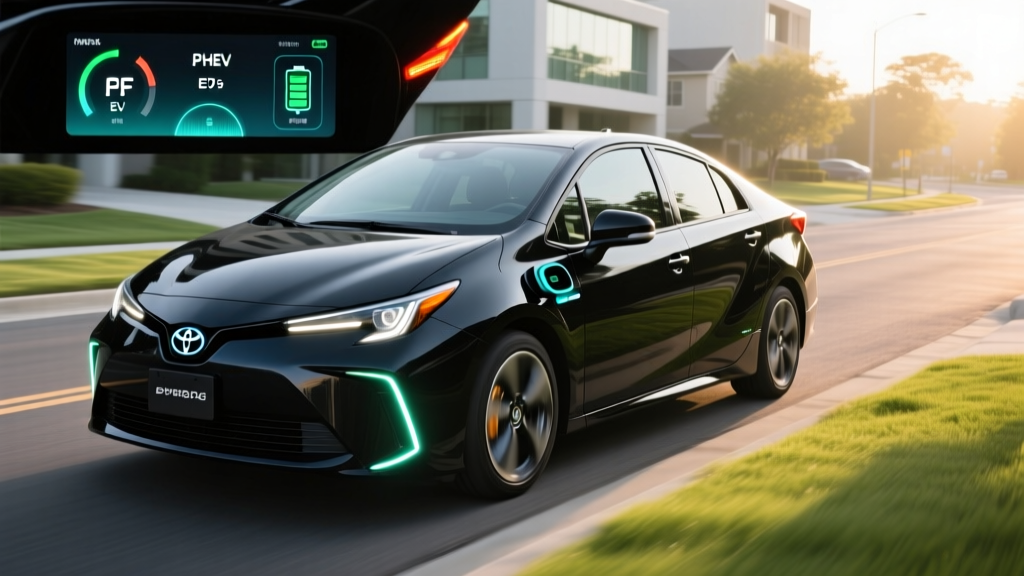
Redesigned for the 2023 model year and refined through 2026, the Prius Prime sheds the dowdy reputation of earlier generations. It's now genuinely quick, sharply styled, and delivers class-leading efficiency.
| Specification | 2026 Prius Prime |
|---|---|
| Combined horsepower | 220 hp |
| 0–60 mph | 6.6 seconds |
| Battery (gross / usable) | 13.6 kWh / ~11.2 kWh |
| Battery chemistry | Lithium-ion (NMC) |
| EPA electric-only range (SE trim) | 44 miles |
| EPA electric-only range (XSE trim) | 40 miles |
| Total combined range | ~510–550 miles |
| EPA MPGe (EV mode, SE) | 127 MPGe |
| EPA MPG (hybrid mode, SE combined) | 52 MPG |
| EPA MPG (hybrid mode, XSE combined) | 48 MPG |
| Level 1 charge time (120V, 12A) | ~11 hours (0–100%) |
| Level 2 charge time (240V, 16A) | ~4 hours (0–100%) |
| DC fast charging | Not supported |
| Drivetrain | FWD |
| Base MSRP (SE trim) | $34,285 |
| XSE trim MSRP | $37,485 |
| XSE Premium MSRP | $40,685 |
Real-World MPG and Range Expectations
The Prius Prime SE's 44-mile EPA electric range is among the highest of any PHEV on the market. Real-world results in moderate temperatures typically match or slightly exceed this figure in city driving — many owners report 45–48 miles before the engine fires up, thanks to the Prius's low curb weight and excellent regenerative braking. Highway driving at 70 mph drops EV range to approximately 35–38 miles. Cold weather (below freezing) reduces it to roughly 30–33 miles.
In hybrid mode, the Prius Prime SE's 52 MPG combined EPA rating is exceptional. Real-world results frequently exceed the EPA estimate in city driving (54–58 MPG is common), while sustained highway speeds bring it down to 46–50 MPG. The XSE trim, with its larger 19-inch wheels, sacrifices about 4 MPG combined and 4 miles of EV range — a meaningful trade-off if efficiency is your priority.
Charging the Prius Prime
Like the RAV4 Prime, the Prius Prime charges via J1772 on Level 1 or Level 2 AC power only — no DC fast charging. The smaller 13.6 kWh battery means even a 16A Level 2 charger fills it in roughly 4 hours. On a standard 120V household outlet, plan for an overnight charge to replenish a full day's EV driving.
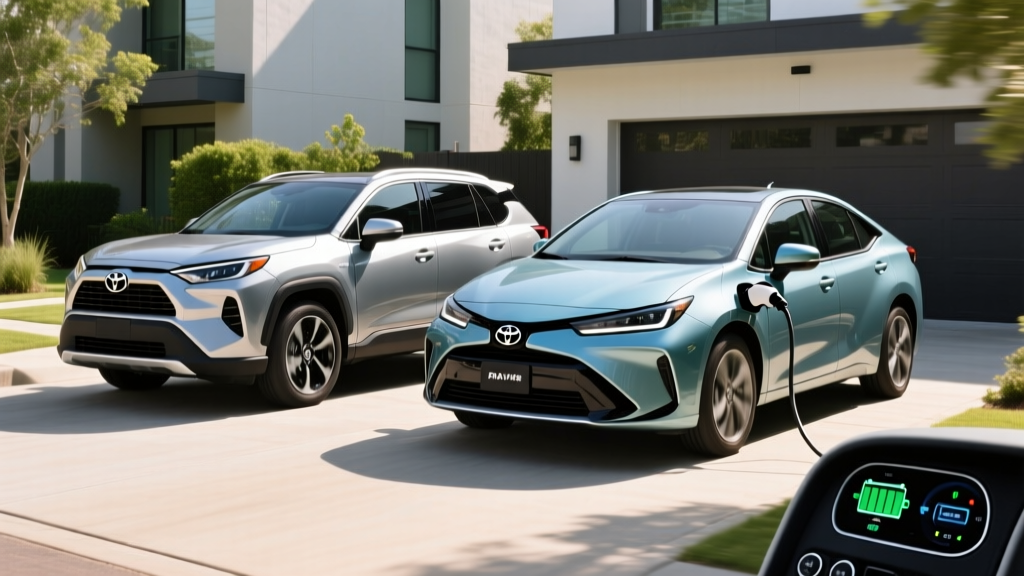
Side-by-Side: RAV4 Prime vs Prius Prime
| Attribute | RAV4 Prime (XSE) | Prius Prime (SE) |
|---|---|---|
| EV range | 42 mi | 44 mi |
| Combined HP | 302 hp | 220 hp |
| 0–60 mph | 5.7 sec | 6.6 sec |
| Hybrid-mode MPG (combined) | 38 MPG | 52 MPG |
| MPGe (EV mode) | 94 MPGe | 127 MPGe |
| Drivetrain | AWD | FWD |
| Cargo volume (behind rear seats) | 33.5 cu ft | 20.3 cu ft |
| Towing capacity | Not rated | Not rated |
| Level 2 charge time | ~2.5 hr (32A) | ~4 hr (16A) |
| Starting MSRP | $44,915 | $34,285 |
| Federal tax credit eligible | Varies (see below) | Varies (see below) |
The RAV4 Prime wins on power, AWD capability, and cargo space. The Prius Prime wins on efficiency, EV range, and price — by over $10,000 at base trim. Your choice depends on whether you need SUV utility or prioritize maximum efficiency and value.
Federal Tax Credit Eligibility (§30D)
Federal tax credit eligibility for Toyota PHEVs is governed by IRS §30D rules, which have tightened significantly since the Inflation Reduction Act. As of 2026, both the RAV4 Prime and Prius Prime face the same eligibility framework, though final credit amounts depend on battery sourcing and critical mineral requirements that shift annually.
- Vehicle MSRP cap: SUVs (RAV4 Prime) must be ≤$80,000; sedans/liftbacks (Prius Prime) must be ≤$55,000. Both models qualify under their respective caps.
- Buyer income cap: Modified AGI ≤$150,000 (single), ≤$225,000 (head of household), ≤$300,000 (joint). Exceed these and you're ineligible regardless of the vehicle.
- Battery sourcing: A percentage of critical minerals and battery components must be sourced from the U.S. or free-trade-agreement countries. These thresholds increase yearly. Toyota's supply chain compliance for 2026 model-year vehicles determines whether the full $7,500, a partial $3,750, or $0 credit applies.
- Point-of-sale transfer: Eligible buyers can transfer the credit to the dealer at purchase, reducing the purchase price directly rather than waiting for a tax refund.
- Assembly: The vehicle must undergo final assembly in North America. Both the RAV4 Prime (assembled in Japan) and Prius Prime (assembled in Japan) have faced eligibility challenges under this requirement.
Critical note: As of the 2026 model year, both Toyota PHEV models are assembled in Japan, which has historically disqualified them from the §30D credit under the North American final assembly requirement. Always verify current eligibility on fueleconomy.gov and consult a tax professional before relying on the credit in your purchase decision. Do not assume a $7,500 credit applies.
Battery Warranty, Reliability, and Replacement Costs
Toyota's hybrid battery warranty is among the strongest in the industry and applies equally to both PHEV models:
Hybrid Battery Warranty: 10 years / 150,000 miles (whichever comes first) for 2020 and newer model years. This covers the high-voltage traction battery against defects and excessive capacity loss. Toyota defines excessive loss as falling below approximately 70% of original capacity.
Hybrid System Warranty: 8 years / 100,000 miles covering the inverter, electric motors, and related control electronics.
Basic Warranty: 3 years / 36,000 miles bumper-to-bumper.
Powertrain Warranty: 5 years / 60,000 miles on the gasoline engine and transmission.
Real-World Battery Longevity
Toyota's hybrid battery track record is well-established. The conventional Prius, in production since 1997 in Japan and 2000 in the U.S., has demonstrated that Toyota's nickel-metal hydride and lithium-ion hybrid batteries routinely last 150,000–200,000+ miles with normal use. The PHEV batteries are larger and experience deeper cycling, but Toyota's conservative buffer management (the system never fully charges or fully depletes the battery) protects long-term health.
Based on data from earlier-generation Prius Prime and RAV4 Prime owners, battery degradation of 5–10% over the first 5 years / 60,000 miles is typical — meaning a RAV4 Prime that started with 42 miles of EV range might deliver 38–40 miles after five years of regular use.
Battery Replacement Cost
If a traction battery does need replacement outside warranty, expect the following approximate costs at a Toyota dealer:
- RAV4 Prime battery pack: $6,000–$8,500 (parts + labor)
- Prius Prime battery pack: $4,500–$6,500 (parts + labor)
These are ballpark figures that vary by region and dealer. Third-party hybrid battery refurbishers offer reconditioned packs for 40–60% less. However, given Toyota's 10-year/150,000-mile warranty and the demonstrated longevity of their hybrid batteries, out-of-pocket replacement during typical ownership is uncommon.
For reliability ratings, both the RAV4 and Prius nameplates consistently earn above-average scores from Consumer Reports and strong marks in NHTSA safety testing.
Who Should Buy a Toyota PHEV — and Who Shouldn't
Choose a Toyota PHEV if:
- You have access to home charging (even a standard 120V outlet works for daily top-ups)
- Your daily round-trip commute is under 40 miles — you'll rarely burn gas on weekdays
- You take road trips where charging infrastructure is sparse or unreliable
- You want EV-like daily driving without range anxiety on longer trips
- You live in a region with cold winters where full EV range drops significantly
- You want AWD (RAV4 Prime) without the efficiency penalty of a gas-only SUV
Choose a full BEV (battery-electric vehicle) instead if:
- Your daily driving is consistently under 250 miles and you have reliable home + destination charging
- You want zero tailpipe emissions and minimal maintenance (no oil changes, no gas engine upkeep)
- You qualify for the full federal tax credit on a BEV and want maximum incentive value
- You want access to DC fast charging for road trips (30-minute 10–80% stops)
Choose a conventional Toyota HEV (standard hybrid) instead if:
- You cannot charge at home or at work — a PHEV's EV range is wasted without plugging in
- You want the lowest possible purchase price with strong MPG
- Your driving is mostly long highway trips where the PHEV's EV range provides minimal benefit
Toyota PHEV Pros
- 42–44 miles of real, usable EV range covers most daily commutes
- No range anxiety — gas engine provides 500+ additional miles
- Industry-leading 10-year/150,000-mile hybrid battery warranty
- RAV4 Prime offers 302 hp and AWD with 38 MPG hybrid-mode
- Prius Prime delivers 52 MPG combined — best-in-class efficiency
- Proven Toyota reliability and strong resale value
Toyota PHEV Cons
- No DC fast charging — limited to Level 2 AC
- Japan assembly may disqualify from federal §30D tax credit
- RAV4 Prime pricing starts above $44,000 — premium over gas RAV4
- Prius Prime cargo space (20.3 cu ft) trails many compact SUVs
- EV range drops 20–25% in cold weather
- Neither model offers one-pedal driving or strong regen like full EVs
Frequently Asked Questions
How many MPG does the Toyota PHEV get?
The 2026 Prius Prime SE achieves 52 MPG combined (57 city / 47 highway) in hybrid mode after the EV range is used. The RAV4 Prime delivers 38 MPG combined (40 city / 36 highway) in hybrid mode. In EV mode, the Prius Prime is rated at 127 MPGe and the RAV4 Prime at 94 MPGe. Real-world city driving often exceeds EPA estimates in both models due to regenerative braking.
How far can the Toyota PHEV go on electric only?
The Prius Prime SE delivers 44 miles of EPA-rated electric-only range (40 miles for the XSE trim). The RAV4 Prime provides 42 miles. In real-world conditions, expect 35–48 miles depending on temperature, speed, and terrain. Cold weather below freezing typically reduces EV range by 20–25%.
Does the Toyota PHEV qualify for a federal tax credit?
Under current IRS §30D rules, eligibility depends on North American final assembly, battery component sourcing, buyer income, and vehicle MSRP. Both the RAV4 Prime and Prius Prime are assembled in Japan, which has historically made them ineligible for the federal credit due to the final assembly requirement. Always check the latest eligibility list at fueleconomy.gov and consult a tax professional before purchasing.
Is the Toyota PHEV reliable, and what does battery replacement cost?
Toyota's hybrid powertrains have a two-decade track record of above-average reliability. The hybrid battery is warranted for 10 years / 150,000 miles. Real-world data shows Toyota hybrid batteries lasting 150,000–200,000+ miles. Out-of-warranty replacement costs approximately $4,500–$6,500 for the Prius Prime and $6,000–$8,500 for the RAV4 Prime, though needing one during typical ownership is uncommon.
Do I need to plug in a Toyota PHEV?
You don't have to — both models operate as fully capable conventional hybrids if never plugged in. However, you'd forfeit the 42–44 miles of electric-only range that defines the PHEV value proposition. Without plugging in, a PHEV is simply a heavier, more expensive hybrid. If you can't charge at home or work, a conventional Toyota HEV (standard RAV4 Hybrid or Prius) is a better financial choice.
How long does it take to charge a Toyota PHEV at home?
On a standard 120V outlet (Level 1), expect 11–12 hours for a full charge — sufficient for overnight replenishment. On a 240V Level 2 charger, the RAV4 Prime charges in approximately 2.5 hours (at 32A) and the Prius Prime in about 4 hours (at 16A). Neither model supports DC fast charging.
Toyota PHEV vs full EV — which should I choose?
If your daily driving is under 40 miles and you have home charging, a Toyota PHEV gives you EV-like weekday commuting with gas-engine freedom for road trips — no charging infrastructure dependency. If you drive more than 250 miles daily, have reliable charging access, and want zero tailpipe emissions with lower maintenance, a full BEV like the Tesla Model Y, Hyundai Ioniq 5, or Chevrolet Equinox EV may serve you better. The PHEV is the pragmatic choice for households that want one vehicle to do everything without compromise.