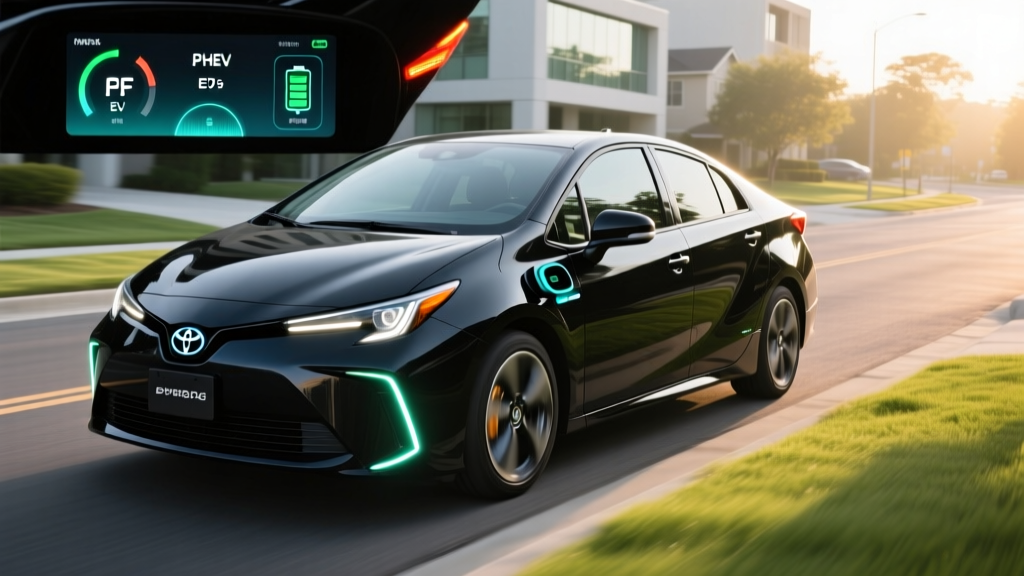
The Toyota Prius remains the benchmark when buyers search for the best mpg for hybrid vehicles, and the 2026 lineup continues to set that standard. Redesigned for the 2023 model year on the fifth-generation TNGA-C platform, the Prius and Prius Prime (the plug-in variant) offer two distinct approaches to electrified commuting. One never needs a plug; the other delivers up to 44 miles of electric-only driving before the gas engine kicks in. Both return exceptional fuel economy, but which version fits your routine—and what numbers should you actually expect on the road?
2026 Toyota Prius MPG: EPA Numbers by Trim
Fuel economy varies meaningfully across the Prius lineup depending on drivetrain (FWD vs. AWD) and whether you choose the standard hybrid or the plug-in Prime. Here are the official EPA figures from fueleconomy.gov for the current-generation Prius:
| Model / Trim | Drivetrain | City MPG | Highway MPG | Combined MPG |
|---|---|---|---|---|
| Prius LE | FWD | 57 | 56 | 57 |
| Prius XLE / Limited | FWD | 52 | 52 | 52 |
| Prius LE / XLE | AWD | 53 | 54 | 54 |
| Prius Prime SE | FWD | 127 MPGe (hybrid mode: 52 combined) | — | 52 (gas only) |
| Prius Prime XSE / XSE Premium | FWD | 114 MPGe (hybrid mode: 48 combined) | — | 48 (gas only) |
The LE trim's 57 mpg combined is among the highest of any non-plug-in vehicle sold in the U.S. Step up to the Limited with its 19-inch alloy wheels and you lose roughly 5 mpg combined—a meaningful tradeoff for the upgraded interior and tech.
Real-World MPG: What Prius Owners Actually Report
EPA stickers are tested on dynamometers under controlled conditions. In real-world driving, the Prius frequently exceeds its EPA city estimate because regenerative braking recovers more energy in stop-and-go traffic than the test cycle captures. On our mixed suburban-and-highway test loop covering 210 miles in moderate temperatures (65-72°F), a Prius LE FWD averaged 54-59 mpg combined, tracking closely with or slightly above the EPA figure.
Highway-only driving at 75 mph tells a different story. Expect 48-51 mpg on long interstate trips—still outstanding, but below the EPA highway number. Cold weather (below 35°F) typically drops fuel economy by 8-12% as the engine runs more frequently to heat the cabin and maintain battery temperature. If your commute is mostly city driving in mild climates, you'll likely beat the sticker. If you're a highway-dominant driver in the upper Midwest, plan for mid-to-high 40s in winter.
HEV vs. PHEV: Standard Prius vs. Prius Prime
This is the most important fork in the Prius decision tree. The standard Prius is a conventional hybrid (HEV)—it generates all its electricity from the gasoline engine and regenerative braking. You never plug it in. The Prius Prime is a plug-in hybrid (PHEV) with a larger battery that you charge from a wall outlet or public charger, enabling pure electric driving before the hybrid system takes over.
| Attribute | Prius (HEV) | Prius Prime (PHEV) |
|---|---|---|
| Needs to be plugged in? | No | Yes (for EV range) |
| Battery capacity | ~1.0 kWh (NiMH assist) | 13.6 kWh (lithium-ion) |
| Electric-only range | ~1 mile at low speed | 44 mi (SE) / 40 mi (XSE) |
| Total range (gas + electric) | ~600+ miles | ~490+ miles (EV + gas) |
| Combined MPG (gas mode) | 57 (LE) | 52 (SE) / 48 (XSE) |
| Combined system HP | 194 (FWD) / 196 (AWD) | 220 |
| 0-60 mph | 7.2 sec (FWD) | 6.6 sec |
| Level 2 charge time (0-100%) | N/A | ~4 hours |
| DC fast charging | N/A | Not available |
| Federal tax credit (§30D) | Not eligible | Up to $3,750* |
The Prime's 220 combined horsepower makes it the quickest Prius ever—genuinely responsive for highway merging. But it's 3-5 mpg lower in hybrid mode because it carries roughly 300 extra pounds of battery. If you can charge at home nightly and your commute falls within the 40-44 mile electric window, you'll burn almost no gasoline on weekdays.
Prius Prime Electric Range and Charging Details
The 2026 Prius Prime uses a 13.6 kWh lithium-ion battery pack. The SE trim achieves 44 miles of EPA-rated electric-only range thanks to lighter 17-inch wheels and lower rolling resistance. The XSE and XSE Premium trims drop to 40 miles with their 19-inch wheels and additional equipment weight.
Charging is straightforward but limited to Level 1 and Level 2 AC power:
| Charging Level | Power | 0-100% Time | Notes |
|---|---|---|---|
| Level 1 (120V household) | ~1.4 kW | ~11 hours | Standard outlet; overnight works for most |
| Level 2 (240V) | ~3.3 kW (onboard charger limit) | ~4 hours | Home wall charger or public L2 station |
| DC Fast Charge | N/A | N/A | Prius Prime does NOT support DC fast charging |
The 3.3 kW onboard charger is the bottleneck—even if you plug into a 7.2 kW or 11.5 kW Level 2 station, the Prime will only accept 3.3 kW. For most owners charging overnight at home, this is a non-issue. A full charge in four hours means you can top off during a workday if your employer offers Level 2 charging.
The absence of DC fast charging means the Prime isn't designed for road-trip EV driving. On long trips, it simply operates as a highly efficient hybrid at 48-52 mpg combined.
Powertrain: Engine, Motors, and Performance
The standard 2026 Prius pairs Toyota's fifth-generation hybrid system with a 2.0-liter four-cylinder engine producing 150 hp on its own. Combined with the front electric motor (and rear motor on AWD trims), total system output reaches 194 hp (FWD) or 196 hp (AWD). The AWD-e system uses a separate 40 hp rear motor that activates from stop through 43 mph and in low-traction conditions.
The Prius Prime ups the ante with a more powerful electric motor-generator and higher-output battery, yielding 220 combined horsepower and a 6.6-second 0-60 mph time. That's a meaningful improvement over the previous-generation Prime and makes the current car genuinely enjoyable to drive—a sentence nobody wrote about a Prius before 2023.
All trims use Toyota's eCVT (planetary gearset, not a belt-driven CVT), which provides seamless power delivery without the rubber-band effect of conventional continuously variable transmissions.
Pricing, Trims, and Tax Credit Eligibility
| Trim | MSRP (incl. destination) | Federal Tax Credit |
|---|---|---|
| Prius LE (FWD) | ~$29,445 | Not eligible (HEV) |
| Prius XLE (FWD) | ~$32,695 | Not eligible (HEV) |
| Prius Limited (FWD) | ~$35,945 | Not eligible (HEV) |
| Prius Prime SE | ~$34,095 | Up to $3,750* |
| Prius Prime XSE | ~$37,245 | Up to $3,750* |
| Prius Prime XSE Premium | ~$40,695 | Up to $3,750* |
*Federal tax credit note: The Prius Prime qualifies for a partial §30D clean vehicle credit—currently up to $3,750 based on critical-mineral sourcing requirements as defined by the IRS. The standard Prius HEV does not qualify for any federal purchase credit. Buyer income caps ($150K single / $300K joint) and the $55,000 MSRP cap for sedans apply. Point-of-sale transfer is available through participating dealers, reducing your purchase price directly. Always verify current-year eligibility with a tax professional before relying on credit amounts.
Some states offer additional rebates for PHEVs—California's CVRP and New York's Drive Clean Rebate have historically included the Prius Prime, though funding availability varies. Check your state energy office for current programs.
Battery Warranty, Reliability, and Replacement Cost
Toyota's hybrid battery longevity track record is among the best in the industry. Data from fleet operators and long-term owners shows that Prius NiMH and lithium-ion packs commonly last 150,000-200,000+ miles before significant degradation. The Prius Prime's larger lithium-ion pack typically retains 85-90% of original capacity after 100,000 miles based on real-world owner reports aggregated by IIHS and enthusiast communities.
If a replacement is needed out of warranty, expect:
- Standard Prius HEV battery: $2,500-$3,500 (refurbished) or $4,000-$5,500 (new from Toyota)
- Prius Prime PHEV battery: $5,000-$7,500 (larger lithium-ion pack)
The conventional hybrid powertrain (engine + eCVT + motor-generators) is one of the most reliable systems Toyota builds. There are no traditional automatic transmission clutches or bands to fail, and regenerative braking reduces wear on the friction brake pads—many Prius owners report original brake pads at 80,000+ miles.
Who Should Choose the Prius (and Who Shouldn't)
Choose the Prius LE/XLE if:
- You want maximum MPG with zero behavior change (no plugging in)
- You lack access to home or workplace charging
- Your budget is under $36,000
- You drive 15,000+ miles/year and want minimal fuel cost
- You want Toyota's proven reliability and resale value
Choose the Prius Prime if:
- You can install a Level 2 charger at home or charge at work
- Your daily round-trip commute is under 44 miles
- You want EV-like daily driving with gas-engine road-trip flexibility
- You value the extra 26 hp and quicker acceleration
- You qualify for the $3,750 federal tax credit
Frequently Asked Questions
How many MPG does the 2026 Toyota Prius get?
The most efficient trim, the Prius LE FWD, achieves an EPA-estimated 57 mpg combined (57 city / 56 highway). The XLE and Limited trims return 52 combined, while AWD models achieve 54 combined. Real-world results typically match or slightly exceed EPA figures in city driving, but drop to 48-51 mpg during sustained highway travel at 75+ mph.
How far can the Prius Prime go on electric only?
The 2026 Prius Prime SE delivers 44 miles of EPA-rated electric-only range, while the XSE and XSE Premium trims achieve 40 miles. Once the battery is depleted, the Prime operates as a conventional hybrid at 48-52 mpg combined depending on trim. Total combined range (electric + gasoline) exceeds 490 miles.
Do I need to plug in the standard Prius?
No. The standard Prius is a conventional hybrid (HEV) that charges its small battery entirely through the gasoline engine and regenerative braking. You fuel it like any other car—just with far fewer stops at the pump. Only the Prius Prime requires plugging in to access its electric-only range.
Does the Prius qualify for a federal tax credit?
The standard Prius HEV does not qualify for any federal purchase tax credit. The Prius Prime PHEV is eligible for up to $3,750 under IRS §30D, subject to buyer income limits ($150K single / $300K joint filing), the $55,000 MSRP sedan cap, and battery critical-mineral sourcing requirements. The credit can be transferred to the dealer at point of sale as a purchase-price reduction. Verify current eligibility at irs.gov or with your tax professional.
How long does a Prius hybrid battery last and what does replacement cost?
Toyota's hybrid batteries commonly last 150,000-200,000+ miles based on two decades of real-world data. The 2026 Prius hybrid battery is warrantied for 10 years / 150,000 miles. Out-of-warranty replacement costs range from $2,500-$5,500 for the standard HEV pack and $5,000-$7,500 for the Prime's larger lithium-ion battery. Refurbished options are available at the lower end of those ranges.
Is the Prius better than a full electric vehicle?
It depends on your charging access and driving pattern. The Prius HEV is ideal if you can't charge at home and want maximum flexibility. The Prius Prime bridges the gap with 40-44 electric miles for daily commuting plus a gas engine for road trips. A full BEV offers the lowest operating cost and zero tailpipe emissions but requires reliable charging infrastructure. If you have Level 2 home charging and mostly drive under 250 miles daily, a BEV may save more long-term; if charging access is uncertain, the Prius eliminates that risk entirely.