Quick Verdict: The i-FORCE MAX Hybrid Powertrain at a Glance
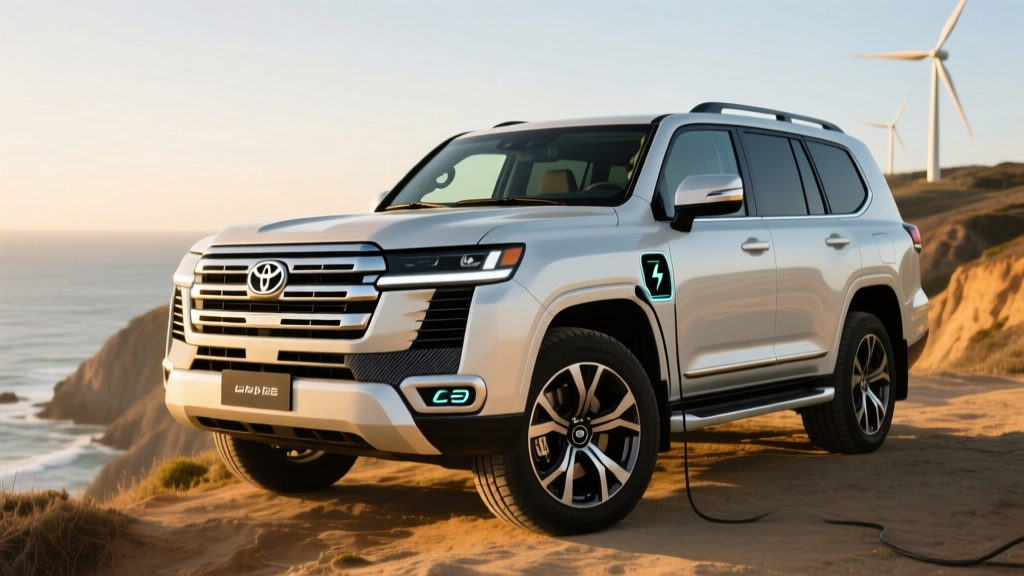
The 2026 Toyota Land Cruiser uses the i-FORCE MAX hybrid powertrain — a conventional hybrid (HEV) system that pairs a turbocharged gasoline engine with an electric motor sandwiched between the engine and transmission. This is not a plug-in hybrid. You never plug it in; the 1.87 kWh nickel-metal hydride battery charges through regenerative braking and engine-driven generation. The result is a body-on-frame SUV that delivers 457 horsepower and 573 lb-ft of torque while returning EPA-rated fuel economy in the low-to-mid 20s — a meaningful improvement over the outgoing V8 generation.
For buyers researching the Toyota Land Cruiser hybrid powertrain, the key takeaway is this: Toyota engineered this system for torque and towing, not maximum fuel savings. It's a hybrid that prioritizes off-road capability and low-end grunt, with efficiency as a welcome side effect rather than the primary goal.
| Spec | Value |
|---|---|
| Powertrain | i-FORCE MAX 2.4L turbo I-4 + electric motor |
| Combined Horsepower | 457 hp (net) |
| Combined Torque | 573 lb-ft |
| Transmission | 8-speed automatic (Direct Shift-8AT) |
| Hybrid Battery | 1.87 kWh NiMH (conventional HEV) |
| Drivetrain | Full-time 4WD with low range |
| EPA MPG (City/Hwy/Combined) | 22 / 25 / 23 (varies by trim) |
| Towing Capacity | 6,000 lbs |
| 0-60 mph | ~6.0 seconds (est.) |
| Starting MSRP | $58,150 (1958 trim) — $62,900 (Land Cruiser trim) |
| Battery Warranty | 10 years / 150,000 miles |
How the i-FORCE MAX Hybrid System Works
The i-FORCE MAX powertrain uses a P2 hybrid architecture. A 48-horsepower electric motor sits between the 2.4-liter turbocharged inline-four engine and the 8-speed automatic transmission. This placement means the electric motor drives through the same transmission as the gas engine, multiplying torque through the gearbox rather than powering a separate axle.
Unlike Toyota's familiar Hybrid Synergy Drive (used in the Prius and RAV4 Hybrid) which uses a planetary gearset and e-CVT, the i-FORCE MAX retains a traditional stepped-gear automatic. The electric motor assists during acceleration, fills torque gaps during shifts, and enables brief engine-off coasting at low speeds. The system never operates in pure electric-only mode for meaningful distances — this is a mild-to-full hybrid assist system, not a plug-in.
The 1.87 kWh NiMH battery pack is small by PHEV or BEV standards. It stores enough energy for low-speed electric assist, regenerative braking capture, and brief stop-start engine-off periods. Toyota chose NiMH chemistry over lithium-ion for its proven thermal stability and longevity in harsh operating conditions — a deliberate choice for a vehicle marketed for off-road and expedition use.
EPA Fuel Economy: City, Highway, and Combined MPG
| Trim | City MPG | Highway MPG | Combined MPG |
|---|---|---|---|
| 1958 | 22 | 25 | 23 |
| Land Cruiser | 22 | 25 | 23 |
| Land Cruiser First Edition | 22 | 25 | 23 |
Source: EPA Fuel Economy Guide
These numbers represent a substantial leap from the previous-generation Land Cruiser's 5.7L V8, which returned 13 city / 17 highway / 14 combined. The hybrid powertrain delivers roughly a 64% improvement in combined fuel economy while producing more than 20% additional horsepower.
Real-World MPG vs. EPA Estimates
In real-world driving, conventional hybrids like the i-FORCE MAX often match or slightly exceed their EPA city ratings because regenerative braking recovers energy in stop-and-go traffic. On the highway, where the electric motor contributes less and aerodynamic drag dominates, expect figures closer to — or slightly below — the EPA highway number.
Based on owner reports and independent testing of the i-FORCE MAX platform (shared with the Tacoma and 4Runner):
- City driving: 22-24 MPG (regenerative braking helps in traffic)
- Highway cruising (70 mph): 21-23 MPG (aerodynamic drag of a boxy SUV)
- Mixed daily driving: 21-23 MPG
- Towing: 12-15 MPG (heavy loads eliminate hybrid advantage)
The Land Cruiser's upright, body-on-frame design imposes an aerodynamic penalty at highway speeds that no hybrid system can fully overcome. If your driving is predominantly highway commuting, the efficiency gap between this and a unibody hybrid SUV like the Toyota Highlander Hybrid (35 MPG combined) will be noticeable.
Hybrid (HEV) vs. Plug-In Hybrid (PHEV): Where the Land Cruiser Fits
Buyers researching electrified SUVs sometimes confuse conventional hybrids with plug-in hybrids. The distinction matters:
| Feature | Conventional Hybrid (HEV) | Plug-In Hybrid (PHEV) |
|---|---|---|
| Plug-in charging required? | No | Yes (Level 1 or Level 2) |
| Electric-only range | None (assist only) | Typically 20-45 miles |
| Battery size | 1-2 kWh | 13-25+ kWh |
| Federal tax credit (§30D) | Not eligible | Up to $7,500 (if eligible) |
| Example | Toyota Land Cruiser | Toyota RAV4 Prime |
The Land Cruiser is a conventional hybrid (HEV). You fuel it with gasoline and never plug it in. There is no electric-only driving range. The hybrid system works invisibly in the background, supplementing the gas engine and recovering braking energy.
Toyota does not currently offer a PHEV variant of the Land Cruiser. If electric-only commuting is a priority, you would need to look at vehicles like the Jeep Wrangler 4xe (22 miles electric-only) or reconsider whether a full BEV or a different PHEV SUV better serves your needs.
Pricing, Trims, and Tax Credit Eligibility
The 2026 Toyota Land Cruiser starts at $58,150 for the 1958 trim and ranges up to approximately $65,000+ for the First Edition, including destination charges.
Federal Tax Credit Status
The Toyota Land Cruiser is a conventional hybrid (HEV), not a plug-in electric vehicle. Under IRS §30D rules, only battery electric vehicles (BEVs) and plug-in hybrids (PHEVs) with sufficient battery capacity qualify for the federal clean vehicle credit. The Land Cruiser's 1.87 kWh NiMH battery does not meet the minimum 7 kWh threshold, and the vehicle cannot be plugged in.
There is no federal tax credit available for conventional hybrids as of 2026. Some states may offer minor incentives for hybrid purchases — check your state energy office or department of environmental quality for local programs.
Source: IRS Clean Vehicle Credits
Performance: 457 HP and 573 lb-ft of Torque
The i-FORCE MAX was designed to deliver diesel-like low-end torque from a gasoline powertrain. The electric motor's instant torque fills in the lag before the turbocharger spools, giving the Land Cruiser strong, linear acceleration from a standstill.
- Combined output: 457 hp / 573 lb-ft
- Engine alone: 2.4L turbo I-4, ~326 hp / 465 lb-ft
- Electric motor: 48 hp / 184 lb-ft
- Peak torque arrival: 1,700 rpm (with electric assist from 0 rpm)
- 0-60 mph: ~6.0 seconds (estimated, manufacturer-independent testing)
- Towing capacity: 6,000 lbs (all trims, properly equipped)
The electric motor's contribution is most noticeable in two scenarios: initial acceleration from a stop (where it eliminates turbo lag) and low-speed off-road crawling (where it provides precise, smooth torque without engine revving). For overlanding and technical trail use, the hybrid system offers a tangible capability advantage over a conventional gas-only powertrain.
Battery Warranty, Reliability, and Replacement Cost
Toyota covers the Land Cruiser's hybrid battery with a 10-year / 150,000-mile warranty (whichever comes first), consistent with Toyota's hybrid battery coverage across its lineup since the 2020 model year. This warranty covers capacity loss and functional failure of the NiMH battery pack.
The broader hybrid system components — including the electric motor, inverter, and control electronics — are also covered under the 8-year/100,000-mile hybrid system warranty.
Longevity Expectations
Toyota's NiMH hybrid batteries have an exceptional long-term reliability record. The Prius, which has used similar NiMH chemistry for over two decades, routinely sees original batteries lasting 150,000-200,000+ miles with minimal degradation. The Land Cruiser's battery operates under less stress than a PHEV or BEV battery because it cycles through a narrow state-of-charge window (roughly 40-80%) and never undergoes deep discharge or DC fast charging.
NiMH chemistry is less energy-dense than modern lithium-ion but significantly more tolerant of temperature extremes and charge cycling — a trade-off that favors expedition reliability over electric range.
Battery Replacement Cost
If replacement is needed outside warranty, expect:
- OEM hybrid battery pack: $2,500-$4,000 (parts)
- Labor: $500-$1,000
- Total out-of-pocket: $3,000-$5,000
For context, this is substantially less than a BEV or PHEV battery replacement, which can run $8,000-$20,000+. The Land Cruiser's small NiMH pack is one of the least expensive hybrid batteries to replace in the market. Third-party remanufactured packs may be available for less as the vehicle ages.
Who Should Choose the Land Cruiser Hybrid vs. a Full EV or Gas SUV
Choose the Toyota Land Cruiser hybrid if:
- You need a body-on-frame SUV with genuine off-road capability and low-range 4WD
- You tow up to 6,000 lbs regularly and want hybrid torque assist
- You want better fuel economy than a gas V6/V8 without changing your refueling habits
- You drive in remote areas where charging infrastructure is nonexistent
- You value Toyota's long-term reliability reputation and 10-year hybrid battery warranty
Consider a full EV (BEV) instead if:
- Your daily driving is under 250 miles and you have home charging access
- You want the lowest per-mile fuel cost and qualify for the $7,500 federal tax credit
- You don't need low-range 4WD or body-on-frame durability
- You want near-silent operation and zero tailpipe emissions
Consider a gas-only SUV instead if:
- You want the lowest purchase price and don't care about fuel economy
- You drive very few miles annually and fuel cost is negligible
- You prefer a lighter vehicle without hybrid system complexity (though Toyota's system adds minimal weight)
Frequently Asked Questions
How many MPG does the Toyota Land Cruiser hybrid get?
The EPA rates the 2026 Toyota Land Cruiser at 22 city / 25 highway / 23 combined MPG across all trims. Real-world results typically fall between 21-24 MPG depending on driving conditions, with city driving sometimes matching or slightly exceeding the EPA estimate thanks to regenerative braking.
Is the Toyota Land Cruiser a plug-in hybrid?
No. The Land Cruiser uses a conventional hybrid (HEV) system. It cannot be plugged in and has no electric-only driving range. The hybrid system operates automatically, supplementing the gas engine and recovering braking energy without any driver intervention.
Does the Toyota Land Cruiser qualify for any tax credit?
The Land Cruiser does not qualify for the federal §30D clean vehicle tax credit because it is a conventional hybrid, not a plug-in vehicle. Only BEVs and PHEVs with battery capacity of at least 7 kWh are eligible. Some states may offer minor hybrid incentives — check your state's energy or environmental agency.
How long will the Land Cruiser hybrid battery last?
Toyota covers the hybrid battery for 10 years or 150,000 miles. Based on Toyota's track record with NiMH batteries in the Prius and 4Runner Hybrid, many owners can expect the original battery to last well beyond 150,000 miles. The narrow charge window and low-stress operating profile favor longevity.
What is the hybrid battery replacement cost?
Out-of-warranty replacement of the Land Cruiser's NiMH hybrid battery typically costs $3,000-$5,000 including parts and labor. This is significantly less than a BEV or PHEV battery replacement due to the smaller pack size and simpler chemistry.
Can the Land Cruiser hybrid tow as much as a gas-only SUV?
Yes. The Land Cruiser is rated to tow 6,000 lbs across all trims. The hybrid system actually enhances towing performance by providing instant electric torque at low RPMs, reducing strain on the turbocharged engine during initial acceleration with a load.
Is the i-FORCE MAX the same hybrid system as the Prius?
No. The Prius uses Toyota's Hybrid Synergy Drive with a planetary e-CVT and lithium-ion battery optimized for maximum fuel efficiency. The i-FORCE MAX uses a P2 architecture with a traditional 8-speed automatic and NiMH battery, optimized for torque output, towing, and off-road capability. They share Toyota's hybrid engineering philosophy but are fundamentally different systems.