Toyota's i-FORCE MAX 2.4L 4-cyl. turbo hybrid powertrain has become the automaker's go-to solution for trucks and SUVs that need serious towing muscle without the fuel thirst of a traditional V6 or V8. Found in the 2026 Toyota Tacoma, 4Runner, and Land Cruiser, this parallel hybrid system pairs a turbocharged four-cylinder engine with an electric motor integrated directly into the transmission. The result is a powertrain that delivers V8-rivaling torque at low RPMs while sipping fuel like a much smaller engine.
But how does the i-FORCE MAX 2.4L 4-cyl. turbo hybrid powertrain actually perform in daily driving, on the highway, and under load? And as a conventional hybrid (HEV) — not a plug-in — what kind of real-world fuel economy can buyers expect? This guide breaks down every spec that matters.
What the i-FORCE MAX 2.4L Turbo Hybrid Actually Is
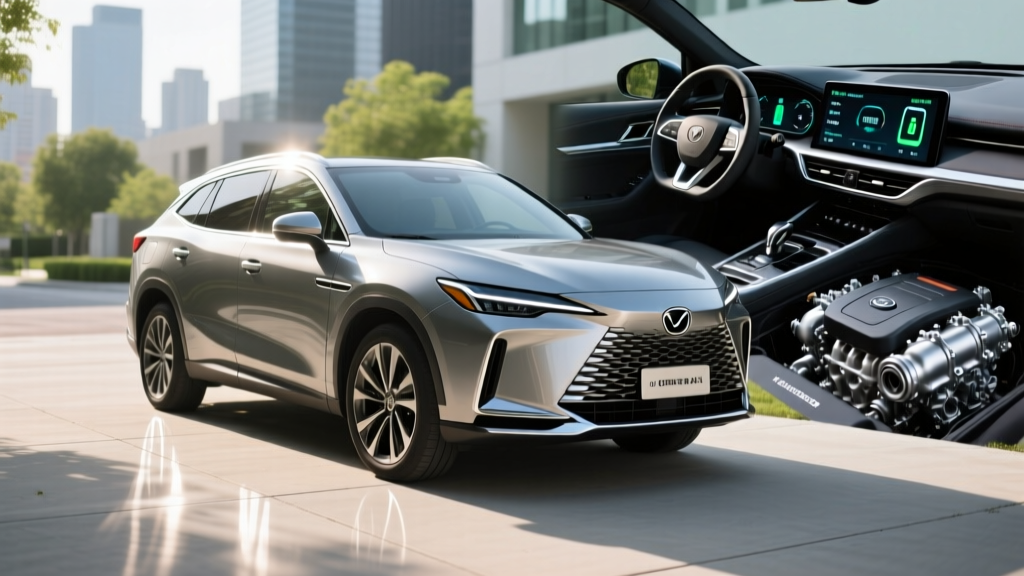
The i-FORCE MAX is Toyota's branding for its performance-oriented hybrid system designed for body-on-frame vehicles. Unlike the synergy-style hybrid setup in a Prius or RAV4 Hybrid, the i-FORCE MAX uses a longitudinally mounted engine with an electric motor sandwiched between the engine and an 8-speed automatic transmission. This layout is critical: it means the electric motor can multiply torque directly through the transmission gears, giving the system its signature low-end punch.
HEV vs. PHEV: Where the i-FORCE MAX Fits
Conventional Hybrid (HEV): The i-FORCE MAX is a self-charging hybrid. It has a small battery (approximately 1.87 kWh) that charges through regenerative braking and the gasoline engine. You never plug it in. Electric-only driving is limited to very low speeds for short distances — typically under a mile in parking lots or stop-and-go traffic.
Plug-In Hybrid (PHEV): A PHEV like the Toyota RAV4 Prime carries a much larger battery (18.1 kWh), can travel 42 miles on electric power alone, and requires plugging into a Level 1 or Level 2 charger to realize its full efficiency benefit. The i-FORCE MAX does not offer this capability.
Bottom line: If you want plug-in electric range, the i-FORCE MAX is not it. If you want better fuel economy and more torque from a truck platform without changing your fueling habits, it's purpose-built for that.
i-FORCE MAX Powertrain Specs at a Glance
| Specification | Value |
|---|---|
| Engine | 2.4L turbocharged inline 4-cylinder |
| Electric Motor | Permanent magnet synchronous, integrated in transmission bell housing |
| Combined Horsepower | 326 hp |
| Combined Torque | 465 lb-ft @ 1,700 RPM |
| Transmission | 8-speed automatic (Direct Shift-8AT) |
| Hybrid Battery | ~1.87 kWh nickel-metal hydride (NiMH) |
| Drivetrain | 4WD with multi-terrain select |
| Max Towing (Tacoma) | 6,000 lbs |
| 0–60 mph (est.) | ~6.0–6.5 seconds (varies by vehicle) |
The headline number is 465 lb-ft of torque arriving at just 1,700 RPM. For context, that's more low-end torque than many diesel engines and substantially more than Toyota's previous 3.5L V6. The electric motor fills in the torque gap while the turbo spools, eliminating the lag that plagues most turbocharged four-cylinders in heavy vehicles.
Fuel Economy: EPA MPG and Real-World Numbers
| Vehicle (2026) | City MPG | Highway MPG | Combined MPG |
|---|---|---|---|
| Toyota Tacoma i-FORCE MAX 4WD | 23 | 24 | 23 |
| Toyota 4Runner i-FORCE MAX 4WD | 23 | 24 | 23 |
| Toyota Land Cruiser (2026) | 22 | 25 | 23 |
Source: EPA Fuel Economy. Actual results vary by driving conditions, terrain, and load.
Real-World MPG vs. EPA Estimates
Conventional hybrids like the i-FORCE MAX tend to outperform their EPA city estimates in real-world stop-and-go driving because regenerative braking recaptures energy that a gas-only vehicle wastes as heat. Owners of the Tacoma i-FORCE MAX consistently report 24–26 MPG in mixed suburban driving, slightly above the EPA combined figure.
Highway driving tells a different story. At sustained speeds above 70 mph, the hybrid system provides minimal benefit — the electric motor can't assist meaningfully at high velocity, and aerodynamic drag dominates. Expect 21–22 MPG on flat interstate runs and potentially less when climbing grades or towing. If you tow a 5,000-lb trailer, fuel economy will drop to the mid-to-high teens, which is typical for any midsize truck under load.
The key advantage is city and suburban efficiency. Compared to the non-hybrid i-FORCE 2.4L turbo (rated at roughly 20 city / 24 highway in the Tacoma), the i-FORCE MAX gains 2–3 MPG in city driving and delivers substantially more torque. For truck owners who do a lot of around-town driving, commuting, or worksite crawling, the hybrid system pays measurable dividends.
How the Hybrid System Works Under Load
The i-FORCE MAX 2.4L 4-cyl. turbo hybrid powertrain uses a parallel hybrid architecture. Both the gasoline engine and the electric motor can drive the wheels simultaneously or independently. Here's what happens in common driving scenarios:
- Launch from stop: The electric motor provides instant torque while the turbo spools up, eliminating the "lag then surge" feel common in turbo trucks.
- Cruising: The gasoline engine does the heavy lifting. The hybrid battery recharges via the engine-driven generator.
- Deceleration/braking: Regenerative braking captures kinetic energy to recharge the 1.87 kWh battery. The regen is moderate — not aggressive enough for true one-pedal driving, but enough to noticeably reduce brake wear over time.
- Low-speed crawling: In 4WD Low, the electric motor's instant torque provides precise throttle control for rock crawling or technical terrain without the lurching of a turbo-only setup.
- Towing: The combined 465 lb-ft means the transmission doesn't need to downshift as frequently on grades, reducing heat buildup and improving drivability under load.
One important note: the hybrid battery is small by design. It's not intended to store large amounts of energy — it's a power buffer that captures and deploys energy in short bursts. This keeps weight down and avoids the packaging compromise of a larger battery pack in a body-on-frame vehicle.
Which Toyota Vehicles Offer the i-FORCE MAX in 2026?
As of the 2026 model year, the i-FORCE MAX 2.4L 4-cyl. turbo hybrid powertrain is available in three Toyota models, with availability varying by trim level:
- Toyota Tacoma: Available on TRD Sport, TRD Off-Road, Limited, and TRD Pro trims. Standard on TRD Pro and Limited.
- Toyota 4Runner: Available on TRD Off-Road, Limited, TRD Pro, and Trailhunter trims. The hybrid is the premium powertrain option across the lineup.
- Toyota Land Cruiser: The 2026 Land Cruiser uses the i-FORCE MAX as its standard and sole powertrain, paired with full-time 4WD.
Pricing varies significantly by vehicle. The Tacoma i-FORCE MAX starts around $41,000 (TRD Sport) and climbs to approximately $57,000 for the TRD Pro. The 4Runner i-FORCE MAX begins near $47,000, while the Land Cruiser starts at roughly $57,000. Always check Toyota's official site for current MSRP by trim.
Tax Credits and Incentives: What You Need to Know
Because the i-FORCE MAX is a conventional hybrid (HEV) — not a plug-in hybrid or battery-electric vehicle — it does not qualify for the federal §30D Clean Vehicle Credit of up to $7,500. That credit is reserved for vehicles with plug-in capability meeting battery sourcing, MSRP, and buyer income requirements, as outlined on IRS.gov.
However, conventional hybrid buyers should check for:
- State-level incentives: A handful of states offer rebates or HOV lane access for hybrid vehicles, though these are increasingly targeted at PHEVs and BEVs.
- Manufacturer incentives: Toyota periodically offers cash-back or low-APR financing on hybrid trims, which can offset the $1,500–$3,000 premium over the non-hybrid i-FORCE engine.
- Fuel savings: At 23 MPG combined versus 18–20 MPG for a comparable V6 truck, the i-FORCE MAX saves approximately $300–$500 per year in fuel costs at 15,000 miles/year and $3.50/gallon — enough to recoup the hybrid premium over 4–6 years of ownership.
Battery Warranty, Lifespan, and Replacement Cost
i-FORCE MAX Hybrid Battery Warranty
Warranty coverage: Toyota covers the hybrid battery and all hybrid-system components (inverter, electric motor, control module) for 10 years or 150,000 miles, whichever comes first, on 2026 models. This applies to the original owner and is transferable to subsequent owners.
Expected lifespan: Toyota's NiMH hybrid batteries have a strong track record. The relatively small 1.87 kWh pack in the i-FORCE MAX undergoes shallow charge/discharge cycles (it rarely drops below 40% or above 80% state of charge), which dramatically reduces degradation. Many Toyota hybrid batteries from the Prius and RAV4 Hybrid lines have exceeded 200,000 miles without replacement.
Replacement cost (out of warranty): If a hybrid battery does fail outside the warranty period, expect to pay approximately $2,000–$3,500 for a replacement NiMH pack plus labor. This is significantly less than a full EV battery replacement, which can exceed $10,000–$15,000.
The hybrid battery in the i-FORCE MAX is fundamentally different from the large lithium-ion packs in EVs. It's smaller, operates within a narrow state-of-charge window, and uses proven NiMH chemistry that Toyota has refined over 25+ years of hybrid production. Battery anxiety should not be a deciding factor against this powertrain.
i-FORCE MAX vs. Full EV vs. Gas Truck: Which Fits You?
Choose i-FORCE MAX Hybrid If:
- You tow regularly (5,000+ lbs)
- You need 4WD capability off-road
- You want better city MPG without changing fueling habits
- You drive in areas with limited charging infrastructure
- You value instant low-end torque for trail crawling or merging
- You plan to keep the vehicle 8+ years under warranty
Choose a Full EV (BEV) If:
- You can charge at home (Level 2)
- Your daily driving is under 250 miles
- You want the lowest per-mile fuel cost
- You qualify for the $7,500 federal tax credit
- You rarely tow heavy loads
- You want zero tailpipe emissions
Stick With Gas-Only If:
- You want the lowest upfront purchase price
- You drive very low annual miles (hybrid premium won't pay back)
- You primarily drive highway miles at 75+ mph
- You plan to sell/trade within 3 years
The i-FORCE MAX occupies a specific niche: it's the best option for truck and SUV buyers who need genuine off-road and towing capability but want to reduce fuel consumption and gain torque without adopting a plug-in lifestyle. It's not a bridge to full electrification — it's a practical optimization of the internal combustion truck for the realities of 2026 fuel prices.
Reliability Track Record and What to Watch
Toyota's hybrid systems carry some of the strongest reliability reputations in the industry. The Prius, Camry Hybrid, and RAV4 Hybrid have consistently earned above-average reliability scores from Consumer Reports and J.D. Power. The i-FORCE MAX system shares core hybrid components (power control unit, motor-generator) with these proven platforms, adapted for longitudinal, body-on-frame duty.
Areas to monitor over the long term include:
- Turbocharger longevity: Turbocharged engines operate under higher thermal stress than naturally aspirated ones. Toyota's 2.4L turbo (T24A-FTS) is relatively new, introduced for the 2023 model year. Early data is positive, but 150,000+ mile durability data is still accumulating.
- Transmission cooling under tow: The 8-speed automatic handles the combined 326 hp / 465 lb-ft, but sustained heavy towing in hot climates may push transmission fluid temperatures. The factory tow package includes an auxiliary cooler for this reason.
- Hybrid system cooling: The inverter and motor-generator are liquid-cooled. Coolant maintenance (following Toyota's scheduled intervals) is important for long-term hybrid system health.
Overall, the i-FORCE MAX 2.4L 4-cyl. turbo hybrid powertrain carries low mechanical risk relative to its complexity, backed by Toyota's 10-year / 150,000-mile hybrid component warranty — one of the longest in the segment.
Frequently Asked Questions
How many MPG does the i-FORCE MAX hybrid get?
The EPA rates the i-FORCE MAX at approximately 23 city / 24 highway / 23 combined MPG in the 2026 Tacoma and 4Runner, and 22/25/23 in the Land Cruiser. Real-world city driving often yields 24–26 MPG thanks to regenerative braking, while highway towing can drop economy into the teens.
Do I need to plug in the i-FORCE MAX to charge it?
No. The i-FORCE MAX is a conventional hybrid (HEV), not a plug-in hybrid. The battery charges automatically through regenerative braking and the gasoline engine. There is no charge port and no plug-in capability.
Can the i-FORCE MAX drive on electric power only?
Only at very low speeds (typically under 20 mph) for very short distances (under a mile). The 1.87 kWh battery is too small for meaningful electric-only range. This is by design — the system prioritizes torque assist and efficiency over electric-only driving.
Is the i-FORCE MAX hybrid reliable?
Toyota's hybrid systems have an excellent reliability record spanning 25+ years. The i-FORCE MAX uses proven hybrid components adapted for truck duty, and it's backed by a 10-year / 150,000-mile hybrid system warranty. The turbocharged engine is newer, but early reliability data is favorable.
What does a hybrid battery replacement cost?
Out of warranty, an i-FORCE MAX hybrid battery replacement runs approximately $2,000–$3,500 including labor. However, Toyota's NiMH hybrid batteries routinely last 200,000+ miles, and the 10-year/150,000-mile warranty covers most owners for the vehicle's usable life.
Does the i-FORCE MAX qualify for any federal tax credit?
No. The federal §30D Clean Vehicle Credit applies only to plug-in electric vehicles (PHEVs and BEVs) meeting specific battery sourcing and MSRP requirements. The i-FORCE MAX, as a conventional hybrid, does not qualify. Check your state for any hybrid-specific incentives.
How does the i-FORCE MAX compare to a V6 for towing?
The i-FORCE MAX produces 326 hp and 465 lb-ft of torque, compared to the non-hybrid 2.4L turbo's 278 hp and 317 lb-ft. The hybrid's extra 148 lb-ft of torque — available at 1,700 RPM — makes a tangible difference in towing responsiveness, reducing downshifts on grades and improving low-speed trailer control. Max towing capacity in the Tacoma is 6,000 lbs.