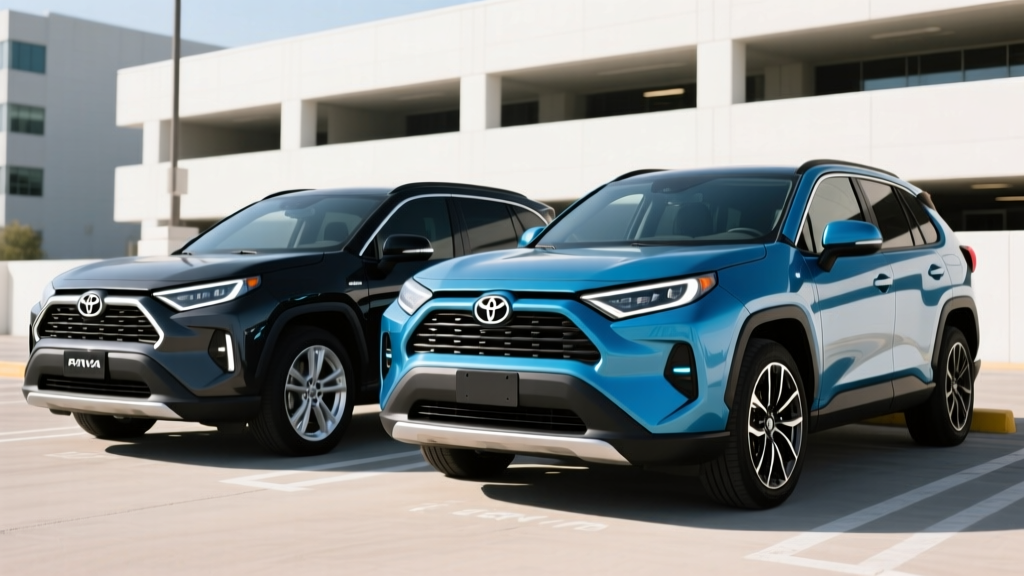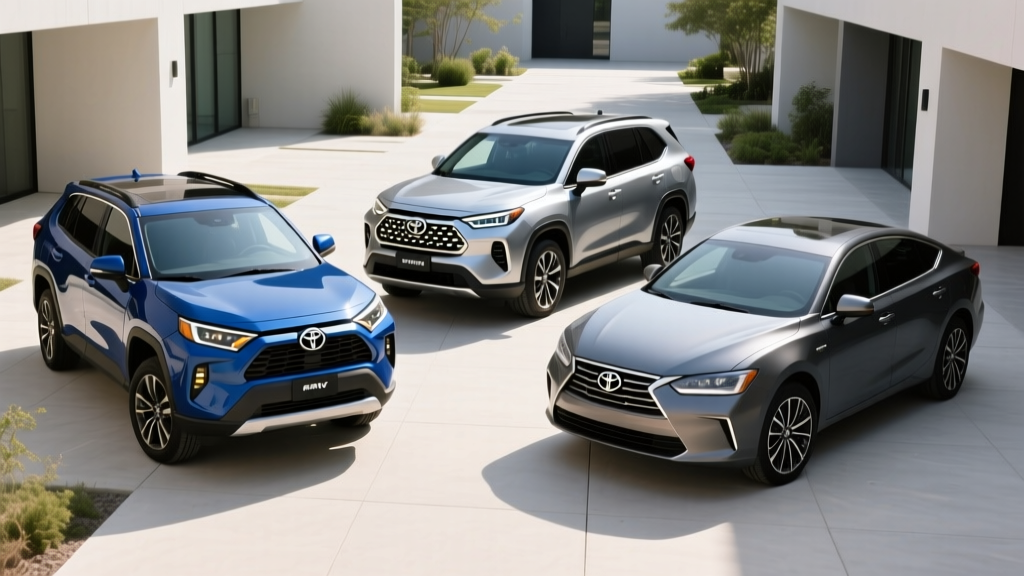
The 2026 Toyota Hybrid SUV Lineup at a Glance
Toyota offers four distinct hybrid SUVs for the 2026 model year, spanning compact crossovers to three-row family haulers. Each uses Toyota's proven Hybrid Synergy Drive architecture, but the differences between them — particularly between conventional hybrids (HEVs) and plug-in hybrids (PHEVs) — matter enormously for your wallet and daily routine.
This guide breaks down every current Toyota hybrid SUV with exact EPA figures, real-world expectations, powertrain specs, and tax-credit eligibility so you can choose the right one without guesswork.
| Model | Type | EPA Combined MPG | EV-Only Range | Combined HP | Starting MSRP |
|---|---|---|---|---|---|
| RAV4 Hybrid | HEV | 39 MPG | N/A | 219 hp | $33,550 |
| RAV4 Prime (PHEV) | PHEV | 38 MPG (gas) / 94 MPGe | 42 miles | 302 hp | $44,515 |
| Highlander Hybrid | HEV | 35 MPG | N/A | 243 hp | $42,720 |
| Grand Highlander Hybrid | HEV | 34 MPG (MAX: 27 MPG) | N/A | 243 hp / 362 hp (MAX) | $45,520 |
HEV vs PHEV: Understanding Toyota's Two Hybrid Approaches
Conventional Hybrid (HEV) — The RAV4 Hybrid, Highlander Hybrid, and Grand Highlander Hybrid are self-charging. A small battery (typically 1.0–1.6 kWh) captures energy from regenerative braking and the gasoline engine. You never plug in. The electric motor assists the gas engine to dramatically reduce fuel consumption, especially in city driving. Think of it as a gas car that's far more efficient, with no behavioral change required.
Plug-In Hybrid (PHEV) — The RAV4 Prime carries a much larger 18.1 kWh battery that you can charge from a wall outlet or Level 2 charger. It drives the first 42 miles on pure electricity — enough for most commutes — then operates as a conventional hybrid once the battery depletes. You get EV-like daily driving with a gas-engine safety net for road trips.
The distinction is critical: HEVs require zero infrastructure change and deliver consistent MPG gains. PHEVs require access to charging (ideally at home) to unlock their full value. If you can't plug in regularly, a PHEV's premium price doesn't justify itself.
RAV4 Hybrid: The Efficiency Benchmark
The RAV4 Hybrid remains Toyota's best-selling electrified vehicle for good reason. Its 2.5-liter four-cylinder engine paired with front and rear electric motors produces 219 combined horsepower and delivers an EPA-estimated 41 city / 38 highway / 39 combined MPG, according to fueleconomy.gov.
| Trim | City | Highway | Combined |
|---|---|---|---|
| LE / XLE / XLE Premium | 41 MPG | 38 MPG | 39 MPG |
| Woodland Edition | 38 MPG | 35 MPG | 37 MPG |
Real-world note: Toyota hybrids consistently exceed their EPA city estimates in stop-and-go traffic, where regenerative braking recaptures the most energy. In our experience and owner-reported data, expect 42–45 MPG in urban driving. Highway driving at 75+ MPH drops efficiency to 34–36 MPG due to increased aerodynamic drag, which the hybrid system can't offset. Cold weather (below freezing) typically reduces MPG by 5–10% as the engine runs more frequently for cabin heat.
The 1.6 kWh nickel-metal hydride (NiMH) battery requires no plug-in charging. A full 14.5-gallon tank yields approximately 565 miles of total range.
RAV4 Prime PHEV: 42 Miles Electric, Then Hybrid Efficiency
The RAV4 Prime is the performance flagship of the Toyota hybrid SUV lineup. Its 2.5-liter engine and dual electric motors combine for 302 horsepower — good for a 5.7-second 0–60 MPH time — while its 18.1 kWh lithium-ion battery delivers an EPA-estimated 42 miles of electric-only driving.
| Spec | Value |
|---|---|
| Electric-only range | 42 miles (EPA) |
| Combined gas range | ~520 miles after battery depletion |
| MPGe (electric mode) | 94 MPGe |
| MPG (hybrid mode) | 38 combined (40 city / 36 hwy) |
| Battery capacity | 18.1 kWh (lithium-ion) |
| Level 1 charge time (120V) | ~12 hours |
| Level 2 charge time (240V, 3.3 kW) | ~4.5 hours |
| Level 2 charge time (240V, 6.6 kW) | ~2.5 hours |
| DC fast charging | Not available |
| Combined horsepower | 302 hp |
| 0–60 MPH | 5.7 seconds |
| Drivetrain | AWD (electronic rear motor) |
Real-world electric range: The 42-mile EPA estimate holds well in moderate temperatures and city driving. Expect 35–38 miles on the highway at 70 MPH and as low as 28–30 miles in sub-freezing weather, where battery efficiency drops and cabin heating draws additional power. The RAV4 Prime does not support DC fast charging — a notable limitation for road-trip charging, though the 6.6 kW onboard charger handles overnight Level 2 replenishment easily.
Once the battery depletes, the Prime operates as a conventional hybrid at 38 MPG combined. This means even on a 500-mile road trip with no charging stops, you're still getting excellent fuel economy — just not the 94 MPGe the EPA credits for electric-mode driving.
Highlander and Grand Highlander Hybrid: Three-Row Efficiency
For families needing three rows, the Highlander Hybrid pairs a 2.5-liter four-cylinder with electric motors for 243 combined horsepower and an EPA-estimated 35 MPG combined (35 city / 35 highway). That's roughly a 40% improvement over the gas-only Highlander's 24 MPG combined — a meaningful savings at the pump for a vehicle this size.
The Grand Highlander Hybrid offers two powertrain choices:
- Standard Hybrid (243 hp): 34 MPG combined — same proven powertrain as the Highlander Hybrid, stretched for more cargo and third-row space.
- Hybrid MAX (362 hp): 27 MPG combined — a turbocharged 2.4-liter hybrid tuned for performance, with a 6-speed automatic instead of the eCVT. Towing capacity jumps to 5,000 lbs (vs. 3,500 lbs for the standard hybrid).
Real-world note: Three-row hybrids are heavier, so the gap between EPA and real-world MPG narrows. Expect 32–34 MPG combined in mixed driving for the standard Highlander Hybrid. The Hybrid MAX, prioritizing acceleration, delivers closer to 24–26 MPG in practice — still better than most V6 competitors, but the efficiency penalty for the performance upgrade is real.
Pricing, Tax Credits, and Total Cost
| Model | Base MSRP | Federal Tax Credit (§30D) | Effective Price (if eligible) |
|---|---|---|---|
| RAV4 Hybrid LE | $33,550 | Not eligible | $33,550 |
| RAV4 Prime SE | $44,515 | Up to $7,500* | ~$37,015* |
| Highlander Hybrid LE | $42,720 | Not eligible | $42,720 |
| Grand Highlander Hybrid | $45,520 | Not eligible | $45,520 |
*RAV4 Prime tax credit caveat: Under current IRS §30D rules, the RAV4 Prime may qualify for up to $7,500 in federal tax credits, but eligibility depends on three factors that change frequently:
- MSRP cap: SUVs must be under $80,000 — the Prime clears this easily.
- Buyer income cap: Modified AGI must not exceed $150,000 (single) / $300,000 (joint).
- Battery sourcing: Critical minerals and battery components must meet phased-in domestic/free-trade sourcing requirements. Toyota's supply chain compliance has varied by model year — verify current-year eligibility on the IRS clean vehicle credit page or with your dealer before purchasing.
- Point-of-sale transfer: As of 2024, you can transfer the credit to the dealer for an immediate price reduction rather than waiting for a tax refund.
Conventional hybrids (HEVs) — the RAV4 Hybrid, Highlander Hybrid, and Grand Highlander Hybrid — do not qualify for the federal §30D new clean vehicle credit. That credit applies only to plug-in vehicles (PHEVs and BEVs). Some states offer separate rebates for HEVs; check your state energy office or Alternative Fuels Data Center for local programs.
Battery Reliability, Warranty, and Replacement Costs
Toyota Hybrid Battery Warranty: All 2026 Toyota hybrid and PHEV models carry a 10-year / 150,000-mile hybrid battery warranty (whichever comes first). This covers battery capacity loss below a defined threshold and defects. California and states adopting CARB emissions standards extend this to 10 years / 150,000 miles with additional provisions.
Toyota's hybrid battery reliability track record is among the strongest in the industry. The RAV4 Hybrid's NiMH battery chemistry is less energy-dense than lithium-ion but exceptionally durable, with widespread owner reports of 200,000+ miles without replacement. The RAV4 Prime's lithium-ion pack operates within a conservative state-of-charge buffer (never fully charging or depleting), which reduces degradation stress.
Replacement cost if out of warranty:
- RAV4 Hybrid (NiMH): $3,000–$4,500 installed
- RAV4 Prime (lithium-ion): $8,000–$12,000 installed
- Highlander/Grand Highlander Hybrid: $3,500–$5,000 installed
These costs are relevant context, but the failure rate within the warranty period is very low. Toyota's hybrid systems are among the most proven in production — the Prius powertrain architecture has been refined over 25+ years. According to IIHS and long-term owner surveys, hybrid battery replacement before 150,000 miles is uncommon.
Which Toyota Hybrid SUV Fits Your Situation?
Choose the RAV4 Hybrid if: You want maximum MPG without changing your fueling routine. No plug, no range anxiety, 565+ miles between fill-ups, and ~$1,100/year in fuel savings vs. a gas RAV4 (at 15,000 miles/year, $3.40/gal). Best for apartment dwellers without charging access.
Choose the RAV4 Prime if: You can charge at home (Level 2 recommended), your daily commute is under 40 miles round-trip, and you want the performance bonus (302 hp, 5.7s 0–60). The ~$11,000 premium over the RAV4 Hybrid pays for itself in roughly 6–8 years through fuel savings and the potential $7,500 tax credit — but only if you actually plug in daily.
Choose the Highlander Hybrid if: You need three rows and prioritize fuel costs over performance. At 35 MPG combined, it saves ~$600–$800/year over the gas Highlander. The trade-off is modest acceleration (7.5s 0–60) and no electric-only driving.
Choose the Grand Highlander Hybrid MAX if: You need maximum cargo space and towing (5,000 lbs) but still want hybrid efficiency. The 27 MPG combined is a penalty vs. the standard hybrid, but it outperforms nearly every gas-powered three-row SUV on the market.
Choose a full EV (bZ4X or competitor) instead if: You have reliable home charging, drive under 250 miles daily, want zero tailpipe emissions, and are ready to forgo the gas engine entirely. A BEV eliminates oil changes and has lower per-mile fuel costs — but requires more planning for road trips.
Frequently Asked Questions
How many MPG does the Toyota RAV4 Hybrid actually get?
The EPA rates the 2026 RAV4 Hybrid at 41 city / 38 highway / 39 combined MPG. In real-world city driving, many owners report 42–45 MPG thanks to aggressive regenerative braking. Highway cruising at 75+ MPH typically yields 34–36 MPG. Cold weather reduces efficiency by 5–10%.
How far can the RAV4 Prime go on electric power alone?
The EPA rates the RAV4 Prime at 42 miles of electric-only range. Real-world results vary: expect 38–42 miles in moderate city driving, 35–38 on the highway, and 28–32 in freezing temperatures. Once depleted, it operates as a 38-MPG conventional hybrid.
Do Toyota hybrid SUVs need to be plugged in?
No — except the RAV4 Prime. The RAV4 Hybrid, Highlander Hybrid, and Grand Highlander Hybrid are conventional HEVs that charge their batteries entirely through regenerative braking and the gasoline engine. You fuel them exactly like a gas car. Only the RAV4 Prime (PHEV) benefits from plugging in.
Is the Toyota hybrid battery reliable and expensive to replace?
Toyota's hybrid batteries are covered by a 10-year/150,000-mile warranty and have an excellent reliability record spanning 25+ years of production. Out-of-warranty replacement costs range from $3,000–$5,000 for HEV models and $8,000–$12,000 for the RAV4 Prime's larger lithium-ion pack. Premature failure is rare.
Does any Toyota hybrid SUV qualify for a federal tax credit?
Only the RAV4 Prime (PHEV) is potentially eligible for the federal §30D clean vehicle credit of up to $7,500, subject to buyer income limits ($150K single / $300K joint), MSRP caps, and battery-sourcing requirements that change periodically. Conventional Toyota hybrids (HEVs) do not qualify for the federal credit but may be eligible for certain state incentives.
Hybrid vs PHEV vs full EV — which is right for me?
Choose a hybrid (HEV) if you can't charge at home and want zero-routine-change efficiency. Choose a PHEV if you can charge at home, commute under 40 miles daily, and want EV-like driving with road-trip flexibility. Choose a full EV (BEV) if you have home charging, drive under 250 miles daily, want the lowest operating costs, and are comfortable planning DC fast-charging stops for longer trips.
Can the RAV4 Prime DC fast charge?
No. The RAV4 Prime supports Level 1 (120V, ~12 hours) and Level 2 (240V) charging at either 3.3 kW (~4.5 hours) or 6.6 kW (~2.5 hours). DC fast charging is not available on any current Toyota PHEV. For road trips, the gasoline engine provides all the range you need.