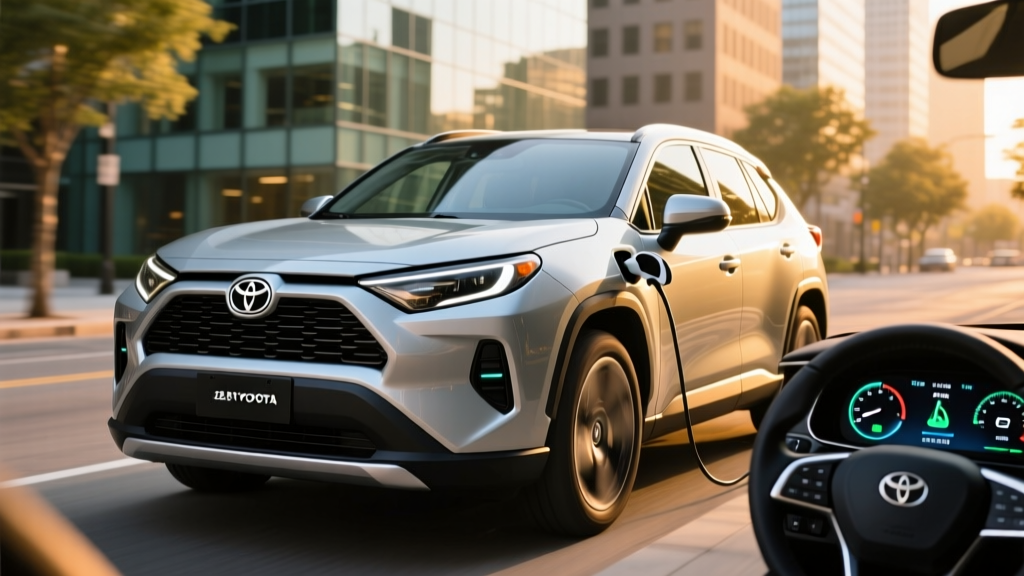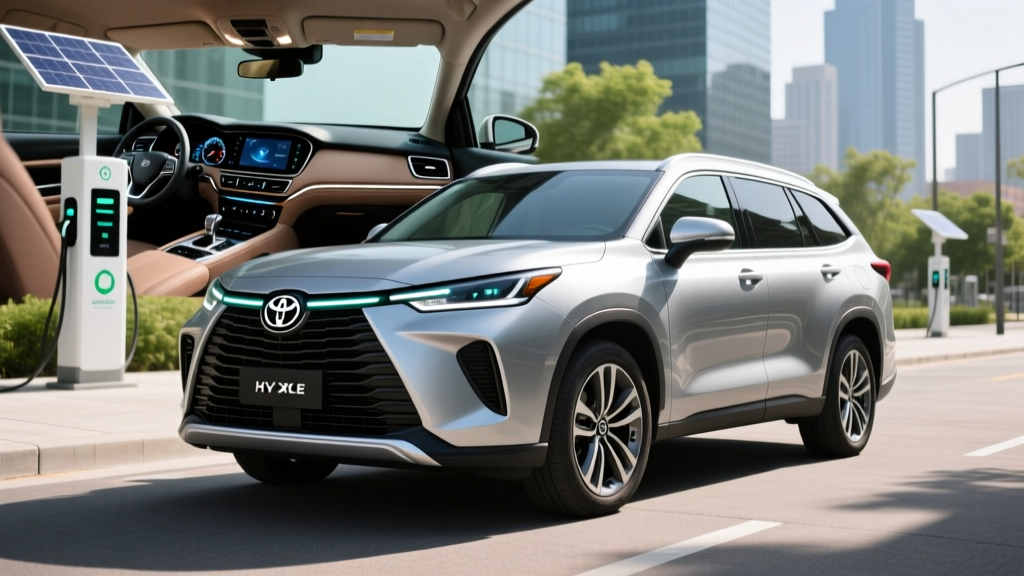
Three-row SUVs that don't guzzle fuel are a short list, and the 2026 Toyota Highlander XLE Hybrid sits near the top. With an EPA-estimated 35 MPG combined and seating for up to eight, it threads the needle between family utility and fuel sipping that most midsize SUVs can't match. But does the real-world efficiency match the sticker, and is the XLE the right trim for your budget? Here's the data-driven breakdown.
2026 Toyota Highlander XLE Hybrid: Quick Verdict
The Highlander Hybrid pairs a 2.5-liter four-cylinder engine with Toyota's fourth-generation hybrid system to deliver 243 combined horsepower and 35 MPG combined. The XLE trim — starting at an MSRP of $43,970 (including destination) — is the value sweet spot, adding SofTex seating, a power moonroof, wireless Apple CarPlay/Android Auto, and Toyota Safety Sense 3.0 over the base LE. It does not plug in. There is no plug-in hybrid (PHEV) version of the current-generation Highlander; if you want electric-only miles in a Toyota three-row, you'd need to look at the Grand Highlander Hybrid or wait for future product.
| Spec | Value |
|---|---|
| Powertrain | 2.5L 4-cyl + 2 electric motors (eCVT) |
| Combined Horsepower | 243 hp |
| EPA MPG (City / Hwy / Combined) | 35 / 35 / 35 (FWD); 35 / 34 / 35 (AWD) |
| Fuel Tank | 17.1 gallons |
| Total Driving Range | ~598 miles (FWD) |
| 0–60 mph | ~7.8 seconds |
| Towing Capacity | 3,500 lbs |
| Cargo (behind 3rd / 2nd / max) | 16.1 / 48.4 / 84.3 cu ft |
| Seating | 7 or 8 passengers |
| Base MSRP (XLE FWD) | $43,970 |
| Hybrid Battery Warranty | 10 years / 150,000 miles |
HEV vs PHEV: What the Highlander Hybrid Is (and Isn't)
This is a conventional hybrid electric vehicle (HEV). You never plug it in. The 1.6 kWh nickel-metal hydride (NiMH) traction battery charges itself through regenerative braking and the gasoline engine. It provides electric-only assist at low speeds and during gentle acceleration, but it cannot drive on electricity alone for meaningful distances — typically less than a mile at parking-lot speeds.
Toyota does not currently offer a Highlander PHEV in the United States. Buyers wanting a plug-in Toyota three-row should cross-shop the Grand Highlander Hybrid (also an HEV) or look to competitors like the Kia Sorento PHEV (32 miles electric-only) or the Mazda CX-90 PHEV (26 miles electric-only).
Fuel Economy: EPA Numbers vs Real-World MPG
The EPA rates the 2026 Highlander Hybrid at 35 MPG city, 35 highway, and 35 combined for front-wheel-drive models. AWD models drop 1 MPG on the highway to 34. These are segment-leading figures for a three-row SUV — the non-hybrid V6 Highlander returns just 24 MPG combined, and competitors like the Honda Pilot (22 MPG combined) and Ford Explorer (23 MPG combined) trail significantly.
| Vehicle | City MPG | Highway MPG | Combined MPG |
|---|---|---|---|
| 2026 Toyota Highlander Hybrid (FWD) | 35 | 35 | 35 |
| 2026 Kia Sorento Hybrid | 34 | 31 | 34 |
| 2026 Honda Pilot | 19 | 27 | 22 |
| 2026 Ford Explorer (2.3L EcoBoost) | 21 | 28 | 24 |
| 2026 Toyota Highlander (gas V6) | 21 | 29 | 24 |
Source: fueleconomy.gov
Powertrain and Driving Impressions
The Highlander Hybrid uses Toyota's proven 2.5-liter Dynamic Force four-cylinder engine paired with two motor-generators through an electronically controlled continuously variable transmission (eCVT). Total system output is 243 horsepower. The front motor handles primary propulsion and regeneration; on AWD models, a rear-mounted 54 hp electric motor provides on-demand all-wheel drive without a mechanical driveshaft.
The eCVT is smooth but unexciting. Acceleration from 0–60 mph takes approximately 7.8 seconds — adequate for merging and passing, but not quick. The engine can drone under hard acceleration due to the CVT holding high RPM, a common trait in Toyota hybrids. In normal driving, transitions between electric and gas power are seamless and nearly imperceptible.
Toyota Safety Sense 3.0 is standard across all trims, including pre-collision with pedestrian detection, full-speed dynamic radar cruise control, lane departure alert with steering assist, lane tracing assist, and automatic high beams. This is a SAE Level 2 driver-assistance system — you must keep your hands on the wheel and eyes on the road at all times. It is not autonomous driving.
Pricing, Trims, and Tax Credit Eligibility
The 2026 Highlander Hybrid is available in LE, XLE, Limited, and Platinum trims. Here's the MSRP breakdown:
| Trim | FWD MSRP | AWD MSRP |
|---|---|---|
| LE | $40,970 | $42,570 |
| XLE | $43,970 | $45,570 |
| Limited | $48,770 | $50,370 |
| Platinum | $52,470 | $54,070 |
The XLE is the volume trim for good reason. Over the LE, it adds SofTex-trimmed heated front seats, a 10-way power driver's seat, power moonroof, auto-dimming rearview mirror, wireless charging pad, and a hands-free power liftgate. It's a meaningful comfort upgrade for a $3,000 premium.
Hybrid Battery Reliability, Warranty, and Replacement Cost
Toyota's hybrid battery warranty is one of the strongest in the industry: 10 years or 150,000 miles, whichever comes first, covering defects and capacity loss below a defined threshold. This applies to all 50 states. The Highlander Hybrid uses a nickel-metal hydride (NiMH) battery pack — a mature, proven chemistry that Toyota has refined over 25+ years since the original Prius.
Toyota's hybrid system has earned a reputation for exceptional reliability. The Highlander consistently scores above average in IIHS safety testing and J.D. Power dependability studies. The eCVT has no traditional clutch packs or bands to wear — it's a planetary gearset that's mechanically simple and durable.
Highlander Hybrid vs Full EV vs Gas: Which Fits You?
Choosing between a conventional hybrid, a plug-in hybrid, a full battery electric vehicle (BEV), and a gas-only SUV depends on your driving pattern, charging access, and budget. Here's a practical decision framework:
- You cannot charge at home (no garage, apartment living, no outlet access)
- You want maximum range with zero behavior change (~598 miles per tank)
- You frequently drive in stop-and-go city traffic where hybrids excel
- You want a three-row SUV under $50,000 with top-tier fuel economy
- You plan to own the vehicle 8–12 years and value Toyota's reliability record
- You can install a Level 2 home charger and have a commute under 30 miles
- You want electric-only daily driving but need gas flexibility for road trips
- You want to qualify for the §30D federal tax credit (up to $7,500)
- You have reliable home Level 2 charging
- Your daily driving is under 250 miles and you can plan road-trip charging
- You want zero tailpipe emissions and the lowest per-mile energy cost
- You qualify for the full $7,500 federal tax credit and any state incentives
- You tow more than 3,500 lbs regularly (the hybrid's towing capacity is limited)
- You drive predominantly highway miles at high speeds where the hybrid advantage narrows
- Upfront budget is the top priority and you'll drive fewer than 10,000 miles/year
Pros and Cons
- Class-leading 35 MPG combined for a three-row SUV
- Smooth, seamless hybrid powertrain with proven reliability
- 10-year / 150,000-mile hybrid battery warranty
- XLE trim offers strong value at $43,970
- Standard Toyota Safety Sense 3.0 suite
- ~598 miles of total range — fewer fill-ups on road trips
- No plug-in hybrid option available — no electric-only commuting
- eCVT engine drone under hard acceleration
- Third row is tight for adults on longer trips
- 3,500-lb towing capacity trails some V6 competitors
- No federal tax credit eligibility (HEV, not PHEV/BEV)
- Infotainment interface lags behind rivals in responsiveness
Frequently Asked Questions
How many MPG does the Toyota Highlander XLE Hybrid get?
The EPA rates the 2026 Highlander Hybrid at 35 MPG city, 35 highway, and 35 combined (FWD). Real-world owners commonly report 36–38 MPG in suburban and city driving, with highway-only trips yielding 30–32 MPG at speeds above 75 mph. Cold weather reduces efficiency by roughly 3–5 MPG on short trips.
Can I plug in the Highlander Hybrid to charge?
No. The Highlander Hybrid is a conventional HEV — it has no plug and no charging port. The hybrid battery recharges automatically through regenerative braking and the gasoline engine. You fuel it exclusively at a gas station, just like a conventional car.
Does the Highlander Hybrid qualify for any tax credit?
It does not qualify for the federal §30D Clean Vehicle Credit, which requires a plug-in vehicle (BEV or PHEV). Some states, municipalities, or utilities offer smaller rebates for conventional hybrids — check your local programs. Consult a tax professional for eligibility specifics.
How long will the hybrid battery last, and what does replacement cost?
Toyota covers the hybrid battery for 10 years or 150,000 miles. Historical data shows Toyota NiMH hybrid batteries lasting 180,000–250,000+ miles before significant degradation. Out-of-warranty replacement costs $2,500–$4,000 at a dealership, with refurbished options available for $1,500–$2,500.
Is the Highlander Hybrid good for towing?
The Highlander Hybrid is rated to tow up to 3,500 pounds — adequate for a small boat, utility trailer, or a pair of dirt bikes, but less than some gas-only competitors (the non-hybrid V6 Highlander previously offered 5,000-lb capacity). If you tow heavy loads frequently, a gas or diesel SUV may be a better fit.
Hybrid vs PHEV vs EV — which three-row SUV should I buy?
If you can't charge at home, the Highlander Hybrid is the most efficient three-row option with zero lifestyle change. If you can charge at home and want electric-only commuting, consider the Kia Sorento PHEV (32 miles electric) or look ahead to upcoming three-row BEVs like the Kia EV9 (300+ miles range). The right choice depends entirely on your charging access and daily mileage.