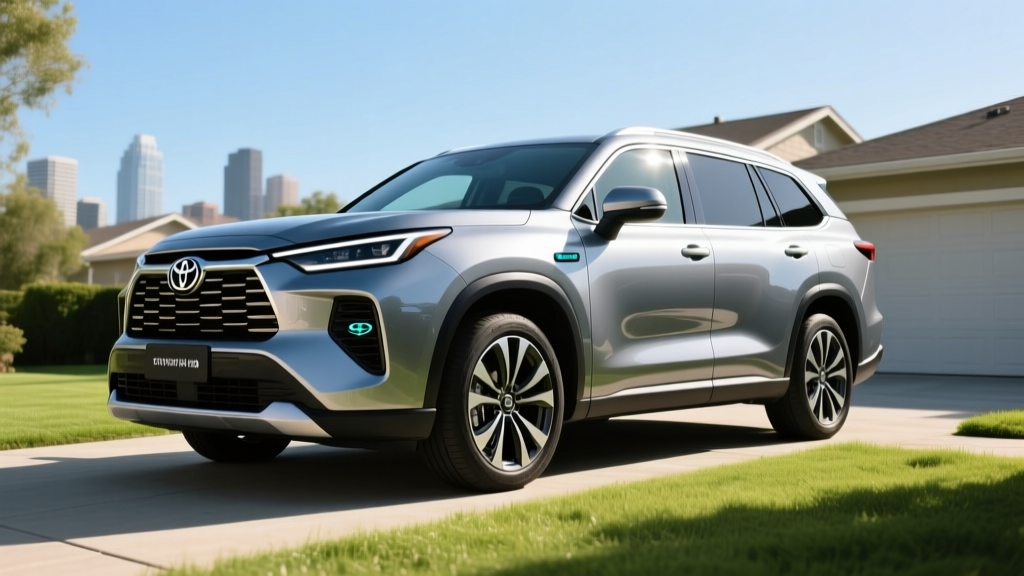
Three-row SUVs that actually deliver at the pump are rare. The Toyota Grand Highlander Hybrid manages the trick by pairing a 2.5-liter four-cylinder with Toyota's proven hybrid system to achieve up to 36 MPG combined — a figure that puts most midsize crossovers to shame. But with three distinct powertrain options across the lineup, the real-world efficiency story is more nuanced than the EPA sticker suggests.
This guide breaks down every Grand Highlander Hybrid variant available for the 2026 model year: the standard hybrid (HEV), the Hybrid MAX performance variant, and the critical differences that determine which one fits your driving pattern. We cover real-world MPG, ownership economics, battery longevity, and tax-credit eligibility so you can make a data-driven purchase decision.
EPA MPG Breakdown: Standard Hybrid vs. Hybrid MAX
The Grand Highlander Hybrid comes in two flavors, and their fuel economy profiles diverge significantly. The standard 2.5L hybrid prioritizes efficiency; the Hybrid MAX trades some MPG for substantially more power. Here's how the EPA rates each:
| Powertrain | City MPG | Highway MPG | Combined MPG | Drivetrain |
|---|---|---|---|---|
| 2.5L Hybrid (FWD) | 37 | 34 | 36 | Front-Wheel Drive |
| 2.5L Hybrid (AWD) | 36 | 33 | 35 | Electronic AWD |
| Hybrid MAX (AWD) | 27 | 28 | 27 | AWD (standard) |
Source: EPA Fuel Economy
The standard hybrid's 36 MPG combined is exceptional for a vehicle with 185+ cubic feet of interior volume and seating for seven or eight. The Hybrid MAX's 27 MPG combined is respectable for its 362-horsepower output, but it's a clear step down in efficiency.
Toyota hybrids historically meet or exceed their EPA city ratings in stop-and-go driving because regenerative braking recovers energy that a conventional vehicle wastes as heat. Expect 37–40 MPG in urban/suburban use with the standard hybrid. Highway driving is where hybrids lose their advantage: sustained 75+ MPH cruising typically yields 30–32 MPG for the standard hybrid and 24–26 MPG for the Hybrid MAX. Cold weather (below 32°F) reduces MPG by 10–15% due to increased engine idling for cabin heat and reduced battery efficiency.
Powertrain Specifications: Three Ways to Go
Understanding what's under the hood matters because it determines both your fuel bill and your driving experience. Toyota offers the Grand Highlander with three electrified powertrains:
| Specification | 2.5L Hybrid | Hybrid MAX |
|---|---|---|
| Engine | 2.5L inline-4 + 2 electric motors | 2.4L turbo inline-4 + electric motor |
| Combined Horsepower | 245 hp | 362 hp |
| Combined Torque | 173 lb-ft (engine) | 400 lb-ft |
| Transmission | eCVT (planetary gearset) | 6-speed automatic |
| 0–60 MPH | ~7.8 sec | ~6.3 sec |
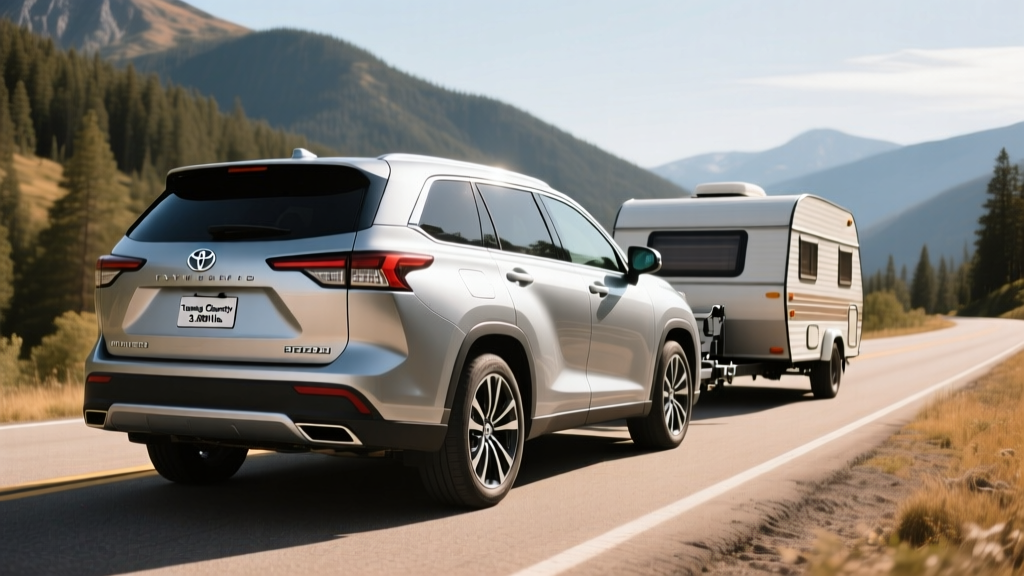
| Towing Capacity | 3,500 lbs | 5,000 lbs |
| AWD Availability | Optional (electronic) | Standard |
| Battery Type | NiMH (hybrid system) | NiMH (hybrid system) |
The standard 2.5L hybrid uses Toyota's fourth-generation Hybrid Synergy Drive. It's not a plug-in — the small nickel-metal hydride battery recharges through regenerative braking and engine-driven generation. You never plug it in. The eCVT isn't a belt-and-cone CVT; it's a planetary gearset that blends engine and motor power with zero shift shock.
The Hybrid MAX is a different animal entirely. Its 2.4-liter turbocharged engine paired with a direct-shift automatic delivers V6-rivaling acceleration and 5,000 lbs of towing capacity, at the cost of roughly 9 MPG combined versus the standard hybrid.
HEV vs. PHEV vs. Full EV: Which Fits Your Household?
The Grand Highlander Hybrid is a conventional hybrid (HEV). Toyota does not currently offer a plug-in hybrid (PHEV) version. That distinction matters for buyers cross-shopping electrified three-row SUVs.
- No plug-in required
- 35–36 MPG combined
- ~530-mile total range
- No electric-only driving
- Lower upfront cost
- No federal tax credit (§30D)
- Plug in for 32 mi electric-only
- ~30 MPG combined (gas mode)
- ~430-mile total range
- Short EV commutes possible
- Higher upfront cost
- May qualify for §30D credit
- Electric only — must charge
- 89 MPGe / ~2.9 kWh/mi
- ~270-mile EPA range
- Zero tailpipe emissions
- Highest upfront cost
- Up to $7,500 §30D credit
The decision framework is straightforward:
- Choose the Grand Highlander HEV if: You want maximum range with zero charging infrastructure requirements, frequently take long road trips, and don't have reliable home charging access.
- Choose a PHEV three-row if: Your daily commute is under 30 miles, you have home Level 2 charging, and you want EV-mode commuting with gas-engine road-trip backup.
- Choose a full BEV if: You have reliable home charging, your daily driving is under 200 miles, and you want the lowest per-mile energy cost and zero tailpipe emissions.
Pricing, Trims, and Tax-Credit Eligibility
The 2026 Grand Highlander Hybrid starts at approximately $45,120 for the LE FWD trim and climbs to around $60,000 for the Hybrid MAX Platinum. Here's the approximate MSRP ladder:
| Trim | Powertrain | MSRP (est.) |
|---|---|---|
| LE | 2.5L Hybrid FWD | $45,120 |
| XLE | 2.5L Hybrid AWD | $49,500 |
| Limited | 2.5L Hybrid AWD | $53,400 |
| Hybrid MAX Limited | Hybrid MAX AWD | $55,900 |
| Hybrid MAX Platinum | Hybrid MAX AWD | $59,950 |
Federal tax credit: The Grand Highlander Hybrid does not qualify for the federal §30D clean vehicle credit. Under current IRS rules, the §30D credit applies only to plug-in electric vehicles (BEVs and PHEVs) with sufficient battery capacity. Conventional hybrids (HEVs) are excluded. No state-level hybrid-specific incentives are broadly available as of 2026, though some states offer minor registration-fee reductions — check your state's DMV for specifics.
Real-World Ownership Costs: Fuel Savings vs. Gas-Only Rivals
The Grand Highlander Hybrid's efficiency advantage translates to meaningful dollar savings over the vehicle's life. Let's compare annual fuel costs against a gas-only three-row competitor:
| Vehicle | Combined MPG | Annual Fuel Cost* | 5-Year Fuel Cost |
|---|---|---|---|
| Grand Highlander Hybrid (AWD) | 35 | $1,500 | $7,500 |
| Grand Highlander (Gas 2.4T) | 24 | $2,188 | $10,938 |
| Competitor (Gas V6 3-Row) | 22 | $2,386 | $11,932 |
*Based on $3.50/gallon regular unleaded, 15,000 mi/year (55% city / 45% highway). Actual costs vary by region and driving pattern. Source: fueleconomy.gov
Over five years, the hybrid saves roughly $3,400–$4,400 in fuel compared to the gas-only Grand Highlander and typical V6 competitors. That nearly offsets the hybrid's modest price premium over the gas model.
Battery Warranty, Reliability, and Replacement Cost
Hybrid battery longevity is the top concern for first-time hybrid buyers. Toyota addresses this with one of the strongest warranties in the industry:
- Hybrid battery: 10 years / 150,000 miles (whichever comes first)
- Hybrid system components: 8 years / 100,000 miles
- Powertrain warranty: 5 years / 60,000 miles
Toyota's hybrid batteries in the Highlander family have demonstrated excellent longevity. Many first-generation Highlander Hybrids (2006+) exceeded 200,000 miles on their original battery packs. The Grand Highlander uses an updated, more thermally managed system expected to match or exceed this track record.
Replacement cost if out of warranty: A hybrid battery replacement for the Grand Highlander is estimated at $3,000–$5,000 including labor, based on current Highlander Hybrid battery pricing. This is far less than a full EV battery replacement ($10,000–$20,000+). Third-party refurbishers offer replacements for $2,000–$3,500.
Toyota's hybrid system reliability is well-documented. The eCVT planetary gearset has no belts, clutches, or bands to wear. Regenerative braking reduces wear on friction brake pads — many Toyota hybrid owners report 80,000+ miles on original brake pads. IIHS and NHTSA safety ratings for the Grand Highlander have been strong, with Top Safety Pick recognition.
Pros, Cons, and the Bottom Line
- 36 MPG combined — best-in-class for 3-row SUVs
- ~530-mile total range on one tank
- No charging infrastructure needed
- 10-year/150k-mile hybrid battery warranty
- Strong resale value (Toyota hybrid demand)
- Spacious third row and cargo area
- Proven hybrid reliability track record
- No federal tax credit (§30D ineligible)
- Hybrid MAX drops to 27 MPG combined
- Standard hybrid feels underpowered at highway speeds
- No PHEV option for EV-mode commuting
- Higher base price than gas-only version
- eCVT drone under hard acceleration
- Limited third-row headroom vs. some rivals
Frequently Asked Questions
How many MPG does the Toyota Grand Highlander Hybrid actually get?
The EPA rates the standard 2.5L hybrid at 37 city / 34 highway / 36 combined (FWD) and 36/33/35 (AWD). In real-world city driving, many owners report 37–40 MPG thanks to regenerative braking. Highway-only driving at 75+ MPH typically drops to 30–32 MPG. The Hybrid MAX variant is rated at 27 MPG combined.
Do I need to plug in the Grand Highlander Hybrid?
No. The Grand Highlander Hybrid is a conventional hybrid (HEV), not a plug-in. Its small battery recharges automatically through regenerative braking and the gasoline engine. You fuel it like any other car — just with fewer stops at the pump.
Does the Grand Highlander Hybrid qualify for any tax credit?
No. The federal §30D clean vehicle tax credit applies only to plug-in electric vehicles (BEVs and PHEVs). As a conventional hybrid, the Grand Highlander Hybrid is not eligible. Some states may offer minor incentives for efficient vehicles, but no major credits apply as of 2026.
How long will the hybrid battery last, and what does replacement cost?
Toyota covers the hybrid battery for 10 years or 150,000 miles. Based on the Highlander Hybrid family's track record, many batteries exceed 200,000 miles without replacement. If replacement is needed out of warranty, expect $3,000–$5,000 from a dealer or $2,000–$3,500 from a certified refurbisher.
Is the Hybrid MAX worth the MPG trade-off?
It depends on your priorities. The Hybrid MAX delivers 362 hp and 5,000-lb towing capacity versus the standard hybrid's 245 hp and 3,500-lb limit. If you tow a boat or trailer regularly, the MAX is justified. If fuel economy is your primary concern, the standard hybrid's 35–36 MPG combined saves roughly $700/year over the MAX at 15,000 miles annually.
Hybrid vs. PHEV vs. full EV — which three-row SUV should I buy?
Choose the Grand Highlander HEV if you lack home charging and take frequent road trips. Choose a PHEV (like the Pacifica Hybrid) if you can charge at home and commute under 30 miles. Choose a full BEV (like the Kia EV9) if you have reliable charging, drive under 200 miles daily, and want the lowest operating cost plus federal tax credit eligibility.
How does cold weather affect Grand Highlander Hybrid MPG?
Expect a 10–15% MPG reduction in sustained below-freezing temperatures. The engine runs more frequently to provide cabin heat and maintain battery temperature. A typical 35-MPG combined average may drop to 30–31 MPG in winter. This is less severe than the 20–30% range loss full EVs experience in cold weather.