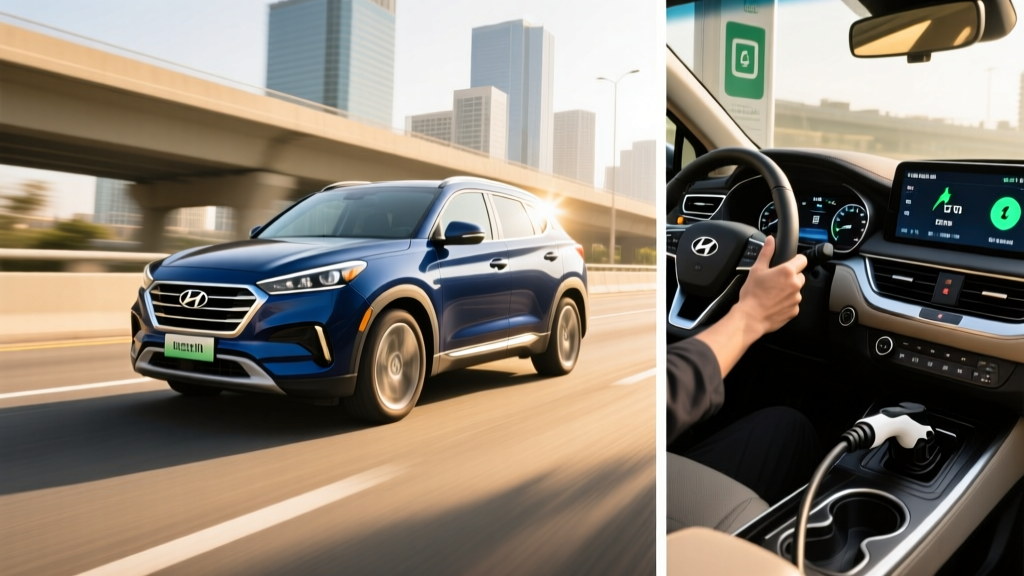
Three-row SUV buyers face a familiar dilemma: you need cargo space and towing capability, but you're tired of spending $80+ at every fill-up. The 2025 Toyota Highlander Hybrid threads this needle with a 2.4-liter turbocharged hybrid powertrain, standard all-wheel drive, and an EPA-estimated 36 MPG combined — all while maintaining a 3,500-pound towing capacity that covers most boat, camper, and utility trailer needs.
But how does that towing capacity compare to the non-hybrid Highlander, and what happens to fuel economy when you're actually pulling a load? This guide covers the exact specs, real-world efficiency data, ownership economics, and how the Highlander Hybrid stacks up against PHEV and full-electric alternatives in 2025.
2025 Toyota Highlander Hybrid: Powertrain and Towing Specs
The 2025 Highlander Hybrid pairs a 2.4-liter turbocharged four-cylinder engine with front and rear electric motors, producing a combined 243 horsepower and 350 lb-ft of torque. Toyota's electronic on-demand AWD system uses the rear motor to power the back axle without a mechanical driveshaft, saving weight and improving efficiency.
| Specification | Value |
|---|---|
| Powertrain | 2.4L turbo 4-cyl + front/rear electric motors |
| Combined Horsepower | 243 hp |
| Combined Torque | 350 lb-ft |
| Drivetrain | Electronic AWD (standard) |
| Max Towing Capacity | 3,500 lbs (all trims) |
| EPA MPG (City / Hwy / Combined) | 35 / 35 / 36 |
| Fuel Tank Capacity | 17.1 gallons |
| Total Range (EPA est.) | ~615 miles |
| Hybrid Battery | 1.87 kWh NiMH (sealed, self-charging) |
| Base MSRP (LE trim) | $41,770 |
Fuel Economy: EPA Ratings vs. Real-World MPG
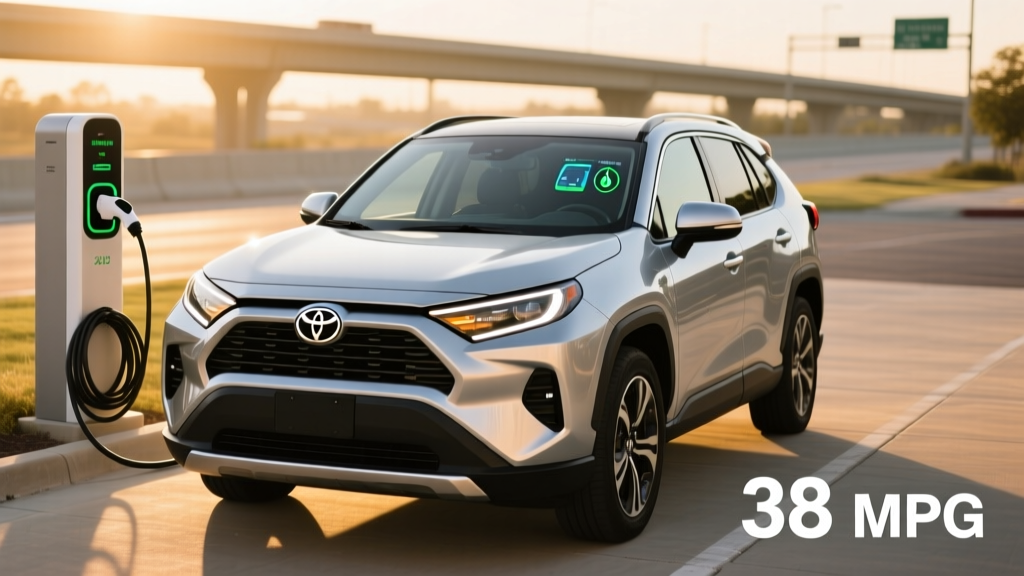
The EPA rates the 2025 Highlander Hybrid AWD at 35 city / 35 highway / 36 combined MPG across all trims. That's a significant improvement over the gas-only Highlander's 24 combined MPG — roughly 50% better fuel efficiency.
| Trim | City MPG | Highway MPG | Combined MPG |
|---|---|---|---|
| LE | 35 | 35 | 36 |
| XLE | 35 | 35 | 36 |
| Limited | 35 | 34 | 35 |
| Platinum | 35 | 34 | 35 |
Source: fueleconomy.gov
Real-World MPG: What Owners Actually Report
Toyota's hybrid system excels in stop-and-go city driving, where the electric motors handle low-speed propulsion and regenerative braking recaptures energy. In real-world owner reporting on forums and tracking sites like Fuelly, the Highlander Hybrid averages between 33–38 MPG combined, with many owners exceeding the EPA estimate in suburban and city-heavy driving cycles.
Highway-heavy commutes at 75+ mph tend to pull the average down to 30–33 MPG, as the turbocharged engine carries more of the load at sustained high speeds. Cold-weather driving (below 30°F) reduces efficiency by roughly 10–15% due to cabin heating demands and reduced battery efficiency — expect 28–32 MPG in winter conditions until the powertrain warms up.
Hybrid vs. PHEV vs. EV: Which Three-Row SUV Fits You?
The Highlander Hybrid is a conventional hybrid (HEV) — it does not plug in. The 1.87 kWh nickel-metal hydride battery charges exclusively through regenerative braking and the gasoline engine. There is no electric-only driving mode of any meaningful distance, and no charging port.
This is a critical distinction. Many shoppers confuse conventional hybrids with plug-in hybrids (PHEVs). Here's how the three electrified powertrain types compare for a three-row SUV buyer in 2025:
| Factor | Conventional Hybrid (HEV) | Plug-In Hybrid (PHEV) | Battery Electric (BEV) |
|---|---|---|---|
| Plug-in Required? | No | Yes (Level 2 recommended) | Yes (Level 2 essential) |
| Electric-Only Range | None (assist only) | 30–45 miles typical | 250–350+ miles |
| Example Model | Toyota Highlander Hybrid | Toyota Grand Highlander Hybrid MAX (not PHEV — see note) | Kia EV9 |
| Fuel Cost (per mile) | ~$0.10–0.12 | ~$0.04 electric / ~$0.10 gas | ~$0.03–0.05 |
| Towing Capacity | 3,500 lbs | Varies (3,500–5,000 lbs) | 2,000–5,000 lbs (varies) |
| Range Anxiety | None | Minimal | Requires planning on road trips |
| Home Charging Install | Not needed | $500–$2,000 (Level 2) | $1,000–$3,000+ (Level 2) |
Note on Toyota's PHEV lineup: As of the 2025 model year, Toyota does not offer a plug-in hybrid version of the Highlander in the U.S. market. The RAV4 Prime and Prius Prime are Toyota's PHEV offerings, but neither provides three-row seating. If you want a three-row PHEV, competitors like the Mazda CX-90 PHEV or the Jeep Grand Cherokee 4xe are worth evaluating.
- You don't have reliable access to home Level 2 charging
- You want maximum simplicity — no plug, no charging apps, no range planning
- Your commute is city/suburban-heavy (where hybrids shine)
- You tow light-to-moderate loads (under 3,500 lbs) a few times per year
- You prioritize long-term reliability and low maintenance costs
Pricing, Trims, and Tax Credit Eligibility
The 2025 Toyota Highlander Hybrid is available in four trims. Pricing includes destination charge:
| Trim | MSRP (incl. destination) | Key Features |
|---|---|---|
| LE | $41,770 | 8-passenger seating, 8" touchscreen, TSS 3.0, power liftgate |
| XLE | $44,770 | SofTex seats, heated front seats, sunroof, wireless CarPlay |
| Limited | $49,170 | Leather, 12.3" touchscreen, JBL audio, panoramic roof |
| Platinum | $52,670 | Head-up display, 360° camera, ventilated front seats |
Federal Tax Credit: Does the Highlander Hybrid Qualify?
No. The 2025 Toyota Highlander Hybrid does not qualify for the federal §30D Clean Vehicle Credit. Under current IRS rules, only plug-in electric vehicles (PHEVs and BEVs) with a battery capacity of at least 7 kWh are eligible for the up-to-$7,500 federal tax credit. Conventional hybrids like the Highlander Hybrid use a small self-charging battery and do not meet this threshold.
Some states offer their own incentives for hybrid purchases, but these vary widely and change frequently. Check your state's energy or DMV website for current programs. For federal credit rules, refer to IRS.gov §30D guidance.
Battery Warranty, Reliability, and Replacement Costs
Toyota's hybrid battery warranty is one of the strongest in the industry and a key reason the Highlander Hybrid consistently ranks at the top of reliability surveys.
- Hybrid Battery: 10 years / 150,000 miles (whichever comes first)
- Hybrid System Components: 8 years / 100,000 miles
- Powertrain (engine, transmission): 5 years / 60,000 miles
- Bumper-to-Bumper: 3 years / 36,000 miles
How Long Do Toyota Hybrid Batteries Actually Last?
Toyota's nickel-metal hydride (NiMH) hybrid batteries have an exceptionally long track record. Data from high-mileage owner communities and fleet operators show that the majority of Toyota hybrid batteries last 150,000–200,000+ miles before significant degradation. The Highlander Hybrid's battery is relatively small (1.87 kWh) and is never deeply discharged — the hybrid system keeps it in a narrow state-of-charge window (roughly 40–80%), which dramatically extends cycle life.
If a replacement is needed out of warranty, a refurbished Highlander Hybrid battery costs approximately $2,000–$3,500 installed, while a new OEM battery from Toyota runs $3,500–$5,000 installed. Independent hybrid battery shops offer reconditioned units at the lower end of that range.
Reliability Track Record
Toyota's hybrid system is among the most proven in the automotive industry, with over 25 years of continuous refinement since the original Prius. The 2.4-liter turbocharged engine in the 2025 Highlander Hybrid is shared with the gas Highlander and the Grand Highlander, and Toyota's e-CVT (planetary gearset, not a belt-driven CVT) has no friction clutches or bands to wear out. The IIHS has historically rated the Highlander highly for crash safety, and Toyota Safety Sense 3.0 comes standard on every trim.
Towing with the Highlander Hybrid: Practical Considerations
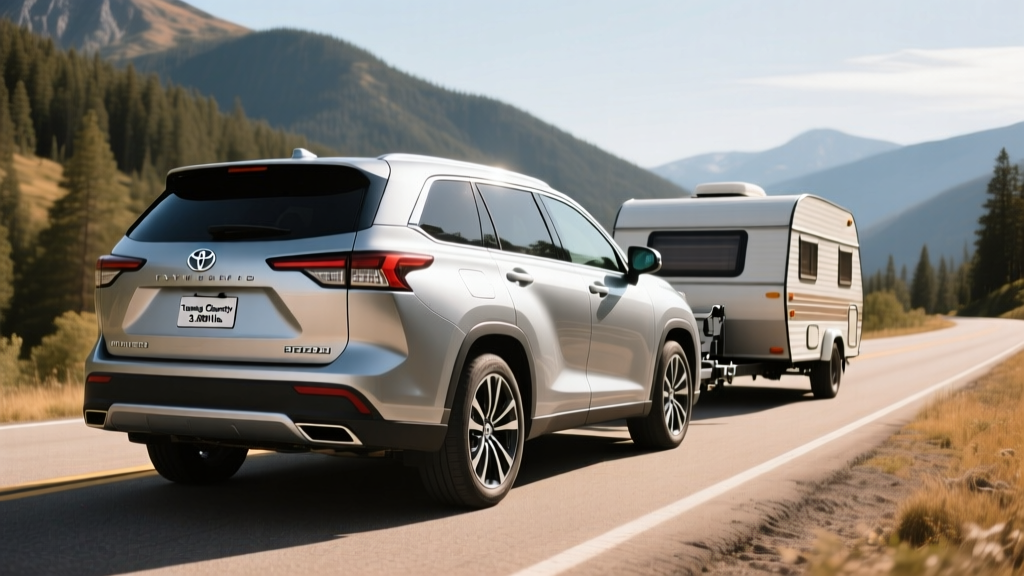
The 3,500-lb towing rating applies across all Highlander Hybrid trims when properly equipped with the factory tow prep package. Here's what that capacity covers in real-world terms:
- Pop-up camper / tent trailer: 1,500–2,500 lbs ✓
- Small boat on trailer (16–18 ft): 2,000–3,000 lbs ✓
- Utility trailer (loaded): 1,500–3,000 lbs ✓
- Jet Skis on dual trailer: 1,800–2,200 lbs ✓
- Mid-size travel trailer (20+ ft): 4,000–5,500 lbs ✗ (exceeds capacity)
- Large boat (20+ ft): 4,000+ lbs ✗ (exceeds capacity)
The hybrid's electric motors provide instant torque from a stop, which helps with low-speed trailer maneuvering and initial acceleration. The e-CVT keeps the engine in its optimal power band without the shift shock of a conventional automatic, which is beneficial when pulling grades. However, the 243 hp combined output means highway merging and mountain passes require planning when loaded near the maximum rating.
Required equipment: Toyota's tow prep package includes a heavy-duty radiator, supplemental transmission cooler, and wiring harness. An aftermarket hitch receiver and brake controller may be needed depending on your trailer type. Always verify your trailer's loaded weight (including cargo, water, and propane) against the 3,500-lb limit — not just the dry weight listed by the manufacturer.
Highlander Hybrid vs. Competitors: Where It Stands
The three-row hybrid SUV segment has grown, but the Highlander Hybrid remains the efficiency benchmark. Here's how it compares to key rivals:
| Model | Combined MPG | Towing Capacity | Combined HP | Starting MSRP |
|---|---|---|---|---|
| Toyota Highlander Hybrid | 36 | 3,500 lbs | 243 | $41,770 |
| Toyota Grand Highlander Hybrid | 36 | 3,500 lbs | 245 | $45,120 |
| Kia Sorento Hybrid | 34 | 2,000 lbs | 227 | $38,490 |
| Hyundai Santa Fe Hybrid | 34 | 2,000 lbs | 230 | $39,500 |
| Mazda CX-90 PHEV | 56 MPGe / 25 gas | 3,500 lbs | 323 | $51,000 |
The Grand Highlander Hybrid offers more third-row and cargo space on a longer wheelbase for about $3,350 more, with essentially identical powertrain specs and efficiency. The Sorento and Santa Fe hybrids are more affordable but sacrifice 1,500 lbs of towing capacity and some interior volume. The Mazda CX-90 PHEV delivers more power and electric-only commuting capability — but at a $9,000+ premium and with the requirement to plug in regularly to realize its efficiency benefits.
Frequently Asked Questions
How many MPG does the 2025 Toyota Highlander Hybrid get?
The EPA rates the 2025 Highlander Hybrid AWD at 35 city / 35 highway / 36 combined MPG on LE and XLE trims, with Limited and Platinum trims rated at 35 combined. Real-world owners report 33–38 MPG combined depending on driving style and conditions. Highway-heavy driving at high speeds and cold weather reduce efficiency to 28–33 MPG.
Can the Highlander Hybrid tow a camper trailer?
Yes, for lighter campers. The 3,500-lb towing capacity handles pop-up campers, teardrop trailers, and small hard-sided campers (typically 1,500–3,000 lbs loaded). Larger travel trailers weighing 4,000+ lbs exceed the hybrid's rating — consider the gas-only Highlander (5,000 lbs) or a body-on-frame SUV for those loads.
Does the Highlander Hybrid need to be plugged in?
No. The Highlander Hybrid is a conventional hybrid (HEV). Its small battery charges through regenerative braking and the gasoline engine. There is no charging port and no electric-only driving mode. You fuel it like any other vehicle at a gas station.
Does the 2025 Highlander Hybrid qualify for a federal tax credit?
No. Federal §30D clean vehicle credits apply only to plug-in vehicles (PHEVs and BEVs) with at least 7 kWh of battery capacity. The Highlander Hybrid's 1.87 kWh self-charging battery does not qualify. Some states may offer separate hybrid incentives — check your state's energy office for current programs.
How long will the Highlander Hybrid battery last and what does replacement cost?
Toyota's hybrid battery is warranted for 10 years / 150,000 miles. Real-world data shows most Toyota NiMH hybrid batteries last 150,000–200,000+ miles. If replacement is needed out of warranty, expect $2,000–$3,500 for a refurbished unit or $3,500–$5,000 for a new OEM battery, installed.
Is the Highlander Hybrid AWD system good in snow?
The electronic AWD system provides competent all-weather traction for typical winter driving. The rear electric motor engages automatically when front-wheel slip is detected. It's not a substitute for a dedicated off-road system in deep snow or severe conditions, but combined with winter tires, it handles plowed roads, light snow, and icy commutes well.