Quick Verdict: The AWD Hybrid That Doesn't Compromise on Efficiency
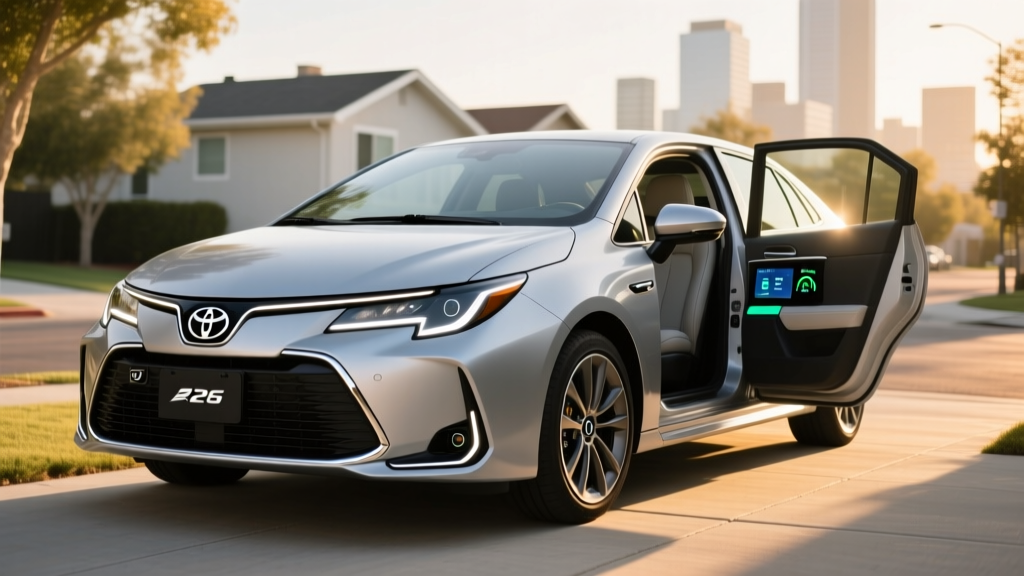
The Toyota Corolla Hybrid All-Wheel Drive occupies a rare spot in the compact sedan market: it pairs the fuel-sipping efficiency of a conventional hybrid (HEV) with the all-weather confidence of electronic all-wheel drive — and it does so without demanding you ever plug in. For the 2026 model year, the Corolla Hybrid AWD continues to offer an EPA-estimated 50 MPG combined, making it one of the most efficient AWD vehicles sold in the United States, period.
If you've been cross-shopping between a full battery-electric vehicle (BEV), a plug-in hybrid (PHEV), and a conventional hybrid, the Corolla Hybrid AWD makes the strongest case for buyers who lack reliable home charging access, face harsh winters, or simply want maximum range flexibility without lifestyle changes. Here's the full data-driven breakdown.
HEV vs. PHEV vs. EV: Where the Corolla Hybrid AWD Fits
Before diving into specs, it's critical to understand what the Corolla Hybrid AWD is — and what it isn't. Toyota offers this car as a conventional hybrid (HEV), not a plug-in hybrid. That distinction matters enormously for your daily routine and your wallet.
| Feature | HEV (Corolla Hybrid AWD) | PHEV (e.g., Prius Prime) | BEV (e.g., Tesla Model 3) |
|---|---|---|---|
| Plugs in to charge? | No — self-charging via engine + regen | Yes — Level 1/2 AC charging | Yes — Level 1/2/DC fast charging |
| Electric-only range | ~1 mile at low speed | 35-44 miles (model dependent) | 250-350+ miles (full battery) |
| Total range | ~550+ miles (11.4-gal tank) | ~400-450 miles combined | 250-350+ miles |
| Home charging needed? | No | Strongly recommended | Essential |
| Federal tax credit (§30D) | Not eligible | Up to $7,500 (if eligible) | Up to $7,500 (if eligible) |
| Best for | No home charger, high mileage, cold climate | Short commutes + home charging | Home charging + low daily miles |
The Corolla Hybrid AWD's 1.1 kWh nickel-metal hydride (NiMH) traction battery is far too small for meaningful electric-only driving. Instead, it serves as an energy buffer: the electric motors assist the gasoline engine during acceleration, capture energy during braking (regenerative braking), and enable brief engine-off coasting. You never plug it in — the engine and regen keep the battery topped up automatically.
Fuel Economy: EPA Numbers and Real-World MPG
According to fueleconomy.gov, the 2026 Toyota Corolla Hybrid AWD carries the following EPA estimates:
| Driving Cycle | EPA Estimated MPG |
|---|---|
| City | 53 MPG |
| Highway | 46 MPG |
| Combined | 50 MPG |
With an 11.4-gallon fuel tank, that translates to roughly 570 miles of total range on a single tank under combined driving conditions.
Real-World MPG: What to Actually Expect
Toyota's hybrid system shines in stop-and-go city driving, where the electric motor handles low-speed propulsion and regenerative braking recaptures energy constantly. In real-world testing, owners routinely meet or exceed the EPA city figure of 53 MPG in urban environments. On a mixed suburban commute with moderate traffic, 50-55 MPG is entirely achievable year-round.
Highway driving is where the Corolla Hybrid AWD falls slightly short of its sticker. At sustained 70-75 mph speeds, expect 43-46 MPG depending on terrain, tire pressure, and wind. The AWD system adds roughly 80 pounds and minor drivetrain drag compared to the front-wheel-drive Corolla Hybrid, which is rated at 53 combined — a modest 3 MPG penalty for all-weather traction.
Cold-weather note: In sub-freezing temperatures, hybrid efficiency drops 5-12%. The engine runs more frequently to generate cabin heat (no resistance heater in the HEV), and the battery's charge/discharge efficiency decreases. Expect 44-47 MPG combined in winter conditions with temperatures below 30°F. This is still dramatically better than a non-hybrid AWD compact, which typically returns 28-32 MPG combined in the same conditions.
Powertrain and AWD System: How It Works
| Specification | 2026 Corolla Hybrid AWD |
|---|---|
| Engine | 1.8L 4-cylinder Atkinson cycle |
| Engine output | 96 HP / 105 lb-ft torque |
| Front electric motor | 70 HP / 120 lb-ft |
| Rear electric motor (AWD) | 40 HP / 62 lb-ft |
| Net combined system output | 138 HP |
| Traction battery | 1.1 kWh NiMH (sealed) |
| Transmission | eCVT (planetary gearset, no belt) |
| AWD type | Electronic (rear motor only — no driveshaft) |
| 0-60 mph | ~9.0 seconds |
| Fuel tank | 11.4 gallons |
| Curb weight | ~3,115 lbs |
The Corolla Hybrid AWD uses Toyota's fifth-generation hybrid system. Unlike traditional AWD systems that route power through a mechanical driveshaft from front to rear, this car employs a dedicated rear-mounted electric motor that engages the rear wheels only when needed — during acceleration from a stop, in low-traction conditions (rain, snow, ice), or when the front wheels slip. Under steady-state cruising, the rear motor is idle, minimizing efficiency losses.
The eCVT transmission is not a conventional belt-driven CVT. It uses a planetary gearset that seamlessly blends engine and motor power with no fixed gear ratios. This is the same proven architecture Toyota has refined over 25+ years in the Prius, and it contributes heavily to the car's legendary reliability record.
Pricing, Trims, and Tax Credit Eligibility
The 2026 Toyota Corolla Hybrid AWD is available across multiple trims. Pricing (MSRP, including destination charge):
| Trim | MSRP | AWD Availability |
|---|---|---|
| LE AWD | $25,225 | Standard |
| SE AWD | $27,075 | Standard |
| XLE AWD | $28,775 | Standard |
Federal Tax Credit: The Honest Answer
Because the Corolla Hybrid AWD is a conventional hybrid (HEV) with no plug-in capability, it does not qualify for the federal §30D Clean Vehicle Credit. That credit — up to $7,500 — is reserved for battery-electric vehicles (BEVs) and plug-in hybrids (PHEVs) that meet battery capacity, critical-mineral sourcing, MSRP caps, and buyer income thresholds.
There is no federal tax credit specifically for conventional hybrids in 2026. However, some states offer rebates or incentives for high-efficiency vehicles — check your state's energy office or department of environmental quality for current programs. A few states (e.g., Colorado) have offered hybrid-specific incentives in prior years, but these vary by jurisdiction and change frequently.
Bottom line on price: The Corolla Hybrid AWD LE at ~$25,225 is one of the most affordable AWD vehicles in the U.S. market. For comparison, the cheapest AWD Subaru Impreza starts around $24,000 but returns only ~30 MPG combined — making the Corolla Hybrid AWD cheaper to own over 5 years despite the slightly higher sticker.
Battery Warranty, Reliability, and Replacement Cost
This is where Toyota's hybrid track record becomes a decisive advantage. The Corolla Hybrid AWD uses a nickel-metal hydride (NiMH) traction battery — a chemistry Toyota has deployed in millions of vehicles since 1997 with exceptional longevity.
| Coverage | Term |
|---|---|
| Hybrid battery warranty | 10 years / 150,000 miles (whichever comes first) |
| Hybrid system components | 8 years / 100,000 miles |
| Basic vehicle warranty | 3 years / 36,000 miles |
| Powertrain warranty | 5 years / 60,000 miles |
Toyota extended its hybrid battery warranty to 10 years/150,000 miles starting with the 2020 model year, up from the previous 8 years/100,000 miles. This covers the traction battery against defects and capacity loss below a functional threshold.
Real-World Battery Longevity
Based on data from Prius fleets and high-mileage Corolla Hybrid owners, Toyota's NiMH hybrid batteries routinely last 150,000-200,000+ miles before requiring replacement. Many original Prius batteries from the 2004-2010 era are still functional at 200,000+ miles. The Corolla Hybrid, introduced for the 2020 model year in the U.S., benefits from Toyota's latest-generation battery management, which keeps the NiMH pack within a narrow, longevity-optimized state-of-charge window (roughly 40-80% SoC).
Battery Replacement Cost
If the hybrid battery does eventually need replacement outside of warranty, here's what to budget:
| Option | Estimated Cost |
|---|---|
| New OEM Toyota battery (dealer) | $2,500 - $3,500 |
| Refurbished/remanufactured battery | $1,200 - $2,000 |
| Individual module replacement (specialist shop) | $500 - $1,000 |
These figures are far lower than BEV battery replacements ($8,000-$20,000+) because the Corolla Hybrid's 1.1 kWh pack is small and uses mature, widely available NiMH technology. Independent hybrid specialists can often replace individual failed modules within the pack rather than the entire unit, further reducing cost.
Who Should Buy the Corolla Hybrid AWD — And Who Shouldn't
Choose the Corolla Hybrid AWD If:
- You live in a snow-belt state and need AWD but refuse to pay the fuel-economy penalty of a conventional AWD gas car
- You don't have access to home or workplace EV charging (apartment, street parking, no garage outlet)
- You drive high annual miles (15,000+) and want the lowest cost-per-mile without behavioral changes
- You want proven, 25-year-proven hybrid reliability with a 10-year battery warranty
- You take frequent long road trips and don't want to plan around charging stations
- You want a sub-$26,000 AWD sedan with modern safety tech (Toyota Safety Sense 3.0 is standard)
Look Elsewhere If:
- You have home charging and a short commute — a PHEV like the Prius Prime (44 mi electric range) will use zero gas on most daily drives
- You want pure electric driving with zero tailpipe emissions — consider a BEV like the Hyundai Ioniq 6 or Tesla Model 3
- You want the $7,500 federal tax credit — conventional hybrids don't qualify under current §30D rules
- Performance is a priority — 138 HP and a ~9-second 0-60 time is adequate, not quick
- You need a hatchback or SUV body style — the Corolla Hybrid is sedan-only (the Prius offers hatchback practicality)
The Decision Framework
Buy the Corolla Hybrid AWD if your priority is maximum fuel efficiency + AWD + no plug-in hassle, and you lack reliable home charging or regularly exceed 40 miles per day.
Buy a PHEV (Prius Prime) if you have home Level 2 charging, commute under 40 miles round-trip, and want to drive mostly on electricity while keeping gas-engine range for road trips.
Buy a BEV (Model 3, Ioniq 6) if you have home charging, want zero tailpipe emissions, qualify for the $7,500 tax credit, and your daily driving stays under ~250 miles.
5-Year Ownership Cost Snapshot
To put the Corolla Hybrid AWD's value in context, here's a rough 5-year/75,000-mile fuel cost comparison against a comparable AWD gas sedan, using $3.40/gallon regular unleaded:
| Vehicle | Combined MPG | Gallons Used (75k mi) | Fuel Cost (5 yr) |
|---|---|---|---|
| Corolla Hybrid AWD | 50 MPG | 1,500 gal | $5,100 |
| Subaru Impreza AWD | 30 MPG | 2,500 gal | $8,500 |
| Mazda3 AWD Turbo | 28 MPG | 2,679 gal | $9,108 |
The Corolla Hybrid AWD saves roughly $3,400-$4,000 in fuel costs alone over 5 years compared to a conventional AWD compact — nearly enough to offset its slightly higher purchase price. Factor in Toyota's strong resale value (hybrids command premiums in the used market) and low maintenance costs (no oil changes beyond standard intervals, regenerative braking extends pad life), and the total cost of ownership advantage widens further.
Frequently Asked Questions
How many MPG does the Toyota Corolla Hybrid AWD get?
The EPA rates the 2026 Corolla Hybrid AWD at 53 city / 46 highway / 50 combined MPG. In real-world driving, most owners achieve 48-55 MPG depending on conditions. City driving tends to match or exceed the EPA figure thanks to heavy regenerative braking, while sustained highway driving at 75 mph may return 43-46 MPG.
Does the Corolla Hybrid AWD need to be plugged in?
No. The Corolla Hybrid AWD is a conventional hybrid (HEV), not a plug-in hybrid. Its small 1.1 kWh battery charges automatically through the gasoline engine and regenerative braking. There is no charging port and no plug-in capability.
How does the AWD system work on the Corolla Hybrid?
The Corolla Hybrid AWD uses a separate rear-mounted electric motor (40 HP) with no mechanical driveshaft connecting the front and rear axles. The rear motor engages automatically during acceleration, on slippery surfaces, or when front-wheel slip is detected. Under steady cruising, the rear motor disengages to preserve efficiency. This electronic AWD adds roughly 80 lbs and costs only ~3 MPG compared to the FWD version.
Is the Corolla Hybrid AWD reliable? What about battery replacement cost?
Toyota's hybrid system has a 25+ year track record of exceptional reliability, and the Corolla Hybrid benefits from the fifth-generation architecture. The hybrid battery is covered by a 10-year/150,000-mile warranty. Real-world data shows Toyota NiMH hybrid batteries commonly last 150,000-200,000+ miles. If replacement is needed out of warranty, expect $2,500-$3,500 for a new OEM pack or $1,200-$2,000 for a refurbished unit.
Does the Corolla Hybrid AWD qualify for any tax credit?
No. Under current IRS §30D rules, the federal Clean Vehicle Credit applies only to plug-in electric vehicles (BEVs and PHEVs) with a battery capacity of at least 7 kWh. The Corolla Hybrid AWD's 1.1 kWh battery and lack of plug-in capability make it ineligible. Check with your state energy office for any state-level hybrid incentives, as these vary by jurisdiction.
Corolla Hybrid AWD vs. Prius AWD — which is better?
The 2026 Prius AWD is rated at 54 MPG combined (vs. 50 for the Corolla Hybrid AWD), produces 196 HP (vs. 138), and offers a hatchback cargo area. However, the Prius AWD starts around $29,500 — roughly $4,300 more than the Corolla Hybrid AWD LE. If budget is the priority and you prefer a sedan, the Corolla Hybrid AWD is the value pick. If you want more power, cargo flexibility, and slightly better MPG, the Prius AWD justifies its premium.
Can I get the Corolla Hybrid with AWD in all trims?
For 2026, AWD is available on the LE, SE, and XLE trims. AWD is a standalone option package (typically a $1,400-$1,500 premium over the FWD equivalent). All trims use the same 1.8L hybrid powertrain and rear electric motor AWD system.