Quick Verdict: A 14-Year-Old Hybrid SUV Worth Considering?
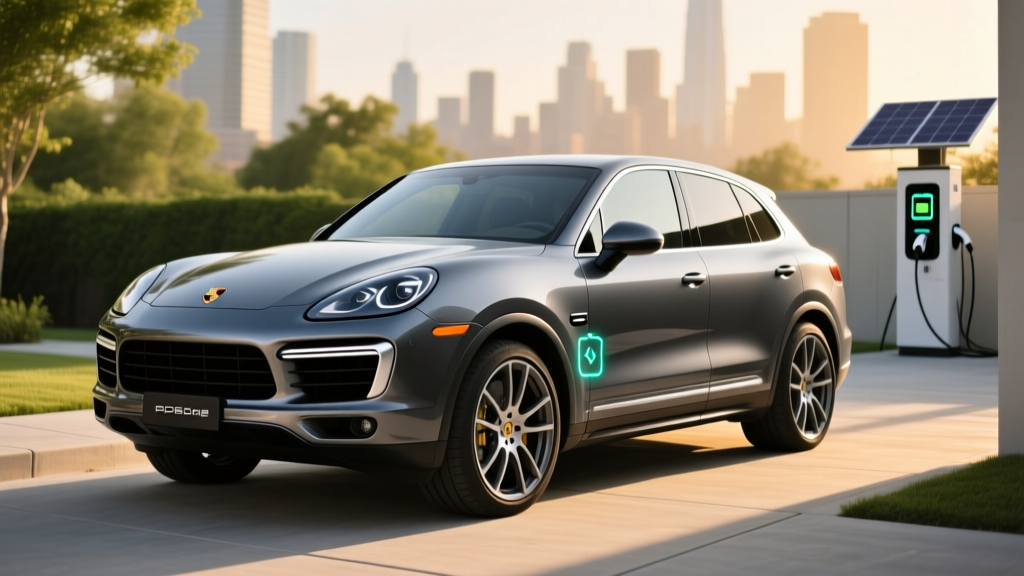
The 2012 Porsche Cayenne S Hybrid was Porsche's first production hybrid, pairing a supercharged 3.0-liter V6 with an electric motor for a combined 380 horsepower. It was a conventional hybrid (HEV) — not a plug-in — meaning it charges its small battery exclusively through regenerative braking and engine power. No plug, no electric-only range to speak of, just modest efficiency gains wrapped in a luxury badge.
In 2026, this model exists entirely on the used market. With examples selling between $10,000 and $18,000 depending on mileage and condition, the Cayenne Hybrid occupies a tricky space: it's one of the cheapest ways into a Porsche SUV, but it's also a 14-year-old German luxury vehicle with a hybrid powertrain that adds complexity. This guide breaks down exactly what you're getting — real-world MPG, battery replacement risk, reliability patterns, and whether this aging HEV makes more sense than a newer plug-in hybrid or a full EV.
EPA Fuel Economy and Real-World MPG
The EPA rated the 2012 Porsche Cayenne S Hybrid at 20 mpg city, 24 mpg highway, and 21 mpg combined. For context, the non-hybrid Cayenne S with the 4.8L V8 was rated at 16/22/18 mpg — so the hybrid delivers roughly a 3 mpg combined improvement, or about 17% better fuel economy.
| Metric | City | Highway | Combined |
|---|---|---|---|
| EPA MPG | 20 mpg | 24 mpg | 21 mpg |
| Annual Fuel Cost (EPA est.) | ~$3,050/year (15,000 mi, $3.75/gal premium) | ||
| Fuel Type Required | Premium unleaded (91+ octane) | ||
Source: fueleconomy.gov — 2012 Porsche Cayenne S Hybrid
Real-World MPG: What Owners Actually Report
Conventional hybrids tend to meet or slightly exceed their EPA city estimates because stop-and-go driving maximizes regenerative braking and electric motor assist. Highway driving is where the gap narrows — at sustained 70–80 mph speeds, the Cayenne's 4,700-pound curb weight and the gasoline engine doing most of the work bring highway numbers closer to (or slightly below) the 24 mpg sticker.
Owner-reported data from fuel-tracking platforms typically clusters around 19–22 mpg combined for mixed driving. Drivers who do predominantly city miles occasionally see 22–23 mpg. Those who highway-cruise or drive aggressively in Sport mode often report 17–19 mpg. Cold weather and short trips (where the engine runs to warm the cabin and catalytic converter) can push city numbers into the mid-teens.
The honest takeaway: expect 19–21 mpg combined in real-world use. The hybrid system's efficiency gains are real but modest — this is still a heavy, powerful luxury SUV.
Powertrain Specs: Supercharged V6 Meets Electric Motor
The 2012 Cayenne S Hybrid uses a parallel hybrid architecture built around Volkswagen Group's 3.0-liter supercharged V6 (shared with the Audi Q5 Hybrid and VW Touareg Hybrid of the same era). Here's the full breakdown:
| Specification | Value |
|---|---|
| Engine | 3.0L supercharged V6 |
| Engine Power | 333 hp @ 5,500–6,500 rpm |
| Engine Torque | 324 lb-ft @ 3,000–5,250 rpm |
| Electric Motor | 47 hp (34 kW), integrated in transmission |
| Combined System Output | 380 hp / 428 lb-ft torque |
| Transmission | 8-speed Tiptronic S automatic |
| Drivetrain | AWD (permanent) |
| 0–60 mph | 6.1 seconds (Porsche est.) |
| Curb Weight | ~4,717 lbs |
| Hybrid Battery | ~1.7 kWh (NiMH), sealed, not plug-in |
| Towing Capacity | 7,716 lbs (braked) |
The electric motor sits between the engine and transmission, enabling engine-off coasting ("sailing" mode) at highway speeds when you lift off the throttle. The engine shuts down completely and the car freewheels — a feature Porsche was early to implement. The NiMH (nickel-metal hydride) battery pack is small at roughly 1.7 kWh and is located under the cargo floor. It cannot be plugged in; it charges only through regeneration and engine-driven generation.
HEV vs. PHEV: Why the 2012 Cayenne Hybrid Is Not a Plug-In
This distinction matters because many buyers searching for a "Cayenne Hybrid" assume plug-in capability. Here's how the generations compare:
| Model Year | Model Name | Type | Battery | Electric-Only Range | Plug-In? |
|---|---|---|---|---|---|
| 2011–2014 | Cayenne S Hybrid | HEV | ~1.7 kWh NiMH | ~1 mile (creep only) | No |
| 2015–2018 | Cayenne S E-Hybrid | PHEV | 10.8 kWh Li-ion | ~14 miles (EPA) | Yes (Level 2) |
| 2019–present | Cayenne E-Hybrid | PHEV | 17.9 kWh Li-ion | ~27 miles (EPA) | Yes (Level 2) |
If you want electric-only commuting or the ability to run errands on battery power alone, you need the 2015+ E-Hybrid (PHEV). The 2012 S Hybrid's electric motor assists the gasoline engine and enables coasting, but it does not meaningfully drive the car on electricity alone beyond very low-speed parking-lot maneuvers.
Hybrid Battery Lifespan, Reliability, and Replacement Cost
This is the single biggest concern for any buyer considering a 14-year-old hybrid. The 2012 Cayenne S Hybrid uses a NiMH (nickel-metal hydride) battery pack — the same chemistry found in the Toyota Prius of that era. NiMH batteries are generally durable and degrade more gracefully than early lithium-ion packs, but they are not immortal.
What Does a Replacement Cost?
Here's the reality most sellers won't volunteer:
- OEM Porsche replacement battery pack: $3,500–$5,500 for the part alone. Total installed cost at a Porsche dealer typically runs $5,000–$7,500 including labor and programming.
- Aftermarket/remanufactured NiMH pack: $2,000–$3,500 installed at an independent hybrid specialist. Companies like Green Bean Battery and similar vendors offer remanufactured NiMH packs with 2–5 year warranties.
- Individual cell/module replacement: Some hybrid specialists can replace failed modules within the pack for $800–$1,500, but this is a temporary fix if the rest of the pack is aging.
NiMH batteries in this application typically last 120,000–180,000 miles before significant capacity loss. Since the battery is small (1.7 kWh) and the car doesn't rely heavily on it for propulsion, degradation manifests as slightly reduced fuel economy and less aggressive regenerative braking rather than a sudden "dead battery" scenario. However, a complete pack failure — usually from a single failed module causing a system fault — will illuminate a hybrid system warning and may put the car into a limp mode.
Overall Reliability: The Bigger Picture
The hybrid system itself is not the primary reliability concern — it's everything else. The 2012 Cayenne (958 generation) is known for several expensive failure points that have nothing to do with the hybrid powertrain:
- Transfer case failures: The center transfer case on 958 Cayennes is a known weak point, with failures typically occurring between 80,000–120,000 miles. Replacement: $3,000–$5,000.
- Coolant pipe leaks: Plastic coolant pipes in the engine valley degrade and crack. Repair requires significant disassembly: $2,000–$3,500.
- Air suspension: If equipped (standard on S Hybrid), air springs and compressors fail around 90,000–130,000 miles. $1,500–$2,500 per corner; $3,000+ for the compressor.
- Supercharger isolator: The Eaton supercharger's isolator coupler can develop play and rattle. Repair: $800–$1,500.
The hybrid system adds one more layer — the power electronics and DC-DC converter — but reported failures on the 958 hybrid are relatively uncommon compared to the mechanical issues above. The NiMH battery remains the primary hybrid-specific financial risk.
2026 Used Pricing and Tax Credit Eligibility
The 2012 Porsche Cayenne S Hybrid originally carried an MSRP of approximately $67,700 (base) to $85,000+ (well-optioned). In 2026, used-market pricing looks dramatically different:
| Condition / Mileage | Typical Price Range |
|---|---|
| Excellent, under 80k miles | $15,000–$18,000 |
| Good, 80k–120k miles | $11,000–$15,000 |
| Fair, 120k+ miles or needs work | $8,000–$11,000 |
Does It Qualify for Any Tax Credit?
No. The 2012 Cayenne S Hybrid does not qualify for any federal tax credit in 2026. Here's why:
- New vehicle credit (§30D): Not applicable — this model has not been sold new since 2014.
- Used EV credit (IRC §25E): This credit (up to $4,000 or 30% of sale price, whichever is less) applies only to used battery electric vehicles (BEVs) and plug-in hybrid electric vehicles (PHEVs) with at least 7 kWh of battery capacity. The 2012 Cayenne S Hybrid is a conventional HEV with a ~1.7 kWh NiMH battery — it does not qualify.
- State incentives: A small number of states offer rebates for used hybrids, but most have eliminated HEV incentives in favor of PHEV and BEV programs. Check your state's energy office for current programs.
For current federal credit rules, refer to the IRS clean vehicle credits page.
2012 Cayenne Hybrid vs. Alternatives: Which Fits You?
If you're cross-shopping this vehicle, you're likely weighing it against newer PHEVs, full EVs, or other used luxury SUVs. Here's a practical decision framework:
- You want Porsche badge prestige on a sub-$15k budget
- You lack home charging access and can't use a PHEV or EV
- You need a conventional hybrid that requires no behavior change
- You value towing capacity (7,716 lbs) over efficiency
- You accept $2,000–$4,000/year in potential repair costs
- You want electric-only commuting (get a 2015+ Cayenne E-Hybrid PHEV)
- You want the lowest possible fuel cost (a BEV or newer PHEV wins)
- You want modern ADAS — this model has no lane-keep, no adaptive cruise standard
- You want a current warranty or predictable ownership costs
- You qualify for the used-EV tax credit (§25E) — a used PHEV/BEV gets you up to $4,000 back
For buyers who want a Porsche Cayenne with plug-in capability and modern electric range, the 2015–2018 Cayenne S E-Hybrid (PHEV) is the logical step up. Used examples in 2026 run $18,000–$28,000 and offer 14 miles of EPA-rated electric-only range with a 10.8 kWh lithium-ion battery — enough for short commutes without the engine firing. The 2019+ Cayenne E-Hybrid jumps to 27 miles electric-only and a more refined system, but used pricing starts around $35,000+.
Pros and Cons at a Glance
Pros
- 380 hp with 0–60 in 6.1 seconds — genuinely quick for a hybrid SUV
- Modest fuel economy improvement over V8 Cayenne (~3 mpg combined)
- Engine-off coasting reduces highway fuel consumption
- 7,716 lb towing capacity exceeds most hybrid competitors
- Low used entry price for a Porsche SUV ($10k–$18k)
- NiMH battery chemistry is proven and degradation is gradual
Cons
- Not a plug-in — no electric-only range, no home charging, no §25E used-EV credit
- Hybrid battery replacement ($3,500–$7,500) likely needed at this age
- 958 generation known for expensive transfer case and coolant pipe failures
- Air suspension repairs are costly ($1,500–$5,000+)
- Outdated infotainment, no Apple CarPlay/Android Auto
- No modern driver-assist features (no AEB standard, no lane-keep assist)
- Premium fuel required — offsets some MPG savings
Frequently Asked Questions
How many MPG does the 2012 Porsche Cayenne Hybrid get?
The EPA rates it at 20 mpg city, 24 mpg highway, and 21 mpg combined. Real-world owners typically report 19–21 mpg combined, with city driving sometimes yielding 22–23 mpg thanks to regenerative braking. Highway-only driving at higher speeds may drop to 18–20 mpg. Premium fuel (91+ octane) is required.
How far can the 2012 Cayenne Hybrid go on electric only?
Essentially zero miles in any practical sense. This is a conventional hybrid (HEV), not a plug-in. The electric motor assists the gasoline engine and enables engine-off coasting, but it cannot propel the car on electric power alone at meaningful speeds. If electric-only driving is a priority, look at the 2015+ Cayenne S E-Hybrid (PHEV), which offers ~14 miles electric-only.
Is the 2012 Cayenne Hybrid reliable, and what does a battery replacement cost?
The hybrid system itself is moderately reliable — NiMH batteries are durable and the power electronics have a decent track record. However, the 958-generation Cayenne platform has known issues with the transfer case, coolant pipes, and air suspension that are expensive to repair. Hybrid battery replacement costs $3,500–$7,500 (OEM) or $2,000–$3,500 (aftermarket remanufactured). Budget at least $2,000–$4,000 per year for maintenance and repairs on a vehicle of this age.
Does the 2012 Cayenne Hybrid qualify for any federal tax credit?
No. As a conventional hybrid (HEV) with a ~1.7 kWh NiMH battery, it does not qualify for the federal new-vehicle credit (§30D) or the used clean-vehicle credit (§25E). The §25E credit requires a battery capacity of at least 7 kWh and applies to PHEVs and BEVs only. Some states may offer small incentives for used hybrids, but most have shifted to PHEV/BEV-only programs.
Hybrid vs. PHEV vs. EV — which Cayenne should I buy?
It depends on your charging access and budget. The 2012 Cayenne S Hybrid (HEV, $10k–$18k used) works if you have no plug-in charging and want a low entry price. The 2015–2018 Cayenne S E-Hybrid (PHEV, $18k–$28k used) adds 14 miles of electric range and qualifies for the up-to-$4,000 used-EV credit under §25E if income and price requirements are met. The 2019+ Cayenne E-Hybrid (PHEV, $35k+) delivers 27 miles electric-only and modern tech. A full BEV like the Porsche Cayenne Electric (announced for 2026+) eliminates gas entirely but starts above $80,000. Match the powertrain to your charging situation and commute length — not to the badge.
Can I convert the 2012 Cayenne Hybrid to a plug-in?
No. There is no aftermarket plug-in conversion kit for this vehicle. The 1.7 kWh NiMH battery, power electronics, and vehicle software are not designed for external charging. Attempting a conversion would void any remaining systems, create safety hazards, and almost certainly cost more than simply buying a factory PHEV.
What should I check before buying a used 2012 Cayenne S Hybrid?
Get a pre-purchase inspection from a Porsche specialist or a shop experienced with the 958 platform. Specifically request: hybrid battery state-of-health scan (via PIWIS diagnostic tool), transfer case inspection for binding or noise, coolant system pressure test (valley pipe leaks), air suspension leak-down test, and a full fault-code readout. Budget for the hybrid battery replacement if the pack shows more than 15–20% degradation or the vehicle has over 120,000 miles.