Quick Verdict: The Pragmatic Hybrid Crossover
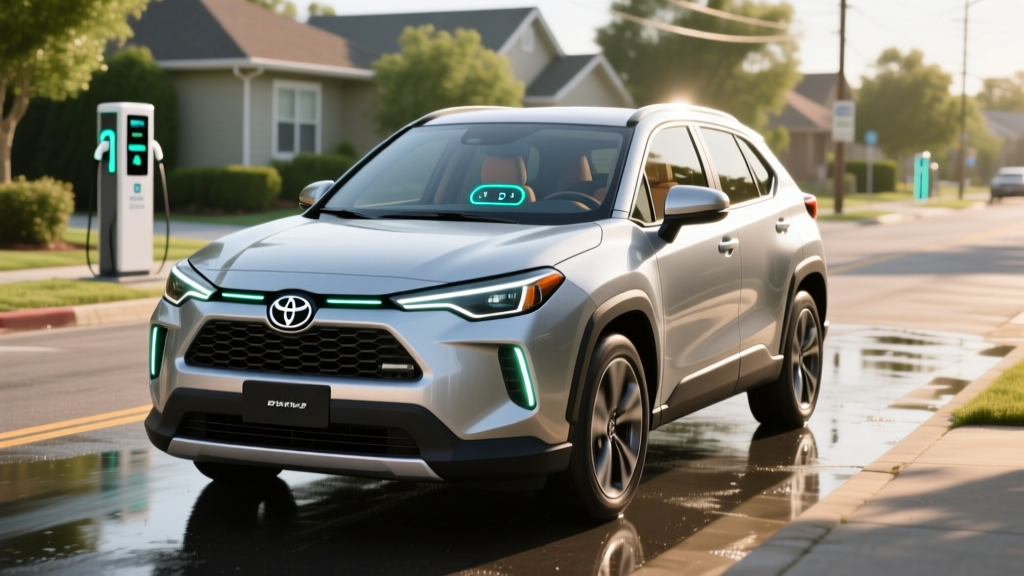
The Toyota Corolla Cross Hybrid occupies a narrow but valuable lane: a compact all-wheel-drive crossover that returns 42 MPG combined without a plug, a charging app, or a single change to your daily routine. For 2026, it remains one of the most accessible entry points into electrified driving, pairing Toyota's fifth-generation hybrid system with a 2.0-liter four-cylinder and a rear-mounted electric motor for standard electronic AWD.
If you've been cross-shopping subcompact crossovers and keep circling back to fuel economy as your top priority, the Corolla Cross Hybrid is the spreadsheet winner. It undercuts most competitors on price while delivering class-leading MPG. The trade-offs are real — a modest 196 combined horsepower, a utilitarian interior, and cargo space that trails some rivals — but for the buyer who wants maximum miles per gallon without plug-in infrastructure, this is the one to beat.
HEV vs PHEV: What the Corolla Cross Hybrid Actually Is
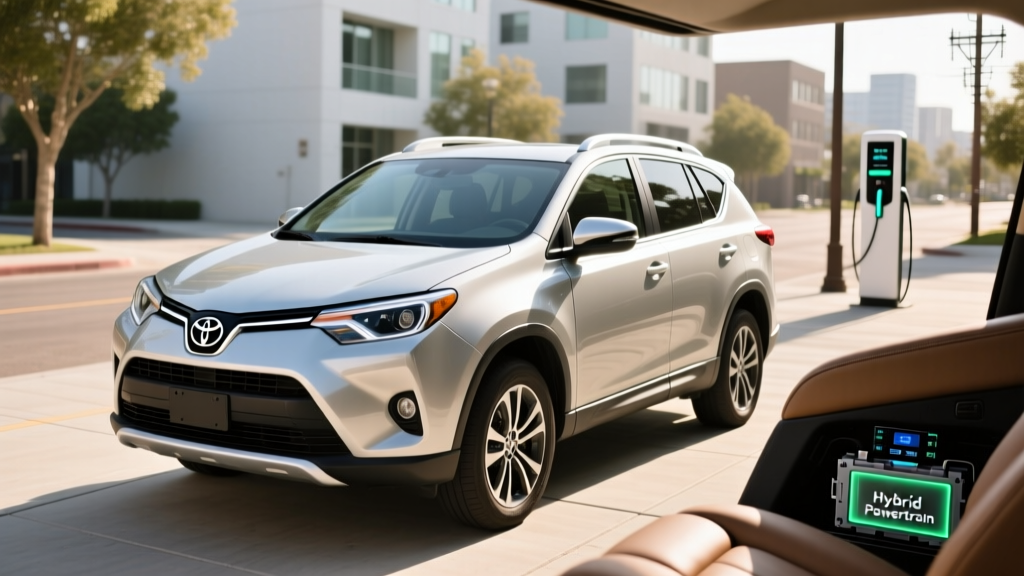
Before diving into specs, let's establish exactly what you're buying. The Corolla Cross Hybrid is a conventional hybrid electric vehicle (HEV). It has no plug. You never charge it from a wall outlet. The 1.6 kWh nickel-metal hydride (NiMH) traction battery charges exclusively through regenerative braking and the gasoline engine.
| Attribute | HEV (Corolla Cross Hybrid) | PHEV (e.g., RAV4 Prime) | BEV (e.g., Tesla Model Y) |
|---|---|---|---|
| Plug-in charging | No | Yes (Level 1/2) | Yes (Level 1/2/DC) |
| Battery capacity | 1.6 kWh (NiMH) | 18.1 kWh (Li-ion) | 75–82 kWh (NMC/LFP) |
| Electric-only range | <1 mile at low speed | ~42 miles | 280–330 miles |
| Fuel economy | 42 MPG combined | 94 MPGe / 38 MPG gas | 123 MPGe (no gas) |
| Upfront cost premium | ~$1,500 over gas model | ~$7,000 over gas model | Varies widely |
| Federal tax credit (§30D) | Not eligible | Eligible (if sourcing rules met) | Eligible (if sourcing rules met) |
Toyota does not currently offer a Corolla Cross plug-in hybrid. If you need meaningful electric-only range for short commutes, you'd need to step up to the RAV4 Prime PHEV (42 miles EV range) or look at a full battery-electric vehicle. The Corolla Cross Hybrid's job is simpler: slash your fuel consumption without changing how you refuel.
Fuel Economy: EPA Ratings and Real-World MPG
The EPA rates the 2026 Corolla Cross Hybrid at 42 MPG combined, with a 45 city / 38 highway split. This is where hybrid physics shines: regenerative braking recaptures energy in stop-and-go driving that a conventional car wastes as heat, so city MPG actually exceeds highway MPG — the opposite of a gas-only vehicle.
| Metric | Value |
|---|---|
| City MPG | 45 |
| Highway MPG | 38 |
| Combined MPG | 42 |
| Fuel tank capacity | 10.6 gallons |
| Total driving range | ~445 miles |
| Annual fuel cost (15,000 mi, $3.40/gal) | ~$1,214 |
Source: EPA Fuel Economy
Real-World MPG vs EPA Sticker
Hybrid owners frequently report exceeding EPA city estimates in warm-weather urban driving — 47–50 MPG is common in moderate climates with light traffic. Highway MPG tends to track closer to the 38 EPA figure, or slightly below at sustained 75–80 mph speeds. In cold weather (below 30°F), expect a 5–10% fuel-economy drop as the engine runs longer to heat the cabin and maintain battery temperature. Overall, 40–44 MPG combined is a realistic year-round expectation for most drivers.
For context, the gas-only Corolla Cross AWD returns 29 MPG combined. The hybrid saves roughly 158 gallons of fuel per year at 15,000 miles — about $537 annually at $3.40 per gallon.
Powertrain, Performance, and Driving Impressions
The Corolla Cross Hybrid uses Toyota's fifth-generation hybrid synergy drive:
- Engine: 2.0-liter Dynamic Force inline-4, 150 hp / 139 lb-ft torque
- Front motor: 83 kW permanent-magnet AC synchronous
- Rear motor: 30 kW (provides electronic AWD)
- Combined system output: 196 horsepower
- Transmission: eCVT (planetary gearset, not a belt-driven CVT)
- 0–60 mph: ~7.5 seconds
| Spec | Value |
|---|---|
| Combined horsepower | 196 hp |
| Drivetrain | Electronic AWD (eAWD) |
| Hybrid battery | 1.6 kWh NiMH |
| 0–60 mph | ~7.5 sec |
| Cargo volume (rear seats up) | 25.0 cu ft |
| Cargo volume (rear seats folded) | ~56.0 cu ft |
| Towing capacity | Not rated |
| Curb weight | ~3,285 lbs |
The eCVT is a key differentiator from the belt-and-pulley CVTs found in competitors like the Subaru Crosstrek. Toyota's planetary gearset design has no belts to slip or wear, contributing to the powertrain's long-term durability. Acceleration is adequate for merging and passing, though the engine does drone under hard throttle — a characteristic of all power-split hybrids. In normal driving, transitions between electric-only, engine, and combined modes are nearly imperceptible.
The electronic AWD system engages the rear motor automatically during acceleration, low-traction starts, and cornering. It's not a rugged off-roader, but it handles rain, light snow, and gravel roads with confidence.
Pricing, Trims, and Tax Credit Eligibility
The 2026 Corolla Cross Hybrid is offered in three trims, all with standard AWD:
- S: ~$29,845 MSRP (base hybrid)
- SE: ~$31,295 MSRP
- XSE: ~$33,045 MSRP
Destination charges add approximately $1,350.
Federal Tax Credit: Not Eligible
The Corolla Cross Hybrid does not qualify for the IRS §30D Clean Vehicle Credit. Under current IRS rules, only plug-in electric vehicles (PHEVs and BEVs) with sufficient battery capacity are eligible. Conventional hybrids like this one have been excluded from the federal credit since the program was restructured under the Inflation Reduction Act.
Some states offer their own hybrid incentives or HOV lane access — check your state's energy office or DMV for current programs.
Even without a federal credit, the Corolla Cross Hybrid's payback math is compelling. The ~$1,500 premium over the gas-only Corolla Cross AWD is recovered in roughly 2.8 years through fuel savings alone at 15,000 miles per year and $3.40 per gallon.
Battery Longevity, Warranty, and Replacement Cost
Hybrid battery anxiety is the number-one concern for first-time hybrid buyers. Here's what the data actually shows:
Toyota Hybrid Battery Warranty
- Coverage: 10 years / 150,000 miles (whichever comes first)
- Applies to: Hybrid traction battery and hybrid system components
- Transferable: Yes, to subsequent owners
- Capacity threshold: Warranty covers defects and significant capacity loss
Source: Toyota Warranty Guide
Toyota's NiMH hybrid batteries have an exceptional longevity track record. The Prius, which uses similar chemistry, routinely reaches 200,000+ miles on its original battery pack. NiMH cells degrade more gracefully than lithium-ion — they lose capacity slowly and predictably rather than suffering sudden cliff-like drops.
If replacement is ever needed outside warranty, a new OEM hybrid battery for the Corolla Cross Hybrid runs approximately $2,500–$3,500 including labor. Third-party refurbishment shops offer reconditioned packs for $1,200–$1,800. Given the 10-year/150,000-mile warranty and Toyota's reliability history, most original owners will never face this cost.
The broader hybrid powertrain — including the eCVT, electric motors, and power control unit — is covered under Toyota's 5-year/60,000-mile powertrain warranty, with the hybrid-specific components covered for the full 10-year/150,000-mile term.
Who Should Buy the Corolla Cross Hybrid?
Choose the Corolla Cross Hybrid If:
- You want maximum fuel economy without changing your refueling habits
- You drive 12,000–20,000+ miles per year (higher mileage = faster payback)
- You live in an area with limited public EV charging infrastructure
- You want AWD for weather but don't need serious off-road capability
- You plan to keep the vehicle 8+ years (warranty coverage + reliability)
- Your budget tops out around $30,000–$35,000
Look Elsewhere If:
- You want electric-only commuting (consider a PHEV like the RAV4 Prime)
- You need more than 25 cu ft of cargo space behind the rear seats
- You want spirited acceleration (the 196 hp is adequate, not quick)
- You want to eliminate gasoline entirely (look at a BEV like the Hyundai Ioniq 5)
- You need a federal tax credit to make the math work
Pros
- 42 MPG combined — best in the subcompact hybrid crossover segment
- Standard AWD on every trim at no extra cost
- 10-year/150,000-mile hybrid battery warranty
- No plug required — zero lifestyle change from a gas car
- Sub-$30,000 starting price for the S trim
- Toyota Safety Sense 3.0 standard (adaptive cruise, lane-keeping, auto emergency braking)
- Proven hybrid powertrain with deep reliability history
Cons
- Engine drone under hard acceleration (eCVT characteristic)
- 25 cu ft cargo space trails some rivals (Honda HR-V: 24.4, but Mazda CX-30: 20.2)
- Interior materials feel budget-grade at the S and SE trims
- No plug-in or electric-only option in the Corolla Cross lineup
- Not eligible for the $7,500 federal EV tax credit
- Rear-seat legroom is tight for taller passengers
Frequently Asked Questions
How many MPG does the Toyota Corolla Cross Hybrid get?
The EPA rates it at 45 city / 38 highway / 42 combined MPG. Real-world drivers typically see 40–44 MPG combined year-round, with city driving in warm weather sometimes exceeding 47 MPG thanks to regenerative braking.
Does the Corolla Cross Hybrid need to be plugged in?
No. It is a conventional hybrid (HEV), not a plug-in hybrid (PHEV). The battery charges through regenerative braking and the gasoline engine. You refuel it at any gas station like a normal car.
Is the Corolla Cross Hybrid reliable?
Toyota's hybrid powertrains have one of the strongest reliability records in the industry. The eCVT has no wear-prone belts, the NiMH battery is proven over millions of Prius miles, and the hybrid system is backed by a 10-year/150,000-mile warranty. IIHS has rated the Corolla Cross highly for crash safety.
What does a hybrid battery replacement cost?
An OEM replacement runs approximately $2,500–$3,500 installed. Refurbished packs are available for $1,200–$1,800. Most owners will never need a replacement — the battery is warranted for 10 years/150,000 miles and Toyota NiMH packs routinely last 200,000+ miles.
Hybrid vs PHEV vs EV — which is right for me?
Choose a hybrid (HEV) if you want better MPG with zero lifestyle changes. Choose a PHEV if you have home charging and a short commute (under 40 miles) and want some electric-only driving. Choose a full EV (BEV) if you have reliable home charging, want to eliminate gas entirely, and your daily driving is under 250 miles. The Corolla Cross Hybrid is the lowest-risk, lowest-change option of the three.
Does the Corolla Cross Hybrid qualify for any tax credit?
It does not qualify for the federal §30D Clean Vehicle Credit, which is limited to plug-in vehicles. Check your state's energy office for any local hybrid incentives, HOV lane access programs, or utility rebates that may apply.
How does the Corolla Cross Hybrid compare to the RAV4 Hybrid?
The RAV4 Hybrid is larger (37.5 cu ft cargo), more powerful (219 hp), and rated at 39 MPG combined — slightly less efficient but more spacious. It also starts about $3,000 higher. If cargo space and rear-seat room are priorities, the RAV4 Hybrid is the better fit. If maximum MPG and a lower price matter most, the Corolla Cross Hybrid wins.