The Intersection of Budget and Hybrid Technology
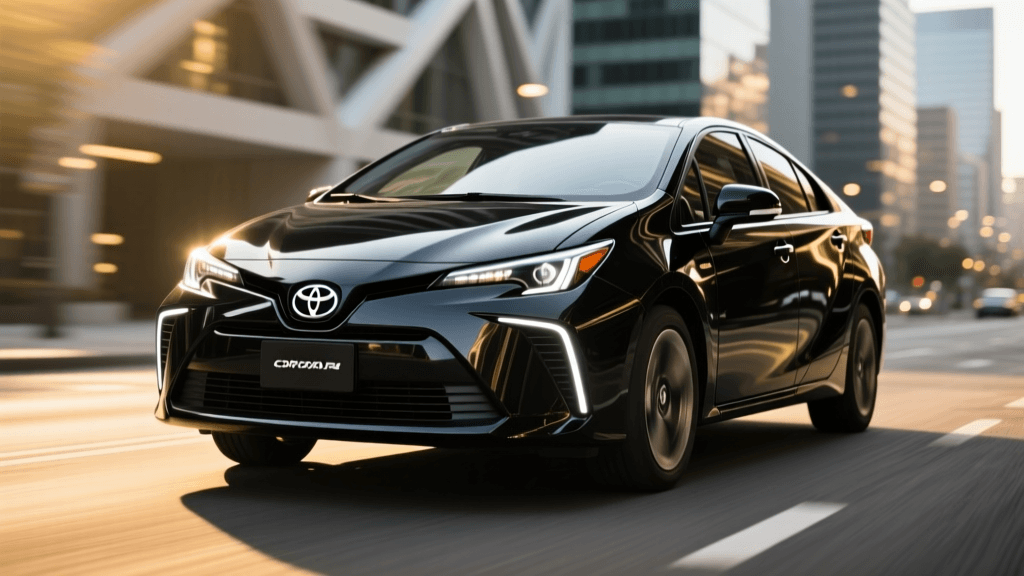
For budget-conscious automotive buyers in the current market, the landscape presents a frustrating dilemma. Fully electric vehicles (EVs) often carry a steep upfront premium that breaks the budget, while traditional internal combustion engine (ICE) vehicles subject owners to volatile fuel prices and higher long-term maintenance costs. The Toyota Corolla Cross Hybrid emerges as a masterclass in bridging this gap. By leveraging the fifth generation of the Toyota Hybrid System (THS), this compact crossover delivers advanced electrification without the luxury-car price tag. In this technology deep dive, we dissect the engineering under the Corolla Cross Hybrid's hood to understand exactly how its powertrain, software logic, and drivetrain architecture translate into tangible financial savings for the budget-minded consumer.
Under the Hood: The 5th Generation Toyota Hybrid System (THS)
At the heart of the Corolla Cross Hybrid is the M20A-FXS 2.0-liter Dynamic Force four-cylinder engine. Unlike older hybrid systems that relied on smaller, less efficient 1.8-liter engines, this 2.0-liter powerhouse is engineered specifically for thermal efficiency. It achieves a remarkable 14:1 compression ratio and utilizes Toyota's D-4S dual-injection system, which combines both direct and port fuel injection. This dual approach ensures optimal fuel atomization across all RPM ranges, reducing carbon buildup on the intake valves while maximizing combustion efficiency.
According to the U.S. Environmental Protection Agency (EPA), modern hybrid systems rely heavily on keeping the gas engine within its most efficient operating window, known as the Brake Specific Fuel Consumption (BSFC) map. The Corolla Cross Hybrid achieves this via a sophisticated continuously variable transmission (CVT) controlled by a planetary gearset, often referred to as the Power Split Device. This gearset seamlessly blends the power of the gas engine with two motor-generators (MG1 and MG2). MG1 primarily acts as a starter and generator to control the engine speed, while MG2 provides the primary electric thrust to the front wheels. The result is an EPA-estimated 42 MPG combined, a figure that drastically reduces the monthly fuel expenditure for daily commuters.
Electronic On-Demand AWD-i: Traction Without the Parasitic Penalty
One of the most significant technological advantages for buyers in snowy or rainy climates is the Corolla Cross Hybrid's Electronic On-Demand All-Wheel Drive (AWD-i). Traditional mechanical AWD systems use a physical driveshaft and a center differential to route power to the rear wheels. This setup adds significant weight and introduces parasitic drivetrain loss, which inherently lowers fuel economy even when all-wheel traction isn't needed.
Toyota's AWD-i system eliminates the mechanical connection entirely. Instead, a dedicated 40-horsepower electric motor is mounted directly on the rear axle. The vehicle's central computer monitors wheel slip, steering angle, and throttle position hundreds of times per second. When slip is detected, or during hard acceleration from a stop, the rear motor instantly engages to provide traction. Because there is no mechanical drag when the rear motor is idle, the Corolla Cross Hybrid maintains its stellar 42 MPG combined rating regardless of whether you opt for the AWD model. For the budget buyer, this means getting the safety and resale value of an AWD vehicle without paying the traditional fuel economy tax at the pump.
Regenerative Braking and Long-Term Maintenance Savings
When evaluating total cost of ownership (TCO), budget buyers must look beyond the sticker price and fuel costs; maintenance is a critical factor. The Corolla Cross Hybrid utilizes an advanced blended regenerative braking system. When you press the brake pedal, the vehicle's computer first engages MG2 in reverse, turning the electric motor into a generator. This creates electromagnetic resistance that slows the vehicle down while simultaneously capturing kinetic energy and sending it back to the hybrid battery.
The physical friction brake pads and rotors are only engaged during harder stops (typically above 0.3g of deceleration) or when the vehicle comes to a complete halt. Because the electric motors handle the vast majority of daily deceleration, the physical brake components experience remarkably little wear. It is incredibly common for Toyota hybrid owners to report original brake pads lasting well beyond 100,000 miles. As noted by the U.S. Department of Energy's Alternative Fuels Data Center, regenerative braking not only recaptures energy but significantly reduces brake wear, translating to hundreds of dollars saved in maintenance over the life of the vehicle.
Real-World Efficiency and Total Cost of Ownership (TCO)
To truly understand the value proposition of the Corolla Cross Hybrid's technology, we must compare its five-year Total Cost of Ownership against its gasoline counterpart and a key segment rival, the Honda HR-V. The data below illustrates how the hybrid premium is quickly offset by operational savings.
| Metric (5-Year Estimate) | Corolla Cross Hybrid (AWD) | Corolla Cross Gas (AWD) | Honda HR-V (AWD) |
|---|---|---|---|
| Approximate Base MSRP | $28,200 | $25,000 | $27,500 |
| EPA Combined Fuel Economy | 42 MPG | 30 MPG | 27 MPG |
| Estimated Annual Fuel Cost | $1,350 | $1,890 | $2,100 |
| 5-Year Total Fuel Cost | $6,750 | $9,450 | $10,500 |
| Estimated Brake Maintenance | $0 (Pads likely last 5+ yrs) | $400 (1-2 replacements) | $400 (1-2 replacements) |
| Net 5-Year Operational Cost | $6,750 | $9,850 | $10,900 |
Note: Fuel costs are estimates based on 15,000 miles driven annually and average national fuel prices. Actual costs will vary by region and driving habits.
As the table demonstrates, the roughly $3,200 upfront premium for the hybrid technology is entirely recouped within the first four to five years of ownership through fuel savings alone, not even factoring in the reduced brake maintenance and typically higher resale value of Toyota hybrids.
Battery Chemistry and Packaging: Protecting Your Investment
A common anxiety for budget buyers considering a hybrid is the potential cost of battery replacement. The Corolla Cross Hybrid utilizes a highly refined Nickel-Metal Hydride (NiMH) battery pack, rather than the more volatile and expensive Lithium-Ion packs found in full EVs. Toyota has engineered this specific NiMH pack using a bipolar structure, which reduces internal resistance and allows for a more compact, lightweight design that fits neatly under the rear seats without compromising cargo space.
NiMH chemistry is chosen for this application due to its exceptional thermal stability, longevity, and lower manufacturing cost. Furthermore, Toyota backs its hybrid battery technology with an industry-leading 10-year or 150,000-mile warranty (whichever comes first) in all 50 states. According to Toyota's official hybrid technology resources, the battery management system actively monitors cell voltage and temperature, using the gas engine or cabin climate control to heat or cool the battery as needed, ensuring it remains in its optimal state of health for the life of the vehicle. This robust warranty effectively eliminates the financial risk of battery degradation for the original owner and significantly boosts the vehicle's value on the used market.
Verdict: Is the Tech Worth the Premium for Budget Buyers?
The Toyota Corolla Cross Hybrid is not just a gas-powered crossover with a battery bolted on; it is a highly integrated, software-defined machine designed to extract maximum efficiency from every drop of fuel and every kilowatt of electricity. The 5th-generation THS, combined with the parasitic-loss-free AWD-i system and regenerative braking, creates a financial moat that protects budget buyers from rising fuel and maintenance costs.
For the consumer who cannot justify the $45,000+ starting price of a modern electric SUV, but refuses to accept the inefficiency of a traditional gas engine, the Corolla Cross Hybrid represents the undisputed sweet spot. It delivers cutting-edge automotive technology in a practical, reliable, and highly affordable package, proving that you do not need to break the bank to drive the future.