Quick Verdict: The AWD Hybrid That Punches Above Its Weight
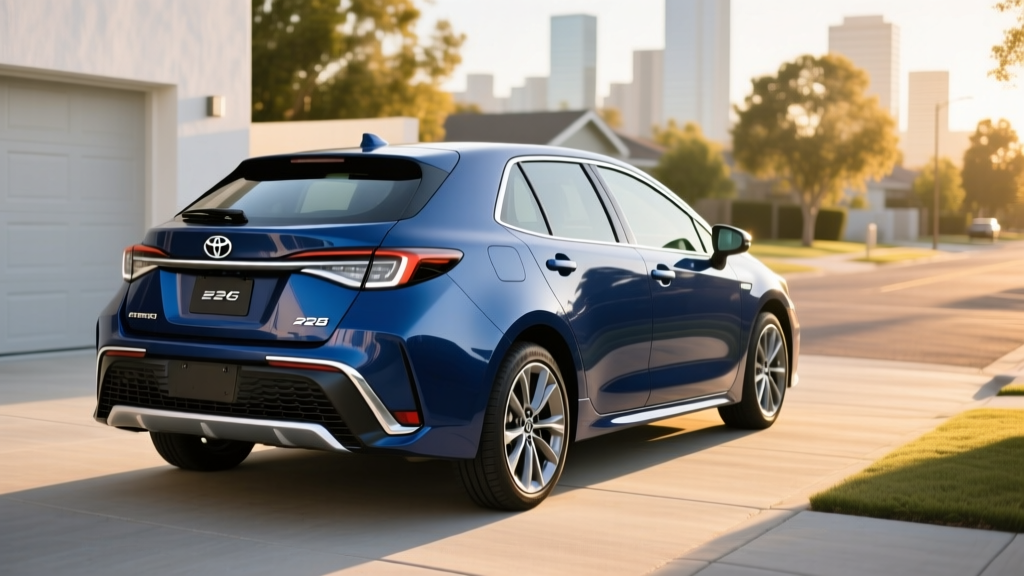
The Toyota Corolla all wheel drive hybrid occupies a narrow but valuable lane in the 2026 compact-car market: it delivers all-weather traction, 50+ MPG in real-world city driving, and Toyota's proven hybrid reliability — all starting under $27,000. Unlike a plug-in hybrid or full EV, this is a conventional hybrid (HEV) that requires no behavioral change. You fuel it like a gas car, and the hybrid system handles the rest. For buyers in snow-belt states who want efficiency without range anxiety or charging infrastructure, the Corolla AWD Hybrid is arguably the most pragmatic compact sedan available.
Powertrain and AWD System Explained
The 2026 Corolla Hybrid AWD pairs a 1.8-liter Atkinson-cycle four-cylinder engine with Toyota's fifth-generation hybrid transaxle up front and a separate rear-mounted electric motor (MM) that drives the rear wheels when traction demands it. This is not a mechanical AWD system with a driveshaft — it's an electronic on-demand setup, similar to what Toyota uses in the RAV4 Hybrid and Prius AWD.
| Spec | Value |
|---|---|
| Engine | 1.8L 4-cyl Atkinson-cycle |
| Combined Net Horsepower | 138 hp |
| Rear Motor (AWD) | 30 kW (40 hp) electric motor |
| Hybrid Battery | ~0.9 kWh lithium-ion (sealed NiMH on some trims) |
| Transmission | eCVT (planetary gearset) |
| Drivetrain | Electronic AWD (eAWD) |
| 0-60 mph (est.) | ~9.0 seconds |
The rear motor engages automatically during acceleration from a stop, on low-traction surfaces, and during certain cornering scenarios. It disengages at steady highway cruising to avoid parasitic drag. The result is confident launches in rain and light snow without the fuel-economy penalty of a traditional mechanical AWD system. Don't expect rally-car grip — ground clearance remains sedan-low — but for commuting through a Midwest winter, it's more than adequate.
Fuel Economy: EPA Ratings vs Real-World MPG
The EPA rates the 2026 Corolla Hybrid AWD at 51 city / 49 highway / 50 combined MPG, according to fueleconomy.gov. The slight AWD penalty versus the front-wheel-drive Corolla Hybrid (rated 53/46/50) is negligible — you gain traction and lose essentially nothing at the pump.
| Model | City | Highway | Combined | AWD? |
|---|---|---|---|---|
| Toyota Corolla Hybrid AWD | 51 | 49 | 50 | Yes |
| Toyota Corolla Hybrid FWD | 53 | 46 | 50 | No |
| Hyundai Elantra Hybrid | 51 | 58 | 54 | No |
| Honda Civic Hybrid | 50 | 47 | 49 | No |
| Subaru Impreza (gas AWD) | 27 | 34 | 30 | Yes |
Pricing, Trims, and Tax Credit Eligibility
The 2026 Corolla Hybrid is offered in LE Hybrid and SE Hybrid trims, with AWD available on both. Pricing starts at approximately $26,550 MSRP for the LE Hybrid AWD (including destination), with the SE Hybrid AWD starting around $28,250. Fully loaded with packages, you're looking at roughly $30,000 out the door.
Hybrid vs PHEV vs EV — Which Powertrain Fits You?
The Corolla AWD Hybrid is an HEV. Understanding where it fits relative to plug-in hybrids and full EVs is critical before purchase:
| Factor | HEV (Corolla Hybrid) | PHEV (e.g., Prius Prime) | BEV (e.g., Tesla Model 3) |
|---|---|---|---|
| Plugs In? | No | Yes (optional) | Yes (required) |
| Electric-Only Range | None | 25-44 miles | 250-360 miles |
| Home Charging Needed? | No | Recommended | Essential |
| Federal Tax Credit | No | Up to $3,750* | Up to $7,500* |
| Upfront Cost | Lowest | Moderate | Highest |
| Best For | No home charging, simple ownership | Short commutes + road trips | Home charging + low running cost |
*PHEV and BEV tax credit eligibility depends on MSRP caps, buyer income limits, battery sourcing requirements, and point-of-sale transfer rules under current IRS §30D guidelines. Consult IRS.gov or a tax professional.
Reliability, Battery Warranty, and Replacement Cost
Toyota's hybrid system is among the most proven in the industry, with over 25 years of continuous production since the original Prius. The fifth-generation hybrid transaxle in the 2026 Corolla uses fewer moving parts than a conventional automatic transmission — no torque converter, no clutch packs, no gear shifts to wear out.
The lithium-ion hybrid battery in the Corolla is small (~0.9 kWh usable) and operates within a narrow state-of-charge window (roughly 40-80% SoC), which dramatically reduces degradation stress compared to the large batteries in full EVs. Real-world data from Toyota's hybrid fleet shows most batteries retain sufficient capacity well past 200,000 miles. Out-of-warranty replacement cost for the Corolla Hybrid battery currently ranges from $2,000 to $3,500 including labor, though many owners never need one.
Daily Driving: Interior, Tech, and Practicality
The 2026 Corolla Hybrid AWD carries over the refreshed interior introduced in the prior model year: an 8-inch touchscreen with wireless Apple CarPlay and Android Auto on the SE trim (wired on LE), a 7-inch digital instrument cluster, and Toyota Safety Sense 3.0 as standard equipment. TSS 3.0 includes adaptive cruise control, lane-keeping assist, automatic emergency braking with pedestrian detection, and road-sign assist.
Cargo space is 13.1 cubic feet — adequate for weekly groceries but tighter than the Hyundai Elantra Hybrid's 14.2 cu ft trunk. Rear seat legroom is 41.4 inches, which is competitive. The AWD system's rear motor sits beneath the cargo floor and does not reduce trunk volume versus the FWD hybrid variant.
- 50 MPG combined with AWD capability
- Sub-$27K starting price
- 10-year/150K-mile hybrid battery warranty
- No plug-in charging required
- Standard Toyota Safety Sense 3.0
- Proven long-term reliability record
- Modest 138 hp — not a performance sedan
- No federal EV tax credit eligibility
- Tight trunk (13.1 cu ft)
- Rear motor AWD not suited for deep snow/off-road
- Base LE trim lacks wireless phone integration
- No plug-in hybrid AWD variant available
Frequently Asked Questions
How many MPG does the Toyota Corolla all wheel drive hybrid get?
The EPA rates the 2026 Corolla Hybrid AWD at 51 city / 49 highway / 50 combined MPG. In real-world city driving with frequent stops, many owners report 52-55 MPG thanks to regenerative braking. Highway driving above 70 mph typically yields 44-47 MPG.
Can I plug in the Corolla Hybrid AWD to charge?
No. The Corolla Hybrid is a conventional hybrid (HEV), not a plug-in hybrid (PHEV). It charges its small battery through regenerative braking and the gasoline engine. You never plug it in — you simply refuel at a gas station like any conventional car.
Is the Corolla AWD Hybrid reliable, and what does battery replacement cost?
Toyota's hybrid system has an exceptional reliability track record spanning over 25 years. The hybrid battery is warranted for 10 years/150,000 miles. Out-of-warranty replacement runs $2,000-$3,500, though most batteries last well beyond 200,000 miles due to the conservative charge window the system maintains.
Does the Corolla Hybrid AWD qualify for any tax credit?
It does not qualify for the federal §30D Clean Vehicle Credit, which requires plug-in capability and minimum battery capacity. Some states offer small hybrid rebates — check the Alternative Fuels Data Center for your state's current programs.
How does the AWD system work in snow?
The electronic AWD engages the rear motor automatically when the front wheels slip, providing additional traction during acceleration in rain, snow, and ice. It's effective for typical winter commuting but is not a substitute for dedicated winter tires in deep snow or severe conditions. Ground clearance remains a standard sedan height (~5.3 inches).
Should I get the Corolla Hybrid AWD or a PHEV instead?
If you cannot charge at home, the Corolla Hybrid AWD is the better choice — no infrastructure needed, lower purchase price, and comparable combined MPG. If you have Level 2 charging access and a commute under 40 miles, a PHEV like the Toyota Prius Prime (44 miles electric-only) can eliminate most gasoline use on weekdays while still offering a gas engine for road trips.