Quick Verdict: The Midsize Hybrid Benchmark Gets Sharper
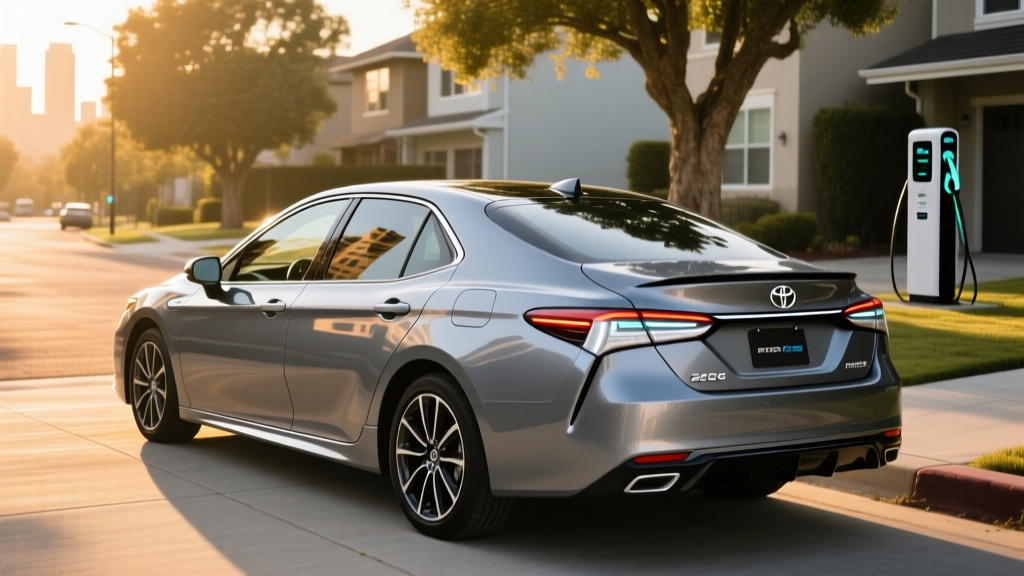
The Toyota Camry Hybrid has long been the default answer for buyers who want sedan comfort without the fuel bill, and the current ninth-generation platform (introduced for 2025) only tightens that grip. For 2026, the Camry Hybrid is offered exclusively with Toyota's fifth-generation hybrid powertrain — a 2.5-liter four-cylinder paired with electric motors for a combined 225 horsepower and an EPA-estimated 51 MPG combined on front-wheel-drive trims. All-wheel-drive models drop only slightly to 49 MPG combined while adding genuine all-weather traction.
This is a conventional hybrid electric vehicle (HEV), not a plug-in hybrid (PHEV). You never plug it in. The system recovers energy through regenerative braking and the gasoline engine to keep a small traction battery charged. If you need plug-in electric-only range, you'll want to look at the Toyota RAV4 Prime or a full BEV — but for drivers who want maximum fuel savings with zero lifestyle change, the 2026 Camry Hybrid is the segment leader.
EPA Fuel Economy vs. Real-World MPG
Fuel economy is the Camry Hybrid's headline act. Here's the official EPA breakdown by drivetrain, sourced from fueleconomy.gov:
| Drivetrain | City MPG | Highway MPG | Combined MPG |
|---|---|---|---|
| FWD (LE, SE) | 53 | 50 | 51 |
| AWD (SE, XLE, XSE) | 51 | 49 | 49 |
At 12,000 miles per year and $3.40/gallon regular unleaded, a 51-MPG Camry Hybrid costs roughly $800 annually in fuel. A comparable 30-MPG gas midsize sedan would cost about $1,360 — a savings of $560 per year, or $2,800 over five years.
Hybrid Powertrain: Specs and How It Works
| Specification | 2026 Toyota Camry Hybrid |
|---|---|
| Engine | 2.5L inline-4 (Dynamic Force) |
| Electric Motors | 2 (FWD) / 3 (AWD, with rear motor) |
| Combined System Output | 225 hp (FWD) / 232 hp (AWD) |
| Transmission | eCVT (planetary gearset, not belt-driven) |
| Traction Battery | Lithium-ion, ~1.0 kWh (bipolar) |
| Drivetrain | FWD standard; electronic AWD available |
| 0–60 MPH | ~7.1 seconds (FWD) |
| Fuel Type | Regular unleaded (87 octane) |
| Towing Capacity | Not rated for towing |
Toyota's fifth-generation hybrid system uses a bipolar lithium-ion traction battery that's more compact and responsive than the nickel-metal hydride packs of earlier generations. The battery is small (~1.0 kWh) by design — it's a buffer for energy recapture and electric assist, not for sustained electric-only driving. You'll see brief EV-mode operation at low speeds in parking lots or stop-and-go traffic, typically under 1 mile before the engine restarts.
The eCVT is not a traditional continuously variable transmission with a rubber belt. It uses a planetary gearset that seamlessly blends engine and motor power. The result is smooth, linear acceleration with none of the "rubber band" drone associated with older CVTs.
HEV vs. PHEV: Where the Camry Hybrid Fits
| Feature | Camry Hybrid (HEV) | Typical PHEV (e.g., RAV4 Prime) |
|---|---|---|
| Plug-in charging required? | No — self-charging | Yes — for electric-only range |
| Electric-only range | ~1 mile at low speed | 25–42 miles |
| Battery size | ~1.0 kWh | 14–18 kWh |
| Federal tax credit | Not eligible (§30D requires plug-in) | Up to $7,500 (if eligible) |
| Home charger needed? | No | Yes (Level 2 recommended) |
| Best for | No home charging access; want simplicity | Home charging + short commute |
Pricing, Trims, and Tax Credit Eligibility
The 2026 Camry Hybrid is offered across four trims. Here's the MSRP breakdown (destination charge included):
| Trim | Drivetrain | MSRP (incl. destination) |
|---|---|---|
| LE | FWD | $29,990 |
| SE | FWD or AWD | $31,490 / $32,990 |
| XLE | FWD or AWD | $34,490 / $35,990 |
| XSE | AWD | $36,490 |
Battery Warranty, Lifespan, and Replacement Cost
Battery longevity is the top concern for hybrid buyers, and Toyota's track record here is among the strongest in the industry. The Camry Hybrid's lithium-ion traction battery is covered by:
• 10 years / 150,000 miles (whichever comes first) for the hybrid battery
• 8 years / 100,000 miles for other hybrid system components (inverter, control module)
• Warranty is fully transferable to subsequent owners
• Covers capacity loss below functional thresholds and all manufacturing defects
In practice, Toyota hybrid batteries routinely last well beyond the warranty period. Taxi fleets and high-mileage drivers have documented Camry and Prius hybrid batteries exceeding 200,000 miles with minimal degradation. The fifth-generation bipolar lithium-ion pack is more thermally stable and has a longer expected cycle life than the NiMH packs it replaced.
Out-of-warranty replacement cost: If the hybrid battery does need replacement after 10+ years, expect to pay $2,500–$4,500 for a new OEM battery pack including labor at a Toyota dealer. Independent hybrid specialists often offer refurbished packs for $1,500–$2,500. Individual module replacement (repairing only failed cells) can cost as little as $500–$1,000 at specialist shops.
Reliability, Safety, and Ownership Costs
Toyota's hybrid system has over 25 years of proven reliability since the original Prius. The Camry nameplate consistently earns top marks from both the NHTSA and IIHS. The current generation carries a 5-Star NHTSA overall safety rating and IIHS Top Safety Pick+ designation when equipped with the standard Toyota Safety Sense 3.0 suite (pre-collision braking, lane departure alert, dynamic radar cruise control, and road sign assist).
Estimated 5-Year Ownership Costs (FWD LE, 12,000 mi/yr):
| Category | 5-Year Estimate |
|---|---|
| Fuel (regular 87 octane) | ~$4,000 |
| Maintenance (oil, filters, brakes) | ~$2,200 |
| Insurance (national avg.) | ~$7,500 |
| Depreciation (est.) | ~$10,500 |
| Estimated Total | ~$24,200 |
Hybrid maintenance costs are often lower than gas-only cars. Regenerative braking significantly reduces brake pad wear — many Camry Hybrid owners report original brake pads lasting 80,000+ miles. There's no starter motor or alternator to replace (the hybrid motor-generator handles both functions), and the eCVT has no belts or clutch packs to service.
Who Should Buy the Camry Hybrid — and Who Shouldn't
Choose the Camry Hybrid If:
- You want 50+ MPG without changing your fueling habits (no plugging in)
- You don't have access to home or workplace charging for a PHEV or BEV
- You want a proven, low-risk ownership experience with strong resale value
- Your daily commute involves heavy stop-and-go traffic (where hybrids shine brightest)
- You want a midsize sedan with a spacious trunk (15.1 cu ft) and comfortable rear seat
Look at a PHEV or Full EV Instead If:
- You have home Level 2 charging and a commute under 35 miles (a PHEV like the RAV4 Prime lets you drive electric daily)
- You want to eliminate gasoline entirely (consider a BEV like the Tesla Model 3 or Hyundai Ioniq 6)
- You want to claim the $7,500 federal tax credit (requires a plug-in vehicle meeting §30D sourcing and income requirements)
- You prioritize instant electric torque and one-pedal driving (BEVs deliver a fundamentally different driving experience)
Pros
- Class-leading 51 MPG combined (FWD)
- No plugging in — zero lifestyle change from a gas car
- 225 hp provides confident highway merging
- 10-year / 150,000-mile hybrid battery warranty
- Strong resale value and Toyota reliability reputation
- AWD available across most trims
- Standard Toyota Safety Sense 3.0
Cons
- No federal tax credit (HEV, not PHEV)
- No meaningful electric-only range (under 1 mile)
- Not rated for towing
- Highway MPG falls below EPA estimate at sustained 75+ MPH
- Trunk space slightly reduced vs. prior gas-only Camry (battery packaging)
- AWD trims sacrifice 2 MPG combined vs. FWD
Frequently Asked Questions
How many MPG does the 2026 Toyota Camry Hybrid actually get?
The EPA rates the FWD Camry Hybrid at 53 city / 50 highway / 51 combined MPG. AWD models earn 51/49/49. In real-world driving, expect 48–54 MPG in city conditions and 44–48 MPG on the highway. Hybrids consistently beat their EPA city numbers in stop-and-go traffic thanks to regenerative braking and electric assist at low speeds.
Does the Camry Hybrid need to be plugged in?
No. The Camry Hybrid is a conventional hybrid (HEV). Its small lithium-ion battery is recharged automatically through regenerative braking and the gasoline engine. You fuel it like any other car — at a gas station, with regular 87-octane unleaded. If you want plug-in capability, look at Toyota's PHEV lineup (RAV4 Prime, Prius Prime).
How far can the Camry Hybrid drive on electric power alone?
Under 1 mile at very low speeds (parking lots, creeping traffic). The ~1.0 kWh battery isn't designed for sustained electric driving — it's a power buffer that assists the gas engine during acceleration and captures energy during braking. For meaningful electric-only range (25–42 miles), you need a plug-in hybrid like the Prius Prime.
Is the Camry Hybrid reliable, and what does a battery replacement cost?
Toyota's hybrid system is one of the most proven in the industry, with 25+ years of real-world data. The hybrid battery carries a 10-year / 150,000-mile warranty. Out-of-warranty replacement runs $2,500–$4,500 at a dealer, or $1,500–$2,500 for a refurbished pack from an independent specialist. Most hybrid batteries last well beyond 200,000 miles.
Does the 2026 Camry Hybrid qualify for any tax credit?
Not at the federal level. The IRS §30D Clean Vehicle Credit requires plug-in capability and a minimum battery capacity — the Camry Hybrid meets neither requirement as a conventional HEV. Some states, municipalities, and utilities offer separate hybrid incentives. Check your state energy office for current programs.
Camry Hybrid vs. full EV — which should I choose?
If you lack reliable home charging, drive 400+ miles between stops regularly, or live in an area with sparse public charging infrastructure, the Camry Hybrid is the pragmatic choice — you get roughly half the fuel cost of a gas car with zero charging logistics. If you have home Level 2 charging, a commute under 30 miles, and want to minimize operating costs further, a BEV like the Tesla Model 3 or Chevrolet Equinox EV will cost less per mile and eliminate oil changes entirely. A PHEV splits the difference if you can charge at home but still want gas-engine range flexibility.
What's the difference between the Camry Hybrid trims?
The LE is the efficiency-focused base trim with 16-inch wheels and the highest EPA ratings. The SE adds sport-tuned suspension, 18-inch wheels, and a more aggressive exterior. The XLE brings premium features (leather-trimmed seats, upgraded audio, ambient lighting). The XSE is the sport-luxury flagship with AWD standard, unique styling, and the most aggressive tuning. AWD is available on SE, XLE, and standard on XSE, adding a rear electric motor for electronic all-wheel drive at a 2-MPG combined penalty.