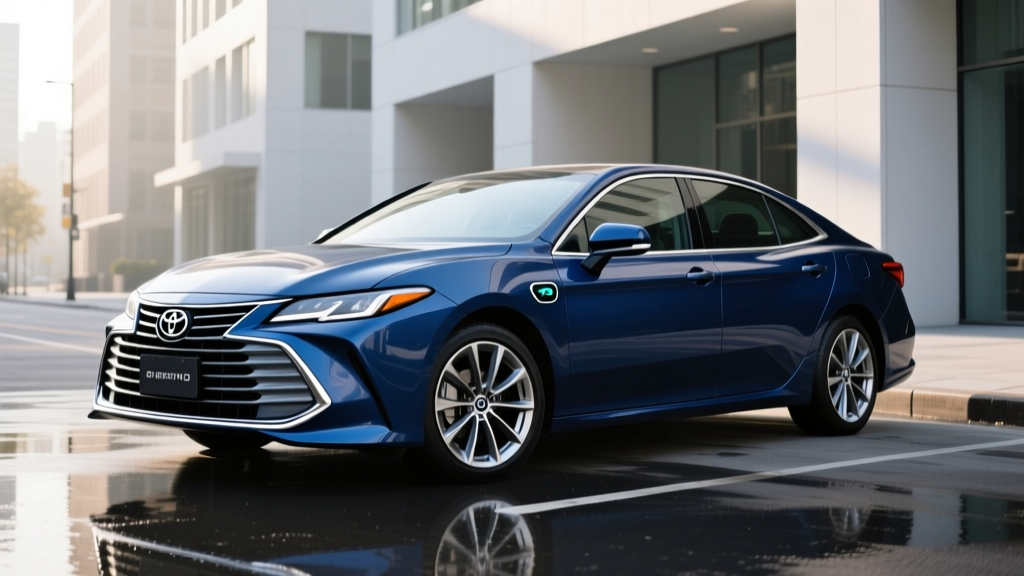
The Toyota Avalon Hybrid was one of the most fuel-efficient full-size sedans ever sold in the U.S., delivering an EPA-estimated 44 MPG combined in its final model years. Toyota discontinued the Avalon after the 2022 model year, but its hybrid powertrain remains a benchmark for large-sedan efficiency — and used examples continue to attract buyers who want near-Camry fuel economy with Crown-level cabin space.
If you're searching for an Avalon Toyota Hybrid in 2026, you're looking at the used market. This guide covers every spec that matters: real-world MPG, hybrid battery longevity, replacement costs, powertrain details, and whether a used Avalon Hybrid still makes sense versus a new Camry Hybrid, Prius, or full EV.
Toyota Avalon Hybrid Specs at a Glance
| Specification | 2022 Toyota Avalon Hybrid (Final Year) |
|---|---|
| Powertrain Type | Conventional Hybrid (HEV) — no plug-in |
| Engine | 2.5L inline-4 (176 hp) + electric motor (118 hp) |
| Combined System Horsepower | 215 hp |
| Drivetrain | Front-wheel drive (eCVT) |
| Hybrid Battery | 1.6 kWh nickel-metal hydride (NiMH) |
| EPA MPG (City / Highway / Combined) | 43 / 44 / 44 MPG |
| Fuel Tank Capacity | 13.2 gallons |
| Total Driving Range | ~580 miles |
| 0–60 mph | ~7.3 seconds |
| Cargo Volume | 16.1 cu ft |
| Original MSRP (Base XLE) | $37,350 |
| Hybrid Battery Warranty (Original) | 10 years / 150,000 miles |
How Many MPG Does the Toyota Avalon Hybrid Get?
The 2022 Toyota Avalon Hybrid carries an EPA rating of 43 MPG city, 44 MPG highway, and 44 MPG combined. These figures apply to the XLE, XSE, and Limited trims. The Touring trim (with AWD and sportier tuning) was not available on the hybrid in all years, but FWD hybrid trims share the same EPA numbers.
| Driving Condition | EPA Estimate | Real-World Expectation |
|---|---|---|
| City | 43 MPG | 44–48 MPG (hybrids excel in stop-and-go) |
| Highway (70 mph cruise) | 44 MPG | 38–42 MPG (aerodynamic drag, less regen benefit) |
| Combined | 44 MPG | 40–45 MPG (varies by driving mix) |
| Cold Weather (below 30°F) | N/A | 35–39 MPG (engine runs more for cabin heat) |
Like most Toyota hybrids, the Avalon Hybrid frequently exceeds its EPA city rating in real-world stop-and-go driving. The hybrid system recovers energy during braking and uses the electric motor for low-speed propulsion, which is where conventional gas cars waste the most fuel. Highway driving tells a different story: at sustained 70–80 mph speeds, the gasoline engine does most of the work, and real-world highway MPG typically drops to the high 30s or low 40s.
For reference, fueleconomy.gov lists the 2022 Avalon Hybrid at 44 MPG combined with an annual fuel cost of approximately $1,350 (based on 15,000 miles/year and mid-2025 fuel prices).
HEV vs PHEV vs EV: Which Fits Your Driving?
The Avalon Hybrid is a conventional hybrid (HEV). It does not plug in. The small 1.6 kWh battery charges exclusively through regenerative braking and the gasoline engine. There is no electric-only driving range to speak of — the motor assists the engine but cannot propel the car on its own for meaningful distances.
| Factor | Avalon Hybrid (HEV) | Typical PHEV (e.g., RAV4 Prime) | Full EV (e.g., Tesla Model 3) |
|---|---|---|---|
| Plug-in Required? | No | Yes (for electric range) | Yes |
| Electric-Only Range | ~0 miles | 25–42 miles | 250–360 miles |
| Home Charging Needed? | No | Recommended (Level 2) | Essential (Level 2) |
| Combined Efficiency | 44 MPG | 38 MPG + 94 MPGe | 120–140 MPGe |
| Federal Tax Credit (§30D) | Not eligible | Up to $7,500 (if eligible) | Up to $7,500 (if eligible) |
| Upfront Cost (Used/New) | $24,000–$35,000 (used) | $45,000+ (new) | $38,000+ (new) |
| Best For | No home charging, long highway commutes | Short commute + home charger | Home charger + daily EV driving |
Choose the Avalon Hybrid if you don't have access to home or workplace charging, drive a mix of city and highway miles, and want maximum range without ever thinking about plugs. With a 580-mile total range, it outdistances most EVs and PHEVs on road trips.
Choose a PHEV if you have a Level 2 charger at home, your daily commute is under 30 miles round-trip, and you want electric-only weekday driving with gas-engine flexibility for weekend road trips.
Choose a full EV if you have reliable home charging, want the lowest per-mile energy cost, and your typical trips fall within 200–250 miles (or you're willing to plan DC fast-charging stops).
Powertrain and Driving Experience
The Avalon Hybrid pairs a 2.5-liter Dynamic Force inline-4 engine (176 hp, 163 lb-ft) with a permanent-magnet electric motor (118 hp, 149 lb-ft) through Toyota's eCVT planetary gearset. Combined system output is 215 horsepower. This is Toyota's fourth-generation hybrid system, shared with the Camry Hybrid and RAV4 Hybrid of the same era.
The eCVT is not a traditional belt-driven CVT — it uses a planetary gearset to seamlessly blend engine and motor power. The result is smooth, linear acceleration without the rubber-band feeling some CVTs produce. The 0–60 mph time of roughly 7.3 seconds is adequate for a full-size sedan, though it won't feel quick compared to turbocharged competitors or EVs.
Driving modes include Normal, Eco, and Sport. Eco mode softens throttle response and reduces HVAC load to maximize fuel economy. Sport mode sharpens throttle mapping and adds simulated shift points to the eCVT for a more engaging feel. In practice, most owners leave it in Normal and let the hybrid system manage everything automatically.
One characteristic worth noting: the Avalon Hybrid's regenerative braking is relatively mild compared to a full EV. You won't get one-pedal driving. The brake pedal feel is progressive and well-tuned — a common Toyota hybrid strength — but expect to use the friction brakes for final stops as you would in any conventional car.
Hybrid Battery Longevity, Warranty, and Replacement Cost
Toyota Hybrid Battery Warranty: 10 years or 150,000 miles (whichever comes first), transferable to second owners. This warranty covers battery capacity loss below a defined threshold, not just total failure. For a 2022 model, the original warranty extends through 2032 or 150,000 miles.
The Avalon Hybrid uses a 1.6 kWh nickel-metal hydride (NiMH) battery pack — not the lithium-ion chemistry found in EVs or PHEVs. NiMH is a proven, durable chemistry for conventional hybrids. Toyota's hybrid batteries in the Prius and Camry families have demonstrated strong longevity, with many reaching 150,000–200,000 miles before significant degradation.
Unlike EV batteries, the Avalon's hybrid battery is small and operates within a narrow state-of-charge window (roughly 40–80% SoC), managed by the hybrid control system. This shallow cycling dramatically reduces wear. You will not see the kind of percentage-based degradation that EV owners track; instead, the battery either functions correctly or individual modules fail.
Battery replacement cost: If the hybrid battery fails outside warranty, a new OEM replacement from Toyota costs approximately $3,000–$4,000 including labor at a dealership. Independent hybrid specialists can often refurbish the pack by replacing individual failed modules for $1,200–$2,000. Aftermarket remanufactured packs are also available in the $1,500–$2,500 range.
For context, the NiMH pack in a 2022 Avalon Hybrid is far less expensive to replace than an EV's lithium-ion traction battery (which can run $10,000–$20,000+). The hybrid battery is also physically smaller and simpler to swap — a typical dealership replacement takes 2–3 hours.
Pricing, Used Market Values, and Tax Credit Eligibility
Because Toyota discontinued the Avalon after 2022, no new examples are available. Used-market pricing for the Avalon Hybrid in early 2026:
| Trim | Original MSRP (2022) | Estimated Used Price (2026) |
|---|---|---|
| XLE Hybrid | $37,350 | $24,000–$28,000 |
| XSE Hybrid | $39,150 | $26,000–$30,000 |
| Limited Hybrid | $43,350 | $29,000–$34,000 |
Prices vary by mileage, condition, and region. Low-mileage examples (under 30,000 miles) command a premium, while high-mileage fleet vehicles may sell below these ranges.
Federal tax credit: The Avalon Hybrid is a conventional HEV and does not qualify for the IRS §30D Clean Vehicle Credit. That credit applies only to plug-in vehicles (PHEVs and BEVs) with battery capacities of at least 7 kWh. Since the Avalon's battery is 1.6 kWh and it cannot plug in, no federal purchase incentive applies — whether buying new (no longer possible) or used.
The used clean vehicle credit (up to $4,000 or 30% of sale price, whichever is less) also requires a plug-in vehicle with at least 7 kWh of battery capacity. The Avalon Hybrid does not meet this threshold. See IRS guidance on the used clean vehicle credit for eligibility details.
Some states offer rebates for hybrid purchases, but these are increasingly targeted at PHEVs and BEVs. Check your state's energy or environmental agency for current programs.
Real-World Ownership: What Avalon Hybrid Owners Report
Across owner forums and long-term reviews, the Avalon Hybrid earns consistent praise for several practical strengths:
- Fuel economy consistency: Many owners report 42–46 MPG in mixed driving year-round, closely tracking the EPA estimate. City-dominant commuters sometimes see 47+ MPG in warm weather.
- Ride comfort: The Avalon's longer wheelbase (113.0 inches) and rear multi-link suspension deliver a smoother ride than the Camry Hybrid. Cabin noise levels are notably low.
- Rear-seat space: 40.3 inches of rear legroom — significantly more than the Camry (38.0 in) and competitive with luxury sedans.
- Reliability: Toyota's hybrid system has an outstanding track record. The eCVT has no belts or clutches to wear out, and the NiMH battery is proven over millions of Prius miles.
Common criticisms include:
- Infotainment: The 2022 Avalon's 9-inch touchscreen runs Toyota's older Entune interface. It supports Apple CarPlay and Android Auto, but the native UI feels dated compared to competitors.
- No AWD option on hybrid: The hybrid powertrain was FWD-only. If you need all-wheel drive, you'd need the V6 gas model or look at the Camry Hybrid (which offers AWD).
- Trunk space: 16.1 cu ft is adequate but not class-leading. The hybrid battery sits under the rear seat, so trunk space is the same as the gas model — no compromise there.
Avalon Hybrid vs Alternatives in 2026
| Model | Type | EPA Combined | Used/New Price Range | Key Advantage |
|---|---|---|---|---|
| Toyota Avalon Hybrid (2022) | HEV | 44 MPG | $24,000–$34,000 (used) | Best ride comfort + rear space per MPG dollar |
| Toyota Camry Hybrid (2025) | HEV | 52 MPG | $30,000–$38,000 (new) | Higher MPG, available AWD, current warranty |
| Toyota Crown (2025) | HEV | 38–41 MPG | $42,000–$55,000 (new) | Avalon's spiritual successor, AWD standard |
| Honda Accord Hybrid (2025) | HEV | 48 MPG | $34,000–$40,000 (new) | Sharper handling, modern interior |
| Toyota Prius Prime (2025) | PHEV | 44 mi EV + 52 MPG | $34,000–$40,000 (new) | Plug-in range, §30D credit eligible |
The Avalon Hybrid occupies a specific niche: full-size sedan comfort with mid-size sedan fuel economy, at a used-car price. If you prioritize a smooth ride, generous rear-seat room, and proven reliability over the latest tech, it remains compelling. If you want the newest safety features, a modern infotainment system, and a full factory warranty, the current-generation Camry Hybrid or Crown are better choices — at a higher price.
Who Should Buy the Toyota Avalon Hybrid?
Buy the Avalon Hybrid if:
- You want 40+ MPG without plugging in or changing habits
- Rear-seat comfort and trunk space matter (family, rideshare, clients)
- You're budget-conscious and comfortable buying used
- You drive 15,000+ miles/year and want low fuel costs without EV charging logistics
Look elsewhere if:
- You want plug-in electric range or federal tax credits → consider a PHEV
- You need AWD for snow-belt winters → Camry Hybrid AWD or Toyota Crown
- You want the latest ADAS and infotainment → current-generation models
- You have home charging and want the lowest per-mile cost → full EV
Frequently Asked Questions
Is the Toyota Avalon Hybrid a plug-in?
No. The Avalon Hybrid is a conventional hybrid (HEV). It charges its own battery through regenerative braking and the gasoline engine. You never plug it in. If you want a Toyota plug-in hybrid sedan, the closest current option is the Prius Prime, which offers up to 44 miles of electric-only range.
How far can the Avalon Hybrid go on a full tank?
With a 13.2-gallon fuel tank and 44 MPG combined, the Avalon Hybrid delivers approximately 580 miles of total range. In city-heavy driving where it achieves 45+ MPG, some owners report exceeding 600 miles between fill-ups.
How long will the hybrid battery last?
Toyota's NiMH hybrid batteries routinely last 150,000–200,000 miles with no issues. The original warranty covers 10 years / 150,000 miles. For a 2022 model, that warranty remains in effect through 2032. Battery failures before 100,000 miles are rare based on Toyota's long-term reliability data across the Prius and Camry Hybrid families.
What does it cost to replace the Avalon Hybrid battery?
A new OEM battery from Toyota costs approximately $3,000–$4,000 installed. Refurbished or remanufactured options from independent hybrid specialists run $1,200–$2,500. This is significantly less than EV battery replacement costs.
Does the Avalon Hybrid qualify for any tax credit?
No. The IRS §30D Clean Vehicle Credit requires a plug-in vehicle with at least 7 kWh of battery capacity. The Avalon Hybrid's 1.6 kWh NiMH battery and lack of a plug-in port make it ineligible for both the new and used federal EV tax credits. Check IRS §30D rules for current eligibility requirements.
Is the Avalon Hybrid reliable?
Yes. Toyota's fourth-generation hybrid system is among the most proven in the industry. The eCVT has no friction bands, belts, or clutch packs to wear out. The NiMH battery chemistry is mature and durable. The Avalon earned top marks from the IIHS in crash testing for its model years. Long-term ownership costs are typically low, with routine maintenance limited to oil changes, brake pads (which last longer due to regenerative braking), and tires.
Should I buy a used Avalon Hybrid or a new Camry Hybrid?
It depends on budget and priorities. A used 2022 Avalon Hybrid ($24,000–$34,000) offers more interior space, a smoother ride, and a quieter cabin than a new Camry Hybrid ($30,000–$38,000). However, the new Camry Hybrid delivers 52 MPG combined (vs. 44), comes with a full factory warranty, has Toyota's latest Safety Sense 3.0 suite, and offers available AWD. If rear-seat room and ride quality are paramount and you're comfortable with a used purchase, the Avalon wins on value. If you want maximum efficiency and peace of mind, the Camry Hybrid is the safer choice.