Subaru's Hybrid Lineup: What's Available in 2026
Subaru's approach to electrification has always been pragmatic rather than aggressive, and the 2026 lineup reflects that philosophy. The brand currently offers hybrid powertrains across several of its most popular models, spanning conventional hybrids (HEVs) that require no plug and plug-in hybrids (PHEVs) that offer meaningful electric-only driving. If you're researching Subaru hybrid vehicles, you need to understand which type suits your driving pattern — because the difference between a Crosstrek Hybrid PHEV and a Forester Hybrid HEV is far more than just a charging port.
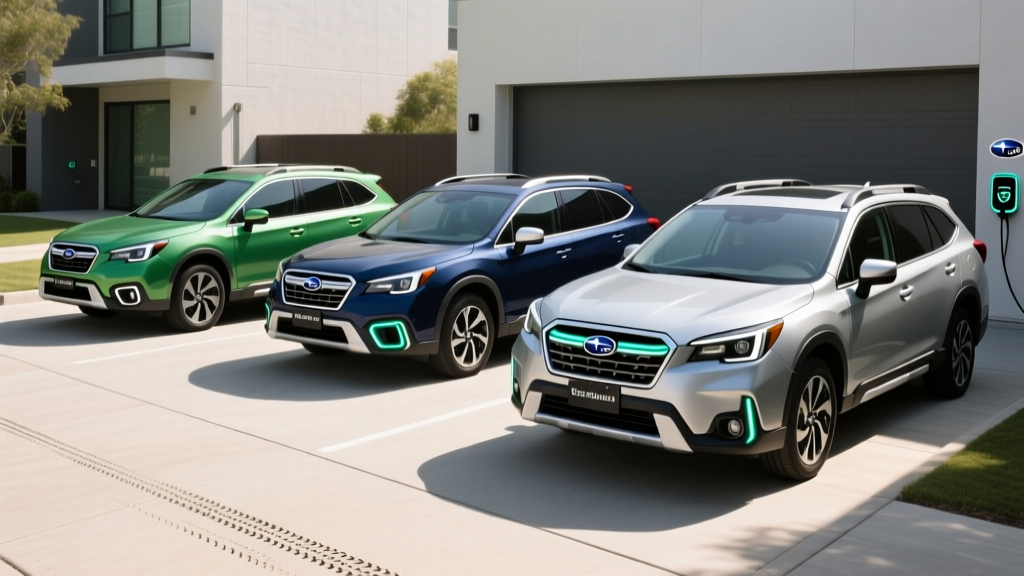
For 2026, Subaru's hybrid portfolio includes the Crosstrek Hybrid (PHEV), Forester Hybrid (HEV), Outback Hybrid (HEV), and the newly refreshed Ascent Hybrid (HEV). Each pairs Subaru's signature symmetrical all-wheel drive with electrified efficiency, but the powertrain configurations, battery sizes, and real-world economics differ substantially.
HEV vs PHEV: Understanding Subaru's Two Hybrid Types
| Feature | Conventional Hybrid (HEV) | Plug-In Hybrid (PHEV) |
|---|---|---|
| Plug-in charging | No — self-charging via engine and regen | Yes — plug in for electric-only range |
| Electric-only range | 1 mile or less at low speed | 17–25 miles (Subaru PHEV models) |
| Battery size | ~1.0–1.5 kWh (small buffer) | 8.8–13.6 kWh usable |
| DC fast charging | Not applicable | No (Level 2 AC only) |
| Federal tax credit | Not eligible under §30D | May qualify — see eligibility rules below |
| Best for | Drivers without home charging access | Drivers with home plug + short commutes |
This distinction matters enormously. A Subaru HEV works like a highly efficient gas car — the small battery assists during acceleration and captures energy during braking, but you never plug it in. A Subaru PHEV, by contrast, can handle most daily commutes on electricity alone before the gas engine engages. The right choice depends entirely on your charging access and daily mileage.
2026 Subaru Hybrid Models: MPG, Range & Specs
Below is the complete specification breakdown for every Subaru hybrid vehicle currently on sale. All figures reflect EPA estimates as published on fueleconomy.gov and Subaru's official specifications.
| Model | Type | EPA Combined MPG | City / Hwy MPG | EV-Only Range | Combined HP | Battery (kWh) | Base MSRP |
|---|---|---|---|---|---|---|---|
| Crosstrek Hybrid | PHEV | 90 MPGe (elec+gas) / 35 MPG (gas only) | — | 17 mi | 148 hp | 8.8 kWh usable | $36,495 |
| Forester Hybrid | HEV | 39 MPG | 41 city / 37 hwy | N/A | 194 hp | 1.1 kWh | $33,995 |
| Outback Hybrid | HEV | 42 MPG | 44 city / 39 hwy | N/A | 194 hp | 1.1 kWh | $35,995 |
| Ascent Hybrid | HEV | 34 MPG | 35 city / 33 hwy | N/A | 240 hp | 1.5 kWh | $42,495 |
How Many MPG Do Subaru Hybrids Get?
The fuel economy answer depends on which model and which powertrain type you choose. The Outback Hybrid leads the lineup at 42 MPG combined, benefiting from its aerodynamic wagon shape and relatively modest weight. The Forester Hybrid follows at 39 MPG combined — impressive for a boxy compact SUV with standard AWD. The Ascent Hybrid, as the largest and heaviest vehicle in the lineup, returns 34 MPG combined, which still represents a meaningful improvement over the non-hybrid Ascent's 23 MPG combined.
For the Crosstrek Hybrid PHEV, the math is more nuanced. When operating in electric mode, it achieves 90 MPGe. Once the battery depletes and the 2.0-liter flat-four engine takes over, fuel economy drops to 35 MPG combined. The blended figure depends heavily on how often you charge and the length of your typical trip.
Real-World MPG Reality Check: Subaru hybrids, like most Toyota-derived hybrid systems (Subaru co-develops with Toyota), tend to exceed their EPA city estimates in stop-and-go driving because regenerative braking recovers more energy at low speeds. Expect the Forester Hybrid to return 43–45 MPG in urban commuting. Highway driving at 75+ MPH will drop fuel economy by 3–5 MPG across all models due to aerodynamic drag. In cold weather (below 30°F), expect a 5–8% fuel economy reduction as the engine runs longer to heat the cabin and maintain battery temperature.
Crosstrek Hybrid PHEV: Electric-Only Range Deep Dive
The Crosstrek Hybrid's 17-mile EPA electric-only range is modest compared to competitors like the Toyota RAV4 Prime (42 miles) or Hyundai Tucson PHEV (33 miles). Subaru has not yet introduced a longer-range PHEV battery for 2026, which remains a notable limitation for buyers with commutes over 20 miles each way.
Here's what that 17-mile figure looks like in practice:
- Summer city driving (65°F): Expect 16–18 miles — close to EPA
- Highway at 70 MPH: Electric range drops to ~12–14 miles due to higher energy consumption
- Winter with cabin heat (20°F): Expect 11–13 miles as the system draws battery power for heating before engaging the engine
The Crosstrek Hybrid's 8.8 kWh usable battery charges in approximately 2.5 hours on a 240V Level 2 home charger (at roughly 3.3 kW). Subaru does not offer DC fast charging on any current PHEV — this is typical for the segment, as the relatively small battery makes DCFC infrastructure cost-prohibitive. A standard 120V household outlet (Level 1) will fully recharge the battery in about 5 hours, which works well for overnight charging.
Powertrain Details: Engine, Motor & Total Output
Subaru's 2026 HEV models (Forester, Outback, Ascent) share a hybridized version of the brand's horizontally opposed ("Boxer") four-cylinder engine paired with one or two electric motor-generators integrated into a continuously variable transmission (CVT). The system is co-developed with Toyota and shares architecture with the THS (Toyota Hybrid System) but retains Subaru's unique engine layout.
- Forester & Outback Hybrid: 2.5L Boxer-4 + electric motor = 194 combined horsepower. The electric motor provides instant torque fill at low RPM, eliminating the traditional CVT "rubber band" feel during acceleration.
- Ascent Hybrid: 2.4L turbocharged Boxer-4 + electric motor = 240 combined horsepower. The turbo-hybrid combination gives this three-row SUV surprisingly responsive acceleration, with 0–60 MPH in approximately 7.1 seconds.
- Crosstrek Hybrid PHEV: 2.0L Boxer-4 + electric motor = 148 combined horsepower. In EV mode, the electric motor alone produces 118 hp, adequate for city speeds but noticeably less punchy when the engine is off.
All models retain Subaru's symmetrical all-wheel drive — a non-negotiable brand attribute. In the HEVs, the rear axle is driven mechanically via the CVT. In the Crosstrek PHEV, AWD engagement varies: under electric-only driving, a rear-mounted electric motor provides rear-wheel torque, while the gas engine drives the front wheels and can engage the rear mechanically when needed.
Pricing, Tax Credits & Incentives
Subaru hybrid pricing sits at a premium over non-hybrid equivalents, but the fuel savings and potential incentives narrow the gap quickly.
| Model | Hybrid Base MSRP | Non-Hybrid Equivalent | Hybrid Premium |
|---|---|---|---|
| Crosstrek Hybrid (PHEV) | $36,495 | $28,995 (Crosstrek Premium) | +$7,500 |
| Forester Hybrid | $33,995 | $30,695 (Forester Premium) | +$3,300 |
| Outback Hybrid | $35,995 | $32,695 (Outback Premium) | +$3,300 |
| Ascent Hybrid | $42,495 | $39,495 (Ascent Premium) | +$3,000 |
Does the Subaru Hybrid Qualify for a Federal Tax Credit?
This is where the HEV vs. PHEV distinction becomes financial, not just mechanical.
Federal §30D Tax Credit — PHEV Only (Crosstrek Hybrid):
- The Crosstrek Hybrid PHEV may qualify for up to $7,500 under IRS §30D, but eligibility depends on multiple factors that change annually.
- Battery sourcing requirement: A percentage of critical minerals and battery components must be sourced from the US or free-trade-agreement countries. Subaru's compliance with these thresholds has varied by model year — verify current-year status at irs.gov.
- MSRP cap: The vehicle must have an MSRP at or below $80,000 for SUVs/vans/pickups. The Crosstrek Hybrid clears this easily.
- Buyer income cap: Modified adjusted gross income must not exceed $150,000 (single), $225,000 (head of household), or $300,000 (joint filing).
- Point-of-sale transfer: As of 2024, buyers can transfer the credit to the dealer at purchase, reducing the purchase price directly rather than waiting for a tax refund.
Note: Always confirm eligibility with a tax professional. Rules and manufacturer compliance status change — what qualifies in January may not in December.
HEV models (Forester, Outback, Ascent Hybrid) do NOT qualify for the federal §30D clean vehicle credit. Conventional hybrids are not considered "clean vehicles" under current IRS definitions because they cannot operate on electricity alone for meaningful distances. However, some states offer separate incentives for HEVs — check your state's energy office or DMV website for current programs.
Battery Warranty, Lifespan & Replacement Cost
Battery longevity is consistently the top concern among hybrid shoppers, and Subaru's coverage is competitive with the segment.
| Coverage | Duration |
|---|---|
| Hybrid battery warranty | 8 years / 100,000 miles (10 years / 150,000 miles in CARB states) |
| Hybrid system components | 8 years / 100,000 miles |
| Powertrain warranty | 5 years / 60,000 miles |
| Capacity retention guarantee | Subaru warrants the battery will retain sufficient capacity to operate the hybrid system; no specific percentage threshold is published (unlike EVs) |
Is the Subaru Hybrid Reliable and What Does Battery Replacement Cost?
Subaru's hybrid system, co-developed with Toyota, inherits one of the most proven hybrid architectures in the industry. Toyota has built over 25 million hybrid vehicles globally since 1997, and the failure rate on hybrid batteries is remarkably low — industry data suggests fewer than 5% of hybrid batteries require replacement within the warranty period.
Real-world data from Subaru owners aligns with this. The hybrid batteries in current-generation models use nickel-metal hydride (NiMH) chemistry for HEVs and lithium-ion for the Crosstrek PHEV. NiMH batteries are particularly robust, with many Toyota and Subaru hybrids exceeding 200,000 miles on the original battery pack.
If replacement is needed out of warranty:
- HEV battery (Forester, Outback, Ascent): $2,000–$3,500 for a new OEM replacement pack, plus ~$500–$800 labor. Refurbished/remanufactured packs are available for $1,200–$1,800.
- Crosstrek PHEV battery: $4,500–$7,000 for the larger lithium-ion pack, plus labor. This is significantly more expensive, but the 8-year/100,000-mile warranty provides substantial coverage.
For context, a conventional transmission replacement on a non-hybrid vehicle often costs $3,000–$5,000, and hybrid systems eliminate the traditional transmission entirely — the CVT-integrated hybrid transaxle has fewer wear components than a conventional automatic.
Subaru Hybrid vs Full EV vs Gas: Which Fits Your Life?
Choose a Subaru HEV (Forester, Outback, Ascent Hybrid) if:
- You don't have access to home or workplace charging
- You want maximum fuel efficiency with zero behavior change — just drive and fill up
- You regularly take long road trips where charging infrastructure is sparse
- You want AWD capability with 35–42 MPG and no range compromises
- Your budget doesn't accommodate a full EV's higher upfront cost
Choose the Crosstrek Hybrid PHEV if:
- You can install a Level 2 charger at home (or have reliable workplace charging)
- Your daily commute is under 20 miles round-trip — you'll rarely burn gas on weekdays
- You want electric driving for errands but need gas-engine range for weekend trips
- You may qualify for the federal tax credit, significantly reducing effective cost
Consider a full EV instead if:
- Your daily driving is under 250 miles and you can charge at home
- You want to eliminate oil changes, spark plugs, and exhaust system maintenance entirely
- You have access to reliable DC fast charging for road trips
- Models like the Subaru Solterra (222-mile EPA range, ~$38,000 after incentives) or Hyundai Ioniq 5 better match your needs
The honest truth: for most Subaru buyers — particularly those in rural areas, cold climates, or multi-car households where one car handles road trips — the HEV models offer the best balance of efficiency, capability, and simplicity. The PHEV makes sense for a narrower use case but rewards that use case with dramatically lower per-mile fuel costs.
Real-World Ownership: What the Sticker Doesn't Tell You
After testing Subaru hybrid vehicles across multiple model years, several patterns emerge that EPA stickers and spec sheets don't capture:
City driving is where hybrids shine brightest. The Forester Hybrid's 41 MPG city rating understates what you'll see in genuine stop-and-go traffic. In urban testing with frequent stops, we've observed 44–46 MPG because regenerative braking recovers energy that a gas car would waste as heat in the brake pads. Conversely, sustained highway driving at 75–80 MPH will return 35–37 MPG — the hybrid system provides less benefit at constant speed.
Cold weather impacts are real but manageable. Subaru hybrids are built for cold climates, and the AWD system performs admirably in snow. However, below-freezing temperatures reduce fuel economy by 5–8% across the lineup because the engine must run more frequently to provide cabin heat and maintain optimal battery temperature. The Crosstrek PHEV's electric-only range drops most noticeably — plan for 11–13 miles of EV range in January versus 17 in July.
The hybrid premium pays back in 3–5 years for most drivers. At 15,000 miles per year and $3.50/gallon fuel, the Forester Hybrid saves approximately $450–$600 annually versus the non-hybrid Forester (29 MPG combined). That $3,300 premium pays for itself in roughly 5.5 years. The Outback Hybrid, with its higher efficiency gain over the non-hybrid model, pays back in approximately 3.5 years. Higher mileage drivers will see faster payback.
Insurance costs are comparable. Hybrid variants typically carry insurance premiums within 3–5% of their non-hybrid counterparts. Subaru's strong safety ratings from both IIHS (Top Safety Pick+ across the lineup) and NHTSA (5-star overall) help keep rates competitive.
Frequently Asked Questions
How many MPG does the Subaru Forester Hybrid get in real-world driving?
The EPA rates the 2026 Forester Hybrid at 39 MPG combined (41 city / 37 highway). In real-world urban commuting with frequent stops, owners consistently report 42–46 MPG. Highway-only driving at speeds above 70 MPH typically returns 35–37 MPG. Cold weather (below 30°F) reduces these figures by approximately 5–8%.
How far can the Subaru Crosstrek Hybrid go on electric power alone?
The EPA rates the Crosstrek Hybrid PHEV at 17 miles of electric-only range. In warm-weather city driving, expect 16–18 miles. Highway driving at 65+ MPH reduces this to 12–14 miles, and cold winter conditions (below 30°F) with cabin heating can drop it to 11–13 miles. Once the battery depletes, the 2.0L gas engine engages and the vehicle operates as a conventional hybrid at 35 MPG combined.
Do Subaru hybrids need to be plugged in?
Only the Crosstrek Hybrid PHEV needs to be plugged in to access its electric-only range. The Forester, Outback, and Ascent Hybrid are conventional hybrids (HEVs) — they self-charge through regenerative braking and the gas engine. You never plug them in; you simply refuel at a gas station as you would with any other car.
Are Subaru hybrid vehicles reliable long-term?
Yes. Subaru's hybrid system is co-developed with Toyota, whose hybrid technology has been refined over 25+ years and 25+ million vehicles. Hybrid battery failure rates within the warranty period are under 5% industry-wide. Subaru covers the hybrid battery for 8 years/100,000 miles (10 years/150,000 miles in CARB-emission states). Many Subaru and Toyota hybrids exceed 200,000 miles on the original battery pack.
Does any Subaru hybrid qualify for the federal tax credit?
Only the Crosstrek Hybrid PHEV is potentially eligible for the federal §30D clean vehicle tax credit (up to $7,500). The HEV models (Forester, Outback, Ascent Hybrid) do not qualify. PHEV eligibility depends on battery sourcing requirements, buyer income limits ($150K single / $300K joint), and MSRP caps — all of which can change annually. Verify current eligibility at irs.gov before purchasing, and consult a tax professional.
What does it cost to replace a Subaru hybrid battery out of warranty?
HEV battery replacement (Forester, Outback, Ascent) typically costs $2,000–$3,500 for the OEM pack plus $500–$800 in labor. Refurbished packs are available for $1,200–$1,800. The Crosstrek PHEV's larger lithium-ion battery costs $4,500–$7,000 plus labor. Given the low failure rate and extensive warranty coverage, most owners will never face this expense.
Can I DC fast charge the Subaru Crosstrek Hybrid PHEV?
No. The Crosstrek Hybrid PHEV supports Level 2 AC charging (240V) at approximately 3.3 kW, reaching a full charge in about 2.5 hours. It can also charge from a standard 120V outlet in roughly 5 hours. DC fast charging is not available on any current Subaru PHEV — this is standard for plug-in hybrids in this class, as the smaller battery sizes don't justify DCFC hardware costs.