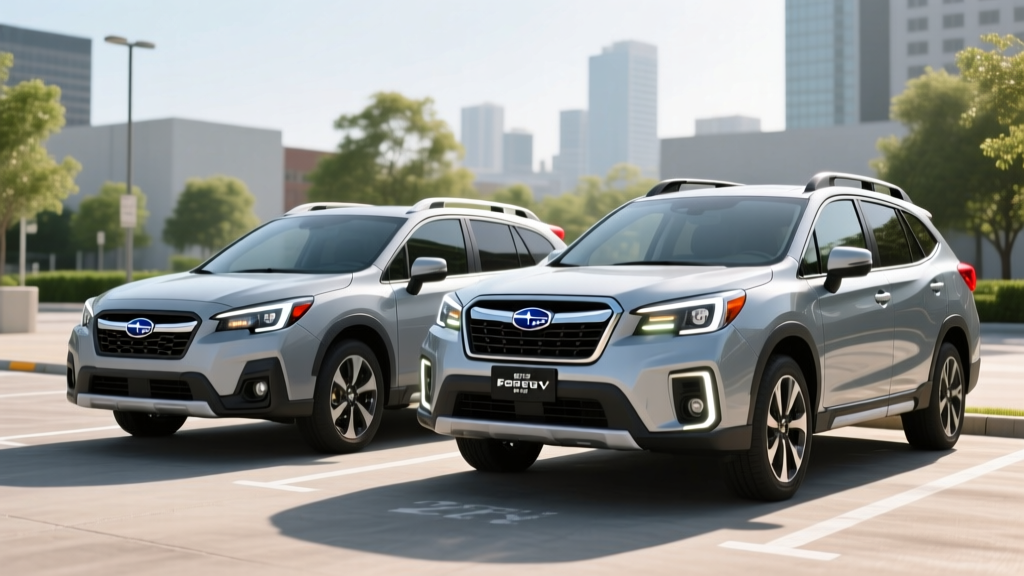
Subaru's approach to electrification has always been cautious, prioritizing all-weather capability and practicality over headline-grabbing range figures. For the 2025 model year, the lineup includes two distinct hybrid strategies: the Crosstrek Hybrid (a plug-in hybrid) and the Forester Hybrid (a conventional hybrid). Understanding which one fits your driving pattern — and whether either qualifies for federal tax credits — is essential before you visit the dealer.
This guide breaks down every 2025 Subaru hybrid model with exact EPA figures, real-world expectations, powertrain specs, battery warranty details, and current §30D tax credit eligibility under IRS rules.
Conventional Hybrid (HEV) vs Plug-In Hybrid (PHEV): What's the Difference?
Before diving into specific models, it's critical to understand the two hybrid architectures Subaru uses in 2025:
| Feature | Conventional Hybrid (HEV) | Plug-In Hybrid (PHEV) |
|---|---|---|
| Plugs in to charge? | No — charges via regenerative braking and engine | Yes — plugs into Level 1 or Level 2 charger |
| Electric-only range | Less than 1 mile at low speed | Typically 17–30+ miles on battery alone |
| Battery size | ~1–2 kWh | ~10–20 kWh |
| Federal tax credit | Not eligible | May qualify (up to $7,500, subject to rules) |
| Best for | Drivers who want better MPG without lifestyle change | Drivers with home charging and short daily commutes |
Neither type requires you to install a DC fast charger at home. The PHEV charges on a standard 120V outlet (Level 1) or a 240V Level 2 home charger.
2025 Subaru Crosstrek Hybrid (PHEV): Electric Range, MPG & Specs
The Crosstrek Hybrid returns as a plug-in hybrid for 2025, pairing Subaru's familiar 2.0-liter flat-four engine with a pair of electric motors and a larger lithium-ion battery pack. It's the most electrified vehicle Subaru currently sells in the US market.
| Specification | 2025 Subaru Crosstrek Hybrid |
|---|---|
| Powertrain | 2.0L Boxer-4 + 2 electric motors |
| Combined Horsepower | 220 hp |
| Battery Capacity | 13.5 kWh (lithium-ion) |
| Electric-Only Range (EPA) | 17 miles |
| Total Combined Range | ~430 miles |
| EPA MPG (gas-only, combined) | 35 MPG combined |
| MPGe (electric + gas) | 90 MPGe |
| Level 1 Charging (120V) | ~5 hours (0–100%) |
| Level 2 Charging (240V) | ~2.5 hours (0–100%) |
| DC Fast Charging | Not supported |
| Drivetrain | Symmetrical AWD (standard) |
| 0–60 mph | 6.8 seconds (est.) |
| Starting MSRP | $36,995 |
Real-World Range & MPG Expectations
EPA electric range: 17 miles. In real-world driving, expect 14–16 miles of electric-only range in moderate temperatures. In cold weather (below 30°F), cabin heating and battery efficiency losses can reduce this to 11–13 miles. The gas-engine MPG of 35 combined holds up well in mixed driving; city drivers may see 37–38 MPG thanks to regenerative braking, while sustained highway driving at 75+ mph drops to roughly 32–33 MPG.
The Crosstrek Hybrid's 17-mile electric range is modest compared to rivals like the Toyota RAV4 Prime (42 miles) or the Hyundai Tucson PHEV (33 miles). However, for commutes under 15 miles round-trip with nightly home charging, it can function as a de facto EV on weekdays while offering full AWD capability for weekend trips.
2025 Subaru Forester Hybrid (HEV): MPG, Powertrain & Pricing
The redesigned Forester gains a conventional hybrid variant for 2025, using a series-parallel hybrid system similar to Toyota's architecture (Subaru's e-Boxer system has been co-developed with Toyota). This is a self-charging hybrid — you never plug it in.
| Specification | 2025 Subaru Forester Hybrid |
|---|---|
| Powertrain | 2.5L Boxer-4 + electric motor |
| Combined Horsepower | 194 hp |
| Battery Capacity | ~1.1 kWh (nickel-metal hydride) |
| Electric-Only Driving | Very limited (low-speed assist only) |
| EPA MPG — City | 35 MPG |
| EPA MPG — Highway | 33 MPG |
| EPA MPG — Combined | 34 MPG |
| Drivetrain | Symmetrical AWD (standard) |
| 0–60 mph | 8.5 seconds (est.) |
| Starting MSRP | $33,995 |
| Federal Tax Credit | Not eligible (conventional HEV) |
Real-World MPG: How Does the Forester Hybrid Actually Perform?
Conventional hybrids like the Forester Hybrid tend to exceed their EPA city rating in stop-and-go traffic because regenerative braking recaptures energy that a gas-only car wastes as heat. In real-world testing, expect:
- City driving: 36–39 MPG (often exceeds EPA)
- Highway driving (65–70 mph): 31–33 MPG
- Mixed/combined: 33–36 MPG
- Cold weather penalty: 2–4 MPG reduction in winter months due to engine running more for cabin heat
Compared to the gas-only Forester (29 MPG combined), the hybrid delivers roughly a 17% fuel economy improvement — meaningful over 15,000 miles per year.
Side-by-Side: Crosstrek Hybrid vs Forester Hybrid
| Attribute | Crosstrek Hybrid (PHEV) | Forester Hybrid (HEV) |
|---|---|---|
| Type | Plug-In Hybrid | Conventional Hybrid |
| Combined HP | 220 hp | 194 hp |
| EPA Combined MPG/MPGe | 90 MPGe / 35 MPG (gas) | 34 MPG |
| Electric-Only Range | 17 miles | N/A |
| Total Range | ~430 miles | ~490 miles |
| Needs Plugging In? | Yes (for EV range benefit) | No |
| Cargo Volume (rear seats up) | 19.9 cu ft | 28.9 cu ft |
| Ground Clearance | 8.7 in | 8.7 in |
| Towing Capacity | 1,000 lbs | 1,500 lbs |
| Starting MSRP | $36,995 | $33,995 |
| Federal Tax Credit | Potentially eligible* | Not eligible |
*Tax credit eligibility depends on battery sourcing, buyer income, and MSRP caps. See the tax credit section below.
Tax Credit Eligibility: Do 2025 Subaru Hybrids Qualify?
Under current IRS §30D Clean Vehicle Credit rules, only plug-in hybrids and full EVs with sufficient battery capacity can qualify. The Forester Hybrid (HEV) is not eligible for any federal purchase credit.
The Crosstrek Hybrid (PHEV) may be eligible, but qualification depends on several factors that change frequently:
- MSRP cap: The vehicle must be under $80,000 (SUVs/vans/pickups) — the Crosstrek Hybrid at ~$37K clears this easily
- Buyer income cap: Modified AGI must not exceed $150K (single), $225K (head of household), or $300K (joint)
- Battery component sourcing: A percentage of battery components must be manufactured or assembled in North America — this threshold increases annually and may disqualify some model years
- Critical minerals: A percentage of critical minerals must be sourced from the US or FTA partners — this also tightens yearly
- Point-of-sale transfer: As of 2024, eligible buyers can transfer the credit to the dealer at purchase, reducing the out-of-pocket price immediately rather than waiting for tax filing
⚠️ Important: Battery sourcing requirements under the Inflation Reduction Act have become increasingly strict. Before purchasing, verify current eligibility on fueleconomy.gov or consult a tax professional. Credit rules are subject to change and may vary by production batch.
Battery Warranty, Lifespan & Replacement Cost
Hybrid battery longevity is the single most common concern among first-time hybrid buyers. Here's what Subaru covers:
| Coverage Item | Crosstrek Hybrid (PHEV) | Forester Hybrid (HEV) |
|---|---|---|
| Hybrid Battery Warranty | 8 years / 100,000 miles | 8 years / 100,000 miles |
| Hybrid System Components | 8 years / 100,000 miles | 8 years / 100,000 miles |
| Powertrain Warranty | 5 years / 60,000 miles | 5 years / 60,000 miles |
| Battery Chemistry | Lithium-ion | Nickel-metal hydride (NiMH) |
| Estimated Replacement Cost | $4,000–$6,500 | $2,500–$4,000 |
How Long Will the Battery Actually Last?
Subaru's hybrid batteries are engineered to last the life of the vehicle under normal use. Real-world data from Toyota's hybrid systems (which share engineering DNA with Subaru's e-Boxer) shows that NiMH and lithium-ion hybrid batteries routinely exceed 150,000–200,000 miles before significant degradation. The PHEV's larger lithium-ion pack may experience 10–15% capacity loss over 10 years, reducing electric-only range from 17 miles to roughly 14–15 miles — still functional.
The 8-year/100,000-mile warranty covers battery capacity below a specified threshold (typically 60–70% of original capacity). If degradation exceeds this within the warranty period, Subaru replaces the battery at no cost. Outside warranty, expect to pay $4,000–$6,500 for a PHEV battery replacement or $2,500–$4,000 for the HEV pack at a dealership.
Hybrid vs PHEV vs Full EV: Which Subaru Buyer Are You?
Choose the Forester Hybrid (HEV) if:
- You don't have access to home or workplace charging
- You want a simple ownership experience — no plugs, no apps, no charging planning
- Your daily driving exceeds 40 miles, making PHEV electric range less impactful
- You want maximum cargo space (28.9 cu ft) and a lower starting price
- You drive in extreme cold regularly (hybrids handle cold better than EVs)
Choose the Crosstrek Hybrid (PHEV) if:
- You have reliable Level 1 or Level 2 home charging
- Your daily commute is under 20 miles round-trip (you'll rarely use gas)
- You want the option of electric-only driving for short trips while retaining gas range for road trips
- You want the most powerful Subaru hybrid (220 hp)
- You may qualify for a federal tax credit that narrows the price gap
Consider a full EV (like the Solterra) instead if:
- You have home Level 2 charging and your daily driving is under 200 miles
- You want zero tailpipe emissions and minimal maintenance (no oil changes, no gas engine)
- You want the full $7,500 federal tax credit (subject to eligibility)
- You're willing to plan around charging on road trips
Reliability & Safety Ratings
Subaru's hybrid systems have proven reliable in long-term ownership. The e-Boxer powertrain uses a planetary gearset (similar to Toyota's Hybrid Synergy Drive) with no traditional transmission belts or clutches to wear out. IIHS has historically rated the Crosstrek and Forester as Top Safety Picks, though 2025 model-year crash test results should be confirmed on IIHS.org as testing completes.
Subaru's EyeSight driver-assistance suite (adaptive cruise control, lane-keeping, pre-collision braking) is standard on both hybrid models. Note: EyeSight is a SAE Level 2 driver-assistance system — it does not drive the car autonomously. The driver must remain attentive with hands on the wheel at all times.
Pros & Cons at a Glance
Crosstrek Hybrid (PHEV) — Pros
- Electric-only commuting eliminates gas on short trips
- 220 hp makes it the quickest Crosstrek variant
- Standard AWD with 8.7" ground clearance
- Potential federal tax credit eligibility
- ~430-mile total range eliminates range anxiety
Crosstrek Hybrid (PHEV) — Cons
- 17-mile EV range trails RAV4 Prime and Tucson PHEV
- No DC fast charging capability
- Higher MSRP than gas Crosstrek ($37K vs ~$28K)
- Reduced cargo space vs Forester
- 1,000-lb towing limit
Forester Hybrid (HEV) — Pros
- 34 MPG combined — 17% better than gas Forester
- No plug-in required; zero lifestyle adjustment
- 28.9 cu ft cargo — largest in Subaru hybrid lineup
- Lower starting price ($33,995)
- Proven, simple hybrid architecture
Forester Hybrid (HEV) — Cons
- No federal tax credit eligibility
- No electric-only driving capability
- 194 hp is adequate, not quick
- Highway MPG advantage over gas model is modest
- Limited availability at some dealers
Frequently Asked Questions
How many MPG does the 2025 Subaru Forester Hybrid get?
The EPA rates the Forester Hybrid at 35 city / 33 highway / 34 combined MPG. In real-world city driving with frequent stops, many owners report 36–39 MPG thanks to regenerative braking. Highway MPG at sustained speeds above 70 mph typically falls to 31–33 MPG.
How far can the Crosstrek Hybrid go on electric only?
The EPA rates the Crosstrek Hybrid at 17 miles of electric-only range. Real-world results range from 14–16 miles in moderate weather to 11–13 miles in cold conditions. After the battery depletes, the gas engine engages and the car operates as a conventional hybrid at 35 MPG combined.
Does the 2025 Subaru Forester Hybrid qualify for a tax credit?
No. Conventional hybrids (HEVs) do not qualify for the federal §30D Clean Vehicle Credit. Only plug-in hybrids and full battery-electric vehicles with sufficient battery capacity are eligible. Some states may offer separate hybrid incentives — check your state's energy office or IRS.gov for details.
Is the Subaru hybrid battery reliable and what does replacement cost?
Subaru hybrid batteries are covered by an 8-year/100,000-mile warranty. Based on data from similar Toyota-derived hybrid systems, these batteries commonly last 150,000+ miles with minimal degradation. Out-of-warranty replacement costs range from $2,500–$4,000 for the Forester HEV and $4,000–$6,500 for the Crosstrek PHEV.
Do I need to plug in the Forester Hybrid?
No. The Forester Hybrid is a conventional (self-charging) hybrid. It charges its small battery through regenerative braking and the gas engine. You fuel it like any other car and never need a charger.
Which 2025 Subaru hybrid is best for snow and winter driving?
Both models include Symmetrical AWD and 8.7 inches of ground clearance, making them excellent in snow. The Forester Hybrid offers more cargo room for winter gear and doesn't lose electric range in cold weather (since it has no meaningful EV mode). The Crosstrek Hybrid's EV range drops 20–30% in freezing temperatures, but its AWD and stability control remain fully effective.
Should I buy a Subaru hybrid or wait for a full EV?
If you lack reliable home charging, frequently drive over 250 miles in a day, or regularly face sub-zero temperatures, a Subaru hybrid is the more practical choice today. If you have Level 2 home charging and mostly drive under 200 miles daily, Subaru's Solterra EV (or a competitor like the Hyundai Ioniq 5) offers lower operating costs and full tax credit eligibility. Hybrids remain the best bridge option for drivers not ready to commit to charging infrastructure.
Sources: EPA fuel economy data via fueleconomy.gov, Subaru of America official specifications, IRS §30D Clean Vehicle Credit guidelines. All pricing and specifications reflect 2025 model year as published; verify with your local dealer for current availability and incentive status.