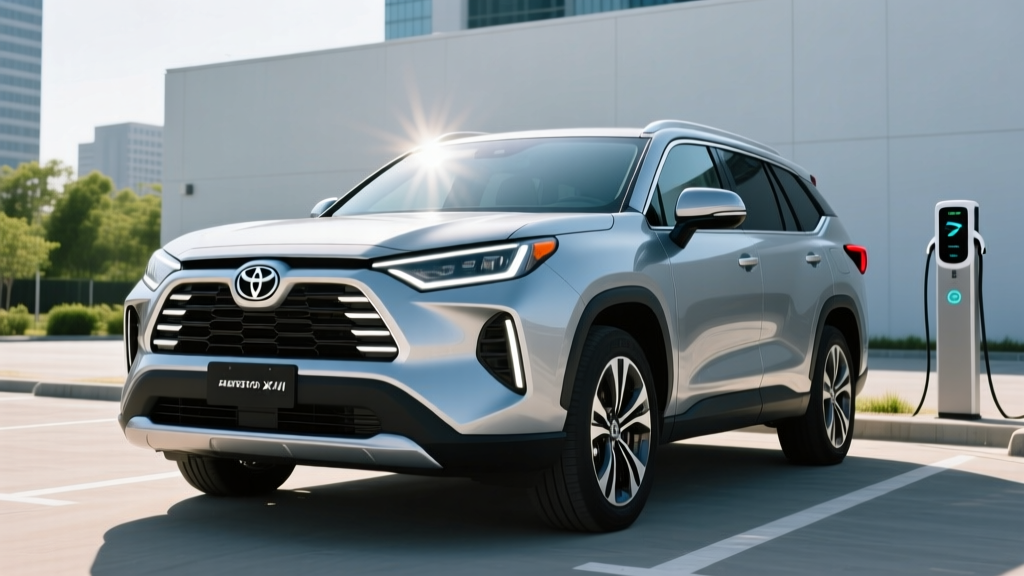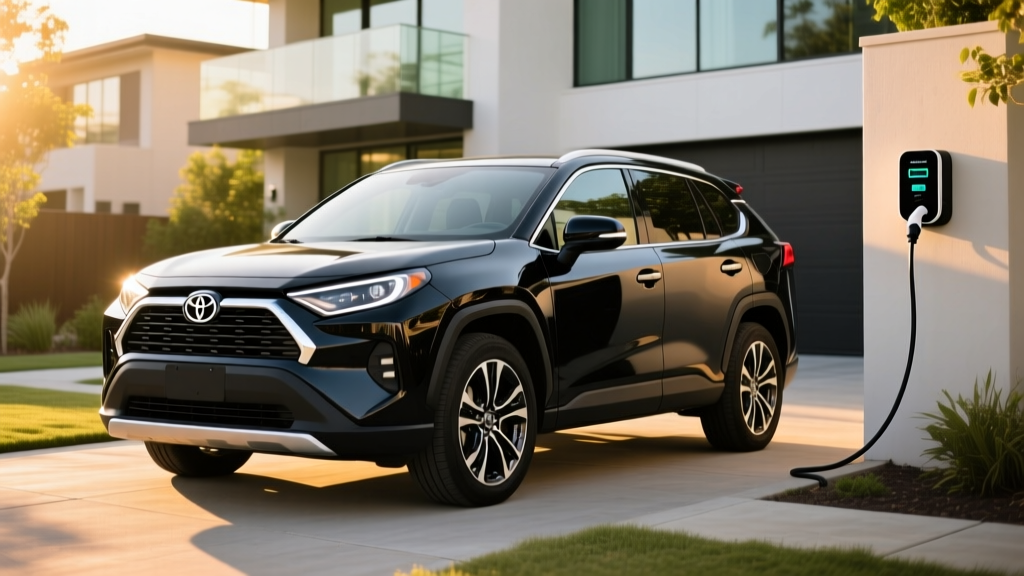
The 2026 Toyota RAV4 Hybrid XLE Premium occupies a specific niche: buyers who want the elevated interior and tech features of a near-luxury compact SUV without paying luxury prices, and who want hybrid efficiency without plugging in. It's the sweet-spot trim in Toyota's best-selling hybrid lineup, adding SofTex upholstery, a power moonroof, and an upgraded infotainment system over the base XLE — all while returning an EPA-estimated 39 MPG combined.
But does the real-world fuel economy match the sticker? And with Toyota's RAV4 Prime plug-in hybrid sitting just a few thousand dollars higher, where exactly does the XLE Premium fit for a buyer weighing electrification options? This guide breaks down every spec that matters.
RAV4 Hybrid XLE Premium: Key Specifications at a Glance
| Specification | Value |
|---|---|
| Powertrain | 2.5L 4-cyl + 2 electric motors (AWD) |
| Combined Horsepower | 219 HP |
| EPA MPG (City / Highway / Combined) | 41 / 38 / 39 MPG |
| Drivetrain | Electronic On-Demand AWD (eAWD) |
| Hybrid Battery | ~1.6 kWh Lithium-Ion (self-charging HEV) |
| 0-60 MPH | ~7.4 seconds |
| Cargo Volume (behind 2nd row) | 37.5 cu ft |
| Base MSRP (XLE Premium AWD) | ~$36,545 (incl. destination) |
| Federal Tax Credit (§30D) | Not eligible (conventional HEV) |
| Hybrid Battery Warranty | 10 years / 150,000 miles |
Fuel Economy: EPA Ratings vs. Real-World MPG
The EPA rates the 2026 RAV4 Hybrid AWD at 41 MPG city, 38 MPG highway, and 39 MPG combined. These figures apply across all AWD trims including the XLE Premium, since they share the same powertrain and weight class. According to fueleconomy.gov, the RAV4 Hybrid AWD's combined rating has held steady at 39-40 MPG across recent model years.
Over a mixed-driving 15,000-mile year, most owners land between 37-41 MPG — close to or slightly above the EPA combined estimate. That translates to roughly 385-410 gallons annually, or about $1,350-$1,450 in fuel at $3.50/gallon regular unleaded.
HEV vs. PHEV vs. EV: Which RAV4 Electrification Fits You?
Toyota offers the RAV4 in three electrification flavors for 2026. Understanding the difference is critical before you visit the dealer:
| Feature | RAV4 Hybrid (HEV) | RAV4 Prime (PHEV) | bZ4X (BEV) |
|---|---|---|---|
| Plug-in Required? | No — self-charging | Yes — 2.5 hrs L2 | Yes — DC fast + L2 |
| Electric-Only Range | ~1 mile (low-speed) | 42 miles EPA | 252 miles EPA |
| Combined MPG / MPGe | 39 MPG | 94 MPGe (elec) / 38 MPG (gas) | 114 MPGe |
| Total Range | ~580 miles | ~600 miles | ~252 miles |
| Horsepower | 219 HP | 302 HP | 214 HP (FWD) |
| Starting MSRP | ~$33,445 | ~$44,900 | ~$43,070 |
| §30D Federal Credit | None | Up to $7,500* | Up to $7,500* |
*§30D credit eligibility depends on buyer income caps (≤$150K single / $300K joint), MSRP caps ($80K SUVs), battery critical-mineral sourcing, and point-of-sale transfer. Verify current rules at IRS.gov before purchasing.
Choose the RAV4 Prime (PHEV) if: You can install a Level 2 home charger, your daily commute is under 42 miles round-trip, and you want near-EV daily driving with gas backup for road trips.
Choose a full EV if: You have reliable home charging, your daily driving stays under 200 miles, and you want zero tailpipe emissions with minimal maintenance.
Powertrain Deep Dive: 219 HP with eAWD
The RAV4 Hybrid pairs a 2.5-liter Dynamic Force 4-cylinder engine (176 HP, 163 lb-ft) with two electric motor-generators — one on the front axle integrated into the transaxle, and a second independent motor powering the rear axle. Combined system output is 219 HP. There is no mechanical driveshaft to the rear wheels; the eAWD system engages the rear motor on demand for traction and cornering stability.
The hybrid battery is a small ~1.6 kWh lithium-ion pack mounted under the rear seat. It charges exclusively through regenerative braking and engine-driven generation — you never plug it in. This is the defining distinction between a conventional hybrid (HEV) and a plug-in hybrid (PHEV). The RAV4 Hybrid's battery acts as a buffer, enabling short electric-only movement at low speeds (parking lots, stop-and-go traffic) but never sustained highway-speed electric driving.
The eCVT (electronically controlled continuously variable transmission) delivers seamless acceleration without fixed gear shifts. The 0-60 MPH time of approximately 7.4 seconds is adequate for merging and passing, though noticeably slower than the RAV4 Prime's 5.7-second sprint.
What the XLE Premium Trim Adds
The XLE Premium sits above the standard XLE in the 2026 RAV4 Hybrid lineup. Key upgrades include:
- SofTex synthetic leather-trimmed seats
- Power tilt/slide moonroof
- 10.5-inch Toyota Audio Multimedia touchscreen (wireless Apple CarPlay & Android Auto)
- Qi wireless smartphone charging pad
- Power-adjustable driver's seat (8-way)
- Leather-trimmed steering wheel and shift knob
- Blind Spot Monitor with Rear Cross-Traffic Alert
The XLE Premium carries an MSRP of approximately $36,545 including destination charges for the AWD configuration. That's roughly $2,500-$3,000 above the XLE and about $5,000 below the Limited trim. For most buyers, the XLE Premium captures the most-valued comfort features without the diminishing returns of the top trim.
Battery Longevity, Warranty, and Replacement Costs
Hybrid battery degradation is a top concern for first-time hybrid buyers, but the data is reassuring. Toyota's hybrid batteries are designed with a generous buffer — they never fully charge or fully discharge the pack, which dramatically extends cycle life. Real-world data from fleet operators and long-term owners shows most RAV4 Hybrid batteries retain 85-90%+ capacity well past 150,000 miles.
If a replacement is needed out of warranty, a new OEM hybrid battery for the RAV4 Hybrid typically costs between $2,500 and $4,000 installed at a dealership. Refurbished or aftermarket options run $1,500-$2,500. For context, this is far less than a full EV traction battery replacement ($8,000-$20,000+) because the hybrid pack is much smaller (~1.6 kWh vs. 60-80+ kWh in a BEV).
The 12-volt auxiliary battery (which powers electronics when the hybrid system is off) is a separate component and typically needs replacement every 4-6 years at a cost of $200-$350 — standard for any modern vehicle.
Tax Credits and Ownership Economics
The 2026 RAV4 Hybrid is a conventional hybrid (HEV) and does not qualify for the federal §30D Clean Vehicle Credit. That credit is reserved for plug-in vehicles (PHEVs and BEVs) meeting specific battery-sourcing, MSRP, and buyer-income requirements.
However, some states offer their own incentives for hybrid purchases. Check your state's energy or environmental agency for current programs. Additionally, the RAV4 Hybrid's lower fuel consumption delivers meaningful savings:
| Model | Combined MPG | Gallons/Year (15K mi) | Annual Fuel Cost* |
|---|---|---|---|
| RAV4 Hybrid AWD | 39 MPG | 385 | ~$1,348 |
| RAV4 Gas AWD (2.5L) | 30 MPG | 500 | ~$1,750 |
*Based on $3.50/gallon regular unleaded, 15,000 miles/year. Source: fueleconomy.gov estimates. Your costs will vary with local fuel prices and driving patterns.
That's roughly $400/year in fuel savings, or about $2,000 over five years. The RAV4 Hybrid typically carries a $1,500-$2,000 price premium over the equivalent gas-only trim, meaning the fuel savings pay back the hybrid premium in approximately 4-5 years at current gas prices.
Reliability and Safety
Toyota's hybrid system is among the most proven in the industry, with over 25 years of continuous refinement since the original Prius. The RAV4 Hybrid consistently earns top reliability ratings from Consumer Reports and J.D. Power. The hybrid components (battery, inverter, eCVT) have fewer moving parts than a conventional automatic transmission and experience less brake wear thanks to regenerative braking.
The 2026 RAV4 comes standard with Toyota Safety Sense 3.0, which includes:
- Pre-Collision System with Pedestrian Detection
- Lane Departure Alert with Steering Assist
- Full-Speed Range Dynamic Radar Cruise Control
- Lane Tracing Assist
- Road Sign Assist
- Proactive Driving Assist
For crash-test ratings, consult the latest results from NHTSA and IIHS, where the RAV4 has historically earned top marks including IIHS Top Safety Pick status.
Pros and Cons: RAV4 Hybrid XLE Premium
Pros
- 39 MPG combined — excellent for a compact AWD SUV
- No plug-in required; zero charging infrastructure needed
- 10-year / 150,000-mile hybrid battery warranty
- Standard eAWD for all-weather traction
- XLE Premium features at a mid-tier price (~$36,500)
- Strong resale value and proven reliability
- 37.5 cu ft cargo space matches gas RAV4
Cons
- No federal tax credit (HEV, not PHEV/BEV)
- Highway MPG drops to ~34-36 at 75+ MPH
- eCVT drone under hard acceleration
- 219 HP is adequate, not quick (7.4s 0-60)
- No DC fast charging capability
- Small ~1.6 kWh battery limits electric-only to low-speed creep
- Dealer markups still common on popular trims
Frequently Asked Questions
How many MPG does the 2026 RAV4 Hybrid XLE Premium get?
The EPA rates it at 41 city / 38 highway / 39 combined MPG. Real-world results typically range from 37-45 MPG depending on driving mix, with city-heavy driving yielding the best results and sustained highway speeds reducing efficiency.
Does the RAV4 Hybrid need to be plugged in?
No. The RAV4 Hybrid is a conventional hybrid (HEV). Its small battery charges exclusively through regenerative braking and the gasoline engine. You fuel it like any other car — just with fewer stops at the pump.
Does the RAV4 Hybrid XLE Premium qualify for any tax credit?
Not the federal §30D credit, which requires a plug-in vehicle (PHEV or BEV). Some states or local utilities may offer hybrid incentives — check your state energy office. If you want the $7,500 federal credit, you'd need to look at the RAV4 Prime (PHEV) or a full EV.
How long will the RAV4 Hybrid battery last?
Toyota warrants the hybrid battery for 10 years or 150,000 miles. Real-world data suggests most batteries last the life of the vehicle. If replacement is needed out of warranty, expect $2,500-$4,000 for a new OEM pack — far less than a full EV battery replacement.
Should I get the RAV4 Hybrid or the RAV4 Prime?
If you can charge at home and commute under 42 miles daily, the Prime (PHEV) offers 94 MPGe on electricity and 302 HP. But it starts ~$8,000 higher. The Hybrid (HEV) makes more financial sense if you can't charge at home, drive long highway routes frequently, or want the lower purchase price.
Is the XLE Premium worth it over the base XLE?
For roughly $2,500-$3,000 more, you gain SofTex seats, a moonroof, the larger 10.5-inch screen, wireless charging, and blind-spot monitoring. If you plan to keep the vehicle 5+ years, the comfort and tech upgrades hold value well at resale.