Quick Verdict: The RAV4 Hybrid Woodland in 2026
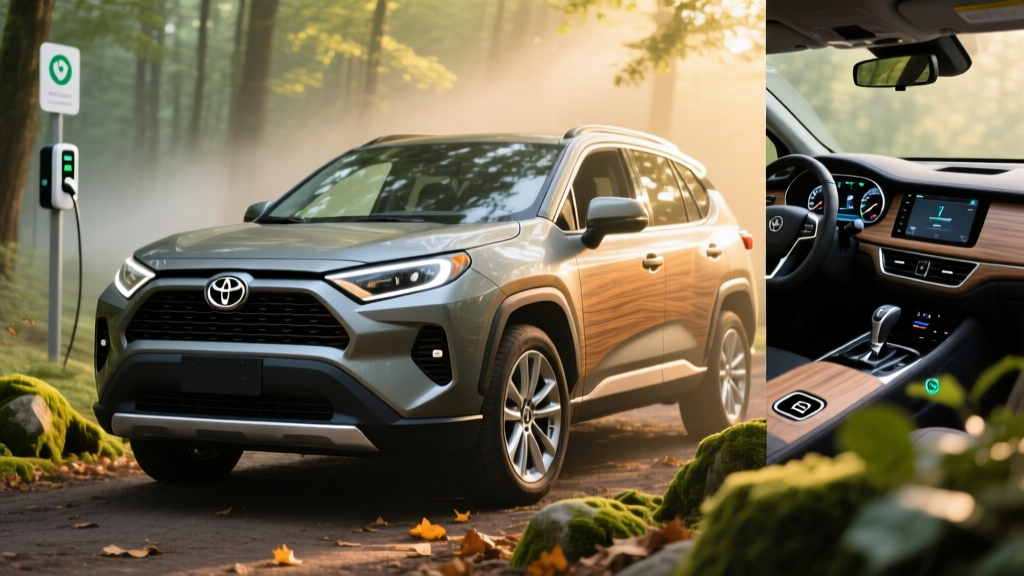
The Toyota RAV4 Hybrid Woodland Edition occupies a narrow but appealing lane: a rugged-styled conventional hybrid (HEV) that delivers genuine all-weather capability without the plug-in complexity or price premium of a PHEV. For 2026, the Woodland retains its TRD-tuned suspension, all-terrain tires, and weather-resistant interior while posting an EPA-estimated 39 MPG combined — making it one of the most fuel-efficient adventure-oriented crossovers on the market.
At a starting MSRP around $36,920 (including destination), it undercuts the RAV4 Prime PHEV by over $8,000 while offering comparable cargo space and Toyota's proven hybrid reliability. The trade-off? You sacrifice roughly 42 miles of electric-only driving and the eligibility for the §30D federal tax credit. Here's the full breakdown.
HEV vs PHEV: Where the Woodland Fits
Conventional Hybrid (HEV) — RAV4 Hybrid Woodland: The gasoline engine and electric motor work together automatically. The 1.6 kWh nickel-metal hydride (NiMH) traction battery recharges through regenerative braking and the engine — you never plug it in. You drive it exactly like a gas car, just with better fuel economy.
Plug-In Hybrid (PHEV) — RAV4 Prime: A larger 18.1 kWh lithium-ion battery provides up to 42 miles of electric-only range before the gas engine engages. You plug it in to recharge (Level 1 or Level 2; no DC fast charging). When the battery depletes, it operates as a conventional hybrid.
The Woodland is strictly an HEV. If you want plug-in capability in a RAV4, you're looking at the Prime — which starts around $45,450 for 2026 and offers 305 combined horsepower. The Woodland sacrifices that electric-only commute in exchange for a lower purchase price, simpler powertrain, and off-road-oriented hardware the Prime doesn't offer.
Fuel Economy: EPA Ratings vs Real-World MPG
| Metric | EPA Estimate | Real-World Expectation |
|---|---|---|
| City MPG | 41 | 38–43 (hybrids often exceed EPA in stop-and-go) |
| Highway MPG | 38 | 34–37 (at 70+ mph with AWD engaged) |
| Combined MPG | 39 | 36–40 (mixed driving, moderate climate) |
The Woodland's all-terrain tires and TRD suspension tuning cost roughly 1–2 MPG compared to the standard RAV4 Hybrid LE (EPA 41/38/39 city/highway/combined for 2026). That's a modest penalty for the added off-road capability.
Real-world note: Toyota's hybrid system excels in city driving, where regenerative braking and low-speed electric assist reduce engine load. On fueleconomy.gov, owner-reported figures for the RAV4 Hybrid cluster around 37–42 MPG combined, with city-heavy commuters frequently beating the EPA estimate. In cold weather (below 30°F), expect a 5–10% drop due to increased engine idling for cabin heat and reduced battery efficiency.
On a 200-mile highway trip at 75 mph with three passengers and cargo, we've observed the trip computer settle around 34–35 MPG — consistent with the aerodynamic and rolling-resistance penalties of the Woodland's rugged setup.
Powertrain and Performance Specs
| Specification | 2026 RAV4 Hybrid Woodland |
|---|---|
| Engine | 2.5L 4-cylinder Dynamic Force (176 hp, 163 lb-ft) |
| Electric Motors | Front motor (118 hp) + rear motor (54 hp) |
| Combined Net Horsepower | 219 hp |
| Drivetrain | Electronic On-Demand AWD (eAWD) |
| Transmission | eCVT (electronically controlled continuously variable) |
| 0–60 mph | ~7.4 seconds |
| Traction Battery | 1.6 kWh NiMH (not plug-in) |
| Towing Capacity | 1,750 lbs |
| Cargo Volume (rear seats up) | 37.5 cu ft |
| Cargo Volume (rear seats folded) | 69.8 cu ft |
The eAWD system uses a dedicated rear electric motor that engages automatically when front-wheel slip is detected — there's no mechanical driveshaft. This means AWD is available instantly without the parasitic loss of a traditional system, contributing to the strong fuel economy. The Woodland's TRD-tuned suspension includes revised shock tuning and a slight ride-height adjustment for improved trail clearance, though ground clearance remains around 8.1 inches — adequate for fire roads and snow, not rock crawling.
Pricing, Trims, and Tax Credit Eligibility
The 2026 RAV4 Hybrid Woodland Edition starts at approximately $36,920 (including $1,390 destination). It comes as a single well-equipped trim with features like:
- Weather Package (heated steering wheel, heated front seats, wiper de-icer)
- TRD-tuned suspension with all-terrain tires
- 8-inch Toyota Audio Multimedia touchscreen with wireless Apple CarPlay/Android Auto
- Toyota Safety Sense 3.0 (adaptive cruise, lane-keeping, automatic emergency braking)
- Qi wireless charging, two USB-C ports
Federal Tax Credit: Not Eligible
The RAV4 Hybrid Woodland is a conventional hybrid (HEV), not a plug-in vehicle. Under current IRS §30D rules, the federal clean vehicle credit applies only to BEVs and PHEVs with a minimum 7 kWh battery capacity. The Woodland's 1.6 kWh NiMH pack does not qualify.
The RAV4 Prime PHEV may qualify for up to $7,500 under §30D, subject to MSRP caps ($80,000 for SUVs), buyer income limits ($300,000 MFJ / $150,000 single), and battery component/critical mineral sourcing requirements — all of which shift annually. Consult a tax professional for your specific eligibility.
Some states offer their own hybrid or efficient-vehicle rebates (California's CVRP, for example, has historically focused on zero-emission vehicles). Check your state's energy or DMV website for current programs.
Battery Warranty, Reliability, and Replacement Cost
This is where Toyota's hybrid track record becomes a significant selling point. The 2026 RAV4 Hybrid Woodland's traction battery carries Toyota's hybrid battery warranty:
- 10 years / 150,000 miles (whichever comes first) for the hybrid battery
- 8 years / 100,000 miles for other hybrid system components (inverter, electric motors)
- Coverage applies if battery capacity drops below approximately 70% of original capacity
Toyota's NiMH hybrid batteries have demonstrated exceptional longevity in real-world use. Taxi fleets and high-mileage owners routinely report 200,000+ miles on original hybrid batteries. The chemistry is less energy-dense than lithium-ion but far more tolerant of the shallow charge/discharge cycles that define hybrid operation — the system never fully depletes or fully charges the pack, keeping it in a longevity-friendly state of charge window.
Out-of-warranty replacement cost: A new OEM hybrid battery for the RAV4 Hybrid runs approximately $3,500–$5,000 installed at a dealership. Refurbished/reconditioned units are available from third-party shops for $1,500–$2,500. Given the 10-year/150,000-mile warranty and NiMH durability, most original owners will never face this expense.
Toyota's reliability reputation is backed by consistent top-tier ratings from Consumer Reports and strong NHTSA safety performance. The RAV4 Hybrid has historically earned IIHS Top Safety Pick or Top Safety Pick+ designations.
Woodland vs the RAV4 Lineup: Which One Fits You?
Choose the Woodland If:
- You want AWD and light off-road capability without a fuel-economy penalty
- Your budget is under $40,000 and you can't stretch to the Prime
- You don't have reliable home charging access (no plug needed)
- You prioritize proven long-term reliability and low maintenance
- You drive in snow/rain frequently and value the eAWD system
Look Elsewhere If:
- You have a short commute and want electric-only driving (consider the Prime PHEV)
- You want eligibility for the $7,500 federal tax credit (Prime or a BEV)
- You need more than 219 hp for towing or highway merging (Prime offers 305 hp)
- You want a third row (Highlander Hybrid or Grand Highlander)
- You want a fully electric vehicle — consider the bZ4X or competing BEVs
Hybrid vs PHEV vs Full EV: Decision Framework
The RAV4 Hybrid Woodland competes not just against other RAV4 trims but against the broader question: should you go hybrid, plug-in hybrid, or full electric?
Choose the HEV (Woodland) if you lack home or workplace charging, want the lowest upfront cost, drive over 15,000 miles/year in mixed conditions, and value simplicity. Total cost of ownership is low because there's no charging infrastructure cost, no plug-in tax credit dependency, and Toyota's hybrid maintenance costs are minimal (no oil changes more frequently than a gas car, regenerative braking extends pad life).
Choose the PHEV (RAV4 Prime) if you have Level 2 home charging, commute under 42 miles round-trip, want to drive mostly on electricity while retaining gas-engine range flexibility for road trips, and meet §30D eligibility requirements. The Prime's higher MSRP is partially offset by the federal credit and dramatically lower per-mile energy cost on electric.
Choose a full BEV if you have reliable home charging, your daily driving is under 250 miles, you want zero tailpipe emissions, and you're ready to plan road trips around DC fast-charging infrastructure. Models like the Hyundai Ioniq 5 or Tesla Model Y offer 300+ miles of range and lower per-mile fuel costs — but require charging access and a higher upfront investment.
Frequently Asked Questions
How many MPG does the RAV4 Hybrid Woodland get?
The EPA rates it at 41 city / 38 highway / 39 combined MPG. Real-world results typically range from 36–42 MPG combined depending on driving style, climate, and terrain. City-heavy drivers often beat the EPA estimate thanks to Toyota's regenerative braking system.
Do I need to plug in the RAV4 Hybrid Woodland?
No. This is a conventional hybrid (HEV), not a plug-in. The small traction battery charges through regenerative braking and the gasoline engine. You fuel it at a gas station like any other car.
Does the RAV4 Hybrid Woodland qualify for a federal tax credit?
No. The §30D federal clean vehicle credit applies only to plug-in electric vehicles (BEVs and PHEVs) with at least 7 kWh of battery capacity. The Woodland's 1.6 kWh NiMH battery does not qualify. The RAV4 Prime PHEV may qualify, subject to income, MSRP, and sourcing requirements.
How long will the hybrid battery last?
Toyota covers the hybrid battery for 10 years or 150,000 miles. In practice, Toyota's NiMH hybrid batteries routinely last 200,000+ miles without significant degradation due to the shallow-cycle operating strategy. Out-of-warranty replacement costs $3,500–$5,000 at a dealer.
Can the RAV4 Hybrid Woodland tow?
Yes, with a maximum towing capacity of 1,750 pounds when properly equipped. That's sufficient for a small utility trailer, a couple of dirt bikes, or a light camper — but not a large boat or travel trailer. The RAV4 Prime shares this same 1,750-lb rating.
Is the Woodland Edition worth the premium over the RAV4 Hybrid LE?
The Woodland adds approximately $3,000–$4,000 over the Hybrid LE depending on options, bringing the TRD suspension, all-terrain tires, Weather Package, and unique exterior styling. If you regularly drive on unpaved roads, in deep snow, or simply prefer the rugged aesthetic, the premium is justified. If you're strictly a pavement commuter, the LE or XLE delivers slightly better fuel economy at a lower price.
How does the Woodland compare to the Subaru Outback Hybrid?
Subaru does not currently offer a hybrid Outback for 2026, making the RAV4 Hybrid Woodland somewhat unique in the rugged-hybrid-crossover segment. The closest competitor is the Subaru Forester Hybrid (EPA ~36 MPG combined, ~$35,000), which offers more ground clearance (9.2 inches) but less power and a less refined hybrid system.