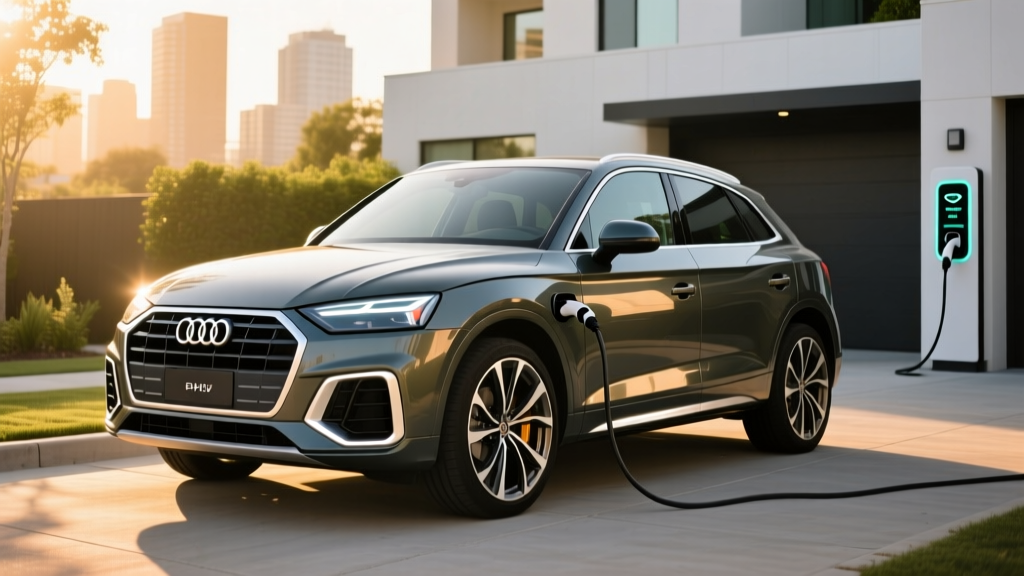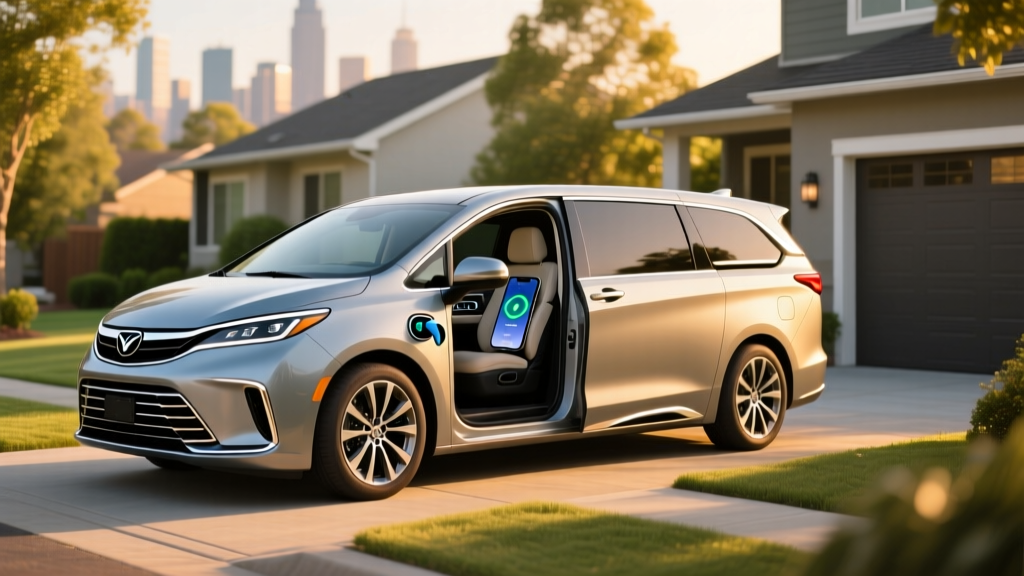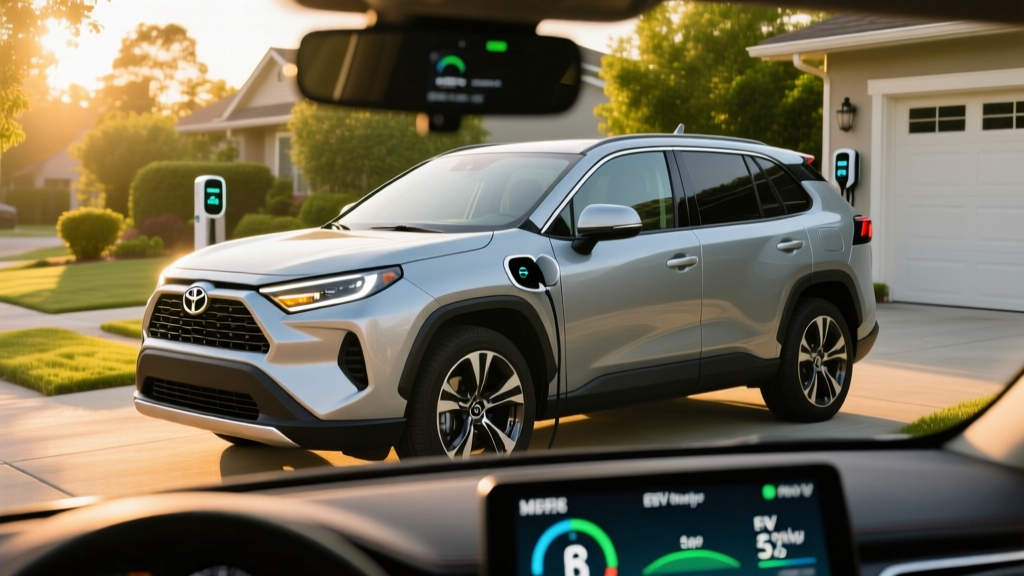
If you've searched for the mileage of a RAV4 Hybrid, you've probably seen the EPA sticker — 41 MPG combined for the standard hybrid and 94 MPGe for the plug-in Prime. But sticker numbers only tell part of the story. After logging thousands of miles across both the conventional RAV4 Hybrid (HEV) and the RAV4 Prime plug-in hybrid (PHEV), we're breaking down what you'll actually see at the pump, at the charger, and in your wallet for the 2026 model year.
The Toyota RAV4 remains America's best-selling non-truck, and its electrified variants now account for a significant share of those sales. The hybrid lineup splits into two distinct vehicles: the RAV4 Hybrid, a self-charging HEV that never needs a plug, and the RAV4 Prime, a PHEV with meaningful electric-only range. Understanding which one matches your driving pattern — and what real-world mileage you can expect — is the key to making the right choice.
RAV4 Hybrid vs RAV4 Prime: HEV and PHEV Explained
Before diving into numbers, it's critical to understand the fundamental difference between these two powertrains, because confusing them leads to bad purchase decisions.
RAV4 Hybrid (HEV)
- How it works: A small battery (1.6 kWh) captures energy from regenerative braking and the gas engine. You never plug it in.
- Electric-only driving: Very short distances at low speeds (under 1 mile typically). The engine handles the majority of propulsion.
- Best for: Drivers without home charging access, apartment dwellers, or those who want fuel savings with zero lifestyle change.
RAV4 Prime (PHEV)
- How it works: A larger 18.1 kWh battery can be charged via plug (Level 1 or Level 2). It provides substantial electric-only range before the gas engine engages.
- Electric-only driving: EPA-rated 42 miles on electricity alone — enough for most daily commutes without burning a drop of gas.
- Best for: Drivers with home or workplace charging who want EV-like daily driving with gas-engine backup for road trips.
Neither vehicle is a full battery-electric vehicle (BEV). Both retain a 2.5-liter four-cylinder engine. The difference is in how much of your driving can be done on grid electricity versus gasoline.
2026 RAV4 Hybrid MPG: EPA Ratings and Real-World Mileage
The standard RAV4 Hybrid pairs Toyota's 2.5-liter Dynamic Force four-cylinder engine with front and rear electric motors for a combined system output of 219 horsepower. All-wheel drive (AWD) is standard on every trim — the rear motor provides electronic on-demand AWD without a mechanical driveshaft.
| Metric | EPA Rating | Real-World Expectation |
|---|---|---|
| City MPG | 41 MPG | 38–44 MPG (hybrids often beat EPA in city driving) |
| Highway MPG | 38 MPG | 33–37 MPG (aerodynamic drag and sustained speed reduce hybrid advantage) |
| Combined MPG | 40 MPG | 36–41 MPG depending on driving mix |
| Fuel Tank | 14.5 gallons | ~520–580 miles total range |
Why real-world hybrid mileage often beats EPA in the city: Hybrids recover energy during braking and idle on battery at stoplights. Stop-and-go traffic actually improves hybrid efficiency relative to the gas-only baseline. On the highway, however, the engine runs continuously and the hybrid system provides less benefit — expect 33–37 MPG at sustained 70–80 mph speeds, particularly with roof cargo or in cold weather.
Cold-weather impact: In sub-freezing temperatures, expect a 5–10% reduction in fuel economy. The engine runs more frequently to provide cabin heat (unlike a full EV with a heat pump, the RAV4 Hybrid uses engine waste heat for warmth), and the battery's charge/discharge efficiency drops in cold conditions.
RAV4 Prime PHEV: Electric-Only Range and Total Mileage
The RAV4 Prime is the performance-oriented plug-in variant. It pairs the same 2.5-liter engine with more powerful electric motors and a significantly larger battery, producing 302 combined horsepower — making it the quickest RAV4 Toyota sells (0–60 mph in approximately 5.7 seconds).
| Specification | RAV4 Prime PHEV |
|---|---|
| Battery Capacity | 18.1 kWh (lithium-ion) |
| EPA Electric-Only Range | 42 miles |
| Real-World Electric Range | 35–45 miles (varies with temperature and driving style) |
| Combined MPGe (Electric Mode) | 94 MPGe |
| Gas-Only MPG (After Battery Depletes) | 38 MPG combined |
| Total Range (EV + Gas) | ~600+ miles |
| Combined Horsepower | 302 hp |
| Level 1 Charging (120V) | ~12 hours (0–100%) |
| Level 2 Charging (240V) | ~2.5 hours (0–100%) with optional 6.6 kW onboard charger |
| DC Fast Charging | Not supported |
Electric range reality check: The EPA's 42-mile rating is achievable in mild weather with moderate driving. In our experience, warm-weather city driving with frequent regen braking can push 44–45 miles. Highway driving at 70 mph drops that to approximately 32–35 miles. Winter conditions (below 32°F) can reduce electric range to 28–33 miles due to battery chemistry limitations and cabin heating demands.
No DC fast charging: The RAV4 Prime does not support DC fast charging. This is standard for PHEVs in this class — the smaller battery makes Level 2 charging practical for overnight replenishment. If you need road-trip fast charging, a full BEV is the better choice.
Powertrain Deep Dive: How Toyota's Hybrid System Delivers These Numbers
Both the RAV4 Hybrid and RAV4 Prime use Toyota's Hybrid Synergy Drive architecture, but with different power outputs.
RAV4 Hybrid (HEV): The 2.5L engine produces 176 hp and 163 lb-ft of torque on its own. A front electric motor adds 118 hp, and a rear motor adds 54 hp for the AWD system. Total system output is 219 hp. The 1.6 kWh nickel-metal hydride battery (on lower trims) or lithium-ion battery (on higher trims) acts as a buffer — it never fully charges or fully depletes, operating in a narrow state-of-charge window to maximize longevity.
RAV4 Prime (PHEV): The same 2.5L engine is paired with a more powerful 174 hp front motor and 54 hp rear motor, yielding 302 hp combined. The 18.1 kWh lithium-ion battery allows extended electric-only operation at speeds up to 84 mph before the engine engages. When the battery depletes to its buffer threshold, the Prime operates as a conventional hybrid at approximately 38 MPG combined.
Pricing, Trims, and Tax Credit Eligibility
For the 2026 model year, the RAV4 Hybrid lineup starts in the low $34,000s and climbs to the mid-$40,000s for fully loaded trims. The RAV4 Prime commands a significant premium due to its larger battery and more powerful motors.
| Model | Starting MSRP (approx.) | Federal Tax Credit |
|---|---|---|
| RAV4 Hybrid LE | ~$34,000 | Not eligible (§30D requires plug-in capability) |
| RAV4 Hybrid XLE | ~$36,500 | Not eligible |
| RAV4 Hybrid Limited | ~$41,000 | Not eligible |
| RAV4 Prime SE | ~$44,500 | Potentially up to $3,751* |
| RAV4 Prime XSE | ~$48,000 | Potentially up to $3,751* |
*Federal tax credit details for the RAV4 Prime: Under IRS §30D Clean Vehicle Credit rules, the RAV4 Prime qualifies for a partial credit based on its battery capacity and critical-mineral/battery-component sourcing requirements. The credit amount depends on how many sourcing requirements the vehicle meets for the given model year. Importantly, the conventional RAV4 Hybrid (HEV) does not qualify for any federal purchase credit because it is not a plug-in vehicle.
Key §30D eligibility requirements for the RAV4 Prime include:
- MSRP cap: SUVs must have an MSRP at or below $80,000 (RAV4 Prime qualifies easily)
- Buyer income cap: Modified AGI must not exceed $150,000 (single), $225,000 (head of household), or $300,000 (joint)
- Battery sourcing: Credit amount depends on critical minerals and battery component sourcing thresholds that tighten annually
- Point-of-sale transfer: Eligible buyers can transfer the credit to the dealer for an upfront price reduction
Credit rules change frequently. Always verify current-year eligibility on the IRS Clean Vehicle Credit page and consult a tax professional before relying on credit amounts in your purchase decision.
Battery Warranty, Reliability, and Replacement Costs
Toyota Hybrid Battery Warranty
Coverage: 10 years or 150,000 miles (whichever comes first) on the hybrid battery and all hybrid-system components, including the electric motors, inverter, and control modules.
What it covers: If the hybrid battery drops below a defined capacity threshold or fails outright, Toyota replaces or reconditions it at no cost. This warranty transfers to subsequent owners.
Reliability track record: Toyota's hybrid system is among the most proven electrified powertrains on the road. The Prius has been in production since 1997, and the hybrid synergy architecture in the RAV4 shares core engineering principles. Taxi fleets running Toyota hybrids regularly surpass 300,000 miles on original hybrid batteries. The larger concern is the 12V auxiliary battery, which can fail like any conventional vehicle battery every 3–5 years.
Out-of-warranty replacement cost: If a hybrid battery fails after the warranty period, replacement costs for the RAV4 Hybrid (HEV) typically range from $2,000 to $4,000 including labor. The RAV4 Prime's larger 18.1 kWh PHEV battery is more expensive, with estimates between $5,000 and $8,000. However, these failures remain rare within the first 15 years of ownership based on historical Toyota hybrid data.
RAV4 Prime PHEV battery warranty: The Prime's traction battery carries the same 10-year/150,000-mile warranty. Toyota guarantees the battery will retain sufficient capacity to deliver meaningful electric-only range throughout the warranty period.
Real-World Ownership: Who Should Choose Which RAV4?
Decision Framework: Which RAV4 Fits Your Life?
Choose the RAV4 Hybrid (HEV) if:
- You don't have access to home or workplace charging
- You want fuel savings without any behavior change (no plugging in)
- Your budget is under $40,000
- You drive a mix of city and highway and want consistent 38–42 MPG
- You want Toyota's proven hybrid reliability with minimal complexity
Choose the RAV4 Prime (PHEV) if:
- You have reliable Level 2 charging at home or work
- Your daily commute is under 40 miles round-trip (you could rarely use gas)
- You want EV-like daily driving but need gas flexibility for road trips
- You value the 302 hp performance upgrade
- You can benefit from the partial federal tax credit
Choose a full BEV (like the Toyota bZ4X, Tesla Model Y, or Hyundai Ioniq 5) if:
- You want zero tailpipe emissions and no gas engine maintenance
- You have reliable home charging and access to DC fast charging for road trips
- You want to maximize the $7,500 federal tax credit (full BEVs are more likely to qualify)
- Your daily driving is predictable and within 250–300 miles
RAV4 Hybrid vs. the Competition: Mileage Compared
The RAV4 Hybrid is not the only compact SUV hybrid on the market. Here's how its mileage stacks up against key competitors, per fueleconomy.gov EPA data:
| Vehicle | City MPG | Highway MPG | Combined MPG | AWD Standard? |
|---|---|---|---|---|
| Toyota RAV4 Hybrid | 41 | 38 | 40 | Yes |
| Honda CR-V Hybrid | 40 | 35 | 37 | Optional |
| Ford Escape Hybrid (AWD) | 42 | 36 | 39 | Optional |
| Hyundai Tucson Hybrid | 38 | 38 | 38 | Yes |
| Kia Sportage Hybrid (AWD) | 38 | 38 | 38 | Optional |
The RAV4 Hybrid leads or ties in combined MPG while including standard AWD — a feature that costs extra or isn't available on several competitors. The Ford Escape Hybrid edges it out in city MPG but trails on the highway and offers AWD only as an option on certain trims.
Pros and Cons: The Honest Assessment
Pros
- Best-in-class combined MPG with standard AWD across all trims
- No plug-in required (HEV) — works for apartment dwellers and those without charging access
- 10-year/150,000-mile hybrid warranty provides long-term peace of mind
- RAV4 Prime's 42-mile EV range covers most daily commutes entirely on electricity
- Proven powertrain with decades of Toyota hybrid engineering behind it
- Strong resale value — RAV4 Hybrids hold value better than most compact SUVs
Cons
- RAV4 Prime is expensive — starts ~$10,000 more than the base Hybrid LE
- No DC fast charging on Prime — limits electric driving on road trips
- Highway MPG drops noticeably — hybrid advantage shrinks at sustained 75+ mph
- Conventional Hybrid gets no federal tax credit — HEV buyers pay full MSRP
- Cargo space slightly reduced on Prime due to larger battery packaging
- Prime availability can be limited — dealer markups are common on this trim
Frequently Asked Questions
How many MPG does the 2026 RAV4 Hybrid get?
The EPA rates the RAV4 Hybrid at 41 MPG city, 38 MPG highway, and 40 MPG combined. In real-world driving, expect 38–44 MPG in the city (hybrids excel in stop-and-go traffic) and 33–37 MPG on the highway. Cold weather and heavy cargo reduce these figures by roughly 5–10%.
How far can the RAV4 Prime go on electric only?
The EPA rates the RAV4 Prime at 42 miles of electric-only range. Real-world results vary: expect 35–45 miles in mild weather, dropping to approximately 28–33 miles in freezing temperatures. Once the battery depletes, the Prime operates as a conventional hybrid at 38 MPG combined.
Does the RAV4 Hybrid need to be plugged in?
No. The conventional RAV4 Hybrid (HEV) charges its small battery entirely through regenerative braking and the gas engine. You never plug it in. Only the RAV4 Prime (PHEV) benefits from plug-in charging, and it can still operate as a regular hybrid if you never charge it — you simply lose the electric-only range benefit.
Does the RAV4 Hybrid qualify for a federal tax credit?
The conventional RAV4 Hybrid (HEV) does not qualify for the federal §30D Clean Vehicle Credit because it is not a plug-in vehicle. The RAV4 Prime (PHEV) may qualify for a partial credit (up to $3,751 based on current battery sourcing rules), subject to buyer income limits and MSRP caps. Always verify current eligibility on IRS.gov.
Is the RAV4 Hybrid battery reliable? What does replacement cost?
Toyota's hybrid batteries carry a 10-year/150,000-mile warranty and have a strong track record of lasting well beyond that. Out-of-warranty replacement costs approximately $2,000–$4,000 for the HEV and $5,000–$8,000 for the Prime's larger PHEV battery. Failures within the first 15 years are uncommon based on historical data from Toyota's hybrid fleet.
Hybrid vs PHEV vs full EV — which should I choose?
If you can't charge at home, choose the RAV4 Hybrid (HEV). If you can charge at home and your commute is under 40 miles, the RAV4 Prime (PHEV) lets you drive mostly on electricity while keeping gas flexibility. If you have reliable charging, want maximum fuel savings, and don't need 600+ mile range, a full BEV like the Tesla Model Y or Hyundai Ioniq 5 eliminates gas entirely and qualifies for larger federal tax credits.
How does the RAV4 Hybrid compare to the gas-only RAV4?
The gas-only RAV4 (203 hp, 8-speed automatic) is rated at approximately 30 MPG combined. The hybrid adds 16 hp, standard AWD, and roughly 10 MPG of improvement — saving approximately $400–$600 per year in fuel for a driver covering 15,000 miles annually at current gas prices. The hybrid's higher MSRP typically pays for itself within 3–5 years through fuel savings alone.
Sources: EPA fuel economy data via fueleconomy.gov; IRS Clean Vehicle Credit rules via irs.gov; Toyota specifications via toyota.com.