Quick Verdict: A Proven Hybrid Powertrain in a Rugged Wrapper
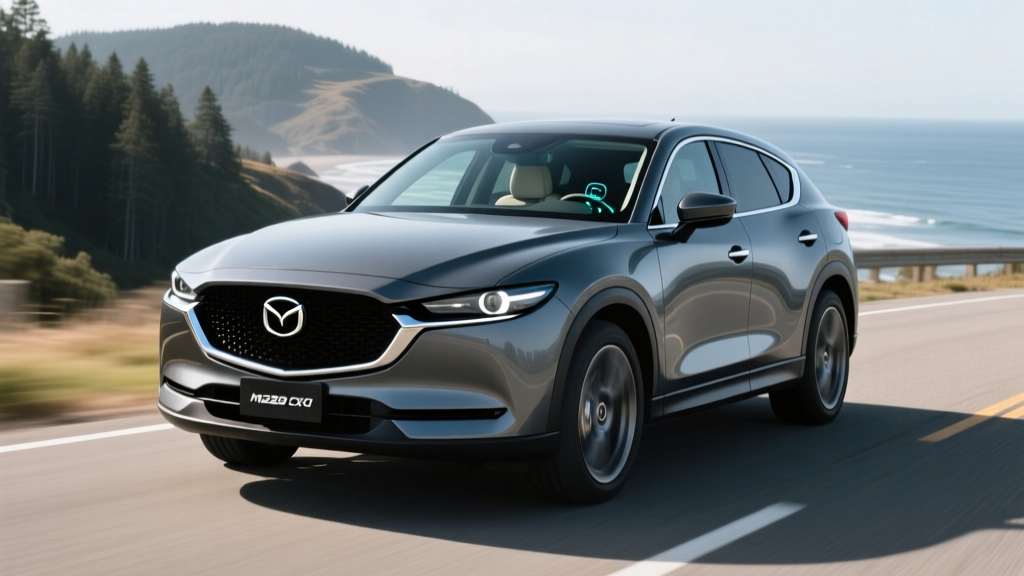
The 2024 Mazda CX-50 Hybrid pairs Mazda's premium compact SUV with Toyota's fourth-generation hybrid system — a collaboration that yields 219 combined horsepower and an EPA-estimated 38 MPG combined. It's a conventional hybrid (HEV), meaning you never plug it in; the gasoline engine and regenerative braking handle all battery charging. For buyers who want Mazda's interior quality and standard all-wheel drive without range anxiety or charging infrastructure concerns, the CX-50 Hybrid occupies a compelling middle ground between a gas-only SUV and a full battery-electric vehicle.
This isn't a plug-in hybrid. There's no electric-only driving range to manage, no home charger to install, and no federal §30D tax credit eligibility. What you get instead is a straightforward, reliable hybrid system that sips fuel in city traffic while delivering confident acceleration. Let's break down every number that matters.
Fuel Economy: EPA Ratings vs. Real-World MPG
| Metric | EPA Estimate | Real-World Expectation |
|---|---|---|
| City MPG | 39 MPG | 38–42 MPG (hybrids often exceed EPA in stop-and-go) |
| Highway MPG | 37 MPG | 34–37 MPG (hybrid advantage diminishes at sustained high speed) |
| Combined MPG | 38 MPG | 36–39 MPG depending on driving mix |
| Fuel Tank Capacity | 14.8 gallons | ~500–560 miles total range |
Source: EPA Fuel Economy Guide
The CX-50 Hybrid's fuel economy is competitive within the compact hybrid SUV segment. The Toyota RAV4 Hybrid achieves a slightly higher 40 MPG combined, while the Honda CR-V Hybrid lands at 37 MPG combined. Where the CX-50 Hybrid distinguishes itself is in the city cycle — Toyota's hybrid system excels at low-speed efficiency thanks to aggressive electric motor assist and engine shut-off at stops.
Real-world note: Hybrid fuel economy is notoriously sensitive to driving style. Aggressive acceleration forces the 2.5-liter four-cylinder engine to run more frequently, dropping observed MPG into the low-to-mid 30s. Conversely, drivers who anticipate stops and let regenerative braking recapture energy will routinely see 40+ MPG in urban conditions. Cold weather reduces MPG by roughly 5–10% as the engine runs more often to provide cabin heat and maintain catalytic converter temperature.
Powertrain: Toyota Hybrid Muscle, Mazda Tuning
| Specification | Detail |
|---|---|
| Engine | 2.5L 4-cylinder Atkinson-cycle |
| Engine Output | 176 hp / 163 lb-ft torque |
| Electric Motors | Front motor + rear motor (e-AWD) |
| Combined Net Horsepower | 219 hp |
| Transmission | Electronic CVT (eCVT) |
| Drivetrain | Standard electronic AWD |
| 0–60 mph | ~7.2 seconds (est.) |
| Towing Capacity | 3,500 lbs (with tow package) |
The CX-50 Hybrid uses Toyota's proven hybrid synergy drive architecture: a 2.5-liter Atkinson-cycle engine paired with two electric motors and a compact nickel-metal hydride (NiMH) hybrid battery. The front motor handles primary propulsion and regenerative braking, while the rear motor provides electronic all-wheel drive without a mechanical driveshaft — reducing weight and packaging complexity.
The 219 hp combined output puts the CX-50 Hybrid ahead of the RAV4 Hybrid (219 hp as well, but with a slightly different torque curve) and well above the non-hybrid CX-50 turbo base engine's 256 hp on premium fuel. The eCVT delivers seamless acceleration without the rubber-band feel of older CVTs, though enthusiasts will notice the absence of traditional gear shifts.
HEV vs. PHEV vs. EV: Which Powertrain Fits You?
| Factor | HEV (CX-50 Hybrid) | PHEV (e.g., RAV4 Prime) | Full EV (e.g., Tesla Model Y) |
|---|---|---|---|
| Plug in to charge? | No | Yes (recommended) | Yes (required) |
| Electric-only range | None (motor assists engine) | 35–42 miles typical | 250–330+ miles |
| Home charger needed? | No | Recommended for daily EV mode | Yes (Level 2 strongly recommended) |
| Federal tax credit (§30D) | Not eligible | Up to $7,500 (if eligible) | Up to $7,500 (if eligible) |
| Best for | No charging access; want simplicity | Home charging + short commute | Home charging + low running cost |
| Fuel/energy cost per mile | ~$0.12–$0.14 | ~$0.04 EV / ~$0.12 gas | ~$0.04–$0.06 |
The CX-50 Hybrid is the right call if you lack reliable home or workplace charging. It requires zero behavioral change — you fuel up at a gas station exactly as before, and the hybrid system handles efficiency optimization automatically. If you have a garage and a commute under 40 miles, a PHEV like the RAV4 Prime (42 miles electric range, ~94 MPGe) lets you drive most days on electricity while keeping a gas engine for road trips. A full EV delivers the lowest per-mile cost but demands charging infrastructure and route planning for longer trips.
Pricing, Trims, and Tax Credit Eligibility
The 2024 Mazda CX-50 Hybrid launched in three trims, all with standard AWD:
| Trim | MSRP | Key Features |
|---|---|---|
| Preferred Hybrid | $34,420 | Leatherette seats, 10.25" display, power liftgate |
| Premium Hybrid | $38,070 | Leather, panoramic roof, Bose 12-speaker audio, HUD |
| Premium Plus Hybrid | $41,070 | Ventilated front seats, heated steering wheel, 20" wheels |
Destination charge adds approximately $1,375.
Federal tax credit: The CX-50 Hybrid is a conventional HEV and does not qualify for the IRS §30D Clean Vehicle Credit. That credit applies only to plug-in vehicles (PHEVs and BEVs) with battery capacities of at least 7 kWh. The CX-50 Hybrid's small NiMH battery (approximately 1.6 kWh) falls well below this threshold.
Some states offer modest hybrid incentives, but these vary widely by jurisdiction. Check your state's energy office or the IRS Clean Vehicle Credit page for current federal rules, and consult a tax professional for eligibility specifics.
Hybrid Battery Warranty & Replacement Cost
Warranty: Mazda covers the CX-50 Hybrid's battery and hybrid system components for 8 years / 100,000 miles (whichever comes first). In California Air Resources Board (CARB) states, hybrid battery coverage extends to 10 years / 150,000 miles.
Replacement cost: If the hybrid battery fails outside warranty, expect a dealer replacement cost between $2,500 and $4,000 including labor. However, Toyota-sourced hybrid batteries have an exceptional longevity record — many first-generation Prius batteries lasted 200,000+ miles before significant capacity loss. The NiMH chemistry used here is less energy-dense than lithium-ion but extremely durable under the shallow charge-discharge cycles hybrids employ.
Warranty claim threshold: Mazda warrants the battery against capacity loss below 60% of original capacity within the warranty period.
Reliability: Toyota Hybrid DNA, Mazda Assembly
The CX-50 Hybrid benefits from one of the most proven hybrid architectures in automotive history. Toyota's hybrid synergy drive has accumulated billions of real-world miles across the Prius, Camry Hybrid, RAV4 Hybrid, and Highlander Hybrid lineups. The system's eCVT contains no traditional clutch packs or bands — it uses planetary gearsets that experience minimal wear. The NiMH battery operates in a narrow state-of-charge window (roughly 40–80%), which dramatically extends cycle life compared to the deep cycling a full EV battery endures.
Mazda assembled the CX-50 Hybrid at its Toyota Mazda Manufacturing U.S.A. plant in Huntsville, Alabama, on the same line as the mechanically related Toyota RAV4 Hybrid. IIHS crash-test data and long-term reliability surveys consistently rate Toyota's hybrid components among the most dependable in the industry.
Common hybrid-specific maintenance is minimal: the hybrid battery cooling fan filter should be cleaned periodically (often overlooked, it's a $0 DIY task), and the inverter coolant should be inspected at scheduled intervals. There are no spark plug changes more frequent than the gas model, and brake pads typically last 80,000–100,000 miles thanks to regenerative braking handling most deceleration.
Interior, Tech, and Practicality
The CX-50 Hybrid shares its cabin with the non-hybrid CX-50 — meaning Mazda's signature minimalist design, available Nappa leather, and a 10.25-inch infotainment display controlled via a rotary dial (no touchscreen on most trims, which divides opinion). Cargo volume is unaffected by the hybrid system: 31.4 cubic feet behind the rear seats and 56.4 cubic feet with the rear seats folded, because the compact NiMH battery sits beneath the rear seat rather than intruding on cargo space.
Standard safety technology includes Mazda's i-Activsense suite: adaptive cruise control, lane-keeping assist, blind-spot monitoring, and automatic emergency braking. Note that these are SAE Level 2 driver-assistance features — the driver must remain fully engaged with hands on the wheel and eyes on the road at all times. This is not autonomous driving.
Pros
- 38 MPG combined with AWD standard — no plug required
- Toyota-sourced hybrid system with proven 200K+ mile longevity
- 3,500-lb towing capacity (rare for hybrid compact SUVs)
- Premium interior materials that punch above the segment
- Strong 8-year/100K-mile hybrid battery warranty
- No behavioral change vs. a gas car — just fuel up and go
Cons
- No federal tax credit eligibility (HEV, not PHEV)
- Infotainment uses rotary dial — no touchscreen interface
- Slightly lower combined MPG than the RAV4 Hybrid (38 vs. 40)
- No electric-only driving mode for zero-emission neighborhood use
- Rear-seat space is tighter than the RAV4 or CR-V
- Premium Plus trim pushes past $42K with destination
Who Should Buy the CX-50 Hybrid — and Who Shouldn't
Choose the CX-50 Hybrid if:
- You lack home or workplace charging access and don't want to rely on public chargers
- You want 35+ MPG without changing any fueling habits
- You prioritize interior quality and styling over maximum cargo space
- You need AWD and light towing (3,500 lbs) for camping or utility trailers
- You plan to keep the vehicle 8–12 years and value proven hybrid reliability
Look elsewhere if:
- You have home charging and a short commute — a PHEV like the RAV4 Prime delivers 42 miles of electric driving and potential §30D tax credit eligibility
- You want the lowest possible per-mile energy cost — a full EV at ~$0.04/mi beats ~$0.13/mi on gas
- You need maximum rear-seat legroom — the CR-V Hybrid offers more
- You prefer touchscreen infotainment — Mazda's rotary-only system frustrates some users
Frequently Asked Questions
How many MPG does the 2024 Mazda CX-50 Hybrid get?
The EPA rates it at 39 city / 37 highway / 38 combined MPG. Real-world results typically fall between 36 and 42 MPG depending on driving conditions, with city driving often yielding higher numbers thanks to regenerative braking and electric motor assist at low speeds.
Does the CX-50 Hybrid need to be plugged in?
No. The CX-50 Hybrid is a conventional HEV (hybrid electric vehicle), not a plug-in hybrid. The battery charges automatically through regenerative braking and the gasoline engine. You fuel it at a gas station exactly like a conventional car.
How far can the CX-50 Hybrid drive on electric only?
The CX-50 Hybrid cannot drive on electric power alone for any meaningful distance. The electric motor assists the gasoline engine during acceleration and enables brief low-speed electric-only creep (under ~15 mph in gentle conditions), but there is no dedicated EV mode or measurable electric-only range. For electric-only commuting, you'd need a PHEV or full BEV.
Does the CX-50 Hybrid qualify for a federal tax credit?
No. The IRS §30D Clean Vehicle Credit applies only to plug-in electric vehicles (PHEVs and BEVs) with battery capacities of at least 7 kWh. The CX-50 Hybrid's ~1.6 kWh NiMH battery does not meet this threshold. Check your state's incentive programs for any hybrid-specific rebates, and consult a tax professional for personalized guidance.
Is the hybrid battery reliable and what does replacement cost?
Toyota-sourced NiMH hybrid batteries are among the most durable components in modern vehicles, routinely lasting 200,000+ miles. Mazda covers the hybrid battery for 8 years/100,000 miles (10 years/150,000 miles in CARB states). Out-of-warranty replacement costs approximately $2,500–$4,000 at a dealer, though third-party refurbished options can reduce this to $1,500–$2,500.
How does the CX-50 Hybrid compare to the RAV4 Hybrid?
Both share the same Toyota hybrid powertrain and produce 219 hp. The RAV4 Hybrid achieves 40 MPG combined (2 MPG better) and offers more rear-seat and cargo space. The CX-50 Hybrid counters with a more premium interior, standard towing capacity of 3,500 lbs (vs. 1,750 lbs for the RAV4 Hybrid), and Mazda's more engaging steering feel. Pricing is comparable at equivalent trim levels.
What is the total driving range?
With a 14.8-gallon fuel tank and 38 MPG combined, the CX-50 Hybrid delivers approximately 500–560 miles of total range per tank — competitive with or exceeding most compact SUVs and sufficient for all but the longest single-day drives without a fuel stop.