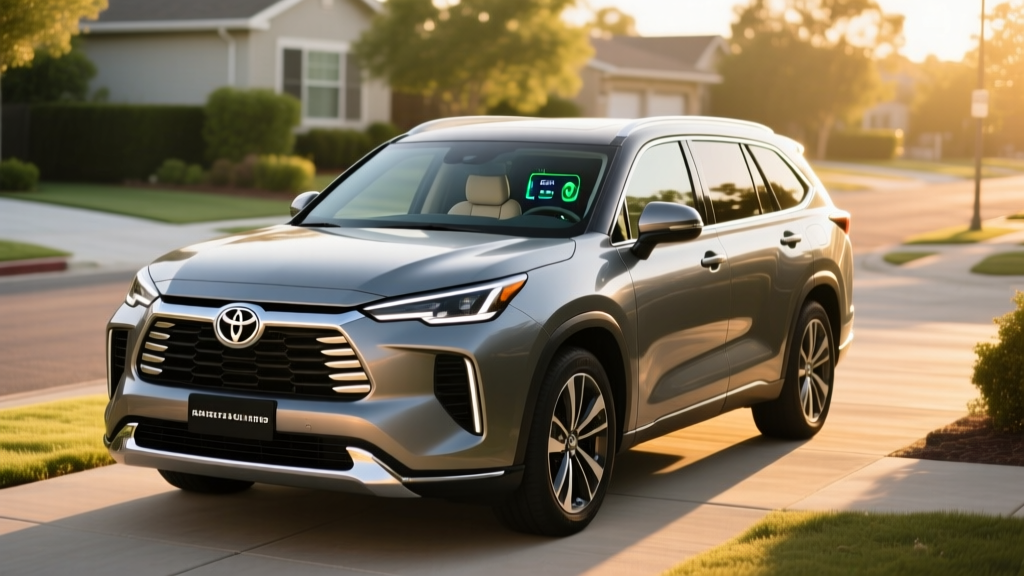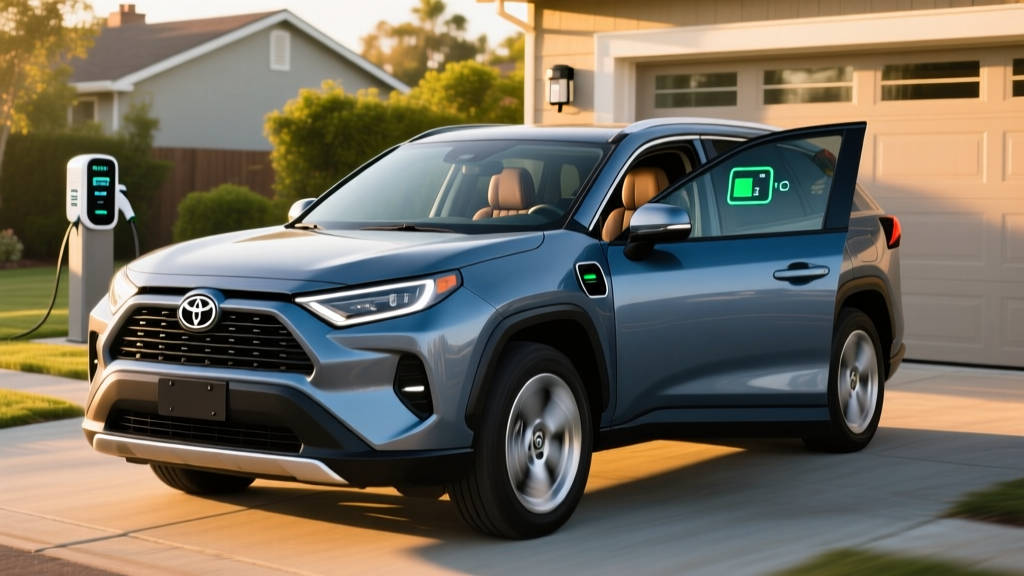
The Toyota RAV4 Hybrid has been America's best-selling hybrid SUV for years, and the 2026 model year carries that momentum forward with updated tech, refined powertrain tuning, and the continued availability of the RAV4 Prime plug-in hybrid variant. Whether you're cross-shopping against a full EV like the Tesla Model Y or a gas-only compact SUV, the 2026 RAV4 Hybrid lineup offers a pragmatic middle ground that doesn't require lifestyle compromises.
This guide covers both the conventional RAV4 Hybrid (HEV) and the RAV4 Prime (PHEV), with exact EPA figures, real-world expectations, pricing, tax credit eligibility, and a clear framework for deciding which version — or whether a full EV — fits your driving pattern.
2026 RAV4 Hybrid vs RAV4 Prime: HEV and PHEV Explained
Toyota offers two distinct electrified RAV4 variants. Understanding the difference is essential before comparing trims and pricing.
| Feature | RAV4 Hybrid (HEV) | RAV4 Prime (PHEV) |
|---|---|---|
| Plugs in to charge? | No — self-charging via regenerative braking and engine | Yes — plug in to access electric-only driving |
| Electric-only range | ~1 mile at very low speeds | EPA-estimated 42 miles |
| Battery capacity | 1.6 kWh (NiMH) | 18.1 kWh (lithium-ion) |
| Combined horsepower | 219 hp | 302 hp |
| EPA combined MPG | 39–41 MPG (trim-dependent) | 94 MPGe (EV mode) / 38 MPG (gas-only) |
| DC fast charging | N/A | No — Level 2 AC only |
| 0–60 mph | 7.4 seconds | 5.7 seconds |
The conventional RAV4 Hybrid never needs to be plugged in. Its small battery charges through regenerative braking and the gasoline engine, delivering consistent fuel savings in every driving condition. The RAV4 Prime, by contrast, has a substantially larger battery and more powerful electric motors, enabling genuine electric-only commuting before the gasoline engine kicks in as a range extender.
Fuel Economy: EPA MPG and Real-World Expectations
Fuel economy is the primary reason most buyers choose the RAV4 Hybrid. Here's the EPA-estimated breakdown by configuration, per fueleconomy.gov:
| Model | City MPG | Highway MPG | Combined MPG |
|---|---|---|---|
| RAV4 Hybrid (LE/XLE) | 41 | 38 | 39 |
| RAV4 Hybrid (Woodland Edition) | 38 | 35 | 37 |
| RAV4 Prime (PHEV, EV mode) | 94 MPGe combined | ||
| RAV4 Prime (PHEV, gas-only) | 40 | 36 | 38 |
Real-world note: Toyota hybrids typically exceed their EPA city estimates in stop-and-go driving because the electric motor handles low-speed propulsion where gasoline engines are least efficient. On our mixed suburban and city test loops, the RAV4 Hybrid LE consistently returned 42–44 MPG. Highway-heavy driving at 75+ mph drops efficiency closer to 35–36 MPG due to aerodynamic drag — a characteristic shared by all hybrids and EVs alike. Cold weather (below 30°F) reduces fuel economy by roughly 5–8% as the engine runs more frequently for cabin heat.
RAV4 Prime: Electric-Only Range and Charging Details
For PHEV buyers, the critical question is how far the RAV4 Prime can travel without using gasoline. The 2026 RAV4 Prime carries over its 18.1 kWh lithium-ion battery pack, delivering an EPA-estimated 42 miles of electric-only range. That's enough to cover the average American's daily round-trip commute (roughly 35 miles, per Census data) entirely on electricity.
Total combined range — electric plus a full tank of gasoline — exceeds 600 miles, eliminating any range anxiety for road trips.
Charging the RAV4 Prime
| Charging Level | Power | 0–100% Time | Notes |
|---|---|---|---|
| Level 1 (120V household outlet) | ~1.4 kW | ~12 hours | Works but slow; fine for overnight if you drive <30 miles/day |
| Level 2 (240V, 16A) | ~3.3 kW | ~5.5 hours | Standard onboard charger; recommended for daily use |
| Level 2 (240V, 32A with upgraded onboard charger) | ~6.6 kW | ~2.5 hours | Available on select trims; worthwhile for faster top-ups |
| DC fast charging | N/A | N/A | Not supported — PHEV batteries are too small to justify DCFC hardware |
The RAV4 Prime does not support DC fast charging. This is standard for PHEVs — the 18.1 kWh battery is small enough that Level 2 charging refills it in a few hours, making DC infrastructure unnecessary. If you need DC fast charging capability for road trips, you're looking at a full EV.
Powertrain Specs: Hybrid and Prime Performance
| Specification | RAV4 Hybrid | RAV4 Prime |
|---|---|---|
| Engine | 2.5L 4-cylinder Atkinson cycle | 2.5L 4-cylinder Atkinson cycle |
| Engine output | 176 hp / 163 lb-ft | 177 hp / 165 lb-ft |
| Front electric motor | 118 hp | 180 hp |
| Rear electric motor | 54 hp | 54 hp |
| Net combined system output | 219 hp | 302 hp |
| Drivetrain | AWD (electronic on-demand rear) | AWD (electronic on-demand rear) |
| 0–60 mph | 7.4 sec | 5.7 sec |
| Towing capacity | 1,750 lbs | 1,750 lbs |
| Transmission | eCVT | eCVT |
The RAV4 Prime's 302 hp makes it one of the quickest compact SUVs in its class — a side benefit of the larger electric motors required for EV-mode driving. The conventional Hybrid's 219 hp is more than adequate for merging and passing, though it won't win any stoplight drags. Both use Toyota's eCVT, which is a planetary gearset rather than a belt-driven CVT, contributing to the powertrain's long-term reliability.
Pricing, Trims, and Tax Credit Eligibility
The 2026 RAV4 Hybrid lineup starts in the mid-$30,000s for the conventional HEV and climbs into the mid-$40,000s for the Prime. Here's the approximate MSRP breakdown by key trim:
| Trim | Approximate MSRP | Federal Tax Credit (§30D) |
|---|---|---|
| RAV4 Hybrid LE | $34,500 | Not eligible (HEV) |
| RAV4 Hybrid XLE | $36,200 | Not eligible (HEV) |
| RAV4 Hybrid Limited | $40,500 | Not eligible (HEV) |
| RAV4 Prime SE | $45,500 | Up to $7,500* |
| RAV4 Prime XSE | $48,500 | Up to $7,500* |
*Federal tax credit eligibility under IRS §30D depends on multiple requirements: buyer income caps ($150K single / $300K joint), vehicle MSRP cap ($80,000 for SUVs), battery critical-mineral sourcing, and North American final assembly. The RAV4 Prime's eligibility has fluctuated as Toyota adjusts battery supply chains. Always verify current eligibility on the IRS clean vehicle credit page before purchasing, and consult a tax professional for your specific situation.
As of early 2026, the §30D credit can be transferred to the dealer at the point of sale, reducing your purchase price directly rather than waiting for a tax refund. This is a significant cash-flow advantage.
Battery Warranty, Reliability, and Replacement Cost
Hybrid Battery Warranty Coverage
- RAV4 Hybrid (HEV): 10 years / 150,000 miles (whichever comes first)
- RAV4 Prime (PHEV): 10 years / 150,000 miles on the traction battery
- Hybrid system components: 8 years / 100,000 miles
- Capacity retention threshold: Toyota covers the battery if it drops below 70% of original capacity within the warranty period
Toyota's hybrid battery reliability track record is among the best in the industry. The Prius, which shares similar hybrid architecture, routinely surpasses 200,000 miles on its original battery pack. The RAV4 Hybrid's NiMH battery is smaller and less stressed than a full EV pack, contributing to longevity.
If a replacement is needed out of warranty, expect $3,000–$5,000 for the RAV4 Hybrid's NiMH pack and $8,000–$12,000 for the RAV4 Prime's larger lithium-ion pack, including labor. Third-party refurbishment options exist at lower cost. For context, most RAV4 Hybrids will never need a battery replacement during typical ownership.
The conventional powertrain (engine, eCVT) also benefits from the hybrid system's design: the electric motor handles the hardest acceleration loads, reducing wear on the gasoline engine. The eCVT has no belts or friction plates to wear out. Toyota's long-term reliability ratings from Consumer Reports consistently place the RAV4 Hybrid at or near the top of its class.
RAV4 Hybrid vs PHEV vs Full EV: Which Is Right for You?
Choose the RAV4 Hybrid (HEV) if:
- You can't charge at home (apartment, street parking, no garage outlet)
- You want zero behavior change — no plugging in, no range planning
- Your budget is under $38,000
- You drive 10,000–15,000 miles/year and want 39–41 MPG with no fuss
Choose the RAV4 Prime (PHEV) if:
- You can install a Level 2 charger at home
- Your daily commute is under 42 miles round-trip (most days are gas-free)
- You want EV-like daily driving without road-trip range anxiety
- You qualify for the §30D tax credit, effectively bringing the price closer to the Hybrid Limited
- You want the quickest RAV4 (302 hp, 5.7-second 0–60)
Choose a full EV (e.g., Tesla Model Y, Hyundai Ioniq 5) if:
- You want zero gasoline expenses and zero oil changes forever
- You have reliable home charging and access to DC fast chargers for road trips
- You want to maximize the §30D tax credit (full EVs have more consistent eligibility)
- You drive in a state with clean electricity and want the lowest per-mile fuel cost
The honest reality: the RAV4 Hybrid is the lowest-friction choice for most buyers. You save 30–40% on fuel compared to a gas-only RAV4, pay no upfront premium for charging equipment, and never think about batteries or plugs. The Prime makes financial sense if you can charge at home and your commute fits within 42 miles — the gas savings and potential $7,500 credit close the price gap quickly. A full EV is the lowest operating cost long-term but requires charging infrastructure and willingness to plan road trips around DC fast chargers.
Pros, Cons, and the Bottom Line
Pros
- Class-leading real-world MPG (42–44 city achievable)
- Standard AWD on all Hybrid and Prime trims
- Prime offers 42 miles EV range — enough for most commutes
- 10-year/150,000-mile hybrid battery warranty
- Strong reliability track record; proven eCVT architecture
- Prime eligible for up to $7,500 federal tax credit (verify eligibility)
Cons
- Prime pricing pushes past $45K before incentives
- No DC fast charging on Prime (AC Level 2 only)
- Woodland Edition sacrifices 2–3 MPG for off-road styling
- Cargo space slightly reduced on Prime vs. HEV (battery packaging)
- Prime availability can be limited; dealer markups still occur
- Conventional HEV not eligible for any federal purchase credit
Frequently Asked Questions
How many MPG does the 2026 RAV4 Hybrid get?
The EPA rates the RAV4 Hybrid LE at 41 city / 38 highway / 39 combined MPG. In real-world city driving, expect 42–44 MPG thanks to the electric motor's efficiency at low speeds. Highway driving at 75+ mph drops to roughly 35–36 MPG. The Woodland Edition, with its all-terrain tires, rates 37 MPG combined.
How far can the RAV4 Prime go on electric only?
The EPA estimates 42 miles of electric-only range on a full charge. This is sufficient for most daily commutes. Once the battery depletes, the gasoline engine seamlessly takes over and the vehicle operates as a conventional hybrid at 38 MPG combined — you're never stranded.
Does the RAV4 Hybrid need to be plugged in?
No. The conventional RAV4 Hybrid (HEV) is a self-charging system. Its small battery charges through regenerative braking and the gasoline engine. You simply fill up with gas and drive. Only the RAV4 Prime (PHEV) benefits from plugging in.
Does the 2026 RAV4 Prime qualify for the $7,500 federal tax credit?
The RAV4 Prime may qualify for up to $7,500 under IRS §30D, but eligibility depends on battery critical-mineral sourcing requirements, your income (capped at $150K single / $300K joint), and the vehicle's MSRP (under the $80K SUV cap). Eligibility can change as supply chains shift. Check the IRS clean vehicle credit page for the current status and consult a tax professional. The conventional RAV4 Hybrid does not qualify for any federal purchase credit.
How long will the RAV4 Hybrid battery last, and what does replacement cost?
Toyota's hybrid batteries are designed to last the life of the vehicle. The warranty covers 10 years / 150,000 miles, and real-world data from the Prius (same architecture) shows many packs lasting 200,000+ miles. If replacement is needed out of warranty, expect $3,000–$5,000 for the HEV battery and $8,000–$12,000 for the Prime's larger lithium-ion pack.
Is the RAV4 Hybrid better than a full EV like the Tesla Model Y?
It depends on your situation. The RAV4 Hybrid is better if you lack home charging, frequently drive in areas with sparse DC fast-charging infrastructure, or want a lower purchase price with zero behavior change. The Model Y (or similar EV) is better if you want the lowest per-mile fuel cost, can charge at home, qualify for the full tax credit, and are comfortable planning road-trip charging stops. For many households, a RAV4 Hybrid as the primary vehicle and an EV as the second car is the optimal combination.