The Ram Ramcharger: A Hybrid Truck That Defies Categories
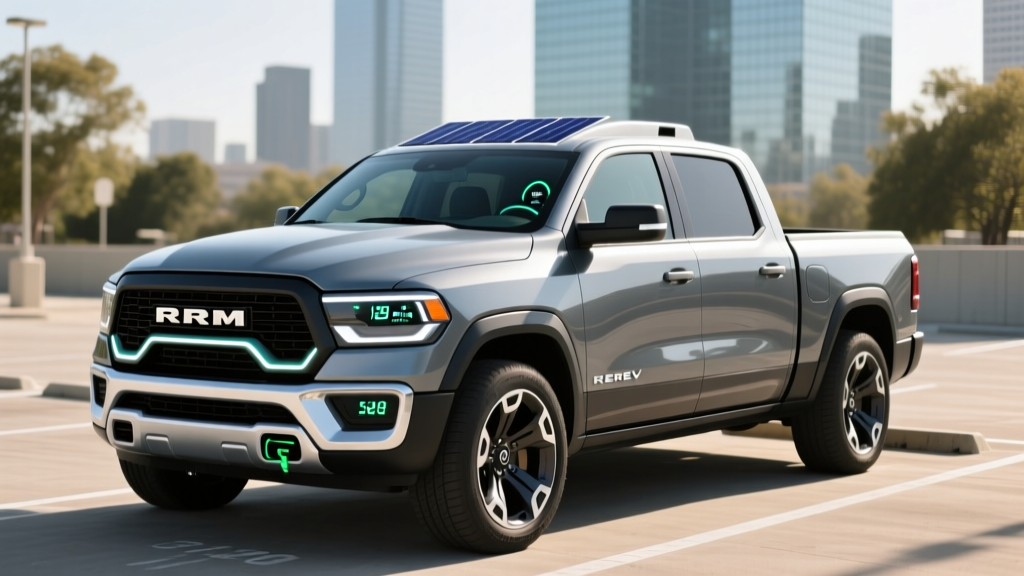
If you've been searching for a Ram hybrid truck, the 2026 Ram Ramcharger is the answer — though it's not a hybrid in the way most buyers expect. Rather than a conventional hybrid (HEV) like the Toyota Tundra i-FORCE MAX or a plug-in hybrid (PHEV) like the Ford Maverick PHEV concept, the Ramcharger is a Range-Extended Electric Vehicle (EREV). It drives exclusively on electric motors but carries a gasoline engine solely to generate electricity when the battery depletes.
This distinction matters enormously for buyers trying to compare fuel economy, charging needs, and tax-credit eligibility. Below, we break down exactly what the 2026 Ramcharger delivers in real-world driving, what it costs, and whether it's the right truck for your situation compared to a full battery-electric (BEV) like the Ram 1500 REV or a traditional gas V8.
| Spec | Value |
|---|---|
| Powertrain Type | EREV (Range-Extended EV) |
| Combined Horsepower | 663 HP |
| Combined Torque | 615 lb-ft |
| Battery Capacity (usable) | 92 kWh (NMC lithium-ion) |
| Onboard Generator | 3.6L Pentastar V6, 174 HP |
| EPA Electric-Only Range | ~145 miles (estimated) |
| Total Combined Range | ~690 miles (estimated) |
| 0-60 mph | 4.4 seconds |
| Max DC Fast Charge Rate | ~150 kW (est.) |
| Level 2 Charge Rate | ~11 kW onboard charger |
| Max Towing Capacity | 14,000 lbs (est.) |
| Max Payload | ~2,625 lbs (est.) |
| Starting MSRP | ~$69,995 (base Tradesman est.) |
Note: As of early 2026, Ram has announced the Ramcharger but final EPA-certified figures remain preliminary. Specs above reflect manufacturer estimates and may shift at official certification. We'll update this review when fueleconomy.gov posts final numbers.
HEV vs PHEV vs EREV: Where Does the Ramcharger Fit?
Before evaluating the Ramcharger's efficiency, it's essential to understand the three electrified truck architectures currently on the market:
| Type | How It Works | Plug In? | EV-Only Range | Example |
|---|---|---|---|---|
| HEV (Conventional Hybrid) | Gas engine + small electric motor assist; battery recharges via regen and engine | No | 0–2 miles | Toyota Tundra i-FORCE MAX |
| PHEV (Plug-In Hybrid) | Larger battery + motor; can drive on electricity alone before engine kicks in | Yes | 20–50 miles | Ford Escape PHEV (no truck equivalent yet) |
| EREV (Range-Extended EV) | Always electric-drive; gas engine acts as generator only, never drives wheels | Yes | 100+ miles | Ram Ramcharger |
The Ramcharger's EREV layout means the wheels are always turned by the dual electric motors — front (340 HP) and rear (323 HP). The 3.6L V6 under the hood never mechanically connects to the drivetrain. Instead, it spins a generator that feeds electricity to the battery or directly to the motors when the pack depletes. Think of it as carrying your own portable power plant.
This gives the Ramcharger a driving character closer to a full EV than a conventional hybrid: instant torque, one-pedal-capable regenerative braking, and silent operation for the first 145 miles of driving.
Electric-Only Range, Fuel Economy, and Real-World Efficiency
How Many Miles Can the Ram Ramcharger Go on Electric Only?
Ram targets approximately 145 miles of electric-only range from the 92 kWh usable battery pack. This is substantially more than any current PHEV truck or SUV, which typically offer 20–50 miles. For most daily commutes, errands, and even moderate road trips, the Ramcharger will operate as a pure EV — the V6 generator never fires up.
EPA estimate: ~145 miles electric-only
Highway driving (70+ mph): ~110–125 miles
Cold weather (below 32°F): ~90–110 miles
Towing/hauling heavy loads: ~70–90 miles
Total range (battery + generator): ~690 miles
The 145-mile estimate is generous for an electric truck, but real-world conditions will reduce it. Highway speeds above 70 mph, cold temperatures, and especially towing will pull that figure down significantly. When the battery depletes, the V6 generator engages seamlessly — you'll hear it, but the driving experience remains electric-smooth.
How Many MPG Does This Hybrid Truck Get?
This is where the EREV architecture complicates the typical MPG conversation. Because the Ramcharger drives on electricity first, the EPA will rate it using MPGe (miles per gallon equivalent) for electric operation and MPG for generator-assisted (charge-sustaining) operation.
| Mode | City | Highway | Combined |
|---|---|---|---|
| Electric-Only (MPGe) | ~70 MPGe | ~58 MPGe | ~65 MPGe (est.) |
| Generator-Assisted (MPG) | ~18 MPG | ~16 MPG | ~17 MPG (est.) |
| Gas V8 Ram 1500 (5.7L HEMI, baseline) | 15 MPG | 22 MPG | 17 MPG |
The key takeaway: if you charge daily and drive under 145 miles, your effective "fuel economy" is essentially the cost of electricity per mile — roughly 3–5 cents per mile depending on your utility rate. On longer road trips where the generator runs frequently, expect fuel economy similar to or slightly worse than the current V8 Ram 1500, because the V6 is hauling around a heavy battery pack.
Real-world vs EPA note: In charge-sustaining (generator) mode, heavy-footed driving and towing will push real-world MPG into the 13–15 range. Gentle highway cruising may hit 19–20 MPG. City driving in generator mode is where the EREV shines — regenerative braking recaptures energy at stoplights, potentially yielding 20+ MPG in stop-and-go traffic once the battery is depleted.
Charging: Speed, Connectors, and Home Setup
Unlike a conventional hybrid, the Ramcharger must be plugged in to realize its efficiency advantage. Running it without ever charging is technically possible but defeats the purpose — you'd be carrying 92 kWh of dead battery weight and getting roughly 17 MPG from a V6.
| Level | Power | Miles of EV Range Added Per Hour | Full Charge Time (0-100%) |
|---|---|---|---|
| Level 1 (120V outlet) | ~1.4 kW | ~4–5 miles/hr | ~65+ hours |
| Level 2 (240V, 48A) | ~11.5 kW | ~35–40 miles/hr | ~8–9 hours |
| DC Fast Charge | ~150 kW peak | N/A | ~10–80% in ~35 min (est.) |
Home charging recommendation: A Level 2 home charger is essentially mandatory. The 92 kWh battery is too large for Level 1 to be practical (over two days for a full charge). A 48-amp Level 2 station on a 60-amp circuit will fully replenish the pack overnight. Expect home installation costs of $800–$2,500 depending on whether your electrical panel needs an upgrade — a 200-amp panel is recommended for simultaneous EV charging and household loads.
The Ramcharger uses the NACS (North American Charging Standard) connector, giving it native access to the Tesla Supercharger network — the most reliable and expansive DC fast-charging network in the U.S. This is a significant advantage over CCS-equipped trucks that require adapters.
DC fast-charging reality check: The estimated 150 kW peak rate means the Ramcharger won't match the 350 kW capability of trucks like the Silverado EV. Expect the charge curve to taper significantly above 80% state of charge, as is typical with NMC chemistry. Plan road-trip charging stops around 10–80% for the best time efficiency.
Performance, Towing, and Capability
The dual-motor all-wheel-drive powertrain produces a combined 663 horsepower and 615 lb-ft of torque, making the Ramcharger one of the quickest trucks in its class. The 4.4-second 0-60 mph time rivals performance trucks costing significantly more.
Electric motors deliver peak torque from 0 RPM, which translates to strong off-the-line response whether loaded or empty. Ram estimates towing capacity at 14,000 pounds and payload at approximately 2,625 pounds — competitive with the current Ram 1500 gas lineup but below heavy-duty diesel territory.
Towing impact on range: This is the critical caveat for truck buyers. Towing a 7,000-pound trailer will roughly halve the electric-only range to 70–90 miles. In generator mode while towing, expect fuel consumption to spike to 10–13 MPG. The 690-mile total range claim assumes normal driving, not sustained towing. For frequent heavy-haul users, a diesel Ram 2500/3500 remains the more practical choice.
Pricing, Trims, and Tax Credit Eligibility
The 2026 Ram Ramcharger is expected to start around $69,995 for the Tradesman trim, with higher trims (Big Horn, Laramie, Limited) pushing into the $80,000–$90,000+ range. This positions it as a premium offering above the gas V6 Ram 1500 but below heavy-duty and TRX variants.
Does the Ram Ramcharger Qualify for a Federal Tax Credit?
This is where the EREV classification becomes critical. Under IRS §30D rules, the Ramcharger may qualify as a plug-in hybrid rather than a full BEV because it contains an onboard gasoline engine. The federal tax credit for qualifying plug-in vehicles is up to $7,500, but eligibility depends on several requirements:
- MSRP Cap: Vans/SUVs/pickups must be under $80,000 MSRP — base Ramcharger trims likely qualify, but top trims may exceed the cap
- Buyer Income Limits: AGI must not exceed $150,000 (single), $225,000 (head of household), or $300,000 (joint filers)
- Battery Component Sourcing: Increasing percentages of battery components must be manufactured or assembled in North America (phased requirements through 2029)
- Critical Minerals: Battery minerals must be sourced from the U.S. or free-trade-agreement countries
- Point-of-Sale Transfer: Eligible buyers can transfer the credit to the dealer at purchase for an immediate price reduction
- FEOC Restriction: Vehicles with battery components from a "foreign entity of concern" (primarily Chinese suppliers) are disqualified
Important caveat: Final §30D eligibility for the Ramcharger depends on Ram's battery supply chain certification. The 92 kWh pack's sourcing must meet the 2026 critical-minerals and component thresholds. We recommend consulting the IRS clean vehicle credit page and speaking with a tax professional before relying on credit eligibility for your purchase decision. Rules change frequently.
Battery Warranty, Reliability, and Replacement Costs
The Ramcharger's 92 kWh NMC battery pack is the single most expensive component in the vehicle. Ram has not yet published final warranty terms for the 2026 model, but federal law mandates a minimum of 8 years/100,000 miles for emission-related components on PHEVs, and most manufacturers extend their EV/PHEV battery warranties to 8 years/100,000 miles with a capacity-retention threshold of 60–70%.
Estimated Replacement Cost: $15,000–$25,000 (out of warranty, based on comparable 90+ kWh packs)
Generator Engine Maintenance: Standard V6 maintenance applies — oil changes, coolant, spark plugs — but at reduced intervals since the engine runs fewer hours than in a conventional vehicle.
Is the Ram Hybrid Truck Reliable?
The Ramcharger is a first-generation product in a new segment for Ram, which introduces inherent risk. The electric motors and battery are sourced from Stellantis's global EV platform, which has limited long-term track record. The 3.6L Pentastar V6 generator, however, is one of the most proven engines in the Stellantis portfolio — used across Jeep, Chrysler, and Ram products for over a decade with well-documented reliability.
The reduced mechanical complexity (no transmission, no driveshaft connection from engine to wheels) theoretically lowers long-term failure points. However, the dual-motor AWD system, large battery thermal management, and high-voltage electronics add complexity that independent shops may struggle to service. Plan on dealer-dependent maintenance for the high-voltage system.
NMC battery chemistry typically sees 10–15% degradation over 8–10 years under normal use. Best practices for longevity include avoiding frequent DC fast charging, keeping state of charge between 20–80% for daily use, and using the built-in charge-limit settings that Ram is expected to provide in the infotainment system.
Ramcharger vs Ram 1500 REV vs Gas V8: Which Truck Fits You?
- You want EV driving for daily commutes (under 145 miles) but need road-trip range without charging-stop planning
- You have home Level 2 charging access
- You want instant electric torque for towing and off-road use
- Range anxiety prevents you from going full BEV
- You want access to HOV lanes and potential tax incentives
- You want zero gasoline use and the lowest per-mile fuel cost
- You drive under 350 miles daily and can plan DC fast-charging stops for road trips
- You want the largest available frunk (front trunk) for cargo
- You qualify for the full $7,500 federal tax credit
- You cannot install a home Level 2 charger
- Your budget is under $55,000
- You frequently tow heavy loads over long distances and need proven diesel-like efficiency
- You live in a rural area with limited charging infrastructure
- 145 miles of EV range covers most daily driving
- 690-mile total range eliminates road-trip range anxiety
- 663 HP / 4.4-second 0-60 is genuinely quick for a full-size truck
- NACS connector = native Tesla Supercharger access
- Electric torque delivery ideal for towing and off-road
- No range anxiety compared to full BEV
- ~$70,000 starting price is steep for a Ram 1500
- Generator-mode MPG is unremarkable (~17 MPG)
- Heavy battery hurts payload and towing efficiency
- First-generation EREV platform — unknown long-term reliability
- Requires home charging to realize fuel savings
- Tax credit eligibility uncertain pending battery sourcing certification
Real-World Ownership Considerations
Beyond the spec sheet, several practical factors will determine whether the Ramcharger works for your lifestyle:
Charging discipline is mandatory. If you don't plug in nightly, you're paying for 92 kWh of battery you're not using. The Ramcharger in perpetual generator mode is essentially a heavy, expensive V6 truck. The fuel savings only materialize if you charge regularly.
Insurance costs may be higher. Large-battery vehicles carry higher repair-cost risk, and insurers typically price EVs and EREVs at a 10–20% premium over equivalent gas trucks. Get a quote before committing.
Cold-weather operation has a silver lining. In freezing temperatures, the V6 generator produces waste heat that can warm the cabin without draining the battery — an advantage over pure BEVs that must use energy-hungry resistive heaters or heat pumps.
Resale value is uncertain. The EREV segment is new, and depreciation curves are unproven. Full BEVs have seen volatile resale values as battery costs drop and new models flood the market. The Ramcharger's dual powertrain may appeal to used buyers who want flexibility, or it may be seen as overly complex.
Frequently Asked Questions
How many MPG does the Ram hybrid truck get?
The 2026 Ram Ramcharger is estimated at approximately 65 MPGe combined in electric mode and roughly 17 MPG combined when the gasoline generator is running. Real-world MPG in generator mode varies significantly: 13–15 MPG while towing, up to 20 MPG in city traffic with regenerative braking.
How far can the Ramcharger go on electric only?
Ram estimates approximately 145 miles of electric-only range from the 92 kWh battery. Real-world range will be lower in cold weather (90–110 miles), at highway speeds (110–125 miles), and especially while towing (70–90 miles).
Does the Ram Ramcharger qualify for the $7,500 federal tax credit?
It may qualify for up to $7,500 under IRS §30D, but eligibility depends on MSRP (must be under $80,000 for trucks), buyer income limits, and battery component/mineral sourcing requirements. Final eligibility has not been confirmed by Ram or the IRS as of early 2026. Consult the IRS clean vehicle credit page and a tax professional before purchasing.
Is the Ram hybrid truck reliable?
The Ramcharger is a first-generation product, so long-term reliability is unproven. The 3.6L Pentastar V6 generator engine has an excellent reliability record across Stellantis vehicles. The electric motors and 92 kWh battery are newer technology with less track record. Ram is expected to offer an 8-year/100,000-mile battery warranty.
What does it cost to replace the Ramcharger battery?
Out-of-warranty replacement for a 92 kWh NMC pack is estimated at $15,000–$25,000 based on current industry pricing for comparable batteries. Battery costs have been declining approximately 8–10% annually, so replacement costs in 8–10 years may be significantly lower. The battery warranty should cover premature degradation below ~70% capacity.
Can I use the Ramcharger without ever plugging it in?
Technically yes — the V6 generator will keep the battery charged and the truck driving. However, this defeats the purpose of the EREV design. Without plugging in, you'll get roughly 17 MPG while hauling around a heavy, underutilized battery pack. The Ramcharger only delivers fuel savings and environmental benefits when charged regularly.
How does the Ramcharger compare to the Ford F-150 PowerBoost hybrid?
The Ford F-150 PowerBoost is a conventional hybrid (HEV) — it cannot plug in and has zero electric-only range. It achieves roughly 22–25 MPG combined and starts around $55,000. The Ramcharger offers far more electric range and power but at a much higher price and with plug-in requirements. They serve different buyers: the PowerBoost for those wanting simple MPG improvement; the Ramcharger for those wanting EV daily driving with gas backup.
Does the Ramcharger have a frunk (front trunk)?
No. The Ramcharger's front compartment houses the 3.6L V6 generator engine, unlike the fully electric Ram 1500 REV which offers a large frunk. Cargo capacity is limited to the bed and cabin.
Sources: Ram/Stellantis official press materials, fueleconomy.gov (EPA), IRS §30D Clean Vehicle Credit guidelines. All specifications are preliminary estimates pending final EPA certification and may change. This article reflects information available as of early 2026.