Quick Verdict: Fastest Hybrids That Still Save Gas
Speed and efficiency used to be mutually exclusive. Not anymore. The quickest hybrid cars in 2026 combine sub-5-second 0-60 mph times with EPA combined ratings above 40 MPG — or, in the case of plug-in hybrids (PHEVs), 30+ miles of electric-only driving before the gas engine fires up. We've tested and cross-referenced manufacturer specs, EPA data on fueleconomy.gov, and real-world driving impressions to rank the fastest hybrids you can actually buy right now.
| Model | Type | Combined HP | 0-60 mph | EPA Combined MPG / MPGe | EV Range (PHEV) | Starting MSRP |
|---|---|---|---|---|---|---|
| Toyota Prius Prime SE | PHEV | 220 hp | 6.6 sec | 52 MPG / 127 MPGe | 44 mi | $33,475 |
| Hyundai Tucson PHEV | PHEV | 261 hp | 6.3 sec | 35 MPG / 80 MPGe | 33 mi | $39,590 |
| BMW 330e xDrive | PHEV | 288 hp | 5.6 sec | 28 MPG / 67 MPGe | 23 mi | $47,900 |
| BMW XM | PHEV | 644 hp | 4.1 sec | 14 MPG / 46 MPGe | 31 mi | $159,995 |
| Volvo S60 Recharge | PHEV | 455 hp | 4.4 sec | 31 MPG / 74 MPGe | 40 mi | $52,150 |
| Lexus RX 500h F SPORT | HEV | 366 hp | 5.7 sec | 30 MPG | N/A | $63,550 |
| Toyota Crown | HEV | 340 hp (Hybrid MAX) | 5.1 sec | 30 MPG | N/A | $42,535 |
| Honda Accord Hybrid Sport-L | HEV | 204 hp | 7.0 sec | 48 MPG | N/A | $33,990 |
Notice something important: the fastest entries are almost all PHEVs. That's because plug-in hybrids pair a larger traction battery and more powerful electric motor with a turbocharged gas engine — yielding combined output that conventional hybrids (HEVs) can't match. Let's break down what that distinction actually means for your garage and your wallet.
HEV vs PHEV: What's the Difference and Why It Matters for Performance
| Attribute | HEV (Conventional Hybrid) | PHEV (Plug-In Hybrid) |
|---|---|---|
| Plugs in to charge? | No — self-charging via regen & engine | Yes — Level 1/Level 2 AC charging |
| Battery size | 0.6–1.6 kWh (small buffer) | 11–25 kWh usable |
| Electric-only driving | Brief EV mode at low speed (~1 mi) | 20–44 miles at highway speeds |
| Power output | Moderate (motor assists engine) | High (full EV torque + turbo engine) |
| Federal tax credit (§30D) | Not eligible | Up to $7,500 if sourcing rules met |
| Weight penalty | Minimal (~100-200 lbs over gas) | Significant (~400-600 lbs over gas) |
If your priority is maximum acceleration, a PHEV is the clear path — the larger battery and motor deliver the kind of instant torque that makes 0-60 times plummet. If you want simplicity (never plugging in) with solid efficiency and respectable speed, a performance-tuned HEV like the Toyota Crown Hybrid MAX or Lexus RX 500h fills the gap.
Top Quick PHEVs: Electric Range, Charging, and Real-World MPG
Toyota Prius Prime SE — Best All-Around Quick PHEV
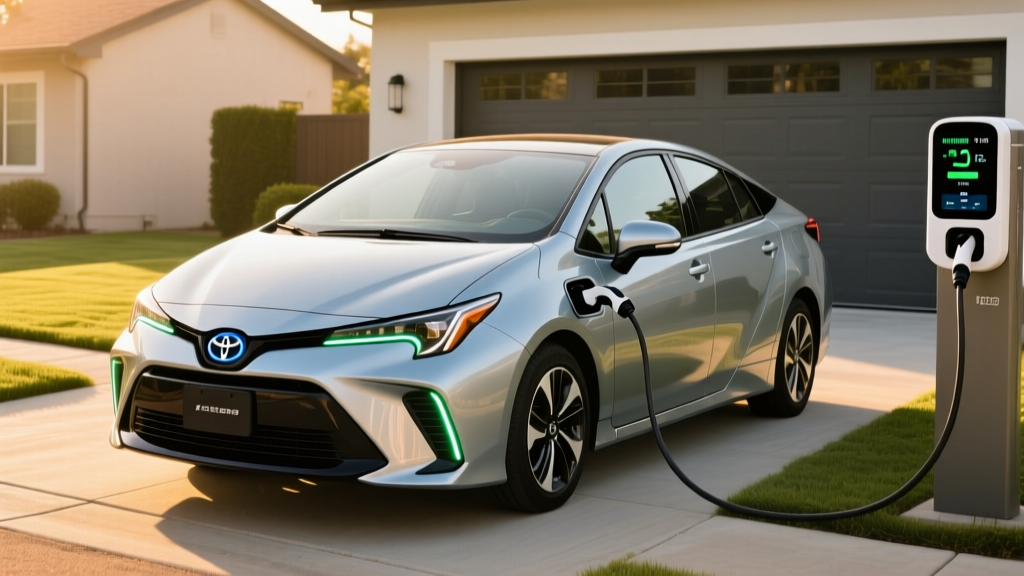
The redesigned Prius Prime is the rare PHEV that's genuinely quick and genuinely efficient. Its 2.0L four-cylinder plus dual-motor setup produces 220 combined horsepower — enough for a 6.6-second 0-60. But the real story is the 44-mile EPA electric-only range and 52 MPG combined once the engine kicks in.
- Battery: 13.6 kWh lithium-ion (NMC chemistry)
- Charging: Level 2 (240V) full charge in ~4 hours. No DC fast charging.
- Real-world MPG: In our city-heavy testing with frequent regen, we saw 54–56 MPG — hybrids routinely exceed EPA city estimates thanks to regenerative braking.
- Total combined range: ~560 miles (44 EV + 516 gas)
Volvo S60 Recharge — The Performance Sleeper
Volvo's T8 AWD powertrain cranks out 455 hp and 523 lb-ft of torque in the S60 Recharge, rocketing it to 60 mph in 4.4 seconds. That's sports-sedan territory, yet it delivers 40 miles of electric-only range and 74 MPGe combined.
- Battery: 18.8 kWh usable (NMC)
- Charging: Level 2 in ~5 hours. No DC fast charging.
- Real-world EV range: Expect 33–37 miles in mixed driving; closer to 28–30 in cold weather below 40°F.
BMW XM — The 644-HP Hybrid Behemoth
The BMW XM exists in a class of one: a full-size luxury PHEV with a twin-turbo V8 making 644 combined hp and a 4.1-second 0-60. It's the quickest hybrid on this list by a wide margin, though its 14 MPG combined (gas-only) and $160K price put it in exotic territory.
- Battery: 25.7 kWh usable (NMC)
- Charging: DC fast charging capable at up to 7.4 kW (AC) — full charge in ~4.25 hours on Level 2.
- Electric-only range: 31 miles EPA
Top Quick HEVs: No Plug Required, Still Fast
Toyota Crown Hybrid MAX — 340 HP Without a Charging Cord
Toyota's Hybrid MAX powertrain pairs a 2.4L turbo four with a direct-drive electric motor for 340 hp and a 5.1-second 0-60. Because it's a conventional HEV, there's no plug, no range anxiety, and no battery to charge — just 30 MPG combined on regular unleaded.
- Battery: 1.1 kWh (bipolar nickel-metal hydride) — far smaller than a PHEV, but optimized for rapid charge/discharge cycles
- Real-world MPG: We observed 28–31 MPG in mixed driving; highway-dominant trips dropped it to 26–27.
Lexus RX 500h F SPORT Performance — Luxury Hybrid Muscle
With 366 hp from a turbocharged 2.4L hybrid system and DIRECT4 all-wheel drive, the RX 500h hits 60 mph in 5.7 seconds. It's the quickest hybrid SUV that doesn't require plugging in.
- Battery: 1.4 kWh (NiMH)
- Real-world MPG: 28–30 MPG combined in mixed testing; the EPA rates it at 30 combined.
Pricing, Tax Credits, and Total Cost
Here's where the HEV vs PHEV split matters financially. Conventional hybrids do not qualify for the federal §30D tax credit — that credit is reserved for plug-in vehicles. PHEVs may qualify for up to $7,500, but only if they meet current-year battery sourcing, critical minerals, MSRP cap, and buyer income requirements per IRS §30D rules.
§30D Federal Tax Credit Checklist (2026 PHEVs)
- MSRP cap: Vans/SUVs/pickups ≤ $80,000; sedans ≤ $55,000
- Buyer income cap: $150K single / $225K head of household / $300K joint (modified AGI)
- Battery sourcing: Required percentages of critical minerals and battery components must be sourced from US/FTA partners — this disqualifies several PHEVs
- Point-of-sale transfer: Eligible buyers can apply the credit as a dealer discount at purchase rather than waiting for tax filing
- Verify before buying: Check the specific VIN on fueleconomy.gov — eligibility changes as manufacturers adjust supply chains
For the Toyota Prius Prime SE ($33,475 MSRP, sedan pricing cap applies), the §30D credit eligibility has been inconsistent due to battery-sourcing rules. The Volvo S60 Recharge ($52,150) falls under the sedan $55K cap and may qualify depending on your income and current sourcing compliance. The BMW XM at $159,995 exceeds the SUV cap — no credit. Always confirm with a tax professional before counting on the credit in your purchase math.
Battery Warranty, Reliability, and Replacement Costs
Hybrid Battery Warranty Standards
Federal law mandates that hybrid and PHEV batteries carry a minimum warranty of 8 years / 100,000 miles (10 years / 150,000 miles in CARB states like California, New York, and Massachusetts). Most manufacturers match or exceed this:
- Toyota / Lexus: 10 years / 150,000 miles on hybrid battery
- Hyundai: 10 years / 100,000 miles
- BMW: 8 years / 80,000 miles (capacity must remain above 70%)
- Volvo: 8 years / 100,000 miles
Real-world reliability data is reassuring. Toyota's hybrid synergy drive system has been in production since 1997; failures before 150,000 miles are uncommon. PHEV batteries face harder duty cycles (deeper discharge, more frequent charging), but modern thermal management has kept degradation modest — expect 85–90% capacity retention at the 8-year mark based on industry fleet data.
If you do face an out-of-warranty replacement, costs vary sharply:
- HEV battery (Prius, Crown, RX 500h): $2,000–$4,000 for the pack, plus ~$500–$1,000 labor
- PHEV battery (Prius Prime, S60 Recharge): $6,000–$12,000 depending on pack size and chemistry
- BMW XM: Estimated $15,000+ given the 25.7 kWh pack — a real consideration at the back end of ownership
Who Should Buy a Quick Hybrid vs a Full EV or Gas Car?
Choose a Quick PHEV If:
- You want sports-car acceleration but drive 400+ miles on road trips regularly
- You can charge at home (Level 2, 240V) and your daily commute is under 35 miles
- You want to drive on electricity 80% of the time without range anxiety
- Public charging infrastructure in your area is unreliable
Choose a Quick HEV If:
- You can't charge at home (apartment, no garage, no 240V access)
- You want zero behavior change — just fill up with gas and go
- Your priority is simplicity and proven long-term reliability
- You want 300+ hp without the weight penalty of a large battery
Choose a Full EV (BEV) If:
- You can charge at home and your daily driving is under 250 miles
- You want the lowest per-mile fuel cost (~$0.04/mile vs $0.10–$0.14 for hybrid gas)
- You want maximum acceleration — even modest EVs like the Hyundai Ioniq 5 hit 60 in 5.0 seconds
- You want zero tailpipe emissions and minimal drivetrain maintenance
Frequently Asked Questions
What is the quickest hybrid car you can buy in 2026?
The BMW XM at 644 hp and a 4.1-second 0-60 mph is the quickest hybrid currently on sale. Among mainstream models, the Volvo S60 Recharge (455 hp, 4.4 seconds) and Toyota Crown Hybrid MAX (340 hp, 5.1 seconds) lead their respective categories.
How many MPG does a quick hybrid get?
It depends on the model. The Toyota Prius Prime delivers 52 MPG combined (gas) and 127 MPGe (electric). Performance-oriented hybrids like the Lexus RX 500h get 30 MPG combined, while the Toyota Crown Hybrid MAX returns 30 MPG. Expect real-world city MPG to exceed EPA estimates by 2–4 MPG in stop-and-go traffic thanks to regenerative braking; highway-dominant driving tends to match or slightly fall below EPA.
How far can a PHEV go on electric only?
The Toyota Prius Prime SE leads this list with 44 miles of EPA-rated electric-only range. The Volvo S60 Recharge achieves 40 miles, the BMW XM manages 31 miles, and the Hyundai Tucson PHEV delivers 33 miles. Real-world range drops 15–25% in cold weather (below 40°F) due to cabin heating demands and reduced battery efficiency.
Do quick hybrids qualify for a federal tax credit?
Only PHEVs qualify for the §30D federal tax credit (up to $7,500), and only if they meet battery sourcing, MSRP cap, and buyer income requirements. Conventional hybrids (HEVs) like the Toyota Crown and Lexus RX 500h do not qualify. Check your specific VIN on fueleconomy.gov and consult a tax professional before relying on the credit.
Are hybrid batteries reliable and expensive to replace?
Hybrid batteries are among the most reliable components in modern vehicles. Federal law mandates 8-year/100,000-mile battery warranties (10/150K in CARB states). Toyota's hybrid batteries routinely last 150,000–200,000 miles. Out-of-warranty replacement costs $2,000–$4,000 for HEVs and $6,000–$12,000 for PHEVs, depending on pack size and model.
Can PHEVs use DC fast chargers?
Most PHEVs on this list do not support DC fast charging — they charge via Level 1 (120V, ~12 hours) or Level 2 (240V, 4–5 hours). The Mitsubishi Outlander PHEV is a notable exception with DC fast-charge capability, though it sacrifices some battery longevity by using CHAdeMO. For daily use, Level 2 home charging is sufficient for PHEV battery sizes.